



Chesapeake Bay
Chesapeake Bay
Filter Total Items: 35
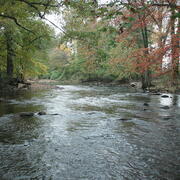
39 Years of Stream Conditions Show Widespread Biological Changes Across the Chesapeake Bay Watershed
USGS scientists predicted stream biological conditions across the Chesapeake Bay watershed from 1985 through 2023, revealing widespread changes but only a ~1% increase in stream length classified as improved. These predicted improvements fell short of the Chesapeake Bay Program’s goal of improving the health of 10% of streams by 2025.
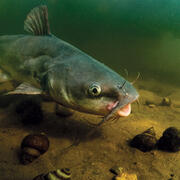
Contaminants in Blue Catfish: Implications for Human, Wildlife, and Environmental Health
As blue catfish become increasingly harvested, recent studies are showing signs that these fish may contain detectable levels of Per- and polyfluoroalkyl Substances (PFAS) and other contaminants. Measuring PFAS in their blood and heavy metals, Polychlorinated biphenyls (PCBs), and microplastics from filets will help determine potential health effects for people, animals, and the environment.

Osprey (Pandion haliaetus) Population and the Availability of Menhaden (Brevoortia tyrannus) as Their Food Source in Chesapeake Bay: Historical and Present-day Comparison
USGS is collaborating with many biologists in analysis of data on osprey ( Pandion haliaetus) and their prey (menhaden, Brevoortia tyrannus, and other species of fish) in the middle and lower Chesapeake Bay and its tributaries. The data compiled and collected will help determine if a lack of menhaden or other environmental factors are affecting osprey reproductive success in portions of the...
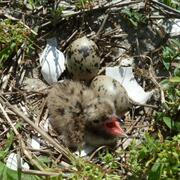
Colonial Nesting Waterbird Ecology
USGS is engaged in a variety of research aimed at understanding population dynamics in colonially nesting waterbirds of the Chesapeake Bay. Much of this work focuses on how focal species such as Common and Least Terns, Cattle and Snowy Egrets, and others respond to habitat restoration and management on Poplar Island, a large-scale effort lead by the U.S. Army Corps of Engineers and the Port of...
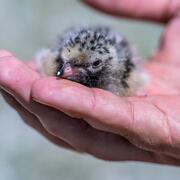
Novel Management Techniques for Colonial Nesting Waterbirds
This project focuses on USGS collaborating with USFWS colleagues to understand how management practices on Poplar Island impact target and non-target wildlife species.
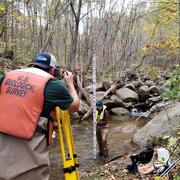
Using monitoring data to measure conditions over time in Chesapeake Bay streams
This study provides a comprehensive assessment of the health of streams throughout the Chesapeake Bay. Monitoring data were used to assess seven key indicators of stream condition, revealing consistent patterns of degradation in urban and agricultural areas. The findings offer critical insights that can inform watershed restoration efforts and improve long-term monitoring strategies.
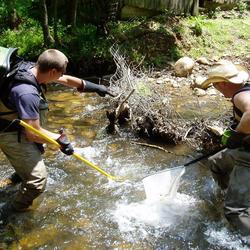
EESC Makes an Impact: Enhancing Recreational & Commercial Fishing
The USGS Eastern Ecological Science Center (EESC) provides world-class science to inform natural resource decisions on aquatic ecosystems, species populations and management, disease, and invasive species. Our scientific products represent critical contributions that enhance the ecological and economic sustainability of recreational and commercial fishing. In the United States, anglers contribute...
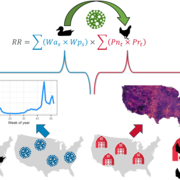
Advancing Risk Modeling for Highly Pathogenic Avian Influenza
Ongoing global outbreaks demonstrate the capacity of highly pathogenic avian influenza virus (HPAIV) to impact poultry, wild birds, and even human health. USGS research is advancing the understanding of the spatial and temporal interface between wild and domestic bird populations from which these viruses emerge to aid biosecurity planning and outbreak response.

Pathogens in the Aquatic Environment – Waterfowl, Avian Influenza
USGS research is investigating the prevalence and strains of avian influenza viruses in the aquatic environment, how those viruses compare to those circulating within wild birds in the same area, and how viruses persist in the environment across seasons.

Key Values of a Century of EESC Science
The USGS Eastern Ecological Science Center (EESC) is rooted in a proud tradition of service to the nation—advancing science that informs the conservation and management of fish, wildlife, and habitats across the eastern United States and beyond. Our mission is clear: deliver reliable, partner-driven science that supports natural resource decisions today, while ensuring these resources remain...
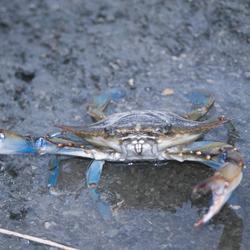
EESC Makes an Impact: Restoring the Chesapeake Bay Watershed
The Chesapeake Bay provides over $100 billion in annual economic value and is home to 18 million people. The USGS, including scientists from the Eastern Ecological Science Center (EESC), works with Federal, State, local, and academic partners to provide research and monitoring and to communicate results to inform management for the Chesapeake and other important landscapes across the Nation.
EESC Makes an Impact: Reducing Management Costs and Increasing Efficiency
Decision analysis is widely used in business applications to improve cost saving and increase efficiency under uncertainty. Scientists at the U.S. Geological Survey Eastern Ecological Science Center (EESC) include world-renowned experts who use data, mathematics, statistics, and computer science to help frame and solve decision problems to support U.S. national security, public health, wildlife...