a sunset photo, both from El Malpais National Monument
a sunset photo, both from El Malpais National MonumentAsunset photo, from El Malpais National Monument, NM.


Official websites use .gov
A .gov website belongs to an official government organization in the United States.

Secure .gov websites use HTTPS
A lock () or https:// means you’ve safely connected to the .gov website. Share sensitive information only on official, secure websites.

Here, you'll find images related to research going on at the Fort Collins Science Center. Our team of scientists are working on multiple areas of environmental interest, ranging from land conservation effectiveness to invasive reptiles.

Asunset photo, from El Malpais National Monument, NM.
Asunset photo, from El Malpais National Monument, NM.
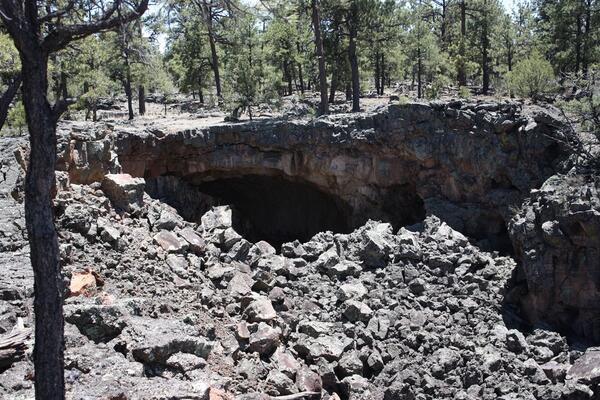
Opening of a large lava tube at El Malpais National Monument in western New Mexico and likely roost for bats, 2011.
Opening of a large lava tube at El Malpais National Monument in western New Mexico and likely roost for bats, 2011.

View from sandstone bluff overlooking extinct lava flows at El Malpais National Monument, New Mexico.
View from sandstone bluff overlooking extinct lava flows at El Malpais National Monument, New Mexico.

A group of southeastern myotis bats found roosting in a bridge. Photo by Andrea Schuhmann (USGS).
A group of southeastern myotis bats found roosting in a bridge. Photo by Andrea Schuhmann (USGS).

A group of Rafinesque big-eared bats (and one southeastern myotis) found roosting in a bridge. Photo by Andrea Schuhmann (USGS).
A group of Rafinesque big-eared bats (and one southeastern myotis) found roosting in a bridge. Photo by Andrea Schuhmann (USGS).

Male greater sage-grouse displaying on a lek in Nevada. Photo by Tatiana Gettleman (USGS).
Male greater sage-grouse displaying on a lek in Nevada. Photo by Tatiana Gettleman (USGS).

A USGS scientist surveying the remains after the Las Conchas fire in New Mexico, 2011.
A USGS scientist surveying the remains after the Las Conchas fire in New Mexico, 2011.

Coal mine in Saskatchewan, Canada. Photo taken by USGS personnel on a Civil Air Patrol flight.
Coal mine in Saskatchewan, Canada. Photo taken by USGS personnel on a Civil Air Patrol flight.

Photo of a lone female Greater Sage-grouse in a field by Tatiana Gettleman (USGS).
Photo of a lone female Greater Sage-grouse in a field by Tatiana Gettleman (USGS).

Lekking male greater sage-grouse in a sagebrush ecosystem. Photo by Tatiana Gettelman.
Lekking male greater sage-grouse in a sagebrush ecosystem. Photo by Tatiana Gettelman.

A brown treesnake crawls on some frangipangi blossoms in Guam.
A brown treesnake crawls on some frangipangi blossoms in Guam.


Backpacking trip
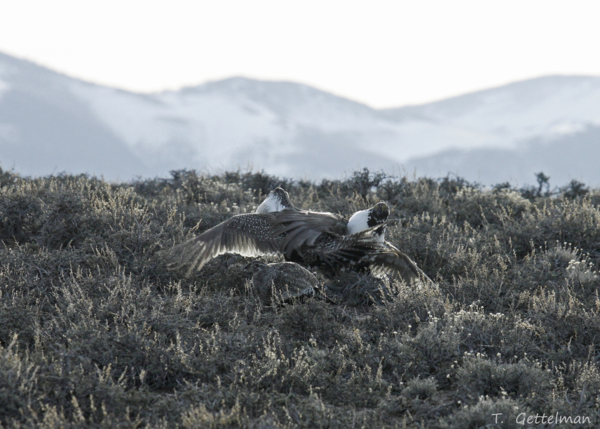
Male greater sage-grouse fighting in a field of sagebrush. Photo by Tatiana Gettelman (USGS).
Male greater sage-grouse fighting in a field of sagebrush. Photo by Tatiana Gettelman (USGS).

Brown treesnakes were a major contributor to the loss of nine of 11 native forest birds on Guam.
Brown treesnakes were a major contributor to the loss of nine of 11 native forest birds on Guam.

Older Bison who was very friendly and thought he was going to be fed.
Older Bison who was very friendly and thought he was going to be fed.

The Colorado River near Moab, Utah. The entire Colorado River Basin currently supports 50 million people, and that amount is expected to increase by 23 million between 2000 and 2030. A new USGS study shows more than half of the streamflow in the Upper Colorado River Basin originates as groundwater. Photo by M. Miller.
The Colorado River near Moab, Utah. The entire Colorado River Basin currently supports 50 million people, and that amount is expected to increase by 23 million between 2000 and 2030. A new USGS study shows more than half of the streamflow in the Upper Colorado River Basin originates as groundwater. Photo by M. Miller.

This photo of a Pacific sheath-tailed bat is the last good photo of this bat from Aguiguan in existence.
This photo of a Pacific sheath-tailed bat is the last good photo of this bat from Aguiguan in existence.

A brown treesnake in a tree in Guam. Photo by Bob Reed, USGS, 2009.
A brown treesnake in a tree in Guam. Photo by Bob Reed, USGS, 2009.

This is an image of a brown treesnake in a tree in Guam, taken in 2009.
This is an image of a brown treesnake in a tree in Guam, taken in 2009.

A brown treesnake in a Streptopelia bitorquata (island collared dove) nest. Yona, Guam, 2009. Photo by James Stanford, USGS.
A brown treesnake in a Streptopelia bitorquata (island collared dove) nest. Yona, Guam, 2009. Photo by James Stanford, USGS.