



Fish and Wildlife
Fish and Wildlife
Learn more about FORT research on fish and wildlife.
Fish and wildlife research in support of the Department of the Interior
Fish and wildlife research in support of the Department of the Interior
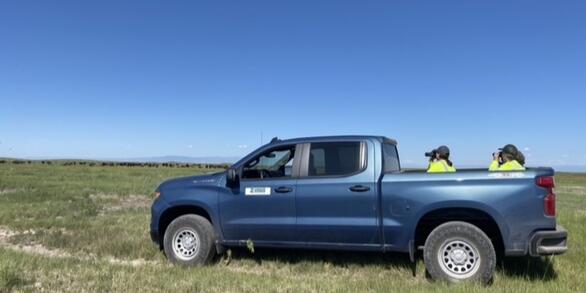
FORT fish and wildlife researchers provide sound science to support the Department of the Interior in its efforts to preserve American heritage, streamline species listing decisions and promote species recovery, manage wild horses and burros using efficient, cost-effective tools, and sustain hunting and fishing on public lands.
Filter Total Items: 122

A user-friendly decision support tool for monitoring and managing greater sage-grouse populations
Researchers at the U.S. Geological Survey (USGS) and Colorado State University (CSU) collaborated with the Bureau of Land Management and state wildlife agencies to develop a hierarchical population monitoring framework for managing greater sage-grouse ( Centrocercus urophasianus) populations and the sagebrush ecosystems they depend on for survival and reproduction. This greater sage-grouse...

Greater Sage-Grouse Population Monitoring Framework Data Inputs Information Sheet
To support management decisions, western state wildlife agencies identified the need for a range-wide database that tracks annual counts of greater sage-grouse ( Centrocercus urophasianus; sage-grouse) at leks (breeding sites), which have been recorded since the early 1950s. Researchers at Colorado State University (CSU) and U.S. Geological Survey (USGS) worked with state wildlife agencies to: 1)...

A targeted annual warning system (TAWS) for identifying aberrant declines in greater sage-grouse populations
Land and wildlife managers require accurate estimates of sensitive species’ trends to help guide conservation decisions that maintain biodiversity and promote healthy ecosystems. Multiple science centers with the U.S. Geological Survey (USGS), in conjunction with Colorado State University (CSU), developed a hierarchical population monitoring framework for managing greater sage-grouse (...

Estimating trends for greater sage-grouse populations within highly stochastic environments
Land and wildlife managers require accurate estimates of sensitive species’ trends to help guide conservation decisions that maintain biodiversity and promote healthy ecosystems. The U.S. Geological Survey (USGS), in conjunction with Colorado State University (CSU), developed a hierarchical population monitoring framework for managing greater sage-grouse ( Centrocercus urophasianus; sage-grouse)...

Developing structured science syntheses for use in NEPA analyses and decision making in the Bureau of Land Management
Science information is fundamental to understanding how proposed actions on public lands may impact the environment. However, agencies often have limited time to compile and synthesize existing science. We are working with land management agencies to develop and explore the usability of a new type of science product— structured science syntheses—for facilitating the use of science information in...

USGS Sagebrush Science: Supporting Public Safety and Economic Decision Making Across the West
The sagebrush biome is one of the largest ecosystems in North America. Encompassing nearly one-third of the continental U.S., it provides critical resources for millions of Americans and a home for hundreds of plants and animal species in the West. Natural resource management in sagebrush ecosystems can be complex, and science can support management decisions by providing knowledge and tools to...
By
Core Science Systems Mission Area, Ecosystems Mission Area, Land Management Research Program, Earth Resources Observation and Science (EROS) Center, Forest and Rangeland Ecosystem Science Center, Fort Collins Science Center, Northern Rocky Mountain Science Center, Southwest Biological Science Center, Western Ecological Research Center (WERC), Wildland Fire Science

Molecular Ecology Lab (MEL)
The Molecular Ecology Laboratory applies innovative genetic and genomic technologies to address a variety of complex questions and issues facing the Nation's natural resources. While we continually update the scale and efficiency of laboratory procedures to meet stakeholder needs, we must also be innovative and flexible in addressing those needs that have no off-the-shelf solution. We help...

Mapping Chronic Wasting Disease Management: Identify Opportunities for Intervention
This research effort is an interagency partnership between U.S. Geological Survey and U.S. Fish and Wildlife Service to model the social-ecological system that encompasses chronic wasting disease management in the United States. Chronic wasting disease (CWD) is a fatal, neurologically degenerative disease that impacts many cervid species in North America (e.g., elk, moose, mule deer, and white...
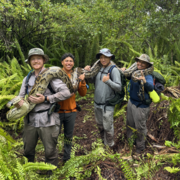
Invasive Burmese python research in the Greater Everglades
USGS leads federal research to control the highly invasive Burmese python ( Python bivittatus), which has become firmly established across the Greater Everglades Ecosystem and poses a serious threat to native wildlife. Capable of reaching over 17 feet long, this massive constrictor is believed to be a key factor in the sharp decline of mammal populations in the region. For over a decade...

The Strain and Genetic Online Tissue Repository for Chronic Wasting Disease
The Strain and Genetic Online Tissue Repository (SAGOTR) is being developed by the USGS Fort Collins Science Center to document, track, discover, and request physical samples of Chronic Wasting Disease (CWD). SAGOTR connects natural resource managers, tissue repositories, and researchers in one online platform, making it easier to locate and share samples and support research and management of CWD...
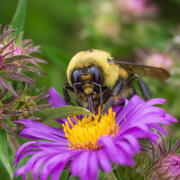
Science for effective pollinator conservation and improved food security
Pollinators, including bees, flies, butterflies, bats, birds, and other animals, are critically important to U.S. ecosystems and agriculture. Recent reports of declines of pollinator species have led to widespread actions to conserve pollinator habitat and recover imperiled species, but resource managers need accurate data and science to support management actions. USGS pollinator research helps...

North American Bat Monitoring Program (NABat)
Bats are essential contributing members of healthy, functioning ecosystems. They perform numerous ecosystem services like insect pest control and plant pollination, and provide enormous economic benefits through ecotourism, medical research, and novel biotechnologies. North American bats face unprecedented threats including habitat loss and fragmentation, white-nose syndrome, and wind energy...