U.S. flag

An official website of the United States government

Images

Images intro.
Filter Total Items: 332
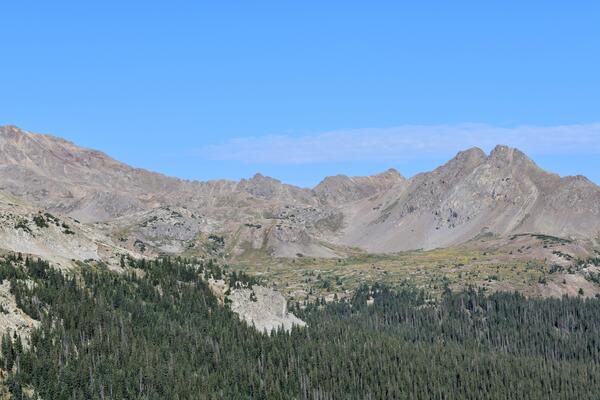
View of Colorado's Lincoln Gulch across a wooded valley
Grizzly Peak Caldera, Southern Rocky Mountain Volcanic Field, Colorado

The west side of Lincoln Creek drainage reveals the intricate details of the Grizzly Peak caldera. Dikes cutting the tuff help establish the timing of volcanic activity that shaped this landscape.
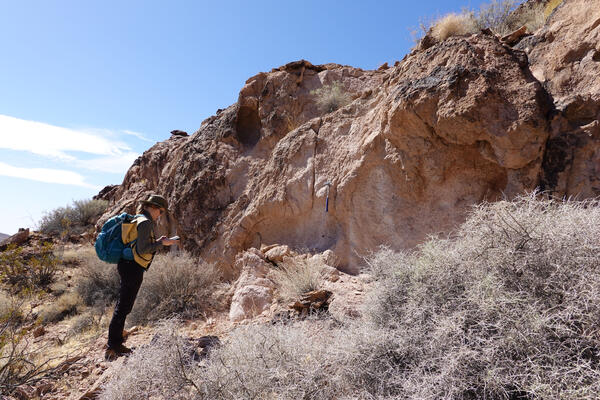
Geologist makes notes at an outcrop of volcanic rocks in Death Valley
Tectonic and Magmatic evolution of Death Valley, California
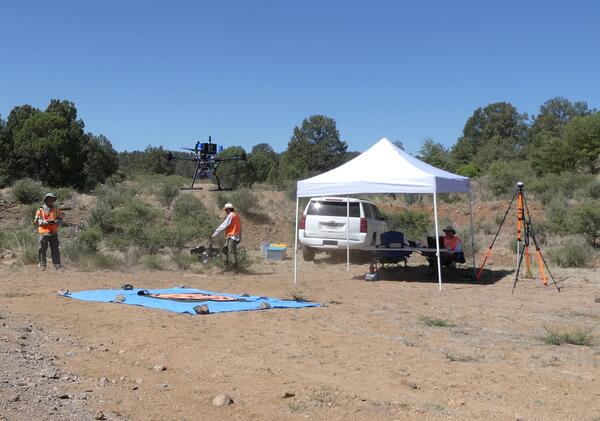
NUSO researchers prepare for evaluation flights with a vertical take-off and landing UAS

NUSO researchers Matt Burgess and Mark Bauer prepare for evaluation flights with the WingtraOne GEN II vertical take-off and landing mapping UAS equipped with the newly released lidar payload.

Group photo captured using a drone standing at the overlook for the Marsh-Felch quarry.

Group photo captured using a drone. Left to right: Matt Burgess (NUSO), Paco Van Sistine (GECSC), Victoria Scholl (NUSO) standing at the overlook for the Marsh-Felch quarry.

USGS geologists view the informational sign at the quarry upper overlook in July 2024.

USGS geologists view the informational sign at the quarry upper overlook in July 2024. The sign describes the history of Professor O.C. Marsh and Marshall P. Felch, the namesakes of the quarry, who worked together to excavate and study dinosaur bones. The sign features a photograph by Israel Cook Russel, a USGS Geologist, in July 1888.

USGS geologists view the informational sign at the quarry upper overlook in July 2024. The sign describes the history of Professor O.C. Marsh and Marshall P. Felch, the namesakes of the quarry, who worked together to excavate and study dinosaur bones. The sign features a photograph by Israel Cook Russel, a USGS Geologist, in July 1888.

USGS personnel standing at the overlook to the quarry prior to conducting UAS operations.

USGS personnel standing at the overlook to the quarry prior to conducting UAS operations.

Thomas Casadevall (Scientist Emeritus with the Geology, Geophysics, and Geochemistry Science Center), Paco Van Sistine (GECSC), Victoria Scholl (NUSO), Matt Burgess (NUSO)

USGS personnel standing at the overlook to the quarry prior to conducting UAS operations.

Thomas Casadevall (Scientist Emeritus with the Geology, Geophysics, and Geochemistry Science Center), Paco Van Sistine (GECSC), Victoria Scholl (NUSO), Matt Burgess (NUSO)

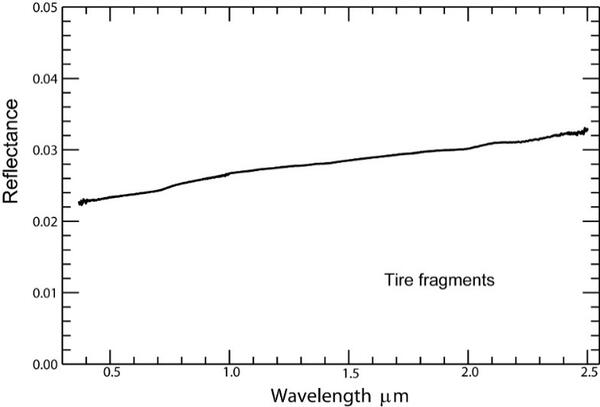
Chart showing Reflectance spectrum for fragments from a shredded road tire, where reflectance increases with wavelength
Reflectance spectrum for fragments from a shredded road tire

Reflectance spectrum for fragments from a shredded road tire showing a strong capacity to absorb solar radiation. The average reflectance over the spectrum is 0.0280. The reflectance of a flat, pure white surface, such as clean snow, is 1.

Reflectance spectrum for fragments from a shredded road tire showing a strong capacity to absorb solar radiation. The average reflectance over the spectrum is 0.0280. The reflectance of a flat, pure white surface, such as clean snow, is 1.

Geologist examining high-angle normal fault in the Jackson Mountains, Nevada
High-angle normal fault in the Jackson Mountains, Nevada

Investigating a fault mirror formed on a range-bounding fault that offsets Triassic volcaniclastic rocks of the Jackson Mountains 

Interactive UAS Science Exhibit on display in Reston

Interactive UAS Science Exhibit on display in Reston

Included in this display are some of the earliest UAS platforms operated by the USGS and an interactive touch screen table that provides access to additional information and videos.

Interactive UAS Science Exhibit on display in Reston

Included in this display are some of the earliest UAS platforms operated by the USGS and an interactive touch screen table that provides access to additional information and videos.

USGS scientists compare waypoints in UAS flight plans during field tests the day prior to the dye release.

Matt Burgess (NUSO) and Brandon Sansom (CERC) compare waypoints in UAS flight plans during field tests the day prior to the dye release. A train travels across the farmland in the background.

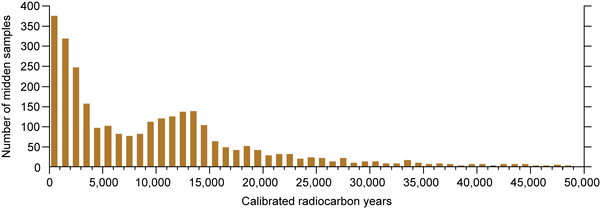
Chart with number of packrat middens compared against 0 to 50,000 calibrated radiocarbon years
USGS North American Packrat Midden Database, Version 5.0: number of middens compared with radiocarbon years

Chart showing number of dated midden samples occurring in each 1,000-year (calibrated radiocarbon) interval recorded in the USGS North American Packrat Midden Database, Version 5.0.

Was this page helpful?