U.S. flag

An official website of the United States government

Images

Images intro.
Filter Total Items: 311
lidar point cloud model of landslide-damaged road showing hillside vegetation
Lidar point cloud with vegetation-classified points

In 2024, the U.S. Geological Survey (USGS) National Uncrewed Systems Office (NUSO) provided technical support to the National Park Service in assessing road damage and landslide hazards along the Blue Ridge Parkway following Hurricane Helene.

In 2024, the U.S. Geological Survey (USGS) National Uncrewed Systems Office (NUSO) provided technical support to the National Park Service in assessing road damage and landslide hazards along the Blue Ridge Parkway following Hurricane Helene.

bare-earth digital terrain model aerial view of damaged road along Blue Ridge Parkway
Bare-earth digital terrain model of landslide damaged road

In 2024, the U.S. Geological Survey (USGS) National Uncrewed Systems Office (NUSO) provided technical support to the National Park Service in assessing road damage and landslide hazards along the Blue Ridge Parkway following Hurricane Helene.

In 2024, the U.S. Geological Survey (USGS) National Uncrewed Systems Office (NUSO) provided technical support to the National Park Service in assessing road damage and landslide hazards along the Blue Ridge Parkway following Hurricane Helene.

lidar point cloud model of landslide damaged road with vegetation removed
Lidar point cloud without vegetation-classified points

In 2024, the U.S. Geological Survey (USGS) National Uncrewed Systems Office (NUSO) provided technical support to the National Park Service in assessing road damage and landslide hazards along the Blue Ridge Parkway following Hurricane Helene.

In 2024, the U.S. Geological Survey (USGS) National Uncrewed Systems Office (NUSO) provided technical support to the National Park Service in assessing road damage and landslide hazards along the Blue Ridge Parkway following Hurricane Helene.

bare-earth digital terrain model of a road on a hillside damaged by a landslide
Bare-earth digital terrain model of road damaged by landslide

In 2024, the U.S. Geological Survey (USGS) National Uncrewed Systems Office (NUSO) provided technical support for the National Park Service in assessing road damage and landslide hazards along the Blue Ridge Parkway following Hurricane Helene.

In 2024, the U.S. Geological Survey (USGS) National Uncrewed Systems Office (NUSO) provided technical support for the National Park Service in assessing road damage and landslide hazards along the Blue Ridge Parkway following Hurricane Helene.

classified point cloud image created from lidar data showing trees, road, and landslide
Point cloud image of landslide

In 2024, the U.S. Geological Survey (USGS) National Uncrewed Systems Office (NUSO) provided technical support for the National Park Service to assess road damage and landslide hazards after Hurricane Helene along the Blue Ridge Parkway.

In 2024, the U.S. Geological Survey (USGS) National Uncrewed Systems Office (NUSO) provided technical support for the National Park Service to assess road damage and landslide hazards after Hurricane Helene along the Blue Ridge Parkway.

work area in the USGS Quaternary Lab Facility showing core on table
Sediment core cold storage and sampling area

Lab bench space in the Quaternary Lab Facility for core sampling outside of the walk-in cold storage room.

core photo stand used in the Quaternary Lab Facility
Sediment core photography stand

Every split sediment core is photographed to document color, structure and stratigraphy.

lab bench with core undergoing magnetic susceptibility measurements
Whole core magnetic susceptibility measurements

Measurements of whole core magnetic susceptibility provide a general stratigraphic profile of sediment layer compositions.

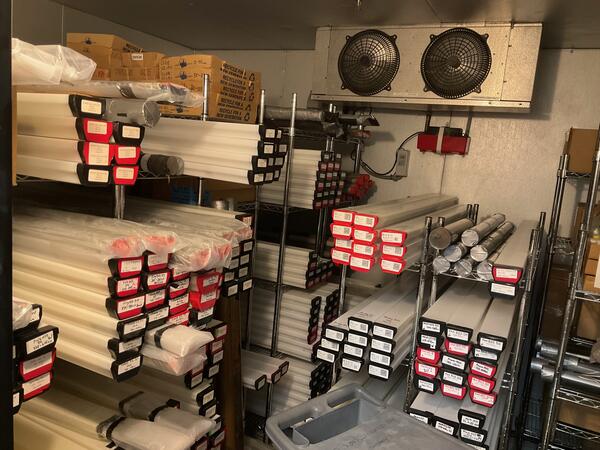
Shelves in the USGS Quaternary Lab Facility stacked with lake sediment cores
Sediment core cold storage

Split cores are stored at 38˚F in a walk in cold room in sealed storage containers. One half of every core is used and the second is kept for long-term archive storage.

Split cores are stored at 38˚F in a walk in cold room in sealed storage containers. One half of every core is used and the second is kept for long-term archive storage.

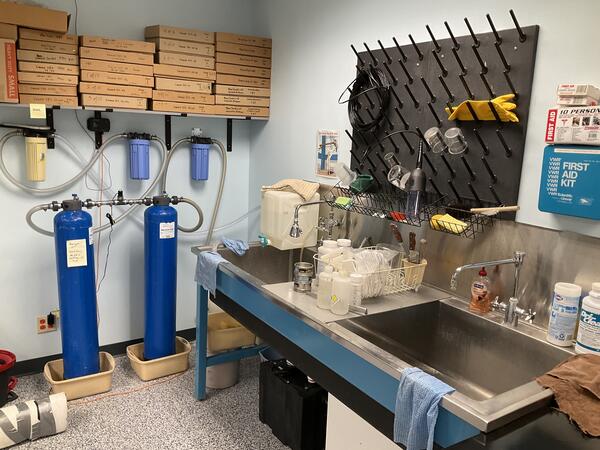
lab room with sinks and tanks
Large sink and deionized water system

The Quaternary Lab Facility: de-ionized water at high volumes sediment is needed for sub-sample processing.

Freeze drier on table in the Quaternary Lab Facility
High volume freeze drier

Sediment sub-samples are freeze dried to preserve delicate sediment particles or for easy pulverization.

Sediment sub-samples are freeze dried to preserve delicate sediment particles or for easy pulverization.

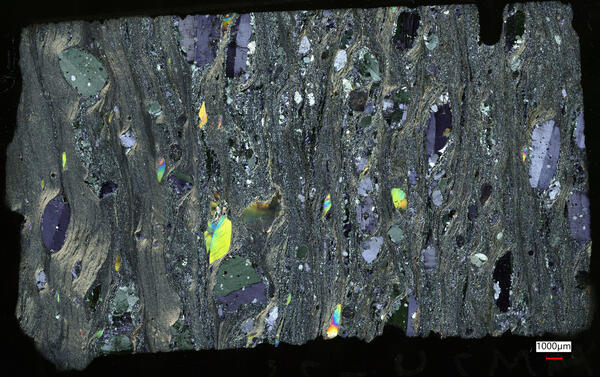
Microscopic image of schist showing garnets
Proterozoic orogenesis and metamorphism

Certain minerals, like the red garnets pictured here, are particularly effective at recording the metamorphic history of a rock.

Certain minerals, like the red garnets pictured here, are particularly effective at recording the metamorphic history of a rock.

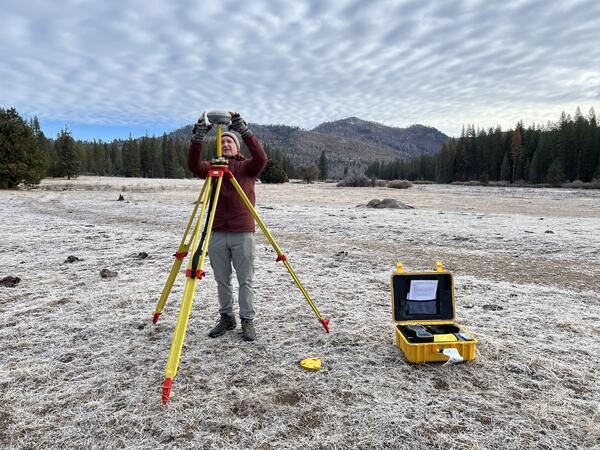
Setting up Global Navigation Satellite System base station on a tripod in a forest clearing with mountains in the background
Setting up Global Navigation Satellite System (GNSS) base station in Yosemite

USGS geographer and remote pilot Mark Bauer sets up a Global Navigation Satellite System (GNSS) base station, which will be used to correct uncrewed aircraft system (UAS) lidar data during post-processing. It's early during the field day and a layer of frost covers the ground.

USGS geographer and remote pilot Mark Bauer sets up a Global Navigation Satellite System (GNSS) base station, which will be used to correct uncrewed aircraft system (UAS) lidar data during post-processing. It's early during the field day and a layer of frost covers the ground.

USGS uncrewed aircraft pilots wearing safety gear standing next to Tanbark Ridge Overlook sign on the Blue Ridge Parkway
Uncrewed aircraft pilots at the Tanbark Ridge Overlook

U.S. Geological Survey (USGS) remote pilots Joe Adams and Matthew Burgess prepare to conduct drone flights at the Tanbark Ridge Overlook along the Blue Ridge Parkway in North Carolina.

U.S. Geological Survey (USGS) remote pilots Joe Adams and Matthew Burgess prepare to conduct drone flights at the Tanbark Ridge Overlook along the Blue Ridge Parkway in North Carolina.

Operator piloting drone on a road damaged from a landslide along the Blue Ridge Parkway in North Carolina
Assessing road damage caused by Hurricane Helene

The U.S. Geological Survey (USGS) employs a range of drone technologies for data collection in science, mapping, and monitoring.

Operator piloting a drone at the Tanbark Ridge Overlook along the Blue Ridge Parkway in North Carolina
Using uncrewed aircraft in landslide assessment

The Blue Ridge Parkway is renowned for its winding path through the rugged Appalachian Mountains. The steep terrain and dense forests make for scenic views but also create a challenging environment for drone operations. U.S. Geological Survey (USGS) remote pilots seek out open areas from which to conduct flights to enable good visibility of their surroundings.

The Blue Ridge Parkway is renowned for its winding path through the rugged Appalachian Mountains. The steep terrain and dense forests make for scenic views but also create a challenging environment for drone operations. U.S. Geological Survey (USGS) remote pilots seek out open areas from which to conduct flights to enable good visibility of their surroundings.

Drone operator standing on eroded road along the Blue Ridge Parkway, North Carolina
Preparing to assess road damage using a drone

In September 2024, Hurricane Helene brought heavy rain and powerful winds, resulting in multiple landslides along the iconic Blue Ridge Parkway. The National Park Service requested technical assistance from the U.S.

In September 2024, Hurricane Helene brought heavy rain and powerful winds, resulting in multiple landslides along the iconic Blue Ridge Parkway. The National Park Service requested technical assistance from the U.S.

road damaged by undercutting caused by a landslide along the Blue Ridge Parkway, North Carolina
Road damaged by landslide

In September 2024, Hurricane Helene brought heavy rain and powerful winds, resulting in multiple landslides along the iconic Blue Ridge Parkway. The National Park Service requested technical assistance from the U.S.

In September 2024, Hurricane Helene brought heavy rain and powerful winds, resulting in multiple landslides along the iconic Blue Ridge Parkway. The National Park Service requested technical assistance from the U.S.

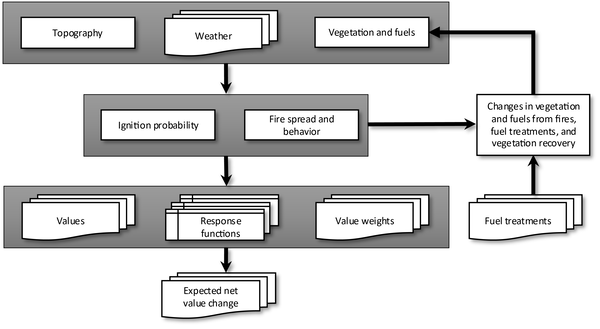
Flowchart showing
The envisioned wildfire risk modeling framework

Flowchart of the steps taken to dynamically model wildfire risk, showing inputs (topography, weather, vegetation, and fuels) that are passed to processes (ignition probability and fire spread and behavior). Changes in available fuels are considered each year in the simulations, modifying the inputs.

Flowchart of the steps taken to dynamically model wildfire risk, showing inputs (topography, weather, vegetation, and fuels) that are passed to processes (ignition probability and fire spread and behavior). Changes in available fuels are considered each year in the simulations, modifying the inputs.

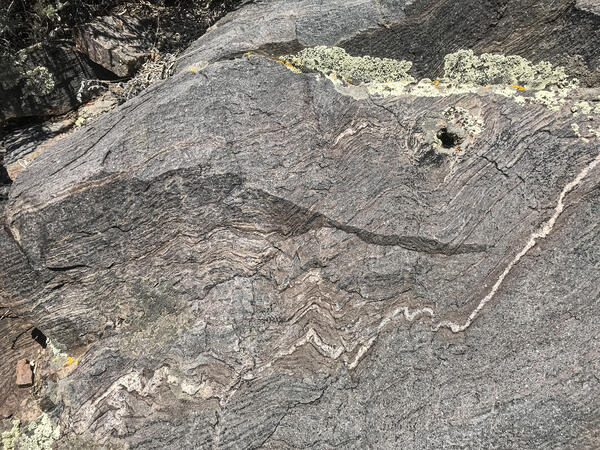
Close up view of metagreywacke
Precambrian basement and tectonism in the Intermountain West

Exploring the Colorado basement and Proterozoic shear zones. Fresh outcrops like this metagreywacke near Almont, Colorado, and cutting-edge techniques shed light on crustal growth and tectonic processes.

Exploring the Colorado basement and Proterozoic shear zones. Fresh outcrops like this metagreywacke near Almont, Colorado, and cutting-edge techniques shed light on crustal growth and tectonic processes.

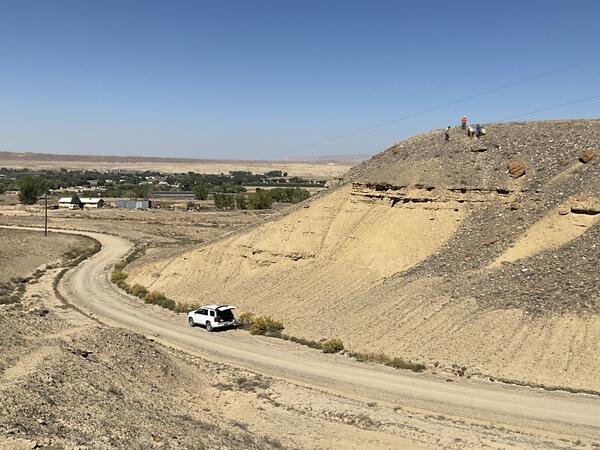
Drill rig along dirt road in the Hanna basin, Wyoming
Extracting cores for sedimentological research

Rock cores from the Hanna basin (Wyoming) penetrate sediments deposited during the Paleocene-Eocene thermal maximum. 

Was this page helpful?