U.S. flag

An official website of the United States government

Images

Images

Filter Total Items: 9443
Image: USGS Topographers at Work
USGS Topographers at Work

USGS topographer Don Winstead working with a level in Hawaii.

Image: USGS Topographer at Work
USGS Topographer at Work

USGS topographer Russ Curtis using a Wild N3 level.

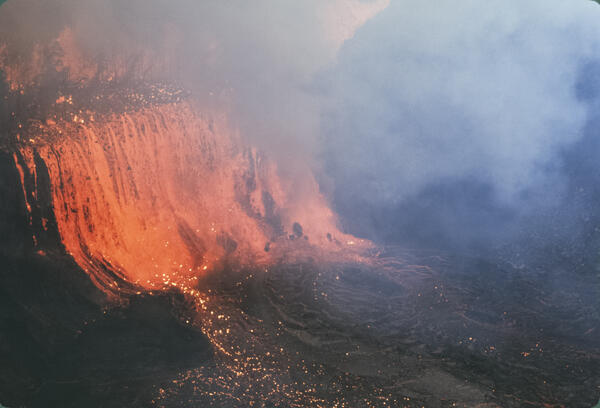
Image:  Lava falls at Mauna Ulu Eruption, 1969
Lava falls at Mauna Ulu Eruption, 1969

Lava falls pour into 'Alae Crater at 11 p.m., HST, on August 5, 1969, supplied by a high lava fountain at Mauna Ulu, 600 m (2,000 feet) away. The falls, more than 100 m (330 ft) high and 300 m (1,000 ft) wide, had nearly filled the crater by the time the fountains stopped at 5:45 a.m., August 6.

Lava falls pour into 'Alae Crater at 11 p.m., HST, on August 5, 1969, supplied by a high lava fountain at Mauna Ulu, 600 m (2,000 feet) away. The falls, more than 100 m (330 ft) high and 300 m (1,000 ft) wide, had nearly filled the crater by the time the fountains stopped at 5:45 a.m., August 6.

1969 Rift Eruption near Nāpau Crater

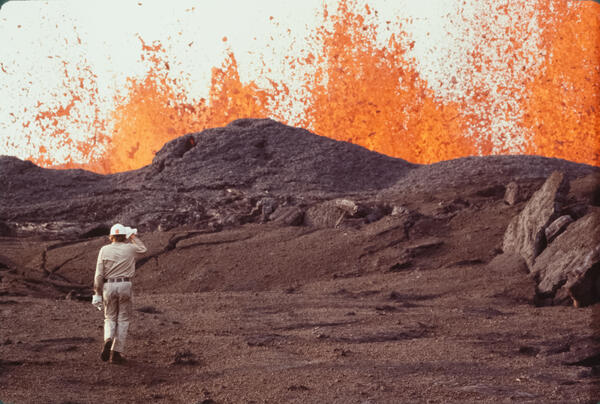
The February 1969 rift eruption near Nāpau Crater was a brief but dynamic precursor to the long-lived Maunaulu eruption that began in May of that year. This week-long event featured lava fountaining from multiple fissures along a 2.5-mile stretch of Kīlauea’s upper East Rift Zone.

The February 1969 rift eruption near Nāpau Crater was a brief but dynamic precursor to the long-lived Maunaulu eruption that began in May of that year. This week-long event featured lava fountaining from multiple fissures along a 2.5-mile stretch of Kīlauea’s upper East Rift Zone.

Image: Crater Creation
Crater Creation
Crater Creation
Crater Creation

Blasting craters for a new section of the Cinder Lakes outside Flagstaff, Ariz.(July 1968). USGS Astrogeology constructed a mockup of a section of the moon's Sea of Tranquillity in a cinder field to aid with training and time-and-motion studies.

Blasting craters for a new section of the Cinder Lakes outside Flagstaff, Ariz.(July 1968). USGS Astrogeology constructed a mockup of a section of the moon's Sea of Tranquillity in a cinder field to aid with training and time-and-motion studies.

Image: USGS Cartographer at Work
USGS Cartographer at Work

Yutaka Hamamoto working on a Wild A-7 Stereoplanigraph.

Repeat oblique photographs of Gulkana glaciers in Alaska.
USGS station 08116650 Brazos River near Rosharon, Texas, looking upstream from right bank.
USGS station 08116650 Brazos River near Rosharon, Texas

U.S. Geological Survey streamflow-gaging station 08116650 Brazos River near Rosharon, Texas, (A) looking upstream from right bank, April 2, 1967 (not known if pilings visible at base of bridge pier are result of channel-bed incision).
USGS SIR 2009–5174

U.S. Geological Survey streamflow-gaging station 08116650 Brazos River near Rosharon, Texas, (A) looking upstream from right bank, April 2, 1967 (not known if pilings visible at base of bridge pier are result of channel-bed incision).
USGS SIR 2009–5174

Repeat oblique photographs of Wolverine glacier in Alaska.

Repeat oblique photographs of Wolverine glacier in Alaska.  1966 image by unknown USGS photographer; 2015 image by L. Sass, USGS.

Image: USGS Topographer at Work
USGS Topographer at Work

Topographer Jim Tennant making measurements with a Wild T-2 theodolite on Mount Trumball in Arizona.

Topographer Jim Tennant making measurements with a Wild T-2 theodolite on Mount Trumball in Arizona.

Image: USGS Photographer at Work
USGS Photographer at Work

Jay Prendergast adjusts the lens on a Robertson 48-inch, 4.5 ton camera. Installed in 1959, the camera was used for precise scale transformation of mapping separates and composites.

Jay Prendergast adjusts the lens on a Robertson 48-inch, 4.5 ton camera. Installed in 1959, the camera was used for precise scale transformation of mapping separates and composites.

Image: USGS Photographer at Work
USGS Photographer at Work
Image: USGS Photographer at Work
USGS Photographer at Work

Calvin Hazlewood works with a 48-inch Robertson copy camera.

Image: San Carlos River near Peridot, Southern Arizona - 1964
San Carlos River near Peridot, Southern Arizona - 1964

Riparian vegetation has increased to the extent of blocking the downstream view. The channel appears to have shifted to the right, and the terrace is now occupied by cottonwood, black willow, and tamarisk. (Raymond M. Turner).

Riparian vegetation has increased to the extent of blocking the downstream view. The channel appears to have shifted to the right, and the terrace is now occupied by cottonwood, black willow, and tamarisk. (Raymond M. Turner).

Station 08098290 Brazos River near Highbank, Texas, looking upstream from FM 413 bridge, March 31, 1964.
USGS station 08098290 Brazos River near Highbank, Texas

U.S. Geological Survey streamflow-gaging station 08098290 Brazos River near Highbank, Texas, looking upstream from FM 413 bridge, March 31, 1964.

SIR 2009–5174

Station 08098290 Brazos River near Highbank, Texas, downstream from FM 413 bridge, March 31, 1964.
USGS station 08098290 Brazos River near Highbank, Texas

U.S. Geological Survey streamflow-gaging station 08098290 Brazos River near Highbank, Texas, looking downstream from FM 413 bridge, March 31, 1964.

SIR 2009–5174

Image: USGS Streamgage in Menard, Texas
USGS Streamgage in Menard, Texas

Although large streamgage structures are no longer necessary, the USGS still uses some of them to contain modern streamgage equipment.

Although large streamgage structures are no longer necessary, the USGS still uses some of them to contain modern streamgage equipment.

Image: USGS Topographers at Work
USGS Topographers at Work

USGS topographer Yukio Yamamoto in Littlefield, Texas with a theodolite and an Electrotape distance measuring unit.

USGS topographer Yukio Yamamoto in Littlefield, Texas with a theodolite and an Electrotape distance measuring unit.

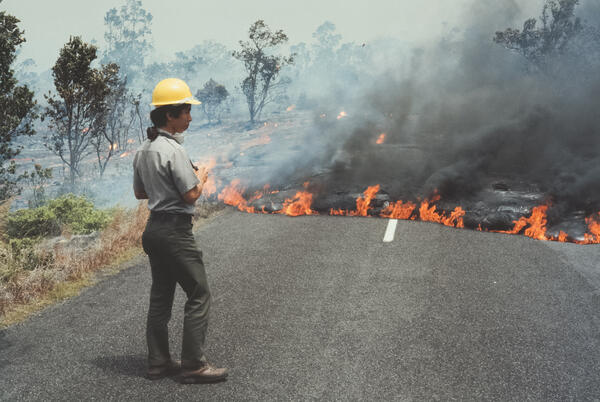
burned trees during 1961 Fissure Eruption near Nāpau Crater
1961 Fissure Eruption near Nāpau Crater

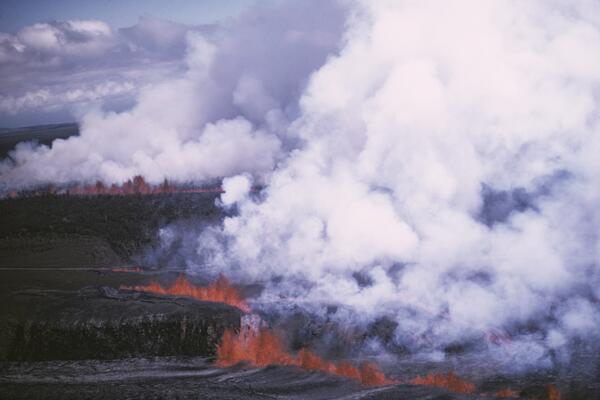
The 1961 fissure eruption near Nāpau Crater was a short-lived but notable event on Kīlauea’s East Rift Zone, occurring in late September. Over two days, lava erupted from vents along a 13-mile stretch, producing 13 small flows and lava fountains that reached heights of up to 400 feet, with the largest flows occurring near Pāhoa.

The 1961 fissure eruption near Nāpau Crater was a short-lived but notable event on Kīlauea’s East Rift Zone, occurring in late September. Over two days, lava erupted from vents along a 13-mile stretch, producing 13 small flows and lava fountains that reached heights of up to 400 feet, with the largest flows occurring near Pāhoa.

July 1961 Summit Eruption

The July 1961 eruption at Halemaʻumaʻu was the third summit eruption of that year, continuing the pattern of vigorous volcanic activity at Kīlauea. This event featured sustained lava fountaining and further infilling of the crater, building upon the changes initiated by the February and March eruptions.

The July 1961 eruption at Halemaʻumaʻu was the third summit eruption of that year, continuing the pattern of vigorous volcanic activity at Kīlauea. This event featured sustained lava fountaining and further infilling of the crater, building upon the changes initiated by the February and March eruptions.

March 1961 Halemaʻumaʻu Eruption

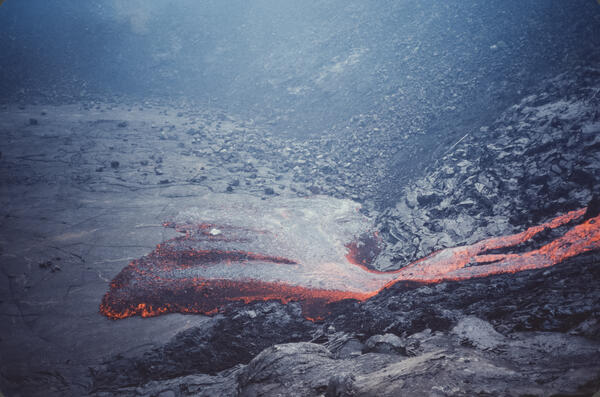
The March 1961 eruption at Halemaʻumaʻu was the second of three summit eruptions at Kīlauea that year, marked by renewed lava activity within the northeast collapse pit formed in February. This phase featured vigorous lava fountaining, crater floor uplift, and the gradual infilling of the pit, reflecting continued magma supply and dynamic summit processes.

The March 1961 eruption at Halemaʻumaʻu was the second of three summit eruptions at Kīlauea that year, marked by renewed lava activity within the northeast collapse pit formed in February. This phase featured vigorous lava fountaining, crater floor uplift, and the gradual infilling of the pit, reflecting continued magma supply and dynamic summit processes.

Was this page helpful?