
U.S. flag

An official website of the United States government

Surface Water Team

Science related to surface water.

Filter Total Items: 56
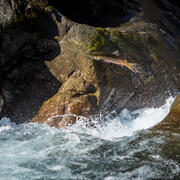
Monitoring tire-derived chemicals in stormwater

The USGS, in partnership with the Oregon Department of Transportation (ODOT) and other state and federal agencies, is studying a contaminant called 6PPD-quinone.
Monitoring tire-derived chemicals in stormwater

Monitoring tire-derived chemicals in stormwater

The USGS, in partnership with the Oregon Department of Transportation (ODOT) and other state and federal agencies, is studying a contaminant called 6PPD-quinone.
Learn More

Modeling tire-derived chemicals in stormwater

The USGS and the Environmental Protection Agency are working together using advanced modeling tools to understand how 6PPD-quinone moves through watersheds and how green infrastructure can reduce its impact.
Modeling tire-derived chemicals in stormwater

Modeling tire-derived chemicals in stormwater

The USGS and the Environmental Protection Agency are working together using advanced modeling tools to understand how 6PPD-quinone moves through watersheds and how green infrastructure can reduce its impact.
Learn More

Water Quality in Keno Reach of the Klamath River

The U.S. Geological Survey, U.S. Bureau of Reclamation, and Watercourse Engineering, Inc. are collaborating to develop knowledge and tools to better manage water quality in the Link-Keno reach of the Klamath River and the Lost River.
Water Quality in Keno Reach of the Klamath River

Water Quality in Keno Reach of the Klamath River

The U.S. Geological Survey, U.S. Bureau of Reclamation, and Watercourse Engineering, Inc. are collaborating to develop knowledge and tools to better manage water quality in the Link-Keno reach of the Klamath River and the Lost River.
Learn More

Harmful Algal Blooms and Drinking Water in Oregon

Harmful algal blooms are a major environmental problem in all 50 states.
Harmful Algal Blooms and Drinking Water in Oregon

Harmful Algal Blooms and Drinking Water in Oregon

Harmful algal blooms are a major environmental problem in all 50 states.
Learn More

City Beavers: Tualatin River Basin Beaver Study

Beavers and their dams are common sights along creeks in the Tualatin River basin. Beaver help create diverse habitats for many other animals, including birds, fish, and amphibians. The USGS studying the affect beaver activity has on the amount and quality of water in local streams, so that agencies in the basin can make strategic management and habitat restoration decisions based on science.
City Beavers: Tualatin River Basin Beaver Study

City Beavers: Tualatin River Basin Beaver Study

Beavers and their dams are common sights along creeks in the Tualatin River basin. Beaver help create diverse habitats for many other animals, including birds, fish, and amphibians. The USGS studying the affect beaver activity has on the amount and quality of water in local streams, so that agencies in the basin can make strategic management and habitat restoration decisions based on science.
Learn More

Tualatin River Basin Water Quality Assessment

In 1990, the USGS began assessing water-quality in the Tualatin River. More then 30 years later, we are still monitoring conditions in the basin and conducting investigations to better understand stream processes within the basin.
Tualatin River Basin Water Quality Assessment

Tualatin River Basin Water Quality Assessment

In 1990, the USGS began assessing water-quality in the Tualatin River. More then 30 years later, we are still monitoring conditions in the basin and conducting investigations to better understand stream processes within the basin.
Learn More

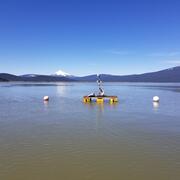
Nutrient and Sediment Loading to Upper Klamath Lake

The U.S. Geological Survey (USGS) computes time-series of total phosphorus (TP) and suspended-sediment concentrations (SSC) and loads entering Upper Klamath Lake using continuous turbidity sensor records, discrete TP and SSC data, and continuously computed streamflow.
Nutrient and Sediment Loading to Upper Klamath Lake

Nutrient and Sediment Loading to Upper Klamath Lake

The U.S. Geological Survey (USGS) computes time-series of total phosphorus (TP) and suspended-sediment concentrations (SSC) and loads entering Upper Klamath Lake using continuous turbidity sensor records, discrete TP and SSC data, and continuously computed streamflow.
Learn More

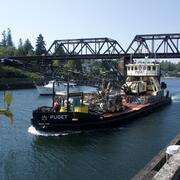
Integrating water availability in the Klamath Basin: from drought to dam removal

The USGS Water Resources Mission Area is assessing how much water is available for human and ecological needs in the United States and identifying where and when the Nation may have challenges meeting its demand for water. This information helps decision makers manage and distribute water in ways that balance competing needs. Due to its complex and competing water demands, ecological significance...
Integrating water availability in the Klamath Basin: from drought to dam removal

Integrating water availability in the Klamath Basin: from drought to dam removal

The USGS Water Resources Mission Area is assessing how much water is available for human and ecological needs in the United States and identifying where and when the Nation may have challenges meeting its demand for water. This information helps decision makers manage and distribute water in ways that balance competing needs. Due to its complex and competing water demands, ecological significance...
Learn More

Lake Washington Ship Canal Sustainable Rivers Project

The U.S. Geological Survey (USGS) and the U.S. Army Corps of Engineers (USACE) are refining a water quality model to better understand temperature and salinity dynamics in the Lake Washington Ship Canal. This effort is supported by the Sustainable Rivers Program, a partnership between the USACE and The Nature Conservancy (TNC).
Lake Washington Ship Canal Sustainable Rivers Project

Lake Washington Ship Canal Sustainable Rivers Project

The U.S. Geological Survey (USGS) and the U.S. Army Corps of Engineers (USACE) are refining a water quality model to better understand temperature and salinity dynamics in the Lake Washington Ship Canal. This effort is supported by the Sustainable Rivers Program, a partnership between the USACE and The Nature Conservancy (TNC).
Learn More

Bridge scour monitoring in Oregon

The U.S. Geological Survey is working with the Oregon Department of Transportation (ODOT) and Federal Highway Administration (FHWA) to revolutionize bridge scour monitoring using real-time sonar data collection and bathymetric surveying to remotely monitor sites, collect long-term data for evaluation, and develop and improve hydraulic models that predict scour.
Bridge scour monitoring in Oregon

Bridge scour monitoring in Oregon

The U.S. Geological Survey is working with the Oregon Department of Transportation (ODOT) and Federal Highway Administration (FHWA) to revolutionize bridge scour monitoring using real-time sonar data collection and bathymetric surveying to remotely monitor sites, collect long-term data for evaluation, and develop and improve hydraulic models that predict scour.
Learn More
New gages for understanding surface water availability and spring Chinook salmon habitat in the Willamette Basin

New gages for understanding surface water availability and spring Chinook salmon habitat in the Willamette Basin

Learn about our new streamgages in the Williamette River Basin.
Learn More

Integrated Water Science Basins: Willamette River

The Willamette River Basin reflects the conflicting water demands between humans and ecosystems—particularly salmon— and the challenge resource managers face throughout the Pacific Northwest.
Integrated Water Science Basins: Willamette River

Integrated Water Science Basins: Willamette River

The Willamette River Basin reflects the conflicting water demands between humans and ecosystems—particularly salmon— and the challenge resource managers face throughout the Pacific Northwest.
Learn More
Was this page helpful?