U.S. flag

An official website of the United States government

Videos

Explore USGS videos about the Landsat Program.

Filter Total Items: 67
Title slide with illustration of satellite above the Earth and text alongside Title slide with illustration of satellite above the Earth and text alongside
Landsat: Products & Services from the USGS - Webinar, September 2023

The USGS Earth Resources Observation and Science (EROS) Center maintains the largest civilian collection of images of the Earth’s land surface. At EROS we study land change and produce land change data products used by researchers, resource managers, and policymakers across the nation and around the world.

The USGS Earth Resources Observation and Science (EROS) Center maintains the largest civilian collection of images of the Earth’s land surface. At EROS we study land change and produce land change data products used by researchers, resource managers, and policymakers across the nation and around the world.

Landsat 1 First Light Image over Dallas, Texas Landsat 1 First Light Image over Dallas, Texas
Landsat Records 50 Years of Growth in Dallas-Fort Worth

Landsat 1 celebrated its 50th anniversary on July 23, 2022!

Landsat 1's first satellite image shared with the world was a view of Dallas-Fort Worth, Texas. Over the course of five decades, Landsat satellites have captured the Dallas-Fort Worth area 2033 times, compiled into individual scenes in the Landsat Archive.

Landsat 1 celebrated its 50th anniversary on July 23, 2022!

Landsat 1's first satellite image shared with the world was a view of Dallas-Fort Worth, Texas. Over the course of five decades, Landsat satellites have captured the Dallas-Fort Worth area 2033 times, compiled into individual scenes in the Landsat Archive.

Landsat: Celebrating 50 Years

The Landsat program conceived of in the 1960s, has been running longer than any remote sensing program. The idea was simple: position a satellite in a nearly polar orbit fixed to the solar angle so that each daytime pass would cross the equator at roughly the same local time.

The Landsat program conceived of in the 1960s, has been running longer than any remote sensing program. The idea was simple: position a satellite in a nearly polar orbit fixed to the solar angle so that each daytime pass would cross the equator at roughly the same local time.

Image of the Week - Landsat's 10 Millionth Scene

Landsat 7 had the honor of acquiring the satellite program’s 10 millionth scene in November 2021.

The scene captures changes to the Dead Sea, located in Southwest Asia. The Dead Sea is mainly fed by the Jordan River, which enters from the north. However, the water level of the Dead Sea has been falling due to irrigation projects and water use upstream.

Landsat 7 had the honor of acquiring the satellite program’s 10 millionth scene in November 2021.

The scene captures changes to the Dead Sea, located in Southwest Asia. The Dead Sea is mainly fed by the Jordan River, which enters from the north. However, the water level of the Dead Sea has been falling due to irrigation projects and water use upstream.

10 Millionth Landsat Image 10 Millionth Landsat Image
10 Millionth Landsat Image

Since 1972, Landsat satellites have continually acquired data about the Earth’s land surface. On November 23, 2021, the Landsat Archive that stores this vital record added its ten millionth scene.

The history of the area on display in that milestone scene offers insight into the value of the Landsat Program’s longevity to the scientific community.

Since 1972, Landsat satellites have continually acquired data about the Earth’s land surface. On November 23, 2021, the Landsat Archive that stores this vital record added its ten millionth scene.

The history of the area on display in that milestone scene offers insight into the value of the Landsat Program’s longevity to the scientific community.

Landsat 9 Underfly screenshot Landsat 9 Underfly screenshot
Landsat 9 Underfly, November 2021

The newly launched Landsat 9 experienced a once-in-a-mission lifetime event where its orbit was directly below Landsat 8 for an “underfly.” For several days in the middle of November, the pair of Earth-observing satellites flew together, collecting data at the same time for the same sites and requiring simultaneous downlinking to global ground station antennas.

The newly launched Landsat 9 experienced a once-in-a-mission lifetime event where its orbit was directly below Landsat 8 for an “underfly.” For several days in the middle of November, the pair of Earth-observing satellites flew together, collecting data at the same time for the same sites and requiring simultaneous downlinking to global ground station antennas.

Screenshot for video thumbnail of Landsat 9 first images Screenshot for video thumbnail of Landsat 9 first images
Image of the Week - Landsat 9 First Images!

Landsat 9 launched into space on September 27th, 2021. The "first light" images arrived on October 31st. On that day the satellite captured: algal blooms in Lake Erie, the glaciers of the Himalayas, bush fires in Australia's Eucalypt Woodlands, coastal communities on the Florida panhandle, and deserts, mountains and mesas across the Navajo Nation.

Landsat 9 launched into space on September 27th, 2021. The "first light" images arrived on October 31st. On that day the satellite captured: algal blooms in Lake Erie, the glaciers of the Himalayas, bush fires in Australia's Eucalypt Woodlands, coastal communities on the Florida panhandle, and deserts, mountains and mesas across the Navajo Nation.

A Legacy Continues with Landsat 9 Launch

Landsat 9 is a partnership between NASA and USGS. The satellite will continue the Landsat program’s mission to capture repeat snapshots of Earth to monitor, understand and manage natural resources.

Landsat 9 is a partnership between NASA and USGS. The satellite will continue the Landsat program’s mission to capture repeat snapshots of Earth to monitor, understand and manage natural resources.

Landsat 9 Launch Trajectory Animation

When #Landsat9 is launched from Lompoc, CA, a ULA Atlas V booster will lift it out over the Pacific Ocean, over 2,500 miles away in the first 15 minutes, rising quickly. If all goes as expected, about an hour later Landsat 9 will be in orbit, 438 miles high, falling around the Earth at 16,760 miles per hour, positioned to capture years of imagery.

When #Landsat9 is launched from Lompoc, CA, a ULA Atlas V booster will lift it out over the Pacific Ocean, over 2,500 miles away in the first 15 minutes, rising quickly. If all goes as expected, about an hour later Landsat 9 will be in orbit, 438 miles high, falling around the Earth at 16,760 miles per hour, positioned to capture years of imagery.

Landsat Launches - Looking Back

A short look back at the the history of Landsat launches through the historic articles of the Lompoc Record publication.

View AD version.

Landsat Launches - Looking Back (AD)

[Audio Descriptions]
A short look back at the the history of Landsat launches through the historic articles of the Lompoc Record publication.

View non-AD version.


Image of the Week - Fires Worldwide as Seen by Landsat 8

Landsat satellites acquire useful data on wildfires around the world. Their near infrared and shortwave infrared imaging allows for detection and mapping of fire, smoke, and burn scars often in remote areas.

In California: the Dixie Fire near Lake Almanor and the Caldor Fire near Lake Tahoe.

Landsat satellites acquire useful data on wildfires around the world. Their near infrared and shortwave infrared imaging allows for detection and mapping of fire, smoke, and burn scars often in remote areas.

In California: the Dixie Fire near Lake Almanor and the Caldor Fire near Lake Tahoe.

Earth Observation User Case: Speaking a New Language of Landsat

Social scientists at the U.S. Geological Survey (USGS) Fort Collins Science Center – in collaboration with the USGS National Land Imaging Program – conduct Earth observation user case studies using qualitative research methods.

Landsat in the Cloud: COGs and Notebooks

In the past, users spent 80% of their time downloading and preparing Landsat data to be processed. With Landsat in the cloud, you can get direct access to stream the Landsat archive without the need to download large amounts of files, by leveraging the Cloud Optimized Geotiff, or "COG".

In the past, users spent 80% of their time downloading and preparing Landsat data to be processed. With Landsat in the cloud, you can get direct access to stream the Landsat archive without the need to download large amounts of files, by leveraging the Cloud Optimized Geotiff, or "COG".

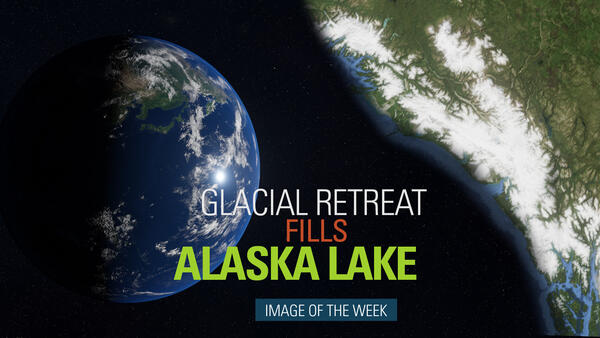
Image of the Week: Glacial Retreat Fills Alaska Lake

The visible impact of climate change on the Earth’s surface is often clearest in the Arctic’s receding glaciers and swelling glacial lakes. Southeastern Alaska’s Harlequin Lake is one of the fastest-growing in North America. These false color Landsat images show the rapidly-retreating Yakutat Glacier, which feeds the lake.

The visible impact of climate change on the Earth’s surface is often clearest in the Arctic’s receding glaciers and swelling glacial lakes. Southeastern Alaska’s Harlequin Lake is one of the fastest-growing in North America. These false color Landsat images show the rapidly-retreating Yakutat Glacier, which feeds the lake.

Earth Observation User Case: Using Landsat to Connect Space to Village

Social scientists at the U.S. Geological Survey (USGS) Fort Collins Science Center – in collaboration with the USGS National Land Imaging Program – conduct Earth observation user case studies using qualitative research methods.

Using Landsat and Machine Learning to Map Urban Change

Social scientists at the U.S. Geological Survey (USGS) Fort Collins Science Center – in collaboration with the USGS National Land Imaging Program – conduct Earth observation user case studies using qualitative research methods.

Social scientists at the U.S. Geological Survey (USGS) Fort Collins Science Center – in collaboration with the USGS National Land Imaging Program – conduct Earth observation user case studies using qualitative research methods.

Earth Observation User Case Study: Ladies of Landsat

Social scientists at the U.S. Geological Survey (USGS) Fort Collins Science Center – in collaboration with the USGS National Land Imaging Program – conduct Earth observation user case studies using qualitative research methods.

Social scientists at the U.S. Geological Survey (USGS) Fort Collins Science Center – in collaboration with the USGS National Land Imaging Program – conduct Earth observation user case studies using qualitative research methods.

Image of the Week - Landsat Archive Hits 9 Million Scenes

The Landsat archive is the world's longest continuously collected record of the Earth's surface. In mid September, it notched another milestone by adding its nine millionth scene. This particular image from north central Paraguay helps tell the kind of story that only a long historical record like Landsat can.

The Landsat archive is the world's longest continuously collected record of the Earth's surface. In mid September, it notched another milestone by adding its nine millionth scene. This particular image from north central Paraguay helps tell the kind of story that only a long historical record like Landsat can.

EROS in Action – Landsat Data Offers Relief to West African Farmers

Data products from the USGS Earth Resources Observation and Science (EROS) Center have long informed the delivery of food aid through a partnership with the Famine Early Warning Systems Network (FEWS NET).

Was this page helpful?