



Conservation Genetics
Conservation Genetics
Filter Total Items: 24

USGS Sagebrush Science: Supporting Public Safety and Economic Decision Making Across the West
The sagebrush biome is one of the largest ecosystems in North America. Encompassing nearly one-third of the continental U.S., it provides critical resources for millions of Americans and a home for hundreds of plants and animal species in the West. Natural resource management in sagebrush ecosystems can be complex, and science can support management decisions by providing knowledge and tools to...
By
Core Science Systems Mission Area, Ecosystems Mission Area, Biological Threats and Invasive Species Research Program, Climate Adaptation Science Centers, Cooperative Research Units, Land Management Research Program, Species Management Research Program, Earth Resources Observation and Science (EROS) Center , Forest and Rangeland Ecosystem Science Center, Fort Collins Science Center, Northern Rocky Mountain Science Center, Southwest Biological Science Center, Western Ecological Research Center (WERC), Wildland Fire Science

Molecular Ecology Lab (MEL)
The Molecular Ecology Laboratory applies innovative genetic and genomic technologies to address a variety of complex questions and issues facing the Nation's natural resources. While we continually update the scale and efficiency of laboratory procedures to meet stakeholder needs, we must also be innovative and flexible in addressing those needs that have no off-the-shelf solution. We help...
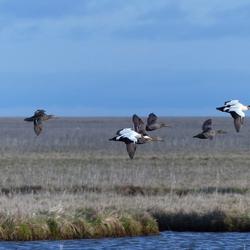
USGS Avian Research: Collaborative Science for Bird Management and Conservation
USGS scientists lead activities that are central to bird conservation and support both wildlife and communities. Through close collaboration with conservation partners, our scientists are meeting real-world needs—from maintaining sustainable harvest opportunities to advancing species recovery efforts.
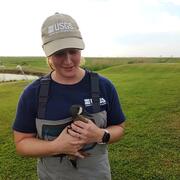
Science in Flight: Seven Ways Bird Science Serves Society
Explore seven case studies highlighting how USGS bird research informs real-world decisions.
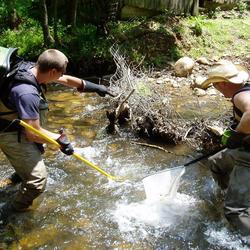
EESC Makes an Impact: Enhancing Recreational & Commercial Fishing
The USGS Eastern Ecological Science Center (EESC) provides world-class science to inform natural resource decisions on aquatic ecosystems, species populations and management, disease, and invasive species. Our scientific products represent critical contributions that enhance the ecological and economic sustainability of recreational and commercial fishing. In the United States, anglers contribute...

Research to support conservation of America’s national mammal, the bison
Once numbering in the tens of millions, plains bison ( Bison bison bison) were nearly driven to extinction with only a few hundred individuals remaining by the late 19th century. Plains bison have since recovered to approximately 20,000 animals managed in conservation herds throughout North America, yet substantial challenges to their recovery remain. The Department of the Interior (DOI) stewards...

Bison Conservation
USGS science in support of the Department of the Interior's Bison Conservation Initiative.

Genomics to Aid Conservation and restoration of the Yellow Lampmussel (Lampsilis cariosa) and Tidewater Mucket (Atlanticoncha ochracea)
Due to the rapid decline in abundance of Yellow Lampmussel ( Lampsilis cariosa) and Tidewater Mucket ( Atlanticoncha ochracea), USGS and partners at the U.S. Fish and Wildlife Service (USFWS) and Central Michigan University (CMU) are conducting an assessment of genetic diversity and population structure to inform appropriate recommendations for conservation and management of each species. These...

Flow Cytometry Applied to the Animal Kingdom in Studies of Natural Resource Science
Flow cytometry is a technique for rapidly analyzing large numbers of animal cells using light-scattering, fluorescence, and absorbance measurements.

Supporting Interstate Conservation of Atlantic Sturgeon (Acipenser o. oxyrinchus) Using Genetics, Telemetry, and Side-scan Sonar
USGS scientists are using innovative combinations of telemetry, genetics, and side-scan Sonar to support conservation of endangered Atlantic sturgeon ( Acipenser o. oxyrinchus).

Characterizing greater sage-grouse climate-driven maladaptation
Climate change will expose many species to novel extreme environmental conditions, that may test organisms’ ability to respond to environmental change. Local adaptation, when a species evolves to be more suited for its local environment, can be an indicator of whether a species is likely to persist in the rapidly changing environment. Habitat specialists, like the greater sage-grouse, have evolved...

Characterizing the environmental drivers of range-wide gene flow for greater sage-grouse
Widespread anthropogenic development in the sagebrush steppe and shifting drought and wildfire patterns have contributed to the observed dramatic declines of the greater sage-grouse since the 1960s. Alteration of the sagebrush habitat can affect many aspects of the species life history, including survival and local resource use. Over many years, the combined effects of landscape composition on...