



Interview With GLSC’s Nicole Watson About PhD Dissertation Research at Michigan State University Featured in Article About Arctic Grayling Reintroduction
Developing More Options for Managing Invasive Plants
GLSC Studies the Effect of Pausing Sea Lamprey Control Efforts During COVID
GLSC Teaches Preschool Students About Aquatic and Terrestrial Science of the Great Lakes
GLSC Invited to Great Lakes Angler Workshop
Great Lakes Science Center
Welcome! The Great Lakes Science Center (GLSC) is part of the Midcontinent Region of the USGS, DOI Regions 3 and 5. Our scientists work in the Great Lakes region and other parts of the country to meet the nation’s need for scientific information used by resource managers to restore, enhance, manage, and protect the living resources and habitats in the Great Lakes basin.


News
A Tale of Two Islands and the Future of an Ocean Sentinel Seabird
A Tale of Two Islands and the Future of an Ocean Sentinel Seabird
EcoNews - Vol. 7 | Issue 2
EcoNews - Vol. 7 | Issue 2
Tree rings provide an important multi-century context for the current wildfire crisis
Tree rings provide an important multi-century context for the current wildfire crisis
Publications
A framework for investigating fish population density responses to habitat fragmentation A framework for investigating fish population density responses to habitat fragmentation
Globally, fish populations that rely on rivers are being fragmented by in-stream barriers, but it is unclear how pervasive any negative population responses to fragmentation are. We developed a modeling framework for estimating density responses of fishes upstream and downstream of in-stream barriers and applied it to learn how low-head dams have influenced fish assemblages in 24 Great...
A genomic tool to tackle cryptic diversity demonstrates the potential for off-target use of GT-seq panels A genomic tool to tackle cryptic diversity demonstrates the potential for off-target use of GT-seq panels
A comprehensive understanding of life history is vital to successful species conservation and management. When different life history stages are accompanied by considerable morphological or cryptic variation, such as the egg and larval phases exhibited by most fishes, genomic tools are essential for identifying species so that early-life ecology questions can be studied. Genotyping-in...
Application of novel encounter and predation models to the natural behavior of slimy sculpin Cottus cognatus Application of novel encounter and predation models to the natural behavior of slimy sculpin Cottus cognatus
Sculpins play a critical mid-trophic role in lacustrine food webs, converting production by benthic and migrating pelagic invertebrates into biomass available to higher trophic levels. Although sculpin diets and habitat choices are relatively well described, much less is known about their in situ behavior which governs trophic interactions and, in part, prey behavior. We measured the...
Science
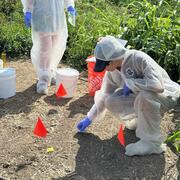
eDNA and the Efficacy of Management Actions
Environmental DNA (eDNA) is a powerful feedback tool, giving managers fast, clear, and cost-effective evidence to guide decisions and improve conservation outcomes.
By
Ecosystems Mission Area, Biological Threats and Invasive Species Research Program, Environmental Health Program, Species Management Research Program, Alaska Science Center, Columbia Environmental Research Center, Eastern Ecological Science Center, Forest and Rangeland Ecosystem Science Center, Fort Collins Science Center, Great Lakes Science Center, National Wildlife Health Center, Northern Prairie Wildlife Research Center, Northern Rocky Mountain Science Center, Pacific Island Ecosystems Research Center, Southwest Biological Science Center, Upper Midwest Environmental Sciences Center, Western Ecological Research Center (WERC), Western Fisheries Research Center, Wetland and Aquatic Research Center , Pacific Northwest Environmental DNA Laboratory
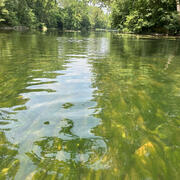
eDNA for Water-Quality Monitoring and Public Health Protection
By analyzing genetic traces left behind in water, eDNA provides early warning signs of problems—helping managers respond faster, protect public health, and keep freshwater ecosystems resilient.
By
Ecosystems Mission Area, Biological Threats and Invasive Species Research Program, Environmental Health Program, Alaska Science Center, Columbia Environmental Research Center, Eastern Ecological Science Center, Forest and Rangeland Ecosystem Science Center, Fort Collins Science Center, Great Lakes Science Center, National Wildlife Health Center, Northern Prairie Wildlife Research Center, Northern Rocky Mountain Science Center, Pacific Island Ecosystems Research Center, Upper Midwest Environmental Sciences Center, Western Ecological Research Center (WERC), Western Fisheries Research Center, Wetland and Aquatic Research Center , Pacific Northwest Environmental DNA Laboratory
eDNA Science for Species Management, Ecosystem Health, Biodiversity Monitoring, and Habitat Restoration
Using eDNA to track biodiversity, guide restoration, and safeguard ecosystems for the future.
By
Ecosystems Mission Area, Biological Threats and Invasive Species Research Program, Species Management Research Program, Alaska Science Center, Columbia Environmental Research Center, Eastern Ecological Science Center, Forest and Rangeland Ecosystem Science Center, Fort Collins Science Center, Great Lakes Science Center, National Wildlife Health Center, Northern Prairie Wildlife Research Center, Northern Rocky Mountain Science Center, Pacific Island Ecosystems Research Center, Southwest Biological Science Center, Upper Midwest Environmental Sciences Center, Western Ecological Research Center (WERC), Western Fisheries Research Center, Wetland and Aquatic Research Center , Pacific Northwest Environmental DNA Laboratory