



Interview With GLSC’s Nicole Watson About PhD Dissertation Research at Michigan State University Featured in Article About Arctic Grayling Reintroduction
Developing More Options for Managing Invasive Plants
GLSC Studies the Effect of Pausing Sea Lamprey Control Efforts During COVID
GLSC Teaches Preschool Students About Aquatic and Terrestrial Science of the Great Lakes
GLSC Invited to Great Lakes Angler Workshop
Great Lakes Science Center
Welcome! The Great Lakes Science Center (GLSC) is part of the Midcontinent Region of the USGS, DOI Regions 3 and 5. Our scientists work in the Great Lakes region and other parts of the country to meet the nation’s need for scientific information used by resource managers to restore, enhance, manage, and protect the living resources and habitats in the Great Lakes basin.


News
A Tale of Two Islands and the Future of an Ocean Sentinel Seabird
A Tale of Two Islands and the Future of an Ocean Sentinel Seabird
EcoNews - Vol. 7 | Issue 2
EcoNews - Vol. 7 | Issue 2
Tree rings provide an important multi-century context for the current wildfire crisis
Tree rings provide an important multi-century context for the current wildfire crisis
Publications
Genetic bottleneck and panmixia following the collapse of a Great Lakes lake whitefish fishery Genetic bottleneck and panmixia following the collapse of a Great Lakes lake whitefish fishery
Lake whitefish Coregonus clupeaformis abundance has declined throughout most of the Laurentian Great Lakes in North America for two decades. Current management strategies in Lake Erie assume that there is a single stock of lake whitefish that spawns in the West Basin. There is documented lake whitefish spawning activity throughout the lake, leading to questions about locally adapted...
Diet and trophic ecology of invasive Blue Catfish Ictalurus furcatus in an eastern shore tributary of the Chesapeake Bay Diet and trophic ecology of invasive Blue Catfish Ictalurus furcatus in an eastern shore tributary of the Chesapeake Bay
Blue Catfish Ictalurus furcatus were first introduced to Virginia tributaries of the Chesapeake Bay in the 1970s and have greatly expanded in population size and distribution, prompting ecological and economic concerns. This study investigates the diet and trophic ecology of invasive Blue Catfish in tidal, low-salinity reaches of the Nanticoke River and Marshyhope Creek, on the...
Arctic Grayling, scared to death: Are Brown Trout an impediment to Arctic Grayling reintroduction success in Michigan? Arctic Grayling, scared to death: Are Brown Trout an impediment to Arctic Grayling reintroduction success in Michigan?
Introduction: Arctic Grayling Thymallus arcticus were extirpated from Michigan in 1936. Their demise was caused by over-fishing, habitat destruction from large-scale logging, and Brook Trout Salvelinus fontinalis and Brown Trout Salmo trutta. Subsequently, Brook and Brown trout have become the dominant salmonid species in Michigan streams. Past attempts to restore Grayling to Michigan...
Science
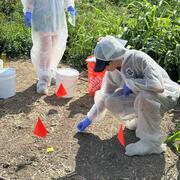
eDNA and the Efficacy of Management Actions
Environmental DNA (eDNA) is a powerful feedback tool, giving managers fast, clear, and cost-effective evidence to guide decisions and improve conservation outcomes.
By
Ecosystems Mission Area, Biological Threats and Invasive Species Research Program, Environmental Health Program, Species Management Research Program, Alaska Science Center, Columbia Environmental Research Center, Eastern Ecological Science Center, Forest and Rangeland Ecosystem Science Center, Fort Collins Science Center, Great Lakes Science Center, National Wildlife Health Center, Northern Prairie Wildlife Research Center, Northern Rocky Mountain Science Center, Pacific Island Ecosystems Research Center, Southwest Biological Science Center, Upper Midwest Environmental Sciences Center, Western Ecological Research Center (WERC), Western Fisheries Research Center, Wetland and Aquatic Research Center , Pacific Northwest Environmental DNA Laboratory
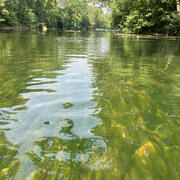
eDNA for Water-Quality Monitoring and Public Health Protection
By analyzing genetic traces left behind in water, eDNA provides early warning signs of problems—helping managers respond faster, protect public health, and keep freshwater ecosystems resilient.
By
Ecosystems Mission Area, Biological Threats and Invasive Species Research Program, Environmental Health Program, Alaska Science Center, Columbia Environmental Research Center, Eastern Ecological Science Center, Forest and Rangeland Ecosystem Science Center, Fort Collins Science Center, Great Lakes Science Center, National Wildlife Health Center, Northern Prairie Wildlife Research Center, Northern Rocky Mountain Science Center, Pacific Island Ecosystems Research Center, Upper Midwest Environmental Sciences Center, Western Ecological Research Center (WERC), Western Fisheries Research Center, Wetland and Aquatic Research Center , Pacific Northwest Environmental DNA Laboratory
eDNA Science for Species Management, Ecosystem Health, Biodiversity Monitoring, and Habitat Restoration
Using eDNA to track biodiversity, guide restoration, and safeguard ecosystems for the future.
By
Ecosystems Mission Area, Biological Threats and Invasive Species Research Program, Species Management Research Program, Alaska Science Center, Columbia Environmental Research Center, Eastern Ecological Science Center, Forest and Rangeland Ecosystem Science Center, Fort Collins Science Center, Great Lakes Science Center, National Wildlife Health Center, Northern Prairie Wildlife Research Center, Northern Rocky Mountain Science Center, Pacific Island Ecosystems Research Center, Southwest Biological Science Center, Upper Midwest Environmental Sciences Center, Western Ecological Research Center (WERC), Western Fisheries Research Center, Wetland and Aquatic Research Center , Pacific Northwest Environmental DNA Laboratory