



Ecosystems—whether agricultural, urban, or natural—depend on pollinators, great and small. Pollinators in the form of bees, birds, butterflies, bats, and even moths provide vital, but often invisible services, from contributing to biodiverse terrestrial wildlife and plant communities to supporting healthy watersheds. Pollinator declines worldwide have been noted as land-use and climate changes occur on the landscape. USGS is laying the groundwork for better scientific understanding of wildlife population level impacts from a variety of potential threats to species from big game to birds, to bats, to pollinators.
USGS Bee Lab at the Eastern Ecological Science Center

With our U.S. Fish and Wildlife Service partners, the USGS Bee Lab develops identification tools and keys for native bee species, takes public access high resolution photographs of bees, works with partners across the country, designs and tests bee counting techniques, documents bee/plant associations and confirms identification of native bee species.
U.S. Geological Survey Pollinator Science Strategy, 2025–35
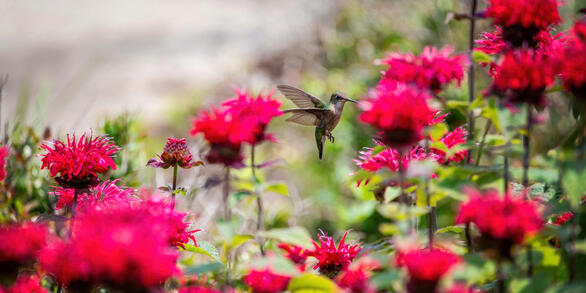
The Pollinator Science Strategy describes the science vision of the USGS to support management, conservation, and policy decisions on animal pollinators and their habitats.
Pollinator Conservation and Climate Science
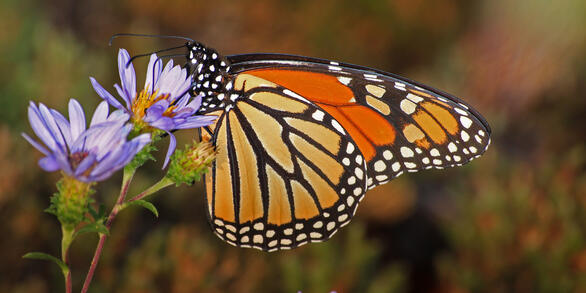
Pollinator species in the United States are in crisis based on broad-scale changes in land-use and climate. The USGS is working with the U.S. Fish and Wildlife Service and others to develop conservation plans, for pollinators, including quantification of the effects of climate change.
Pollinator Research
Explore published USGS pollinator datasets below.
Native Bee Genera in Colorado Conservation Reserve Program Fields, Collected from 2012-2014 Native Bee Genera in Colorado Conservation Reserve Program Fields, Collected from 2012-2014
Nutritional physiology of honey bee (Apis mellifera L.) workers across an agricultural land use gradient dataset Nutritional physiology of honey bee (Apis mellifera L.) workers across an agricultural land use gradient dataset
Influence of land use in the northern Great Plains on honey bee health and pollination service delivery, NPWRC (2015-2017) Influence of land use in the northern Great Plains on honey bee health and pollination service delivery, NPWRC (2015-2017)
Variation in pollen transport, Badlands NP, 2018 Variation in pollen transport, Badlands NP, 2018
Using colony monitoring devices to evaluate the impacts of land use and forage quality on honey bee health datasets Using colony monitoring devices to evaluate the impacts of land use and forage quality on honey bee health datasets
Radio telemetry data on nighttime movements of two species of migratory nectar-feeding bats (Leptonycteris) in Hidalgo County, New Mexico, late-summer 2004 and 2005 Radio telemetry data on nighttime movements of two species of migratory nectar-feeding bats (Leptonycteris) in Hidalgo County, New Mexico, late-summer 2004 and 2005
Soil, geomorphology and pre-European settlement vegetation associations of Southwest Louisiana Soil, geomorphology and pre-European settlement vegetation associations of Southwest Louisiana
Grassland quality and pollinator habitat potential in Southwest Louisiana Grassland quality and pollinator habitat potential in Southwest Louisiana
Recent publications related to USGS pollinator research are listed below. A complete listing of USGS pollinator publications is available from the button below.
U.S. Geological Survey Pollinator Science Strategy, 2025–35—A Review and Look Forward U.S. Geological Survey Pollinator Science Strategy, 2025–35—A Review and Look Forward
Priority species lists to restore desert tortoise and pollinator habitats in Mojave Desert shrublands Priority species lists to restore desert tortoise and pollinator habitats in Mojave Desert shrublands
Field-level exposure of bumble bees to fungicides applied to a commercial cherry orchard Field-level exposure of bumble bees to fungicides applied to a commercial cherry orchard
Long‐term surveys support declines in early‐season forest plants used by bumblebees Long‐term surveys support declines in early‐season forest plants used by bumblebees
Landscape characterization of floral resources for pollinators in the Prairie Pothole Region of the United States Landscape characterization of floral resources for pollinators in the Prairie Pothole Region of the United States
Roadside rights-of-way as pollinator habitat: A literature review Roadside rights-of-way as pollinator habitat: A literature review
Beyond neonicotinoids – Wild pollinators are exposed to a range of pesticides while foraging in agroecosystems Beyond neonicotinoids – Wild pollinators are exposed to a range of pesticides while foraging in agroecosystems
Toward improving pollinator habitat: Reconstructing prairies with high forb diversity Toward improving pollinator habitat: Reconstructing prairies with high forb diversity
Flowering plants preferred by bees of the Prairie Pothole Region Flowering plants preferred by bees of the Prairie Pothole Region
An updated genetic marker for detection of Lake Sinai Virus and metagenetic applications An updated genetic marker for detection of Lake Sinai Virus and metagenetic applications
Forage and habitat for pollinators in the northern Great Plains—Implications for U.S. Department of Agriculture conservation programs Forage and habitat for pollinators in the northern Great Plains—Implications for U.S. Department of Agriculture conservation programs
Wildfire reveals transient changes to individual traits and population responses of a native bumble bee (Bombus vosnesenskii) Wildfire reveals transient changes to individual traits and population responses of a native bumble bee (Bombus vosnesenskii)
Uptake and toxicity of clothianidin to monarch butterflies from milkweed consumption Uptake and toxicity of clothianidin to monarch butterflies from milkweed consumption
Ecosystems—whether agricultural, urban, or natural—depend on pollinators, great and small. Pollinators in the form of bees, birds, butterflies, bats, and even moths provide vital, but often invisible services, from contributing to biodiverse terrestrial wildlife and plant communities to supporting healthy watersheds. Pollinator declines worldwide have been noted as land-use and climate changes occur on the landscape. USGS is laying the groundwork for better scientific understanding of wildlife population level impacts from a variety of potential threats to species from big game to birds, to bats, to pollinators.
USGS Bee Lab at the Eastern Ecological Science Center
With our U.S. Fish and Wildlife Service partners, the USGS Bee Lab develops identification tools and keys for native bee species, takes public access high resolution photographs of bees, works with partners across the country, designs and tests bee counting techniques, documents bee/plant associations and confirms identification of native bee species.
U.S. Geological Survey Pollinator Science Strategy, 2025–35
The Pollinator Science Strategy describes the science vision of the USGS to support management, conservation, and policy decisions on animal pollinators and their habitats.
Pollinator Conservation and Climate Science
Pollinator species in the United States are in crisis based on broad-scale changes in land-use and climate. The USGS is working with the U.S. Fish and Wildlife Service and others to develop conservation plans, for pollinators, including quantification of the effects of climate change.
Pollinator Research
Explore published USGS pollinator datasets below.
Native Bee Genera in Colorado Conservation Reserve Program Fields, Collected from 2012-2014 Native Bee Genera in Colorado Conservation Reserve Program Fields, Collected from 2012-2014
Nutritional physiology of honey bee (Apis mellifera L.) workers across an agricultural land use gradient dataset Nutritional physiology of honey bee (Apis mellifera L.) workers across an agricultural land use gradient dataset
Influence of land use in the northern Great Plains on honey bee health and pollination service delivery, NPWRC (2015-2017) Influence of land use in the northern Great Plains on honey bee health and pollination service delivery, NPWRC (2015-2017)
Variation in pollen transport, Badlands NP, 2018 Variation in pollen transport, Badlands NP, 2018
Using colony monitoring devices to evaluate the impacts of land use and forage quality on honey bee health datasets Using colony monitoring devices to evaluate the impacts of land use and forage quality on honey bee health datasets
Radio telemetry data on nighttime movements of two species of migratory nectar-feeding bats (Leptonycteris) in Hidalgo County, New Mexico, late-summer 2004 and 2005 Radio telemetry data on nighttime movements of two species of migratory nectar-feeding bats (Leptonycteris) in Hidalgo County, New Mexico, late-summer 2004 and 2005
Soil, geomorphology and pre-European settlement vegetation associations of Southwest Louisiana Soil, geomorphology and pre-European settlement vegetation associations of Southwest Louisiana
Grassland quality and pollinator habitat potential in Southwest Louisiana Grassland quality and pollinator habitat potential in Southwest Louisiana
Recent publications related to USGS pollinator research are listed below. A complete listing of USGS pollinator publications is available from the button below.