



Extreme Hydrologic Event Monitoring
Extreme Hydrologic Event Monitoring
Filter Total Items: 28
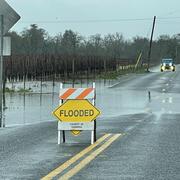
Interagency Flood-Typing and Mixed Population Studies
Flooding is a natural hazard that can cause extensive damage, result in casualties, loss of life and property, and shape landscapes. Understanding more about what caused past flood events, from snowmelt to excessive rainfall, can support future decision-making. The U.S. Geological Survey and U.S. Army Corps of Engineers (USACE) are collaboratively supporting the Federal Emergency Management Agency...

Integrated Water Science Basins: Willamette River
The Willamette River Basin reflects the conflicting water demands between humans and ecosystems—particularly salmon— and the challenge resource managers face throughout the Pacific Northwest.

Centennial Streamgages
Centennial Streamgages are USGS streamgages that have been in operation for more than 100 years.

USGS Flood Information
The USGS collects real-time flood data and conducts flood science to help keep communities safe before, during, and after a flood.
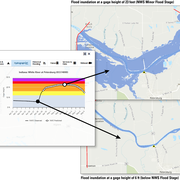
Flood Inundation Mapping Science
When planning for a flood, there are three key questions that must be answered: What areas will be flooded? How deep will the floodwaters get? When will the flood arrive? A flood inundation map library is a set of maps that together show where flooding may occur – and how deep it may be - over a range of potential flooding scenarios in a stream or river.
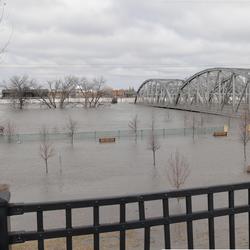
Flood Inundation Mapping (FIM) Program
The USGS Flood Inundation Mapping (FIM) Program helps communities protect lives and property by providing tools and information to help them understand their local flood risks and make cost-effective mitigation decisions.
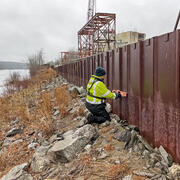
High-Water Marks
High-water marks are like footprints left behind by a flood — they show how high the water reached during a flood event. High-water marks serve as valuable data points for both educational purposes and scientific research, helping us understand past and recent flood events. Collecting this information is an essential and time-sensitive task for understanding flood risk and improving public safety.

National Water Monitoring Network
To manage our water resources effectively, we need to understand how much water is available and its usefulness. The USGS monitors the nation’s water resources through various national observing networks that use a range of technologies and methods to assess real-time water conditions and predict future changes in water availability for human and ecological uses.

Integrated Water Availability Assessments
The USGS Water Resources Mission Area is assessing how much water is available for human and ecological needs in the United States and identifying where and when the Nation may have challenges meeting its demand for water.

USGS National Streamgaging Network
As of October 2024, the USGS Groundwater and Streamflow Information Program supports the collection and (or) delivery of both streamflow and water-level information at 8,705 sites and water-level information alone at 3,460 additional sites. The data are served online—most in near real-time—to meet many diverse needs including the protection of life, property, the environment, and our economy.

Hydrologic Instrumentation Facility (HIF) Construction
The U.S. Geological Survey, in partnership with the University of Alabama, is constructing a new Hydrologic Instrumentation Facility, a science and engineering facility that will support our water observing networks and research.

Groundwater-Level Response to Earthquakes
Did you know that earthquakes can cause changes in groundwater levels? Very large earthquakes can even cause water-level fluctuations in some wells thousands of miles away, depending on the local geological conditions around the well.