Microscopic video imaging for computerized analysis of sperm motility
Microscopic video imaging for computerized analysis of sperm motilityMicroscopic video imaging is used for computerized analysis of sperm motility parameters
An official website of the United States government
Here's how you know
Official websites use .gov
A .gov website belongs to an official government organization in the United States.
Secure .gov websites use HTTPS
A lock () or https:// means you’ve safely connected to the .gov website. Share sensitive information only on official, secure websites.
Access all multimedia to include images, video, audio, webcams, before-after imagery, and more. Filter and explore with filtering options to refine search.
Microscopic video imaging is used for computerized analysis of sperm motility parameters
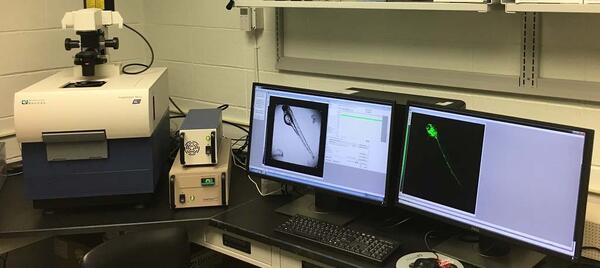
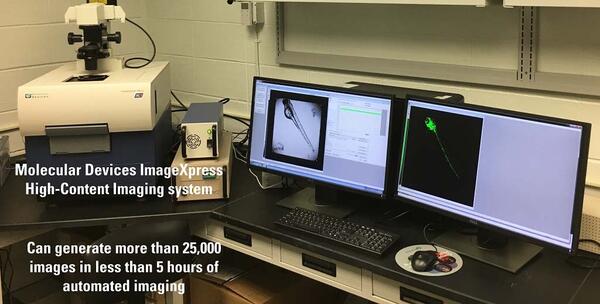
Molecular Devices ImageXpress† High-Content Imaging System that can generate more than 25,000 images in less than 5 hours of automated image acquisition.
Molecular Devices ImageXpress† High-Content Imaging System
Tablet-enabled field forms have been developed to help coordinate field efforts, collect site information, GPS coordinates, photos, and control data collection.
USGS scientists evaluating the nebulizer assembly in a mixed mode ionization source of a triple quadrupole mass spectrometer used to measure individual cyanotoxins
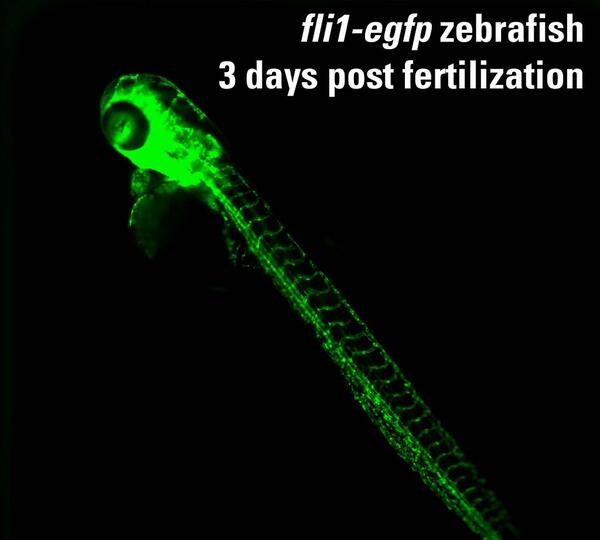
Using the 384-well plate format, a single zebrafish embryo is tested in each well. This is an example of a 72 hour post fertilization fli1:egfp zebrafish (3 millimeters long) imaged under a fluorescein isothiocyanate (FITC) filter.
Leidy Creek near Moran (13012465) streamgage
An otolith, sometimes called “earstone,” of a bloater, a small prey fish in the Great Lakes. Fishery scientists interpret the age of bloater and other fishes by counting annual growth rings on their otoliths.
South Fork Spread Creek near Moran (13012475) streamgage
USGS hydrologic technician Rob Forde flags a high water mark above the eaves at Presbyterian Church of the Covenant, 118 Manchester Road, Spring Hill, North Carolina on Sept. 21, 2018, in the wake of flooding brought on by Hurricane Florence.
Biologists from the USGS and Nature Conservancy identify a small fish captured during a September electrofishing survey on a tributary to Follensby Pond, Adirondack Mountains, New York
Field of Phragmites near Cedar Point, Ohio.
Grand Teton National Park in autumn.
Maintenance of a high-quality ShakeAlert sensors, power and telemetry stations.
Photos taken by the dive camera system of the lake bottom covering sections of sandy and rocky substrate with lots of dreissenid mussels dead and alive.
Upper Left: Dann Blackwood operating the SEABOSS winch during a sampling cruise; Lower left: Bill Schwab, Laura Brothers and Emile Bergeron on the deck of a research vessel; Center Left: Tom O'Brien carrying equipment during a research cruise; Center: USGS staff deploying a seismic system from a research vessel; left: Chuck Worley ready to deploy a multibeam e
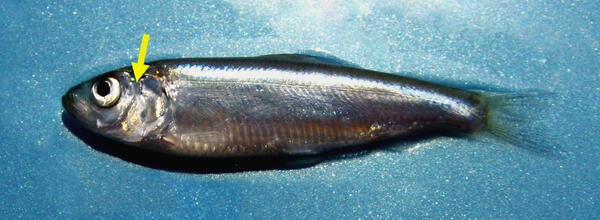
Otoliths are located directly behind the brain of bony fishes. On the young alewife shown here, the approximate location of the otoliths is noted with a yellow arrow.
This aerial view of the western part of Kīlauea Volcano's caldera was taken on August 6, 2018. The down-dropped block is faulted about 120 m (400 feet) below the caldera floor. Many 19th-century lava flows are exposed in the fault scarps. Halema‘uma‘u (not visible) is to the left of this photo. USGS photo by D.Swanson.
Skinny Common Murre with keel protruding. Lower Cook Inlet, Alaska
High-water marks provide valuable data for understanding recent and historical flood events. The proper collection and recording of high-water mark data from perishable and preserved evidence informs flood assessments, research, and water resource management.
ECCC Robot Assisted Vision Slide Two