



To understand information needs and respond to the many challenges in bird conservation, USGS scientists participate in Flyway committees, on Joint Venture boards and working groups, in professional organizations, and in other conservation partnerships. These activities connect USGS scientists to conservation partners with whom they work to address substantial challenges. More than one hundred USGS scientists are dedicated to the scientific study of birds.
USGS Bird Science Today
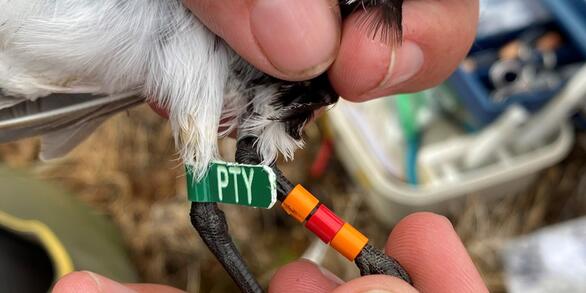
Read about the history of USGS bird research and the ways our science informs real-world decisions from sustaining hunting traditions to protecting at-risk bird species.
6 Birds USGS is Tracking
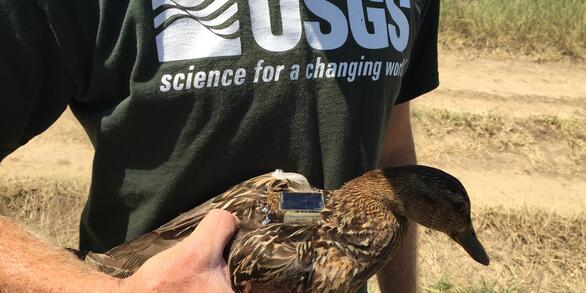
Using lightweight GPS transmitters and classic tools like bird bands, we track migratory birds in near real-time to study their flight paths and behaviors.
USGS Migratory Bird Science

This report highlights the 2021 scope of USGS work supporting migratory bird conservation and management, with contributions from 90 scientists.
Bird Research

Demographic Analysis of the Endangered Cape Sable Seaside Sparrow

Use and History of the North Pacific Pelagic Seabird Database (NPPSD)
Knowledge Synthesis of Cape Sable Seaside Sparrow Science

Productivity of Species of Concern – Least Tern and Common Tern on Poplar Island

Deep Learning for Automated Detection and Classification of Waterfowl, Seabirds, and other Wildlife from Digital Aerial Imagery

Fish and Wildlife seasonal and temporary wetland assessment

Post-fledging movement and habitat selection by mallards in the fall and their effect on spring recruitment

Managing for Grassland Health at Buenos Aires National Wildlife Refuge

Aerial Seabird and Marine Mammal Surveys

Modeling Spatial Habitat Quality for the Cape Sable Seaside Sparrow

Identification of Hydrologic Controls on Coastal Spartina patens Marshes and Optimal Hydrological Conditions for Sustainable Mottled Duck Habitat

Joint Ecosystem Modeling: Cape Sable Seaside Sparrow Helper

Joint Ecosystem Modeling: Wader Distribution & Evaluation Modeling (WADEM)

Aleutian Islands Ecosystem Recovery Studies

Science Informing the Status and Trends of Migratory Birds

Decision support for restoration and management of Service-owned native prairies: Implications for grassland bird communities

Importance of wetlands in intensively farmed landscapes to duck production

Evaluating wetland ecosystem health using real-time nutrient dynamics of ducks

Interactions of consolidation drainage and climate on water-level dynamics, wetland productivity, and waterbirds
Interaction of land use and wet/dry cycles on invertebrate populations of northern prairie wetlands: implications for waterbird habitat conservation

Inventory, mapping, estimation, and monitoring of least tern and piping plover habitats on the upper Missouri River using satellite imagery
To understand information needs and respond to the many challenges in bird conservation, USGS scientists participate in Flyway committees, on Joint Venture boards and working groups, in professional organizations, and in other conservation partnerships. These activities connect USGS scientists to conservation partners with whom they work to address substantial challenges. More than one hundred USGS scientists are dedicated to the scientific study of birds.
USGS Bird Science Today
Read about the history of USGS bird research and the ways our science informs real-world decisions from sustaining hunting traditions to protecting at-risk bird species.
6 Birds USGS is Tracking
Using lightweight GPS transmitters and classic tools like bird bands, we track migratory birds in near real-time to study their flight paths and behaviors.
USGS Migratory Bird Science
This report highlights the 2021 scope of USGS work supporting migratory bird conservation and management, with contributions from 90 scientists.
Bird Research
Demographic Analysis of the Endangered Cape Sable Seaside Sparrow
Use and History of the North Pacific Pelagic Seabird Database (NPPSD)
Knowledge Synthesis of Cape Sable Seaside Sparrow Science
Productivity of Species of Concern – Least Tern and Common Tern on Poplar Island
Deep Learning for Automated Detection and Classification of Waterfowl, Seabirds, and other Wildlife from Digital Aerial Imagery
Fish and Wildlife seasonal and temporary wetland assessment
Post-fledging movement and habitat selection by mallards in the fall and their effect on spring recruitment
Managing for Grassland Health at Buenos Aires National Wildlife Refuge
Aerial Seabird and Marine Mammal Surveys
Modeling Spatial Habitat Quality for the Cape Sable Seaside Sparrow
Identification of Hydrologic Controls on Coastal Spartina patens Marshes and Optimal Hydrological Conditions for Sustainable Mottled Duck Habitat
Joint Ecosystem Modeling: Cape Sable Seaside Sparrow Helper
Joint Ecosystem Modeling: Wader Distribution & Evaluation Modeling (WADEM)
Aleutian Islands Ecosystem Recovery Studies
Science Informing the Status and Trends of Migratory Birds
Decision support for restoration and management of Service-owned native prairies: Implications for grassland bird communities
Importance of wetlands in intensively farmed landscapes to duck production
Evaluating wetland ecosystem health using real-time nutrient dynamics of ducks
Interactions of consolidation drainage and climate on water-level dynamics, wetland productivity, and waterbirds
Interaction of land use and wet/dry cycles on invertebrate populations of northern prairie wetlands: implications for waterbird habitat conservation