
Phytoplankton nutrient enrichment experiment conducted as part of our toxins and harmful algal bloom research at Voyageurs National Park
James Larson
James Larson
Science and Products
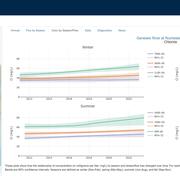
Investigating Links between Chloride and Harmful Algal Blooms in the Great Lakes
The USGS is investigating links between chloride concentrations in Great Lakes tributaries as a catalyst for Harmful Algal Blooms (HABs).
Decoding Harmful Algal Blooms: Unraveling the Mystery
Harmful algal blooms (HABs) are a significant environmental concern due to their potential effects on health, ecosystems, and economies. Algal toxins, which are toxic compounds produced by certain species of cyanobacteria and algae, are commonly linked to these blooms. It's important to note that algal toxins can still be present even when a bloom is not visible, highlighting the need for ongoing...
By
Ecosystems Mission Area, Contaminant Biology, Environmental Health Program, Toxic Substances Hydrology, California Water Science Center, Caribbean-Florida Water Science Center (CFWSC), Maryland-Delaware-D.C. Water Science Center, National Wildlife Health Center, Nevada Water Science Center, New England Water Science Center, New Jersey Water Science Center, New Mexico Water Science Center, South Atlantic Water Science Center (SAWSC), St. Petersburg Coastal and Marine Science Center, Upper Midwest Environmental Sciences Center, Upper Midwest Water Science Center
Nutrient Management for Harmful Algal Blooms: The Importance of Nitrogen and Micronutrients in the Great Lakes
Managing harmful algal blooms in the Great Lakes requires understanding the roles of nitrogen, phosphorus, and micronutrients, emphasizing a comprehensive approach beyond just phosphorus reduction.
Cyanobacteria: Harmful Algae Blooms
Cyanobacteria (a.k.a. blue-green algae) are photosynthetic bacteria that occur in a wide array of terrestrial and aquatic habitats. In freshwaters, cyanobacteria sometimes form extremely dense populations that are termed blooms or harmful algal blooms (HABs). When forming blooms, cyanobacteria cause a variety of environmental issues, but one of the most important is the production of compounds (i...
Prey Assemblage in Response to Stamp Sands Intrusion
Between 1902 and 1932, it is estimated that 22.7 million metric tons of copper-rich rock were processed in mills near Gay, MI, near Lake Superior. Waste rock from this process (so-called stamp sands) was deposited into a pile adjacent to the Lake Superior beach. Since 1932, these stamp sands have eroded from the original pile and along the shoreline to the south and west (Kerfoot et al. 2021)...
Nutrient Dynamics in Great Lake Tributaries
Harmful algae blooms can produce cyanotoxins that are harmful to humans, pets, livestock, and ecosystem health. Harmful algae blooms are a frequent occurrence in the Great Lakes, particularly in Lake Erie and Lake Michigan at the mouths of the Maumee and Fox Rivers and are partially caused by an excess of nutrients such as nitrogen and phosphorous in the water column.
Filter Total Items: 20
Results from experiments to measure the effect of nutrients on phytoplankton growth and potential toxin production in Kabetogama Lake (Minnesota, USA) during September 2021 and 2022 Results from experiments to measure the effect of nutrients on phytoplankton growth and potential toxin production in Kabetogama Lake (Minnesota, USA) during September 2021 and 2022
We performed short-term lab bioassays with nutrient enrichment on field-collected, naturally occurring phytoplankton communities. Naturally-occurring phytoplankton communities were collected from Kabetogama Lake (Minnesota, USA), which is a large lake located within Voyageurs National Park. Two experiments were performed in 2021 and two in 2022. Phytoplankton were raised in the lab under
Data from surface water and sediment nutrient processing experiments associated with the Maumee River (Toledo, OH) during the 2021 growing season Data from surface water and sediment nutrient processing experiments associated with the Maumee River (Toledo, OH) during the 2021 growing season
River-to-lake transitional zones or rivermouths are biogeochemically active sections of the aquatic continuum that are often understudied compared to their adjoining environments. Internal nutrient loading from these transitional zones may be a considerable source of nutrients to lakes and disconnect upstream management initiatives from in-lake improvements. To contextualize internal...
Data for the study of off-channel habitat use by silver carp and bighead carp in the upper Mississippi River 2017–2018 Data for the study of off-channel habitat use by silver carp and bighead carp in the upper Mississippi River 2017–2018
This dataset accompanies the article "Off-channel habitat use by silver carp (Hypophthalmichthys molitrix) and bighead carp (H. nobilis) in the upper Mississippi River". Acoustic telemetry data (Innovasea, Inc.) were collected on invasive silver carp (Hypophthalmichthys molitrix) and bighead carp (Hypophthalmichthys nobilis) in Pools 17-19 of the upper Mississippi River to examine timing...
Annual variation in summer phytoplankton communities influenced by river morphology and seasonal environmental conditions Annual variation in summer phytoplankton communities influenced by river morphology and seasonal environmental conditions
Phytoplankton samples were collected from the La Grange reach of the Illinois River from 2010-2020. Samples were collected from main channel, side channel and backwater areas. The following dataset includes phytoplankton community data (e.g., taxa, biovolume, cell counts, etc.). Any use of trade, firm, or product names is for descriptive purposes only and does not imply endorsement by...
Estimates of microcystin concentration and content using an enzyme-linked immunosorbent assay on samples collected from experiments on cyanobacteria in the Great Lakes and field data from the Mississippi River Estimates of microcystin concentration and content using an enzyme-linked immunosorbent assay on samples collected from experiments on cyanobacteria in the Great Lakes and field data from the Mississippi River
From 2017-2019, the Upper Midwest Environmental Sciences Center (UMESC) analyzed microcystin concentrations in samples collected from three different studies. The first study was on the movement and distribution of invasive carp (Bighead Carp, Silver Carp, Grass Carp) in the upper Mississippi River between lock and dam 16 and lock and dam 19. Samples were collected from May through...
Data from mesocosm experiments to assess metal and nutrient stimulation of Lake Erie and Lake Michigan phytoplankton communities, August 2017 Data from mesocosm experiments to assess metal and nutrient stimulation of Lake Erie and Lake Michigan phytoplankton communities, August 2017
To address how phytoplankton in the Great Lakes respond to macro- and micronutrients, we conducted a bottle incubation enrichment experiment using water collected from blooming (Maumee Bay and Fox River) and non-blooming sites (Detroit River and Ford River) in Lakes Erie and Michigan, respectively, during late summer. Surface water from these locations was collected and taken to Kent...
Phytoplankton nutrient enrichment experiment conducted as part of our toxins and harmful algal bloom research at Voyageurs National Park
Filter Total Items: 53
River-to-lake transitional areas contribute disproportionately to in-lake nutrient loading River-to-lake transitional areas contribute disproportionately to in-lake nutrient loading
River-to-lake transitional areas are biogeochemically active sections of the aquatic continuum that are often understudied compared to their adjoining environments. Internal nutrient loading from river-to-lake transitional areas may be a considerable source of nutrients to lakes and if overlooked disconnect upstream management initiatives from in-lake improvements. To contextualize...
Authors
Nolan J.T. Pearce, James H. Larson, Rebecca M. Kreiling, Mary Anne Evans, Sean Bailey, Kenna J. Gierke, Lynn Bartsch, Marguerite A. Xenopoulos, Paul C. Frost
Effect of copper mill waste material on benthic invertebrates and zooplankton diversity and abundance Effect of copper mill waste material on benthic invertebrates and zooplankton diversity and abundance
Copper (Cu) stamp mill mining in North America from the early 1900s produced a pulverized ore by-product now known as stamp sands (SS). In a mining operation near the city of Gay (Michigan, USA), SS were originally deposited near a Lake Superior beach, but erosion and wave action have moved many SS into beaches and reefs that are critical spawning and nursery areas for native fish (e.g...
Authors
James H. Larson, Michael R. Lowe, Sean Bailey, Amanda H. Bell, Danielle M. Cleveland
Possible influence of water level management on nutrient flux in nearshore sediments of Kabetogama Lake, Minnesota, USA Possible influence of water level management on nutrient flux in nearshore sediments of Kabetogama Lake, Minnesota, USA
Lake water level fluctuations are an important factor driving variation in many ecosystem processes. The nearshore sediments that are periodically exposed and re-inundated can develop distinct physical and chemical characteristics, especially in relationship to the organic matter content of the sediments and the particle size distribution. These sediment characteristics in turn can alter...
Authors
James H. Larson, Sean Bailey, Ryan P. Maki, Victoria Christensen, Erin A. Stelzer, James C. Smith, Jamie F. LeDuc, Seth McWhorter
Macro- and micronutrient effects on phytoplankton in Green Bay, Lake Michigan and the western basin of Lake Erie Macro- and micronutrient effects on phytoplankton in Green Bay, Lake Michigan and the western basin of Lake Erie
Efforts to reduce the frequency, extent, and toxicity of harmful algal blooms (HABs) require knowledge about drivers of algal growth, toxin production, and shifts in phytoplankton community composition to cyanobacterial dominance. Although labile nitrogen (N) and phosphorus (P) fuel primary production, micronutrients also play roles as the enzymatic engines that facilitate rapid and...
Authors
Jordyn T. Stoll, James H. Larson, Sean Bailey, Christopher Blackwood, David M. Costello
An assessment of N, P, Fe, Zn, Ni and Mo limitation on suspended nutrient diffusing substrates in nearshore areas of Lake Michigan and Lake Erie An assessment of N, P, Fe, Zn, Ni and Mo limitation on suspended nutrient diffusing substrates in nearshore areas of Lake Michigan and Lake Erie
In large lakes, metal availability sometimes limits the acquisition of nutrients (nitrogen, N and phosphorus, P) in offshore waters that are relatively isolated from tributaries and sediments. We hypothesize that metals may also be important within harmful algal blooms (HABs). HABs occur where nutrient loads are elevated, but bioassays often indicate that phytoplankton in HABs are N or P...
Authors
James H. Larson, David M. Costello, Jordyn T. Stoll, Andrea S. Fitzgibbon, Sean Bailey, Mary Anne Evans
U.S. Geological Survey Mississippi River Science Forum—Summary of data and science needs and next steps U.S. Geological Survey Mississippi River Science Forum—Summary of data and science needs and next steps
The U.S. Geological Survey hosted a Mississippi River Science Forum with Federal agencies; Tribal, State, and local governments located in States that border the Mississippi River; academia; and other interested stakeholders. The purpose of the forum was to share current (2023) science; identify data gaps and areas of concern; and to prioritize next steps needed to advance the goals of...
Authors
John C. Nelson, Richard A. Rebich, Kathi Jo Jankowski, Thea M. Edwards, James H. Larson, Dale M. Robertson, Lori A. Sprague, Sarah M. Stackpoole, Katherine M. Summers, Peter J. Cinotto, Paul H. Rydlund, Christopher J. Churchill, Wesley M. Daniel, Owen P. McKenna, Beth Middleton, Jacoby Carter, Stephen B. Hartley, Jeffrey W. Frey, Kelly L. Warner
Science and Products
Investigating Links between Chloride and Harmful Algal Blooms in the Great Lakes
The USGS is investigating links between chloride concentrations in Great Lakes tributaries as a catalyst for Harmful Algal Blooms (HABs).
Decoding Harmful Algal Blooms: Unraveling the Mystery
Harmful algal blooms (HABs) are a significant environmental concern due to their potential effects on health, ecosystems, and economies. Algal toxins, which are toxic compounds produced by certain species of cyanobacteria and algae, are commonly linked to these blooms. It's important to note that algal toxins can still be present even when a bloom is not visible, highlighting the need for ongoing...
By
Ecosystems Mission Area, Contaminant Biology, Environmental Health Program, Toxic Substances Hydrology, California Water Science Center, Caribbean-Florida Water Science Center (CFWSC), Maryland-Delaware-D.C. Water Science Center, National Wildlife Health Center, Nevada Water Science Center, New England Water Science Center, New Jersey Water Science Center, New Mexico Water Science Center, South Atlantic Water Science Center (SAWSC), St. Petersburg Coastal and Marine Science Center, Upper Midwest Environmental Sciences Center, Upper Midwest Water Science Center
Nutrient Management for Harmful Algal Blooms: The Importance of Nitrogen and Micronutrients in the Great Lakes
Managing harmful algal blooms in the Great Lakes requires understanding the roles of nitrogen, phosphorus, and micronutrients, emphasizing a comprehensive approach beyond just phosphorus reduction.
Cyanobacteria: Harmful Algae Blooms
Cyanobacteria (a.k.a. blue-green algae) are photosynthetic bacteria that occur in a wide array of terrestrial and aquatic habitats. In freshwaters, cyanobacteria sometimes form extremely dense populations that are termed blooms or harmful algal blooms (HABs). When forming blooms, cyanobacteria cause a variety of environmental issues, but one of the most important is the production of compounds (i...
Prey Assemblage in Response to Stamp Sands Intrusion
Between 1902 and 1932, it is estimated that 22.7 million metric tons of copper-rich rock were processed in mills near Gay, MI, near Lake Superior. Waste rock from this process (so-called stamp sands) was deposited into a pile adjacent to the Lake Superior beach. Since 1932, these stamp sands have eroded from the original pile and along the shoreline to the south and west (Kerfoot et al. 2021)...
Nutrient Dynamics in Great Lake Tributaries
Harmful algae blooms can produce cyanotoxins that are harmful to humans, pets, livestock, and ecosystem health. Harmful algae blooms are a frequent occurrence in the Great Lakes, particularly in Lake Erie and Lake Michigan at the mouths of the Maumee and Fox Rivers and are partially caused by an excess of nutrients such as nitrogen and phosphorous in the water column.
Filter Total Items: 20
Results from experiments to measure the effect of nutrients on phytoplankton growth and potential toxin production in Kabetogama Lake (Minnesota, USA) during September 2021 and 2022 Results from experiments to measure the effect of nutrients on phytoplankton growth and potential toxin production in Kabetogama Lake (Minnesota, USA) during September 2021 and 2022
We performed short-term lab bioassays with nutrient enrichment on field-collected, naturally occurring phytoplankton communities. Naturally-occurring phytoplankton communities were collected from Kabetogama Lake (Minnesota, USA), which is a large lake located within Voyageurs National Park. Two experiments were performed in 2021 and two in 2022. Phytoplankton were raised in the lab under
Data from surface water and sediment nutrient processing experiments associated with the Maumee River (Toledo, OH) during the 2021 growing season Data from surface water and sediment nutrient processing experiments associated with the Maumee River (Toledo, OH) during the 2021 growing season
River-to-lake transitional zones or rivermouths are biogeochemically active sections of the aquatic continuum that are often understudied compared to their adjoining environments. Internal nutrient loading from these transitional zones may be a considerable source of nutrients to lakes and disconnect upstream management initiatives from in-lake improvements. To contextualize internal...
Data for the study of off-channel habitat use by silver carp and bighead carp in the upper Mississippi River 2017–2018 Data for the study of off-channel habitat use by silver carp and bighead carp in the upper Mississippi River 2017–2018
This dataset accompanies the article "Off-channel habitat use by silver carp (Hypophthalmichthys molitrix) and bighead carp (H. nobilis) in the upper Mississippi River". Acoustic telemetry data (Innovasea, Inc.) were collected on invasive silver carp (Hypophthalmichthys molitrix) and bighead carp (Hypophthalmichthys nobilis) in Pools 17-19 of the upper Mississippi River to examine timing...
Annual variation in summer phytoplankton communities influenced by river morphology and seasonal environmental conditions Annual variation in summer phytoplankton communities influenced by river morphology and seasonal environmental conditions
Phytoplankton samples were collected from the La Grange reach of the Illinois River from 2010-2020. Samples were collected from main channel, side channel and backwater areas. The following dataset includes phytoplankton community data (e.g., taxa, biovolume, cell counts, etc.). Any use of trade, firm, or product names is for descriptive purposes only and does not imply endorsement by...
Estimates of microcystin concentration and content using an enzyme-linked immunosorbent assay on samples collected from experiments on cyanobacteria in the Great Lakes and field data from the Mississippi River Estimates of microcystin concentration and content using an enzyme-linked immunosorbent assay on samples collected from experiments on cyanobacteria in the Great Lakes and field data from the Mississippi River
From 2017-2019, the Upper Midwest Environmental Sciences Center (UMESC) analyzed microcystin concentrations in samples collected from three different studies. The first study was on the movement and distribution of invasive carp (Bighead Carp, Silver Carp, Grass Carp) in the upper Mississippi River between lock and dam 16 and lock and dam 19. Samples were collected from May through...
Data from mesocosm experiments to assess metal and nutrient stimulation of Lake Erie and Lake Michigan phytoplankton communities, August 2017 Data from mesocosm experiments to assess metal and nutrient stimulation of Lake Erie and Lake Michigan phytoplankton communities, August 2017
To address how phytoplankton in the Great Lakes respond to macro- and micronutrients, we conducted a bottle incubation enrichment experiment using water collected from blooming (Maumee Bay and Fox River) and non-blooming sites (Detroit River and Ford River) in Lakes Erie and Michigan, respectively, during late summer. Surface water from these locations was collected and taken to Kent...
Phytoplankton nutrient enrichment experiment
Phytoplankton nutrient enrichment experiment conducted as part of our toxins and harmful algal bloom research at Voyageurs National Park
Filter Total Items: 53
River-to-lake transitional areas contribute disproportionately to in-lake nutrient loading River-to-lake transitional areas contribute disproportionately to in-lake nutrient loading
River-to-lake transitional areas are biogeochemically active sections of the aquatic continuum that are often understudied compared to their adjoining environments. Internal nutrient loading from river-to-lake transitional areas may be a considerable source of nutrients to lakes and if overlooked disconnect upstream management initiatives from in-lake improvements. To contextualize...
Authors
Nolan J.T. Pearce, James H. Larson, Rebecca M. Kreiling, Mary Anne Evans, Sean Bailey, Kenna J. Gierke, Lynn Bartsch, Marguerite A. Xenopoulos, Paul C. Frost
Effect of copper mill waste material on benthic invertebrates and zooplankton diversity and abundance Effect of copper mill waste material on benthic invertebrates and zooplankton diversity and abundance
Copper (Cu) stamp mill mining in North America from the early 1900s produced a pulverized ore by-product now known as stamp sands (SS). In a mining operation near the city of Gay (Michigan, USA), SS were originally deposited near a Lake Superior beach, but erosion and wave action have moved many SS into beaches and reefs that are critical spawning and nursery areas for native fish (e.g...
Authors
James H. Larson, Michael R. Lowe, Sean Bailey, Amanda H. Bell, Danielle M. Cleveland
Possible influence of water level management on nutrient flux in nearshore sediments of Kabetogama Lake, Minnesota, USA Possible influence of water level management on nutrient flux in nearshore sediments of Kabetogama Lake, Minnesota, USA
Lake water level fluctuations are an important factor driving variation in many ecosystem processes. The nearshore sediments that are periodically exposed and re-inundated can develop distinct physical and chemical characteristics, especially in relationship to the organic matter content of the sediments and the particle size distribution. These sediment characteristics in turn can alter...
Authors
James H. Larson, Sean Bailey, Ryan P. Maki, Victoria Christensen, Erin A. Stelzer, James C. Smith, Jamie F. LeDuc, Seth McWhorter
Macro- and micronutrient effects on phytoplankton in Green Bay, Lake Michigan and the western basin of Lake Erie Macro- and micronutrient effects on phytoplankton in Green Bay, Lake Michigan and the western basin of Lake Erie
Efforts to reduce the frequency, extent, and toxicity of harmful algal blooms (HABs) require knowledge about drivers of algal growth, toxin production, and shifts in phytoplankton community composition to cyanobacterial dominance. Although labile nitrogen (N) and phosphorus (P) fuel primary production, micronutrients also play roles as the enzymatic engines that facilitate rapid and...
Authors
Jordyn T. Stoll, James H. Larson, Sean Bailey, Christopher Blackwood, David M. Costello
An assessment of N, P, Fe, Zn, Ni and Mo limitation on suspended nutrient diffusing substrates in nearshore areas of Lake Michigan and Lake Erie An assessment of N, P, Fe, Zn, Ni and Mo limitation on suspended nutrient diffusing substrates in nearshore areas of Lake Michigan and Lake Erie
In large lakes, metal availability sometimes limits the acquisition of nutrients (nitrogen, N and phosphorus, P) in offshore waters that are relatively isolated from tributaries and sediments. We hypothesize that metals may also be important within harmful algal blooms (HABs). HABs occur where nutrient loads are elevated, but bioassays often indicate that phytoplankton in HABs are N or P...
Authors
James H. Larson, David M. Costello, Jordyn T. Stoll, Andrea S. Fitzgibbon, Sean Bailey, Mary Anne Evans
U.S. Geological Survey Mississippi River Science Forum—Summary of data and science needs and next steps U.S. Geological Survey Mississippi River Science Forum—Summary of data and science needs and next steps
The U.S. Geological Survey hosted a Mississippi River Science Forum with Federal agencies; Tribal, State, and local governments located in States that border the Mississippi River; academia; and other interested stakeholders. The purpose of the forum was to share current (2023) science; identify data gaps and areas of concern; and to prioritize next steps needed to advance the goals of...
Authors
John C. Nelson, Richard A. Rebich, Kathi Jo Jankowski, Thea M. Edwards, James H. Larson, Dale M. Robertson, Lori A. Sprague, Sarah M. Stackpoole, Katherine M. Summers, Peter J. Cinotto, Paul H. Rydlund, Christopher J. Churchill, Wesley M. Daniel, Owen P. McKenna, Beth Middleton, Jacoby Carter, Stephen B. Hartley, Jeffrey W. Frey, Kelly L. Warner