
James Larson
James Larson
Science and Products
Using Water Level Management to Reduce Harmful Algae Bloom Toxicity
Cyanotoxin concentrations that exceed World Health Organization’s drinking water guidance were observed in ~50% of samples taken during bloom events at Lake Kabetogama in Voyagers National Park. Lake Kabetogama is part of a large lake complex that includes other connected lakes, outflows of which are regulated by man-made dams. Here, we are exploring whether dam management could influence the...
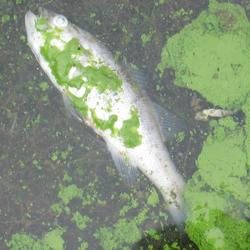
Toxins and Harmful Algal Blooms Science Team
The team develops advanced methods to study factors driving algal toxin production, how and where wildlife or humans are exposed to toxins, and ecotoxicology. That information is used to develop decision tools to understand if toxin exposure leads to adverse health effects in order to protect human and wildlife health.
Filter Total Items: 20
Measurement of benthic invertebrates, zooplankton, stamp sands and metals from four beaches near Keweenaw Bay, Lake Superior in 2021 Measurement of benthic invertebrates, zooplankton, stamp sands and metals from four beaches near Keweenaw Bay, Lake Superior in 2021
Between 1900 and 1932, a copper (Cu) mine operated near Gay, Michigan, along the shore of Lake Superior, discharged approximately 22.8 million metric tons of waste material known as ‘stamp sands’ (SS) to a nearby beach. This pile of SS has migrated via wind and rain along the beaches in northern Grand Traverse Bay and into Buffalo Reef, an important spawning area for Lake Trout and Lake...
Experimental results from intact core incubations of nearshore sediments in Lake Kabetogama, MN (2021, 2022) Experimental results from intact core incubations of nearshore sediments in Lake Kabetogama, MN (2021, 2022)
Lake water level fluctuations are an important factor driving variation in many ecosystem processes. The nearshore sediments that are periodically exposed and re-inundated can develop distinct physical and chemical characteristics, especially in relationship to the organic matter content of the sediments and the particle size distribution. These sediment characteristics in turn can alter...
Data associated with nutrient diffusing substrate experiments conducted in Lake Michigan and Lake Erie (2017) Data associated with nutrient diffusing substrate experiments conducted in Lake Michigan and Lake Erie (2017)
Metals are used in primary producer metabolic pathways, such as photosynthesis and the acquisition of macronutrients nitrogen (N) and phosphorus (P), yet we often do not know their potential as limiting nutrients in freshwaters. In the Great Lakes, metals have sometimes been identified as limiting the acquisition of macronutrients, mostly in off-shore waters that are relatively isolated...
Data from water column and sediment incubations from streams of Duck Creek and Fox River watersheds in Wisconsin, as well as the Fox rivermouth, the Saginaw rivermouth (Lake Huron, MI) and the Maumee rivermouth (Lake Erie, OH) Data from water column and sediment incubations from streams of Duck Creek and Fox River watersheds in Wisconsin, as well as the Fox rivermouth, the Saginaw rivermouth (Lake Huron, MI) and the Maumee rivermouth (Lake Erie, OH)
Nutrient reduction on the landscape scale often focuses on actions that reduce the movement of nitrogen (N) and phosphorus (P) from agricultural lands into streams and rivers. However, processing of N and P in streams and rivers can be substantial and increasing these in-stream processing rates could result in reductions or transformations of nutrients to less labile or less mobile forms...
Water column and sediment incubations to measure dissolved organic matter dynamics in the Fox rivermouth (Lake Michigan; 2016-2017) Water column and sediment incubations to measure dissolved organic matter dynamics in the Fox rivermouth (Lake Michigan; 2016-2017)
These data are associated with experiments performed in 2016 and 2017 in the Fox rivermouth (Green Bay, WI; Lake Michigan). Between the De Pere Dam and the Lake Michigan coastline, we performed experiments to measure water column transformation of dissolved organic matter (DOM) and sediment flux of DOM. These experiments consisted of incubations of surface water or intact sediment cores...
Response of natural phytoplankton communities from Green Bay (Lake Michigan) and Maumee Bay (Lake Erie) to laboratory manipulations of nutrient and trace metal availability during late summer 2018 Response of natural phytoplankton communities from Green Bay (Lake Michigan) and Maumee Bay (Lake Erie) to laboratory manipulations of nutrient and trace metal availability during late summer 2018
Microcystins (MC) are a class of cyanotoxins produced by many cyanobacteria taxa. Although toxic to metazoans, the evolution of microcystin pre-dates the appearance of metazoans, and so MC did not originate as a toxin to potential metazoan grazers. One hypothesized functional role of microcystin is the management and acquisition of metals, several of which form complexes with MC...
Filter Total Items: 53
Interdisciplinary science approach for harmful algal blooms (HABs) and algal toxins—A strategic science vision for the U.S. Geological Survey Interdisciplinary science approach for harmful algal blooms (HABs) and algal toxins—A strategic science vision for the U.S. Geological Survey
Executive Summary Algal blooms in water, soils, dusts, and the environment have captured national attention because of concerns associated with exposure to algal toxins for humans and animals. Algal blooms naturally occur in all surface-water types and are important primary producers for aquatic ecosystems. However, excessive algae growth can be associated with many harmful effects...
Authors
Victoria Christensen, Christopher J. Crawford, Robert J. Dusek, Michael Focazio, Lisa Fogarty, Jennifer Graham, Celeste Journey, Mari E. Lee, James Larson, Sarah Stackpoole, Viviana Mazzei, Emily Pindilli, Barnett A. Rattner, E. Slonecker, Kristen McSwain, Timothy Reilly, Ashley E. Lopez
By
Ecosystems Mission Area, Water Resources Mission Area, Environmental Health Program, Toxic Substances Hydrology, Central Plains Water Science Center, Earth Resources Observation and Science (EROS) Center , Kansas Water Science Center, National Wildlife Health Center, New Jersey Water Science Center, New York Water Science Center, South Atlantic Water Science Center (SAWSC), Upper Midwest Water Science Center, Landsat Missions
Global patterns of allochthony in stream–riparian meta-ecosystems Global patterns of allochthony in stream–riparian meta-ecosystems
Ecosystems that are coupled by reciprocal flows of energy and nutrient subsidies can be viewed as a single “meta-ecosystem.” Despite these connections, the reciprocal flow of subsidies is greatly asymmetrical and seasonally pulsed. Here, we synthesize existing literature on stream–riparian meta-ecosystems to quantify global patterns of the amount of subsidy consumption by organisms...
Authors
Daniel Allen, James Larson, Christina Murphy, Erica Garcia, Kurt Anderson, Michelle H. Busch, Alba Argerich, Alice Belskis, Kierstyn Higgins, Brooke Penaluna, Veronica Saenz, Jay E. Jones, Matt R. Whiles
Comparison of sediment and water column nutrient processing rates in agricultural streams of contrasting buffer land use Comparison of sediment and water column nutrient processing rates in agricultural streams of contrasting buffer land use
Watershed nutrient management often focuses on actions that reduce the movement of nitrogen (N) and phosphorus (P) from agricultural lands into streams. One area of management focus is the buffer of land adjacent to streams. Wetlands and forests in this buffer can intercept and retain N and P from the landscape. In addition to directly intercepting agricultural nutrients, natural...
Authors
James Larson, Sean Bailey, Rebecca Kreiling, Lynn A. Bartsch, Paul C. Frost, Marguerite A. Xenopoulos, Nolan Pearce, Mary Evans
Role of trace metal co-limitation in cyanobacterial blooms of Maumee Bay (Lake Erie) and Green Bay (Lake Michigan) Role of trace metal co-limitation in cyanobacterial blooms of Maumee Bay (Lake Erie) and Green Bay (Lake Michigan)
The open waters of large lakes can sometimes become so depleted in important metals that phytoplankton communities become either growth limited or limited in some metabolic function. Metals such as Fe, Ni, Mo, and Zn are used as co-factors for enzymes by phytoplankton in core metabolic functions, as well as metabolic pathways that allow phytoplankton to use less preferred forms of N and...
Authors
James Larson, Keith Loftin, Erin A. Stelzer, David Costello, Sean Bailey, Mary Evans, Carrie Givens, Lisa R. Fogarty
Dissolved organic matter transformations in a freshwater rivermouth Dissolved organic matter transformations in a freshwater rivermouth
River-to-lake transitional areas are biogeochemically active ecosystems that can alter the amount and composition of dissolved organic matter (DOM) as it moves through the aquatic continuum. However, few studies have directly measured carbon processing and assessed the carbon budget of freshwater rivermouths. We compiled measurements of dissolved organic carbon (DOC) and DOM in several...
Authors
Nolan Pearce, James Larson, Mary Evans, Sean Bailey, Paul C. Frost, William James, Marguerite A. Xenopoulos
Biofouling of a unionid mussel by dreissenid mussels in nearshore zones of the Great Lakes Biofouling of a unionid mussel by dreissenid mussels in nearshore zones of the Great Lakes
In North America, native unionid mussels are imperiled due to factors such as habitat degradation, pollution, and invasive species. One of the most substantial threats is that posed by dreissenid mussels, which are invasive mussels that attach to hard substrates including unionid shells and can restrict movement and feeding of unionids. This dreissenid mussel biofouling of unionids...
Authors
James Larson, Sean Bailey, Mary Evans
Science and Products
Using Water Level Management to Reduce Harmful Algae Bloom Toxicity
Cyanotoxin concentrations that exceed World Health Organization’s drinking water guidance were observed in ~50% of samples taken during bloom events at Lake Kabetogama in Voyagers National Park. Lake Kabetogama is part of a large lake complex that includes other connected lakes, outflows of which are regulated by man-made dams. Here, we are exploring whether dam management could influence the...
Toxins and Harmful Algal Blooms Science Team
The team develops advanced methods to study factors driving algal toxin production, how and where wildlife or humans are exposed to toxins, and ecotoxicology. That information is used to develop decision tools to understand if toxin exposure leads to adverse health effects in order to protect human and wildlife health.
Filter Total Items: 20
Measurement of benthic invertebrates, zooplankton, stamp sands and metals from four beaches near Keweenaw Bay, Lake Superior in 2021 Measurement of benthic invertebrates, zooplankton, stamp sands and metals from four beaches near Keweenaw Bay, Lake Superior in 2021
Between 1900 and 1932, a copper (Cu) mine operated near Gay, Michigan, along the shore of Lake Superior, discharged approximately 22.8 million metric tons of waste material known as ‘stamp sands’ (SS) to a nearby beach. This pile of SS has migrated via wind and rain along the beaches in northern Grand Traverse Bay and into Buffalo Reef, an important spawning area for Lake Trout and Lake...
Experimental results from intact core incubations of nearshore sediments in Lake Kabetogama, MN (2021, 2022) Experimental results from intact core incubations of nearshore sediments in Lake Kabetogama, MN (2021, 2022)
Lake water level fluctuations are an important factor driving variation in many ecosystem processes. The nearshore sediments that are periodically exposed and re-inundated can develop distinct physical and chemical characteristics, especially in relationship to the organic matter content of the sediments and the particle size distribution. These sediment characteristics in turn can alter...
Data associated with nutrient diffusing substrate experiments conducted in Lake Michigan and Lake Erie (2017) Data associated with nutrient diffusing substrate experiments conducted in Lake Michigan and Lake Erie (2017)
Metals are used in primary producer metabolic pathways, such as photosynthesis and the acquisition of macronutrients nitrogen (N) and phosphorus (P), yet we often do not know their potential as limiting nutrients in freshwaters. In the Great Lakes, metals have sometimes been identified as limiting the acquisition of macronutrients, mostly in off-shore waters that are relatively isolated...
Data from water column and sediment incubations from streams of Duck Creek and Fox River watersheds in Wisconsin, as well as the Fox rivermouth, the Saginaw rivermouth (Lake Huron, MI) and the Maumee rivermouth (Lake Erie, OH) Data from water column and sediment incubations from streams of Duck Creek and Fox River watersheds in Wisconsin, as well as the Fox rivermouth, the Saginaw rivermouth (Lake Huron, MI) and the Maumee rivermouth (Lake Erie, OH)
Nutrient reduction on the landscape scale often focuses on actions that reduce the movement of nitrogen (N) and phosphorus (P) from agricultural lands into streams and rivers. However, processing of N and P in streams and rivers can be substantial and increasing these in-stream processing rates could result in reductions or transformations of nutrients to less labile or less mobile forms...
Water column and sediment incubations to measure dissolved organic matter dynamics in the Fox rivermouth (Lake Michigan; 2016-2017) Water column and sediment incubations to measure dissolved organic matter dynamics in the Fox rivermouth (Lake Michigan; 2016-2017)
These data are associated with experiments performed in 2016 and 2017 in the Fox rivermouth (Green Bay, WI; Lake Michigan). Between the De Pere Dam and the Lake Michigan coastline, we performed experiments to measure water column transformation of dissolved organic matter (DOM) and sediment flux of DOM. These experiments consisted of incubations of surface water or intact sediment cores...
Response of natural phytoplankton communities from Green Bay (Lake Michigan) and Maumee Bay (Lake Erie) to laboratory manipulations of nutrient and trace metal availability during late summer 2018 Response of natural phytoplankton communities from Green Bay (Lake Michigan) and Maumee Bay (Lake Erie) to laboratory manipulations of nutrient and trace metal availability during late summer 2018
Microcystins (MC) are a class of cyanotoxins produced by many cyanobacteria taxa. Although toxic to metazoans, the evolution of microcystin pre-dates the appearance of metazoans, and so MC did not originate as a toxin to potential metazoan grazers. One hypothesized functional role of microcystin is the management and acquisition of metals, several of which form complexes with MC...
Filter Total Items: 53
Interdisciplinary science approach for harmful algal blooms (HABs) and algal toxins—A strategic science vision for the U.S. Geological Survey Interdisciplinary science approach for harmful algal blooms (HABs) and algal toxins—A strategic science vision for the U.S. Geological Survey
Executive Summary Algal blooms in water, soils, dusts, and the environment have captured national attention because of concerns associated with exposure to algal toxins for humans and animals. Algal blooms naturally occur in all surface-water types and are important primary producers for aquatic ecosystems. However, excessive algae growth can be associated with many harmful effects...
Authors
Victoria Christensen, Christopher J. Crawford, Robert J. Dusek, Michael Focazio, Lisa Fogarty, Jennifer Graham, Celeste Journey, Mari E. Lee, James Larson, Sarah Stackpoole, Viviana Mazzei, Emily Pindilli, Barnett A. Rattner, E. Slonecker, Kristen McSwain, Timothy Reilly, Ashley E. Lopez
By
Ecosystems Mission Area, Water Resources Mission Area, Environmental Health Program, Toxic Substances Hydrology, Central Plains Water Science Center, Earth Resources Observation and Science (EROS) Center , Kansas Water Science Center, National Wildlife Health Center, New Jersey Water Science Center, New York Water Science Center, South Atlantic Water Science Center (SAWSC), Upper Midwest Water Science Center, Landsat Missions
Global patterns of allochthony in stream–riparian meta-ecosystems Global patterns of allochthony in stream–riparian meta-ecosystems
Ecosystems that are coupled by reciprocal flows of energy and nutrient subsidies can be viewed as a single “meta-ecosystem.” Despite these connections, the reciprocal flow of subsidies is greatly asymmetrical and seasonally pulsed. Here, we synthesize existing literature on stream–riparian meta-ecosystems to quantify global patterns of the amount of subsidy consumption by organisms...
Authors
Daniel Allen, James Larson, Christina Murphy, Erica Garcia, Kurt Anderson, Michelle H. Busch, Alba Argerich, Alice Belskis, Kierstyn Higgins, Brooke Penaluna, Veronica Saenz, Jay E. Jones, Matt R. Whiles
Comparison of sediment and water column nutrient processing rates in agricultural streams of contrasting buffer land use Comparison of sediment and water column nutrient processing rates in agricultural streams of contrasting buffer land use
Watershed nutrient management often focuses on actions that reduce the movement of nitrogen (N) and phosphorus (P) from agricultural lands into streams. One area of management focus is the buffer of land adjacent to streams. Wetlands and forests in this buffer can intercept and retain N and P from the landscape. In addition to directly intercepting agricultural nutrients, natural...
Authors
James Larson, Sean Bailey, Rebecca Kreiling, Lynn A. Bartsch, Paul C. Frost, Marguerite A. Xenopoulos, Nolan Pearce, Mary Evans
Role of trace metal co-limitation in cyanobacterial blooms of Maumee Bay (Lake Erie) and Green Bay (Lake Michigan) Role of trace metal co-limitation in cyanobacterial blooms of Maumee Bay (Lake Erie) and Green Bay (Lake Michigan)
The open waters of large lakes can sometimes become so depleted in important metals that phytoplankton communities become either growth limited or limited in some metabolic function. Metals such as Fe, Ni, Mo, and Zn are used as co-factors for enzymes by phytoplankton in core metabolic functions, as well as metabolic pathways that allow phytoplankton to use less preferred forms of N and...
Authors
James Larson, Keith Loftin, Erin A. Stelzer, David Costello, Sean Bailey, Mary Evans, Carrie Givens, Lisa R. Fogarty
Dissolved organic matter transformations in a freshwater rivermouth Dissolved organic matter transformations in a freshwater rivermouth
River-to-lake transitional areas are biogeochemically active ecosystems that can alter the amount and composition of dissolved organic matter (DOM) as it moves through the aquatic continuum. However, few studies have directly measured carbon processing and assessed the carbon budget of freshwater rivermouths. We compiled measurements of dissolved organic carbon (DOC) and DOM in several...
Authors
Nolan Pearce, James Larson, Mary Evans, Sean Bailey, Paul C. Frost, William James, Marguerite A. Xenopoulos
Biofouling of a unionid mussel by dreissenid mussels in nearshore zones of the Great Lakes Biofouling of a unionid mussel by dreissenid mussels in nearshore zones of the Great Lakes
In North America, native unionid mussels are imperiled due to factors such as habitat degradation, pollution, and invasive species. One of the most substantial threats is that posed by dreissenid mussels, which are invasive mussels that attach to hard substrates including unionid shells and can restrict movement and feeding of unionids. This dreissenid mussel biofouling of unionids...
Authors
James Larson, Sean Bailey, Mary Evans