



This USGS map shows the number of PFAS detected in tap water samples from select sites across the nation. The findings are based on a USGS study of samples taken between 2016 and 2021 from private and public supplies at 716 locations. The map does not represent the only locations in the U.S. with PFAS.
Kelly Smalling
I am interested in the exposure and effects of contaminants including current-use pesticides and other endocrine active compounds on fish and wildlife with a focus on amphibian populations.
I am an environmental organic chemist who has been working with the USGS since 2004. My current research focuses on the occurrence, fate and effects of emerging contaminants including current-use pesticides in the environment. I am the lead for the Amphibian Research and Monitoring Initiative's Contaminants Project, the project coordinator of the "EDC effects on fish and wildlife in the Cheseapeake Bay Watershed" project through the Contaminants Biology Program, and a member of the Toxic Substances Hydrology Program's Pesticide Fate Research Team.
Science and Products
Filter Total Items: 30
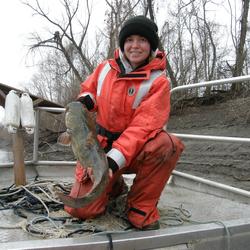
Invasive flathead catfish now top predators in Susquehanna River in Pennsylvania
New study suggests that smallmouth bass and channel catfish are changing what they eat to avoid having to compete with or being eaten by the invader
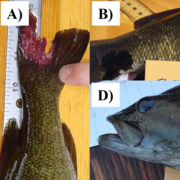
A regional assessment of fish health in the Chesapeake Bay watershed
Fish diseases in freshwater ecosystems pose significant ecological and socioeconomic challenges; yet, monitoring them in wild populations is complex due to interactions between pathogens, hosts, and environmental conditions. External DELT (deformity, erosion, lesion, tumor, and parasite) data (fig. 1) provide a rapid and broad measure of fish health but are a relatively coarse indicator that...
Per and Polyfluoroalkyl Substances (PFAS) in New Jersey surface waters
Scientists from the New Jersey Water Science Center are working with drinking water purveyors to assess the occurrence and distribution of per- and polyfluoroalkyl substances (PFAS) in New Jersey surface waters. These studies will enhance current water-quality assessments in NJ watersheds by characterizing PFAS occurrence in surface water at select locations that have the potential to directly...

Understanding the Dynamics of Per- and Polyfluoroalkyl Substances (PFAS): Insights from USGS Research
The USGS Environmental Health (EH) Program research where per- and polyfluoroalkyl substances PFAS are found, how they move and change in the environment, how they might affect both ecosystems and human health, and ways to reduce their impact. The three teams focusing on these issues within the EH Program include: 1) the PFAS Integrated Science Team, 2) the PFAS Core Technology Team, and 3) the...

Beneath the Surface: Exploring PFAS and Drinking Water on French Island, Wisconsin
The growing concern of finding per- and polyfluoroalkyl substances (PFAS) in drinking water has led USGS scientists to conduct more comprehensive analyses that encompass an extensive list of compounds that can be found in drinking water. These analyses will develop a more complete drinking water contaminant list that managers can use to make more informed public health decisions.

Preliminary Research Sheds Light on Proper Analysis and Sample Handling for the Tire-Derived Contaminants 6PPD and 6PPD-quinone
Tire and road wear particles have been shown to cause acute effects to sensitive aquatic animals and degrade their habitats. U.S. Geological Survey (USGS) scientists developed methods to accurately identify aquatic compounds, such as 6PPD and 6PPD-quinone, that can cause acute mortality events in coho salmon (Oncorhynchus kisutch).
By
Ecosystems Mission Area, Contaminant Biology, Environmental Health Program, Toxic Substances Hydrology, Central Midwest Water Science Center, Eastern Ecological Science Center, Kansas Water Science Center, New Jersey Water Science Center, Oklahoma-Texas Water Science Center, South Atlantic Water Science Center (SAWSC), Washington Water Science Center, Western Fisheries Research Center

PFAS in Select U.S. Tapwater Locations
This USGS map shows the number of PFAS detected in tap water samples from select sites across the nation. The findings are based on a USGS study of samples taken between 2016 and 2021 from private and public supplies at 716 locations. The map does not represent the only locations in the U.S. with PFAS.

Water Sampling for PFAS
A USGS scientist wearing black gloves is collecting a sample of tap water from the kitchen sink using small plastic vials to test for PFAS.
A USGS scientist wearing black gloves is collecting a sample of tap water from the kitchen sink using small plastic vials to test for PFAS.

Water Sampling at MacDonald Pond
USGS scientists collect water samples for chemical analysis from an excavated pond in the NJ Pinelands.
USGS scientists collect water samples for chemical analysis from an excavated pond in the NJ Pinelands.
Science and Products
Filter Total Items: 30
Invasive flathead catfish now top predators in Susquehanna River in Pennsylvania
New study suggests that smallmouth bass and channel catfish are changing what they eat to avoid having to compete with or being eaten by the invader
A regional assessment of fish health in the Chesapeake Bay watershed
Fish diseases in freshwater ecosystems pose significant ecological and socioeconomic challenges; yet, monitoring them in wild populations is complex due to interactions between pathogens, hosts, and environmental conditions. External DELT (deformity, erosion, lesion, tumor, and parasite) data (fig. 1) provide a rapid and broad measure of fish health but are a relatively coarse indicator that...
Per and Polyfluoroalkyl Substances (PFAS) in New Jersey surface waters
Scientists from the New Jersey Water Science Center are working with drinking water purveyors to assess the occurrence and distribution of per- and polyfluoroalkyl substances (PFAS) in New Jersey surface waters. These studies will enhance current water-quality assessments in NJ watersheds by characterizing PFAS occurrence in surface water at select locations that have the potential to directly...
Understanding the Dynamics of Per- and Polyfluoroalkyl Substances (PFAS): Insights from USGS Research
The USGS Environmental Health (EH) Program research where per- and polyfluoroalkyl substances PFAS are found, how they move and change in the environment, how they might affect both ecosystems and human health, and ways to reduce their impact. The three teams focusing on these issues within the EH Program include: 1) the PFAS Integrated Science Team, 2) the PFAS Core Technology Team, and 3) the...
Beneath the Surface: Exploring PFAS and Drinking Water on French Island, Wisconsin
The growing concern of finding per- and polyfluoroalkyl substances (PFAS) in drinking water has led USGS scientists to conduct more comprehensive analyses that encompass an extensive list of compounds that can be found in drinking water. These analyses will develop a more complete drinking water contaminant list that managers can use to make more informed public health decisions.
Preliminary Research Sheds Light on Proper Analysis and Sample Handling for the Tire-Derived Contaminants 6PPD and 6PPD-quinone
Tire and road wear particles have been shown to cause acute effects to sensitive aquatic animals and degrade their habitats. U.S. Geological Survey (USGS) scientists developed methods to accurately identify aquatic compounds, such as 6PPD and 6PPD-quinone, that can cause acute mortality events in coho salmon (Oncorhynchus kisutch).
By
Ecosystems Mission Area, Contaminant Biology, Environmental Health Program, Toxic Substances Hydrology, Central Midwest Water Science Center, Eastern Ecological Science Center, Kansas Water Science Center, New Jersey Water Science Center, Oklahoma-Texas Water Science Center, South Atlantic Water Science Center (SAWSC), Washington Water Science Center, Western Fisheries Research Center
PFAS in Select U.S. Tapwater Locations
This USGS map shows the number of PFAS detected in tap water samples from select sites across the nation. The findings are based on a USGS study of samples taken between 2016 and 2021 from private and public supplies at 716 locations. The map does not represent the only locations in the U.S. with PFAS.
This USGS map shows the number of PFAS detected in tap water samples from select sites across the nation. The findings are based on a USGS study of samples taken between 2016 and 2021 from private and public supplies at 716 locations. The map does not represent the only locations in the U.S. with PFAS.
Water Sampling for PFAS
A USGS scientist wearing black gloves is collecting a sample of tap water from the kitchen sink using small plastic vials to test for PFAS.
A USGS scientist wearing black gloves is collecting a sample of tap water from the kitchen sink using small plastic vials to test for PFAS.
Water Sampling at MacDonald Pond
USGS scientists collect water samples for chemical analysis from an excavated pond in the NJ Pinelands.
USGS scientists collect water samples for chemical analysis from an excavated pond in the NJ Pinelands.