



Emerging Diseases
Emerging Diseases
Filter Total Items: 23
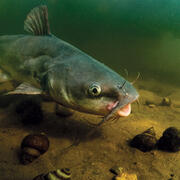
Contaminants in Blue Catfish: Implications for Human, Wildlife, and Environmental Health
As blue catfish become increasingly harvested, recent studies are showing signs that these fish may contain detectable levels of Per- and polyfluoroalkyl Substances (PFAS) and other contaminants. Measuring PFAS in their blood and heavy metals, Polychlorinated biphenyls (PCBs), and microplastics from filets will help determine potential health effects for people, animals, and the environment.
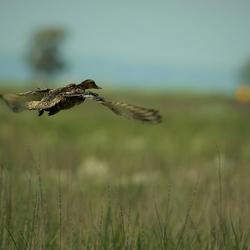
Avian Influenza Spread, Prevalence and Persistence
USGS researchers seek to understand the factors influencing the spread and persistence of avian influenza viruses on the landscape. This research also addresses how novel strains of highly pathogenic avian influenza are impacting a larger number and diversity of host species, including waterfowl, shorebirds, raptors and other birds.
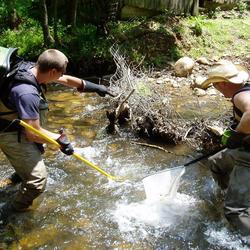
EESC Makes an Impact: Enhancing Recreational & Commercial Fishing
The USGS Eastern Ecological Science Center (EESC) provides world-class science to inform natural resource decisions on aquatic ecosystems, species populations and management, disease, and invasive species. Our scientific products represent critical contributions that enhance the ecological and economic sustainability of recreational and commercial fishing. In the United States, anglers contribute...
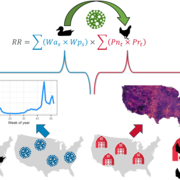
Advancing Risk Modeling for Highly Pathogenic Avian Influenza
Ongoing global outbreaks demonstrate the capacity of highly pathogenic avian influenza virus (HPAIV) to impact poultry, wild birds, and even human health. USGS research is advancing the understanding of the spatial and temporal interface between wild and domestic bird populations from which these viruses emerge to aid biosecurity planning and outbreak response.

Key Values of a Century of EESC Science
The USGS Eastern Ecological Science Center (EESC) is rooted in a proud tradition of service to the nation—advancing science that informs the conservation and management of fish, wildlife, and habitats across the eastern United States and beyond. Our mission is clear: deliver reliable, partner-driven science that supports natural resource decisions today, while ensuring these resources remain...

EESC Makes an Impact: Preserving our Hunting Resources
Hunting is an economic engine for the U.S. and responsible management of these resources directly supports 45.2 billion dollars spent by hunters annually. Conservation and management of hunting resources also contributes substantially to the 394.8 billion dollars spent on all wildlife-related recreation. Hunting traditions are an integral component of our American heritage, with 14.4 million...

Avian Influenza Host Movement Ecology
Understanding disease systems requires an understanding of the basic ecology of host species. USGS is involved in global efforts to explore the movements of bird species that are hosts of avian influenza as well as the potential impacts of changing landscapes on avian influenza.

Using Global Telemetry to Understand Avian Movement and Migration
USGS researchers are collaborating with partners around the globe to leverage new and existing telemetry data to answer broad scale questions about factors influencing avian movement and migration.

Avian Influenza Viral Pathogenicity
USGS is collaborating with numerous partner institutions to explore susceptibility and pathogenesis of relevant avian influenza strains in waterfowl species with special emphasis on sea ducks and diving ducks.
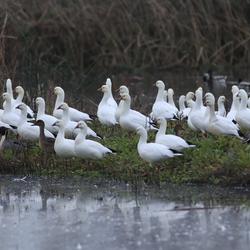
Identifying Spatial and Temporal Trends in Avian Influenza Prevalence in Wild Waterfowl Across the United States
USGS researchers are at the forefront of building and maintaining datasets that represent the spatial and temporal patterns in avian influenza virus prevalence in wild birds, which is critical information used to estimate transmission risk to domestic poultry.

Deriving Spatial and Temporal Waterfowl Inputs for Disease Risk Modeling
USGS is creating spatially and temporally explicit inputs to improve avian influenza transmission risk modeling. This project places special emphasis on wild bird distribution and abundance models as well as avian influenza prevalence models.
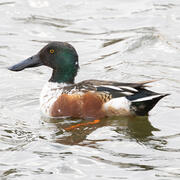
Developing Waterfowl Distribution and Abundance Models to Inform Avian Influenza Transmission Risk
USGS researchers are developing novel methods to improve our understanding of waterfowl distributions and abundance across the United States to inform a variety of ongoing disease studies. Understanding the distribution of wild waterfowl is a critical component to assessing avian influenza transmission risks across the landscape.