
U.S. flag

An official website of the United States government

Web Application Development

Filter Total Items: 27

Greater Sage-Grouse Population Monitoring Framework: Trends Analysis Information Sheet

Land and wildlife managers require accurate estimates of sensitive species’ trends to help guide conservation decisions that maintain biodiversity and promote healthy ecosystems. Accurately assessing greater sage-grouse ( Centrocercus urophasianus; sage-grouse) population trends can be difficult because (1) missing lek counts or incomplete repeat counts, (2) variation in counts of sage-grouse from...
Greater Sage-Grouse Population Monitoring Framework: Trends Analysis Information Sheet

Greater Sage-Grouse Population Monitoring Framework: Trends Analysis Information Sheet

Land and wildlife managers require accurate estimates of sensitive species’ trends to help guide conservation decisions that maintain biodiversity and promote healthy ecosystems. Accurately assessing greater sage-grouse ( Centrocercus urophasianus; sage-grouse) population trends can be difficult because (1) missing lek counts or incomplete repeat counts, (2) variation in counts of sage-grouse from...
Learn More

Prioritizing Restoration of Sagebrush Ecosystems Tool (PReSET): A USGS-facilitated Decision-support Tool for Sagebrush Ecosystem Conservation and Restoration Actions

Sagebrush ecosystems represent one of the most imperiled systems in North America and face continued and widespread degradation due to multiple factors including invasive species and increased human development. Effective sagebrush management must consider how to best conserve and restore habitats to stem the decline of species that rely on them, especially given limited conservation resources. To...
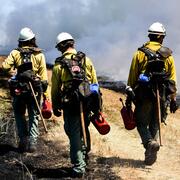
Prioritizing Restoration of Sagebrush Ecosystems Tool (PReSET): A USGS-facilitated Decision-support Tool for Sagebrush Ecosystem Conservation and Restoration Actions

Prioritizing Restoration of Sagebrush Ecosystems Tool (PReSET): A USGS-facilitated Decision-support Tool for Sagebrush Ecosystem Conservation and Restoration Actions

Sagebrush ecosystems represent one of the most imperiled systems in North America and face continued and widespread degradation due to multiple factors including invasive species and increased human development. Effective sagebrush management must consider how to best conserve and restore habitats to stem the decline of species that rely on them, especially given limited conservation resources. To...
Learn More

Siren: The National Early Detection and Rapid Response Information System

Siren: the National Early Detection and Rapid Response (EDRR) Information System is an online resource for invasive species information sharing and collaboration that serves as the information hub of the National EDRR Framework.
Siren: The National Early Detection and Rapid Response Information System

Siren: The National Early Detection and Rapid Response Information System

Siren: the National Early Detection and Rapid Response (EDRR) Information System is an online resource for invasive species information sharing and collaboration that serves as the information hub of the National EDRR Framework.
Learn More

A user-friendly decision support tool for monitoring and managing greater sage-grouse populations

Researchers within the U.S. Geological Survey (USGS) and Colorado State University (CSU) worked with BLM and State Wildlife Agencies to develop a hierarchical population monitoring framework for managing greater sage-grouse ( Centrocercus urophasianus) populations and the sagebrush ecosystems that they depend upon for survival and reproduction. This hierarchical population monitoring strategy now...
A user-friendly decision support tool for monitoring and managing greater sage-grouse populations

A user-friendly decision support tool for monitoring and managing greater sage-grouse populations

Researchers within the U.S. Geological Survey (USGS) and Colorado State University (CSU) worked with BLM and State Wildlife Agencies to develop a hierarchical population monitoring framework for managing greater sage-grouse ( Centrocercus urophasianus) populations and the sagebrush ecosystems that they depend upon for survival and reproduction. This hierarchical population monitoring strategy now...
Learn More

A targeted annual warning system (TAWS) for identifying aberrant declines in greater sage-grouse populations

Land and wildlife managers require accurate estimates of sensitive species’ trends to help guide conservation decisions that maintain biodiversity and promote healthy ecosystems. Researchers within the U.S. Geological Survey (USGS) and Colorado State University (CSU) worked with the Bureau of Land Management (BLM) and State Wildlife Agencies to develop a hierarchical population monitoring...
A targeted annual warning system (TAWS) for identifying aberrant declines in greater sage-grouse populations

A targeted annual warning system (TAWS) for identifying aberrant declines in greater sage-grouse populations

Land and wildlife managers require accurate estimates of sensitive species’ trends to help guide conservation decisions that maintain biodiversity and promote healthy ecosystems. Researchers within the U.S. Geological Survey (USGS) and Colorado State University (CSU) worked with the Bureau of Land Management (BLM) and State Wildlife Agencies to develop a hierarchical population monitoring...
Learn More

Spatiotemporal conditions of vegetation and invasive plant species on mine lands.

To support the Department of Interior's bureaus, states, and local communities, we are developing 1) a document highlighting remote sensing approaches that can be leveraged for site prioritization, recovery design, and long-term assessments of recovery trends, and 2) data products of vegetation conditions, change, recovery potential, and risk of exotic plant invasion on mine lands. We will...
Spatiotemporal conditions of vegetation and invasive plant species on mine lands.

Spatiotemporal conditions of vegetation and invasive plant species on mine lands.

To support the Department of Interior's bureaus, states, and local communities, we are developing 1) a document highlighting remote sensing approaches that can be leveraged for site prioritization, recovery design, and long-term assessments of recovery trends, and 2) data products of vegetation conditions, change, recovery potential, and risk of exotic plant invasion on mine lands. We will...
Learn More

Mapping Grassland Bird Community Distribution under a Changing Landscape

Researchers from the U.S. Geological Survey, the U.S. Department of Agriculture-Agricultural Research Service, and University of Arizona are studying the distribution of grassland bird communities across the western Great Plains to anticipate how species distributions may respond to a changing landscape.
Mapping Grassland Bird Community Distribution under a Changing Landscape

Mapping Grassland Bird Community Distribution under a Changing Landscape

Researchers from the U.S. Geological Survey, the U.S. Department of Agriculture-Agricultural Research Service, and University of Arizona are studying the distribution of grassland bird communities across the western Great Plains to anticipate how species distributions may respond to a changing landscape.
Learn More

Invasive Annual Grass (IAG) Spatial Dataset Compilation and Synthesis

USGS is working closely with partners in the Bureau of Land Management (BLM), U.S. Fish and Wildlife Service (USFWS), and the Intermountain West Joint Venture (IMJV) to collect and summarize spatial datasets that describe measurable aspects of invasive annual grasses (e.g., biomass or presence) across the western United Stated and beyond. The products developed through this project provide...
Invasive Annual Grass (IAG) Spatial Dataset Compilation and Synthesis

Invasive Annual Grass (IAG) Spatial Dataset Compilation and Synthesis

USGS is working closely with partners in the Bureau of Land Management (BLM), U.S. Fish and Wildlife Service (USFWS), and the Intermountain West Joint Venture (IMJV) to collect and summarize spatial datasets that describe measurable aspects of invasive annual grasses (e.g., biomass or presence) across the western United Stated and beyond. The products developed through this project provide...
Learn More

SageDAT: Data and Tools To Support Collaborative Sagebrush Ecosystem Conservation and Management

The USGS, the BLM, the FWS, and the Western Association of Fish and Wildlife Agencies have developed of a new DOI-funded effort, known as SageDAT.
SageDAT: Data and Tools To Support Collaborative Sagebrush Ecosystem Conservation and Management

SageDAT: Data and Tools To Support Collaborative Sagebrush Ecosystem Conservation and Management

The USGS, the BLM, the FWS, and the Western Association of Fish and Wildlife Agencies have developed of a new DOI-funded effort, known as SageDAT.
Learn More

Smart Energy Development: Tools for Informed Development & Successful Reclamation

The USGS is developing science and decision support tools to inform policy and management decisions about various aspects of the energy development life cycle.
Smart Energy Development: Tools for Informed Development & Successful Reclamation

Smart Energy Development: Tools for Informed Development & Successful Reclamation

The USGS is developing science and decision support tools to inform policy and management decisions about various aspects of the energy development life cycle.
Learn More

USGS Data at Risk: Expanding Legacy Data Inventory and Preservation Strategies

As one of the largest and oldest science organizations in the world, USGS has produced more than a century of earth science data, much of which is currently unavailable to the greater scientific community due to inaccessible or obsolescent media, formats, and technology. Tapping this vast wealth of “dark data” requires 1) a complete inventory of legacy data and 2) methods and tools to...
USGS Data at Risk: Expanding Legacy Data Inventory and Preservation Strategies

USGS Data at Risk: Expanding Legacy Data Inventory and Preservation Strategies

As one of the largest and oldest science organizations in the world, USGS has produced more than a century of earth science data, much of which is currently unavailable to the greater scientific community due to inaccessible or obsolescent media, formats, and technology. Tapping this vast wealth of “dark data” requires 1) a complete inventory of legacy data and 2) methods and tools to effectively
Learn More

Data and Tools for Landscape Assessment

The Information Science Branch develops and applies approaches that integrate natural science, computer technology, and information management to address key natural resource issues. Branch staff work with USGS scientists and data managers to convert field observations into GIS-oriented data and metadata products. The Branch also supports ecological and landscape modeling, including the...
Data and Tools for Landscape Assessment

Data and Tools for Landscape Assessment

The Information Science Branch develops and applies approaches that integrate natural science, computer technology, and information management to address key natural resource issues. Branch staff work with USGS scientists and data managers to convert field observations into GIS-oriented data and metadata products. The Branch also supports ecological and landscape modeling, including the...
Learn More
Was this page helpful?