



Interview With GLSC’s Nicole Watson About PhD Dissertation Research at Michigan State University Featured in Article About Arctic Grayling Reintroduction
Developing More Options for Managing Invasive Plants
GLSC Studies the Effect of Pausing Sea Lamprey Control Efforts During COVID
GLSC Teaches Preschool Students About Aquatic and Terrestrial Science of the Great Lakes
GLSC Invited to Great Lakes Angler Workshop
Great Lakes Science Center
Welcome! The Great Lakes Science Center (GLSC) is part of the Midcontinent Region of the USGS, DOI Regions 3 and 5. Our scientists work in the Great Lakes region and other parts of the country to meet the nation’s need for scientific information used by resource managers to restore, enhance, manage, and protect the living resources and habitats in the Great Lakes basin.


News
A Tale of Two Islands and the Future of an Ocean Sentinel Seabird
A Tale of Two Islands and the Future of an Ocean Sentinel Seabird
EcoNews - Vol. 7 | Issue 2
EcoNews - Vol. 7 | Issue 2
Tree rings provide an important multi-century context for the current wildfire crisis
Tree rings provide an important multi-century context for the current wildfire crisis
Publications
Bayesian hierarchical model of lake whitefish cohort strength from sparse trawl data Bayesian hierarchical model of lake whitefish cohort strength from sparse trawl data
Recruitment indices for rare or intermittently recruiting fishes are needed to compare year classes and evaluate recruitment drivers, but sparse trawl data with many zero-catch observations complicate estimation. We used fall bottom trawl data from New York, Pennsylvania, and Ohio surveys in Lake Erie's central and eastern basins to estimate annual relative cohort strength of age-0 lake...
Lake trout colonization of artificial reefs: Who’s interested, and how long does it take? Lake trout colonization of artificial reefs: Who’s interested, and how long does it take?
Restoring self-sustaining lake trout (Salvelinus namaycush) populations has been a major management objective for decades across the species’ native range. Reproduction has been observed but recruitment has been limited in many areas of the Laurentian Great Lakes. Reef restoration and construction have been proposed to increase recruitment, leading to the construction of experimental...
Is "weediness" and "invasiveness" of weeds a function of the plant microbiome? Is "weediness" and "invasiveness" of weeds a function of the plant microbiome?
Over the past several decades, the extent to which microbes enhance plant development and health has become clearer; however, this has not been explored in terms of the aggressiveness and hardiness of weedy plants. In this review, we explore the hypothesis that many features of weeds and invasive plants are related to the activities of plant microbiomes. Microbes contribute to weed...
Science
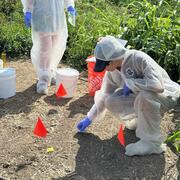
eDNA and the Efficacy of Management Actions
Environmental DNA (eDNA) is a powerful feedback tool, giving managers fast, clear, and cost-effective evidence to guide decisions and improve conservation outcomes.
By
Ecosystems Mission Area, Biological Threats and Invasive Species Research Program, Environmental Health Program, Species Management Research Program, Alaska Science Center, Columbia Environmental Research Center, Eastern Ecological Science Center, Forest and Rangeland Ecosystem Science Center, Fort Collins Science Center, Great Lakes Science Center, National Wildlife Health Center, Northern Prairie Wildlife Research Center, Northern Rocky Mountain Science Center, Pacific Island Ecosystems Research Center, Southwest Biological Science Center, Upper Midwest Environmental Sciences Center, Western Ecological Research Center (WERC), Western Fisheries Research Center, Wetland and Aquatic Research Center , Pacific Northwest Environmental DNA Laboratory
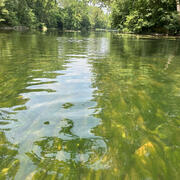
eDNA for Water-Quality Monitoring and Public Health Protection
By analyzing genetic traces left behind in water, eDNA provides early warning signs of problems—helping managers respond faster, protect public health, and keep freshwater ecosystems resilient.
By
Ecosystems Mission Area, Biological Threats and Invasive Species Research Program, Environmental Health Program, Alaska Science Center, Columbia Environmental Research Center, Eastern Ecological Science Center, Forest and Rangeland Ecosystem Science Center, Fort Collins Science Center, Great Lakes Science Center, National Wildlife Health Center, Northern Prairie Wildlife Research Center, Northern Rocky Mountain Science Center, Pacific Island Ecosystems Research Center, Upper Midwest Environmental Sciences Center, Western Ecological Research Center (WERC), Western Fisheries Research Center, Wetland and Aquatic Research Center , Pacific Northwest Environmental DNA Laboratory
eDNA Science for Species Management, Ecosystem Health, Biodiversity Monitoring, and Habitat Restoration
Using eDNA to track biodiversity, guide restoration, and safeguard ecosystems for the future.
By
Ecosystems Mission Area, Biological Threats and Invasive Species Research Program, Species Management Research Program, Alaska Science Center, Columbia Environmental Research Center, Eastern Ecological Science Center, Forest and Rangeland Ecosystem Science Center, Fort Collins Science Center, Great Lakes Science Center, National Wildlife Health Center, Northern Prairie Wildlife Research Center, Northern Rocky Mountain Science Center, Pacific Island Ecosystems Research Center, Southwest Biological Science Center, Upper Midwest Environmental Sciences Center, Western Ecological Research Center (WERC), Western Fisheries Research Center, Wetland and Aquatic Research Center , Pacific Northwest Environmental DNA Laboratory