



Coastal wetlands are among the most productive and valuable ecosystems in the world—comparable to even rainforests and coral reefs.
Videos
Pacific Coastal and Marine Science Center videos.
Filter Total Items: 110

Coastal Wetlands (AD)
Coastal wetlands are among the most productive and valuable ecosystems in the world—comparable to even rainforests and coral reefs.
Coastal Wetlands
Coastal wetlands are among the most productive and valuable ecosystems in the world—comparable to even rainforests and coral reefs.
Coastal wetlands are among the most productive and valuable ecosystems in the world—comparable to even rainforests and coral reefs.

Coastal Change in Arctic Alaska (AD)
The Arctic region is warming faster than anywhere else in the nation. Understanding the rates and causes of coastal change in Alaska is needed to identify and mitigate hazards that might affect people and animals that call Alaska home.
The Arctic region is warming faster than anywhere else in the nation. Understanding the rates and causes of coastal change in Alaska is needed to identify and mitigate hazards that might affect people and animals that call Alaska home.
Coastal Change in Arctic Alaska
The Arctic region is warming faster than anywhere else in the nation. Understanding the rates and causes of coastal change in Alaska is needed to identify and mitigate hazards that might affect people and animals that call Alaska home.
The Arctic region is warming faster than anywhere else in the nation. Understanding the rates and causes of coastal change in Alaska is needed to identify and mitigate hazards that might affect people and animals that call Alaska home.

Reducing Flood Risks by Restoring Coral Reefs (AD)
Reducing Flood Risks by Restoring Coral Reefs (AD)
The increasing risk of flooding along our coasts is driven by climate change, development and habitat loss.
Reducing Flood Risks by Restoring Coral Reefs (AD)
Reducing Flood Risks by Restoring Coral Reefs (AD)
The increasing risk of flooding along our coasts is driven by climate change, development and habitat loss.

Reducing Flood Risks by Restoring Coral Reefs

Ferromanganese Nodules—2021 North Atlantic Stepping Stones Expedition
Ferromanganese Nodules—2021 North Atlantic Stepping Stones ExpeditionDuring a recent dive on the New England Seamount chain off the North Atlantic coast, researchers aboard the NOAA Ocean Exploration Expedition, North Atlantic Stepping Stones, discovered a marine geological feature known as a ferromanganese (Fe-Mn) nodule field in the saddle between two peaks of Gosnold Seamount.
Ferromanganese Nodules—2021 North Atlantic Stepping Stones Expedition
Ferromanganese Nodules—2021 North Atlantic Stepping Stones ExpeditionDuring a recent dive on the New England Seamount chain off the North Atlantic coast, researchers aboard the NOAA Ocean Exploration Expedition, North Atlantic Stepping Stones, discovered a marine geological feature known as a ferromanganese (Fe-Mn) nodule field in the saddle between two peaks of Gosnold Seamount.

Ferromanganese Nodules—2021 North Atlantic Stepping Stones Exped. (AD)
Ferromanganese Nodules—2021 North Atlantic Stepping Stones Exped. (AD)During a recent dive on the New England Seamount chain off the North Atlantic coast, researchers aboard the NOAA Ocean Exploration Expedition, North Atlantic Stepping Stones, discovered a marine geological feature known as a ferromanganese (Fe-Mn) nodule field in the saddle between two peaks of Gosnold Seamount.
Ferromanganese Nodules—2021 North Atlantic Stepping Stones Exped. (AD)
Ferromanganese Nodules—2021 North Atlantic Stepping Stones Exped. (AD)During a recent dive on the New England Seamount chain off the North Atlantic coast, researchers aboard the NOAA Ocean Exploration Expedition, North Atlantic Stepping Stones, discovered a marine geological feature known as a ferromanganese (Fe-Mn) nodule field in the saddle between two peaks of Gosnold Seamount.

NOAA-USGS Stepping Stones 2021 Expedition
Join USGS researchers Jason Chaytor and Kira Mizell as they virtually participate in a NOAA Ocean Exploration expedition to the depths of the North Atlantic.
Join USGS researchers Jason Chaytor and Kira Mizell as they virtually participate in a NOAA Ocean Exploration expedition to the depths of the North Atlantic.

NOAA-USGS Stepping Stones 2021 Expedition - AD
Join USGS researchers Jason Chaytor and Kira Mizell as they virtually participate in a NOAA Ocean Exploration expedition to the depths of the North Atlantic.
Join USGS researchers Jason Chaytor and Kira Mizell as they virtually participate in a NOAA Ocean Exploration expedition to the depths of the North Atlantic.

USGS Coastal Change Hazards (AD)
The USGS Coastal Change Hazards team works to identify and address the Nation’s coastal change hazards problems. By integrating research, technical capabilities and applications, and stakeholder engagement and communications, the Coastal Change Hazards team develops robust and accessible coastal change assessments, forecasts, and tools that help improve the lives,
The USGS Coastal Change Hazards team works to identify and address the Nation’s coastal change hazards problems. By integrating research, technical capabilities and applications, and stakeholder engagement and communications, the Coastal Change Hazards team develops robust and accessible coastal change assessments, forecasts, and tools that help improve the lives,

USGS Coastal Change Hazards
The USGS Coastal Change Hazards team works to identify and address the Nation’s coastal change hazards problems. By integrating research, technical capabilities and applications, and stakeholder engagement and communications, the Coastal Change Hazards team develops robust and accessible coastal change assessments, forecasts, and tools that help improve the lives,
The USGS Coastal Change Hazards team works to identify and address the Nation’s coastal change hazards problems. By integrating research, technical capabilities and applications, and stakeholder engagement and communications, the Coastal Change Hazards team develops robust and accessible coastal change assessments, forecasts, and tools that help improve the lives,

We are the Coastal and Marine Hazards and Resources Program (AD)
We are the Coastal and Marine Hazards and Resources Program (AD)We are the USGS Coastal and Marine Hazards and Resources Program. Our mission is to provide science for sustainable stewardship of Earth’s precious resources.
We are the Coastal and Marine Hazards and Resources Program (AD)
We are the Coastal and Marine Hazards and Resources Program (AD)We are the USGS Coastal and Marine Hazards and Resources Program. Our mission is to provide science for sustainable stewardship of Earth’s precious resources.

We are the Coastal and Marine Hazards and Resources Program
We are the Coastal and Marine Hazards and Resources ProgramWe are the USGS Coastal and Marine Hazards and Resources Program. Our mission is to provide science for sustainable stewardship of Earth’s precious resources.
We are the Coastal and Marine Hazards and Resources Program
We are the Coastal and Marine Hazards and Resources ProgramWe are the USGS Coastal and Marine Hazards and Resources Program. Our mission is to provide science for sustainable stewardship of Earth’s precious resources.

How Our Reefs Protect Us: Valuing the Benefits of U.S. Reefs
How Our Reefs Protect Us: Valuing the Benefits of U.S. ReefsThe degradation of coastal habitats, particularly coral reefs, raises risks by increasing the exposure of coastal communities to flooding hazards during storms. The protective services of these natural defenses are not assessed in the same rigorous economic terms as artificial defenses, such as seawalls, and therefore often are not considered in decision-making.
How Our Reefs Protect Us: Valuing the Benefits of U.S. Reefs
How Our Reefs Protect Us: Valuing the Benefits of U.S. ReefsThe degradation of coastal habitats, particularly coral reefs, raises risks by increasing the exposure of coastal communities to flooding hazards during storms. The protective services of these natural defenses are not assessed in the same rigorous economic terms as artificial defenses, such as seawalls, and therefore often are not considered in decision-making.
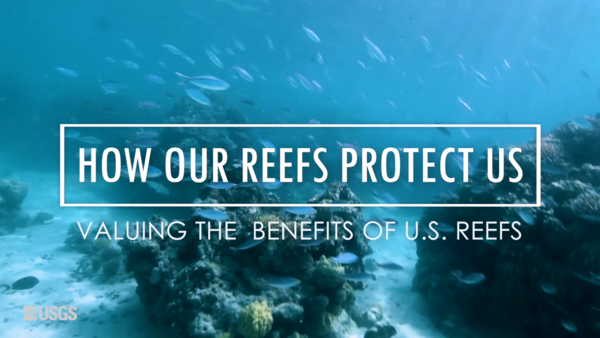
How Our Reefs Protect Us: Valuing the Benefits of U.S. Reefs (AD)
How Our Reefs Protect Us: Valuing the Benefits of U.S. Reefs (AD)The degradation of coastal habitats, particularly coral reefs, raises risks by increasing the exposure of coastal communities to flooding hazards during storms. The protective services of these natural defenses are not assessed in the same rigorous economic terms as artificial defenses, such as seawalls, and therefore often are not considered in decision-making.
How Our Reefs Protect Us: Valuing the Benefits of U.S. Reefs (AD)
How Our Reefs Protect Us: Valuing the Benefits of U.S. Reefs (AD)The degradation of coastal habitats, particularly coral reefs, raises risks by increasing the exposure of coastal communities to flooding hazards during storms. The protective services of these natural defenses are not assessed in the same rigorous economic terms as artificial defenses, such as seawalls, and therefore often are not considered in decision-making.

PubTalk 11/2019 —Sea-Level Rise, Extreme Water Levels, Coastal Erosion
PubTalk 11/2019 —Sea-Level Rise, Extreme Water Levels, Coastal ErosionTitle: Sea-Level Rise, Extreme Water Levels, and Coastal Erosion ... How bad could it possibly be?
PubTalk 11/2019 —Sea-Level Rise, Extreme Water Levels, Coastal Erosion
PubTalk 11/2019 —Sea-Level Rise, Extreme Water Levels, Coastal ErosionTitle: Sea-Level Rise, Extreme Water Levels, and Coastal Erosion ... How bad could it possibly be?

Animation depicting seasonal cycles on Alaska's Arctic bluffs
Animation depicting seasonal cycles on Alaska's Arctic bluffsIn the spring, winter sea ice thaws and moves offshore leaving the coast exposed to increased wave action and relatively warm water temperatures that, when in contact with the bluff, erodes the toe of the bluff.
Animation depicting seasonal cycles on Alaska's Arctic bluffs
Animation depicting seasonal cycles on Alaska's Arctic bluffsIn the spring, winter sea ice thaws and moves offshore leaving the coast exposed to increased wave action and relatively warm water temperatures that, when in contact with the bluff, erodes the toe of the bluff.

Time-lapse video of bluff erosion on Barter Island, Alaska
Time-lapse video of bluff erosion on Barter Island, AlaskaRecorded June 1, 2019 - August 18, 2019: Video shows a series of photos taken every hour during daylight hours in the summer of 2019. The camera looks westward along the coastal bluffs of Barter Island, located on Alaska’s North Slope.
Time-lapse video of bluff erosion on Barter Island, Alaska
Time-lapse video of bluff erosion on Barter Island, AlaskaRecorded June 1, 2019 - August 18, 2019: Video shows a series of photos taken every hour during daylight hours in the summer of 2019. The camera looks westward along the coastal bluffs of Barter Island, located on Alaska’s North Slope.
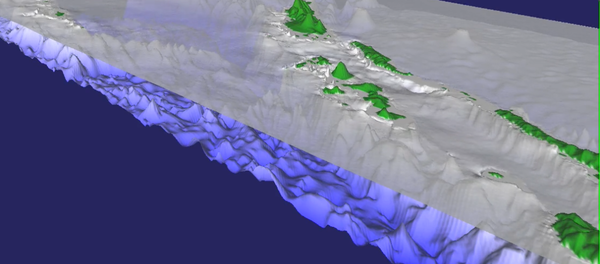
Preliminary simulation of the tsunami from the April 2007 M=8.1 earthquake in the Solomon Islands - NW
Preliminary simulation of the tsunami from the April 2007 M=8.1 earthquake in the Solomon Islands - NWPreliminary simulation of the tsunami from the April 2007 M=8.1 earthquake in the Solomon Islands. Viewpoint looks to the northwest across the Solomon Sea. The first 73 minutes of propagation is shown.
Preliminary simulation of the tsunami from the April 2007 M=8.1 earthquake in the Solomon Islands - NW
Preliminary simulation of the tsunami from the April 2007 M=8.1 earthquake in the Solomon Islands - NWPreliminary simulation of the tsunami from the April 2007 M=8.1 earthquake in the Solomon Islands. Viewpoint looks to the northwest across the Solomon Sea. The first 73 minutes of propagation is shown.
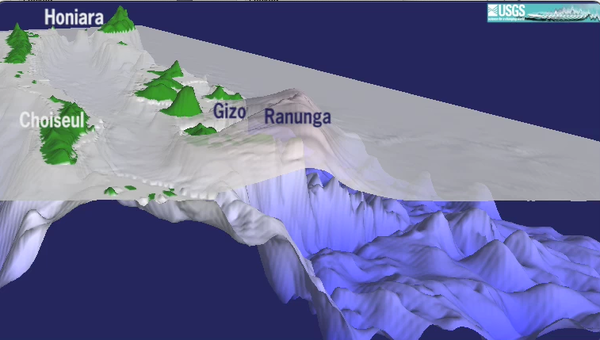
Preliminary simulation of the tsunami from the April 2007 M=8.1 earthquake in the Solomon Islands - SE
Preliminary simulation of the tsunami from the April 2007 M=8.1 earthquake in the Solomon Islands - SEPreliminary simulation of the tsunami from the April 2007 M=8.1 earthquake in the Solomon Islands. Viewpoint looks to the southeast toward Honiara. The first 73 minutes of propagation is shown.
Preliminary simulation of the tsunami from the April 2007 M=8.1 earthquake in the Solomon Islands - SE
Preliminary simulation of the tsunami from the April 2007 M=8.1 earthquake in the Solomon Islands - SEPreliminary simulation of the tsunami from the April 2007 M=8.1 earthquake in the Solomon Islands. Viewpoint looks to the southeast toward Honiara. The first 73 minutes of propagation is shown.