



The Colorado River Basin's Millennium Drought
Is it drought or something more permanent?
Is it drought or something more permanent?
U.S. Geological Survey Dust Science
USGS Science Collaboration Portal for the Colorado River Basin
Saline Lake Ecosystems Integrated Water Availability Assessment
Why do migratory and other waterbirds choose to use the terminal lake and wetland habitats they do in the Great Basin?
Great Salt Lake Hydro Mapper
Great Salt Lake Elevations
USGS Uncrewed Aircraft Systems (UAS)
NEW APP for Monthly Streamflow Conditions in Utah
Easily view, compare, and download monthly medians or means.
Easily view, compare, and download monthly medians or means.
Surface Water in Utah
Groundwater in Utah
Utah Water Science Center
Welcome to the USGS Utah Water Science Center webpage. We collaborate with many partners to monitor, assess, conduct targeted research, and deliver information on a wide range of water resources. Explore some of our work through these pages.
National Water Dashboard
National Water Dashboard

Use the National Water Dashboard to access real-time stream, lake, reservoir, and groundwater information.
Groundwater Conditions in Utah
Groundwater Conditions in Utah

Groundwater Conditions Reports were published annually from 1964 through 2019. Now groundwater information is digitally available from the Groundwater Conditions App.
Quick Links
Quick Links
News
Geospatial Applications to Visualize Science and Support Decision‑Making Across Scales
Geospatial Applications to Visualize Science and Support Decision‑Making Across Scales
2025 in Review: The Saline Lake Ecosystems Integrated Water Availability Assessment
2025 in Review: The Saline Lake Ecosystems Integrated Water Availability Assessment
Saline Lake Ecosystems IWAA February 2025 Seminar
Saline Lake Ecosystems IWAA February 2025 Seminar
Publications
Seasonal estimates of nutrient loading, sources, and impacts on water availability in streams across the conterminous United States, 2000–2020 Seasonal estimates of nutrient loading, sources, and impacts on water availability in streams across the conterminous United States, 2000–2020
Excess riverine nutrients can limit water availability for humans and ecosystems. Nutrient monitoring on individual stream reaches provides important information about current and past conditions, yet most river reaches are unmonitored. Additionally, monitored data integrate effects of upstream sources, sinks, and pathways by which nutrients get into streams, making explicit planning for...
Comparing in vivo methylmercury detoxification in hunted duck: Implications for wildlife and human health Comparing in vivo methylmercury detoxification in hunted duck: Implications for wildlife and human health
Great Salt Lake (GSL) waterfowl have elevated mercury (Hg) concentrations, and in vivo detoxification of neurotoxic and bioaccumulative methylmercury (MeHg) can occur through Hg-selenium (Se) complexation, influencing the suitability of Hg consumption advisories. Here, we present Hg chemical speciation and Hg stable isotope measurements of brain, breast muscle, liver, and kidney samples...
Baseflow and snowmelt sustained streamflow in the Upper Colorado River Basin, 1986-2020 Baseflow and snowmelt sustained streamflow in the Upper Colorado River Basin, 1986-2020
The Upper Colorado River Basin (UCRB) faces substantial water availability limitations. Although most streamflow originates as snowmelt, the partitioning of snowmelt between surface runoff and groundwater recharge and subsequent groundwater discharge to streams is highly uncertain. On average, over half of the streamflow in the UCRB is estimated to originate from groundwater discharge to...
Science
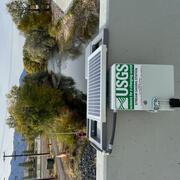
Surface Water Gages in Utah
The Utah Water Science Center maintains approximately 187 real-time surface water gages. Of these, thirty-eight were established between June 2024 and September 2025, thanks to the dedication and fortitude of Utah Water Science Center Hydrologic Technicians in the Salt Lake City, Moab, and Cedar City Field Offices. This increase in the number of gages expanded the capability to monitor many more...
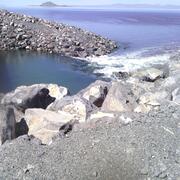
Dust from the Great Salt Lake dry lakebed: a possible health risk for communities in northern Utah
By analyzing dust samples in northern Utah, the USGS is providing crucial insights about the importance of water and lakebed management to mitigate dust pollution and protect vulnerable communities in northern Utah.

Navigating PFAS Contamination: Insights from the USGS Potomac River Watershed Study
The Potomac River is a major watershed in the eastern United States that serves as a crucial water supply for millions of people. USGS researchers conducted a comprehensive investigation to identify the contributions of municipal and industrial wastewater treatment plant effluent to the levels of per-and polyfluoroalkyl substances (PFAS) in the Potomac River. This study included measuring PFAS...