
U.S. flag

An official website of the United States government

Ecosystems We Research

USGS conducts research on public lands to deliver information used by resource managers to maximize and sustain economic and social benefits from natural resources to the American public.

Filter Total Items: 73

USGS Science Syntheses for Public Lands Management

Scientific information is fundamental to understanding how proposed actions on public lands may impact the environment. Development of new science is occurring at rates that can make it challenging for biologists, resource managers, decision makers, private landowners, and other stakeholders to ensure they are using up-to-date, high-quality science information to inform their decisions. Further...

USGS Science Syntheses for Public Lands Management

USGS Science Syntheses for Public Lands Management

Scientific information is fundamental to understanding how proposed actions on public lands may impact the environment. Development of new science is occurring at rates that can make it challenging for biologists, resource managers, decision makers, private landowners, and other stakeholders to ensure they are using up-to-date, high-quality science information to inform their decisions. Further...
Learn More

Key Values of a Century of EESC Science

The USGS Eastern Ecological Science Center (EESC) is rooted in a proud tradition of service to the nation—advancing science that informs the conservation and management of fish, wildlife, and habitats across the eastern United States and beyond. Our mission is clear: deliver reliable, partner-driven science that supports natural resource decisions today, while ensuring these resources remain...
Key Values of a Century of EESC Science

Key Values of a Century of EESC Science

The USGS Eastern Ecological Science Center (EESC) is rooted in a proud tradition of service to the nation—advancing science that informs the conservation and management of fish, wildlife, and habitats across the eastern United States and beyond. Our mission is clear: deliver reliable, partner-driven science that supports natural resource decisions today, while ensuring these resources remain...
Learn More

SBSC: Providing Unbiased Actionable Science & Information to Support Natural Resource Management Needs of the U.S. & Department of the Interior Priorities

The U.S. Geological Survey Southwest Biological Science Center (SBSC) is uniquely positioned in the Colorado River Basin to provide sound information, specialized expertise, and innovative tools to support the management and sustained use of natural resources on public and Tribal lands in the Southwest U.S.
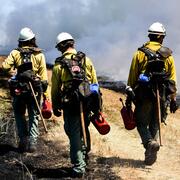
SBSC: Providing Unbiased Actionable Science & Information to Support Natural Resource Management Needs of the U.S. & Department of the Interior Priorities

SBSC: Providing Unbiased Actionable Science & Information to Support Natural Resource Management Needs of the U.S. & Department of the Interior Priorities

The U.S. Geological Survey Southwest Biological Science Center (SBSC) is uniquely positioned in the Colorado River Basin to provide sound information, specialized expertise, and innovative tools to support the management and sustained use of natural resources on public and Tribal lands in the Southwest U.S.
Learn More

Land management research in support of streamlined energy development, economic growth, and wildfire management

FORT researchers provide sound science to support the Department of the Interior in its efforts to streamline reliable energy development, enhance cost efficiency in public lands management, and manage fire-prone habitats for public safety. This research is developed in partnership with resource managers from local, State, Federal and Tribal governments, industry, and nongovernmental organizations...
Land management research in support of streamlined energy development, economic growth, and wildfire management

Land management research in support of streamlined energy development, economic growth, and wildfire management

FORT researchers provide sound science to support the Department of the Interior in its efforts to streamline reliable energy development, enhance cost efficiency in public lands management, and manage fire-prone habitats for public safety. This research is developed in partnership with resource managers from local, State, Federal and Tribal governments, industry, and nongovernmental organizations...
Learn More

Ground-truthing an easy guide to biocrust morphogroups

Land and resource managers are increasingly aware of the contribution of biocrusts to ecological functions and have expressed interest in training and resources to recognize biocrusts in the field. This knowledge will help enable managers to address biocrusts in carrying out analyses under the National Environmental Policy Act (NEPA). WERC scientists have drafted a single page, easy guide to...
Ground-truthing an easy guide to biocrust morphogroups

Ground-truthing an easy guide to biocrust morphogroups

Land and resource managers are increasingly aware of the contribution of biocrusts to ecological functions and have expressed interest in training and resources to recognize biocrusts in the field. This knowledge will help enable managers to address biocrusts in carrying out analyses under the National Environmental Policy Act (NEPA). WERC scientists have drafted a single page, easy guide to...
Learn More

State of Knowledge of Biological Soil Crusts: A synthesis of work to inform land management.

Land and resource managers are increasingly interested in up-to-date information for biocrust conservation and management. To facilitate the use of evolving science by land managers, WERC scientists are compiling a synthesis of recent work on biocrusts related to their ecology and management. This knowledge will help enable managers to address biocrusts in carrying out analyses under the National...
State of Knowledge of Biological Soil Crusts: A synthesis of work to inform land management.

State of Knowledge of Biological Soil Crusts: A synthesis of work to inform land management.

Land and resource managers are increasingly interested in up-to-date information for biocrust conservation and management. To facilitate the use of evolving science by land managers, WERC scientists are compiling a synthesis of recent work on biocrusts related to their ecology and management. This knowledge will help enable managers to address biocrusts in carrying out analyses under the National...
Learn More

Fostering greater use of habitat models for managing rare and invasive plants on public lands

Habitat models can provide critical information on the current and potential distribution of plant species, as well as help target and support conservation efforts. Despite their potential utility in public land management, model use may be constrained by a variety of factors including staff access to and trust in models. In this project, we seek to bring together model users and model developers...
Fostering greater use of habitat models for managing rare and invasive plants on public lands

Fostering greater use of habitat models for managing rare and invasive plants on public lands

Habitat models can provide critical information on the current and potential distribution of plant species, as well as help target and support conservation efforts. Despite their potential utility in public land management, model use may be constrained by a variety of factors including staff access to and trust in models. In this project, we seek to bring together model users and model developers...
Learn More

Reconstructing Flow History From Riparian Tree Rings

FORT aquatic scientists analyze rings of riparian trees relating tree growth and establishment to historical flow. They then use the tree rings to reconstruct the flow in past centuries. Flow reconstructions discover the frequency and magnitude of past droughts and floods—information that is essential for management of rivers and water supplies. They have pioneered the use of cottonwood, a...
Reconstructing Flow History From Riparian Tree Rings

Reconstructing Flow History From Riparian Tree Rings

FORT aquatic scientists analyze rings of riparian trees relating tree growth and establishment to historical flow. They then use the tree rings to reconstruct the flow in past centuries. Flow reconstructions discover the frequency and magnitude of past droughts and floods—information that is essential for management of rivers and water supplies. They have pioneered the use of cottonwood, a...
Learn More

Integrated River and Riparian Ecosystem Studies

FORT scientists study interactions among river flow, riparian vegetation and channel change at low elevations across the western United States. Cooperators include the National Park Service, Bureau of Land Management, U.S. Fish and Wildlife Service and Bureau of Reclamation. Research areas include reservoir management, control of invasive species, drought response and flood erosion after fires...
Integrated River and Riparian Ecosystem Studies

Integrated River and Riparian Ecosystem Studies

FORT scientists study interactions among river flow, riparian vegetation and channel change at low elevations across the western United States. Cooperators include the National Park Service, Bureau of Land Management, U.S. Fish and Wildlife Service and Bureau of Reclamation. Research areas include reservoir management, control of invasive species, drought response and flood erosion after fires...
Learn More

Assessing vegetation and avian community response to juniper reduction treatments in Southwest Montana

The Southwest Montana Sagebrush Partnership (SMSP) team, including land managers, landowners, and scientists, is implementing conifer removal projects encompassing over 55,000 acres of private, state, and federal lands throughout the region. To date, little place-based information exists regarding likely vegetation and bird responses to such treatments in Southwestern Montana. To address this...
Assessing vegetation and avian community response to juniper reduction treatments in Southwest Montana

Assessing vegetation and avian community response to juniper reduction treatments in Southwest Montana

The Southwest Montana Sagebrush Partnership (SMSP) team, including land managers, landowners, and scientists, is implementing conifer removal projects encompassing over 55,000 acres of private, state, and federal lands throughout the region. To date, little place-based information exists regarding likely vegetation and bird responses to such treatments in Southwestern Montana. To address this...
Learn More

Assessing the Proliferation, Connectivity, and Consequences of Invasive Fine Fuels on the Sagebrush Biome

Invasive annual grasses can replace native vegetation and alter fire behavior, impacting a range of habitats and species. A team of researchers from the U.S. Geological Survey, Colorado State University, the Bureau of Land Management, and the U.S. Fish and Wildlife Service are working to identify factors that influence changes in the distribution and abundance of invasive annual grasses (IAGs)...
Assessing the Proliferation, Connectivity, and Consequences of Invasive Fine Fuels on the Sagebrush Biome

Assessing the Proliferation, Connectivity, and Consequences of Invasive Fine Fuels on the Sagebrush Biome

Invasive annual grasses can replace native vegetation and alter fire behavior, impacting a range of habitats and species. A team of researchers from the U.S. Geological Survey, Colorado State University, the Bureau of Land Management, and the U.S. Fish and Wildlife Service are working to identify factors that influence changes in the distribution and abundance of invasive annual grasses (IAGs)...
Learn More

Modeling chronic wasting disease prevalence through time to investigate mechanisms of spread in deer and elk in Wyoming

Diseases are challenging to manage in wild ungulate populations, particularly when there are many ways the disease can spread. Wildlife management agencies often need to take action to control disease spread, but it is unclear which actions are most effective in constraining disease because the importance of different spread mechanisms is not fully understood. This project will aid state wildlife...
Modeling chronic wasting disease prevalence through time to investigate mechanisms of spread in deer and elk in Wyoming

Modeling chronic wasting disease prevalence through time to investigate mechanisms of spread in deer and elk in Wyoming

Diseases are challenging to manage in wild ungulate populations, particularly when there are many ways the disease can spread. Wildlife management agencies often need to take action to control disease spread, but it is unclear which actions are most effective in constraining disease because the importance of different spread mechanisms is not fully understood. This project will aid state wildlife...
Learn More
Was this page helpful?