U.S. flag

An official website of the United States government

Cooperative Research Units

Our website is currently undergoing a major update. Be sure to visit regularly for the latest enhancements. Last updated September 15, 2025.

Established in 1935 at Iowa State University, our mission is our hallmark: to work with University students to develop the conservation workforce, help decision-makers make complex conservation decisions, and provide technical assistance between natural resource agencies and universities. We support 43 units located in 41 States, at 44 host universities. Our Program Office is in Reston, Virginia.

News

Fishing in Nervous Waters: Using Science to Address Uncertainty in Steelhead Fisheries

Fishing in Nervous Waters: Using Science to Address Uncertainty in Steelhead Fisheries

CRU Featured in USGS Energy and Wildlife Science 2025 Year in Review

CRU Featured in USGS Energy and Wildlife Science 2025 Year in Review

Fiscal Year 2025 Highlights from EESC’s Disease Decision Analysis and Research Group

Fiscal Year 2025 Highlights from EESC’s Disease Decision Analysis and Research Group

Publications

Population demographics of invasive Silver Carp in a Great Plains river network Population demographics of invasive Silver Carp in a Great Plains river network

ObjectiveKnowledge of invasive Silver Carp Hypophthalmichthys molitrix population demographics and distributions may inform estimates of efforts necessary to achieve reductions in abundance and identify locations to conduct removal. Although extensively studied in other parts of their invasive range (e.g., Mississippi and Illinois rivers), less is known regarding Silver Carp population...
Authors
Blake Logan, Mark Pegg, Kirk Steffensen, Jonathan Spurgeon

Satellite tracking supports hypotheses of breeding allochrony and allopatry in the Endangered Pterodroma hasitata (Black-capped Petrel, Diablotin) Satellite tracking supports hypotheses of breeding allochrony and allopatry in the Endangered Pterodroma hasitata (Black-capped Petrel, Diablotin)

Pterodroma hasitata, the Black-capped Petrel (locally known as Diablotin), is the only extant Pterodroma petrel nesting in the Caribbean. The species is listed as globally Endangered by the IUCN and was recently listed as endangered under the U.S. Endangered Species Act. Pterodroma hasitata show a phenotypic gradient, ranging from a darker, smaller form to a paler, heavier form, that is...
Authors
Yvan Satgé, J. Patteson, Bradford Keitt, Chris Gaskin, Patrick Jodice

Too hot for comfort: Elevated temperatures influence gene expression and exceed thermal tolerance of bigmouth shiners, Ericymba dorsalis Too hot for comfort: Elevated temperatures influence gene expression and exceed thermal tolerance of bigmouth shiners, Ericymba dorsalis

Environmental and associated ecosystem change may affect the persistence of fish species based on their ability to adapt to changing conditions, including decreasing flows and rising water temperatures. Exceeding the thermal tolerances of stream fish will likely result in a loss of ability to maintain metabolic processes. We evaluated the critical thermal maximum (CTmax) of bigmouth...
Authors
Ella Humphrey, Jonathan Spurgeon, Lizabeth Bowen, Robert Wilson, Shannon Waters-Dynes, Braxton Newkirk, Sarah Sonsthagen

Science

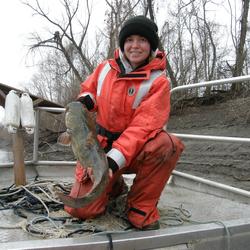
Invasive flathead catfish now top predators in Susquehanna River in Pennsylvania
New study suggests that smallmouth bass and channel catfish are changing what they eat to avoid having to compete with or being eaten by the invader
Invasive flathead catfish now top predators in Susquehanna River in Pennsylvania

Invasive flathead catfish now top predators in Susquehanna River in Pennsylvania

New study suggests that smallmouth bass and channel catfish are changing what they eat to avoid having to compete with or being eaten by the invader
Learn More

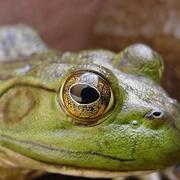
Population ecology of the invasive American Bullfrog (Rana catesbeiana) in Southeastern Arizona

Native to eastern North America, the American bullfrog (Rana catesbeiana) was introduced to Arizona for sport hunting in the early 1900s and has since come to dominate many aquatic systems and threaten native amphibians through four primary mechanisms.
Population ecology of the invasive American Bullfrog (Rana catesbeiana) in Southeastern Arizona

Population ecology of the invasive American Bullfrog (Rana catesbeiana) in Southeastern Arizona

Native to eastern North America, the American bullfrog (Rana catesbeiana) was introduced to Arizona for sport hunting in the early 1900s and has since come to dominate many aquatic systems and threaten native amphibians through four primary mechanisms.
Learn More

Multimedia

Dan Ashe, Simon Roosevelt, and Lowell Baier
Lowell Baier (left) and John Organ (right) pose for a picture.
Lowell Baier and John Organ
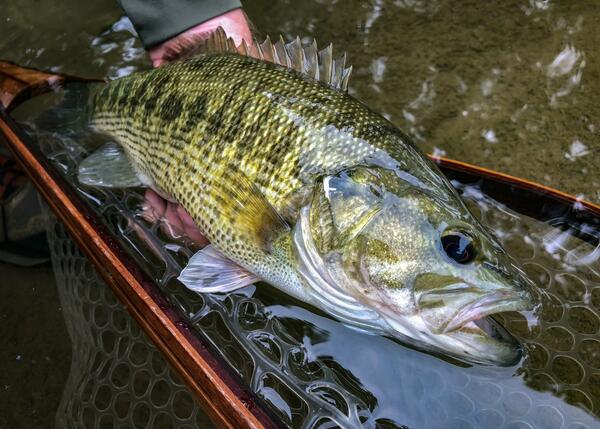
Guadalupe Bass
Guadalupe Bass
Guadalupe Bass
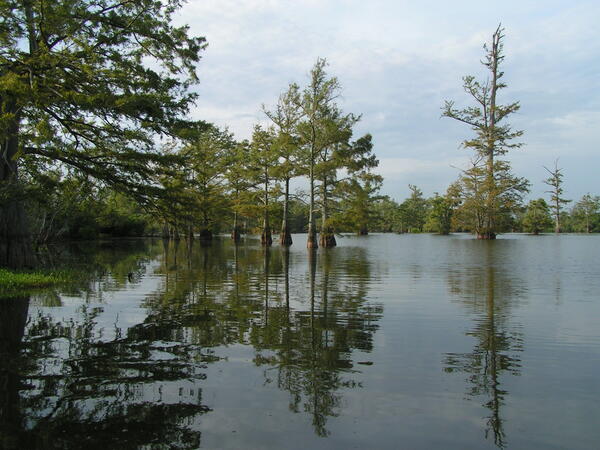
Oxbow lake in Mississippi
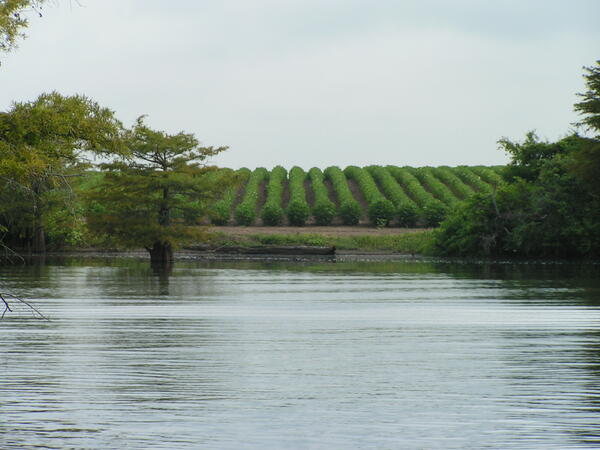
Floodplain of the Lower Mississippi River
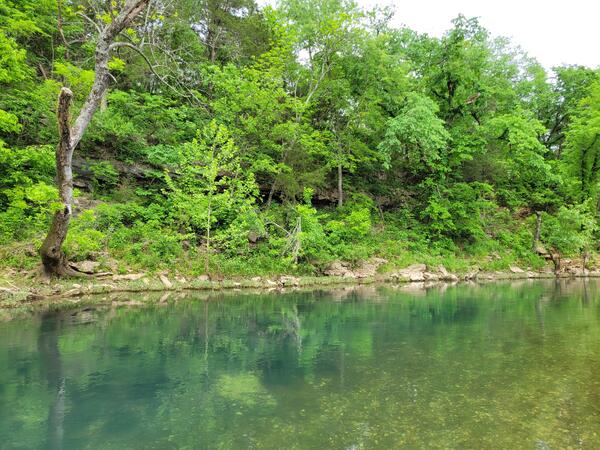
Stream in Arkansas
Stream in Arkansas
Stream in Arkansas
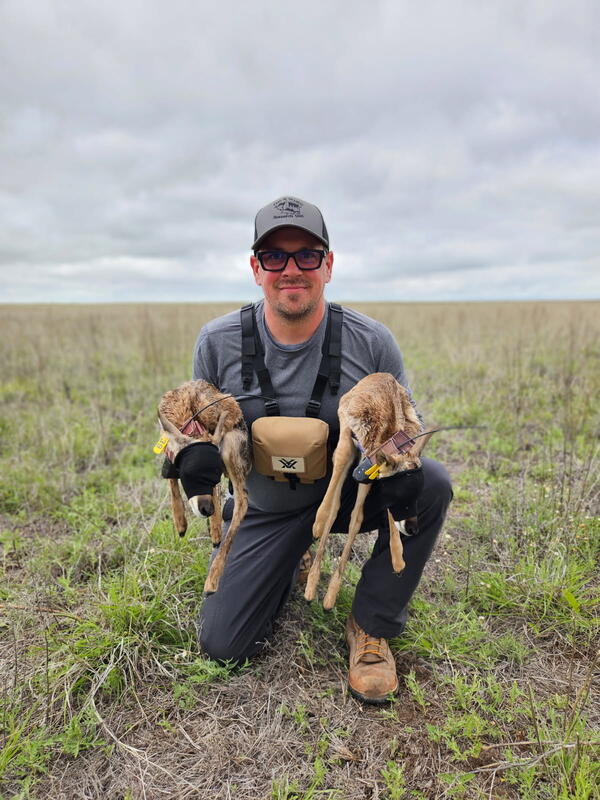
Researcher is tagging pronghorn fawn
Researcher is tagging pronghorn fawn in Oklahoma
 Ancient floodplain of the Lower Mississippi River, sometimes known as The Delta.
Ancient floodplain of the Lower Mississippi River, sometimes known as The Delta
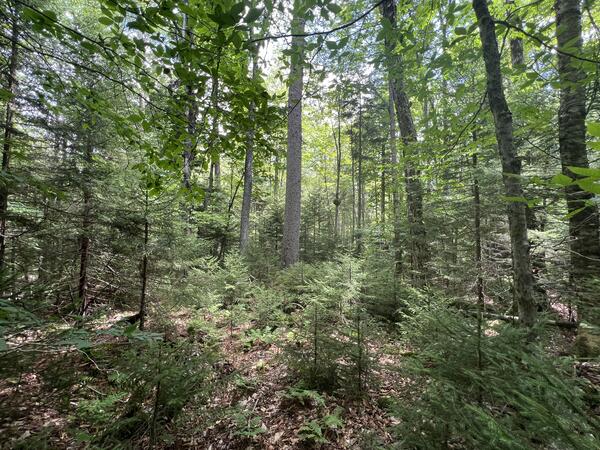
Red spruce forests, once widespread across the central and southern Appalachians, now persist only in scattered fragments on
Red spruce forests in central Appalachia
Was this page helpful?