



All Multimedia
Access all multimedia to include images, video, audio, webcams, before-after imagery, and more. Filter and explore with filtering options to refine search.


Data collection at Duck USACE Field Research Station
Data collection at Duck USACE Field Research StationThe US Army Corps of Engineers Field Research Facility in Duck, NC has set up a variety of sensors and arrays on the beach to measure oceanographic paramters for DUNEX
Data collection at Duck USACE Field Research Station
Data collection at Duck USACE Field Research StationThe US Army Corps of Engineers Field Research Facility in Duck, NC has set up a variety of sensors and arrays on the beach to measure oceanographic paramters for DUNEX

To survey the bathymetry off of the Pea Island DUNEX site WHOI investigator Peter Traykovski prepares to run into the surf with the ASV nicknamed "Robo Turtle" while USGS investigator Chris Sherwood handles the remote controller.
To survey the bathymetry off of the Pea Island DUNEX site WHOI investigator Peter Traykovski prepares to run into the surf with the ASV nicknamed "Robo Turtle" while USGS investigator Chris Sherwood handles the remote controller.

Eyes on Earth Episode 58 - Satellites and Cloud Computing
Eyes on Earth Episode 58 - Satellites and Cloud ComputingSatellite imagery is everywhere. We see it on TV news and weather coverage, in our Twitter and Facebook feeds, and on our phones’ mapping apps. The data behind that imagery is nothing like a screenshot, though.
Eyes on Earth Episode 58 - Satellites and Cloud Computing
Eyes on Earth Episode 58 - Satellites and Cloud ComputingSatellite imagery is everywhere. We see it on TV news and weather coverage, in our Twitter and Facebook feeds, and on our phones’ mapping apps. The data behind that imagery is nothing like a screenshot, though.
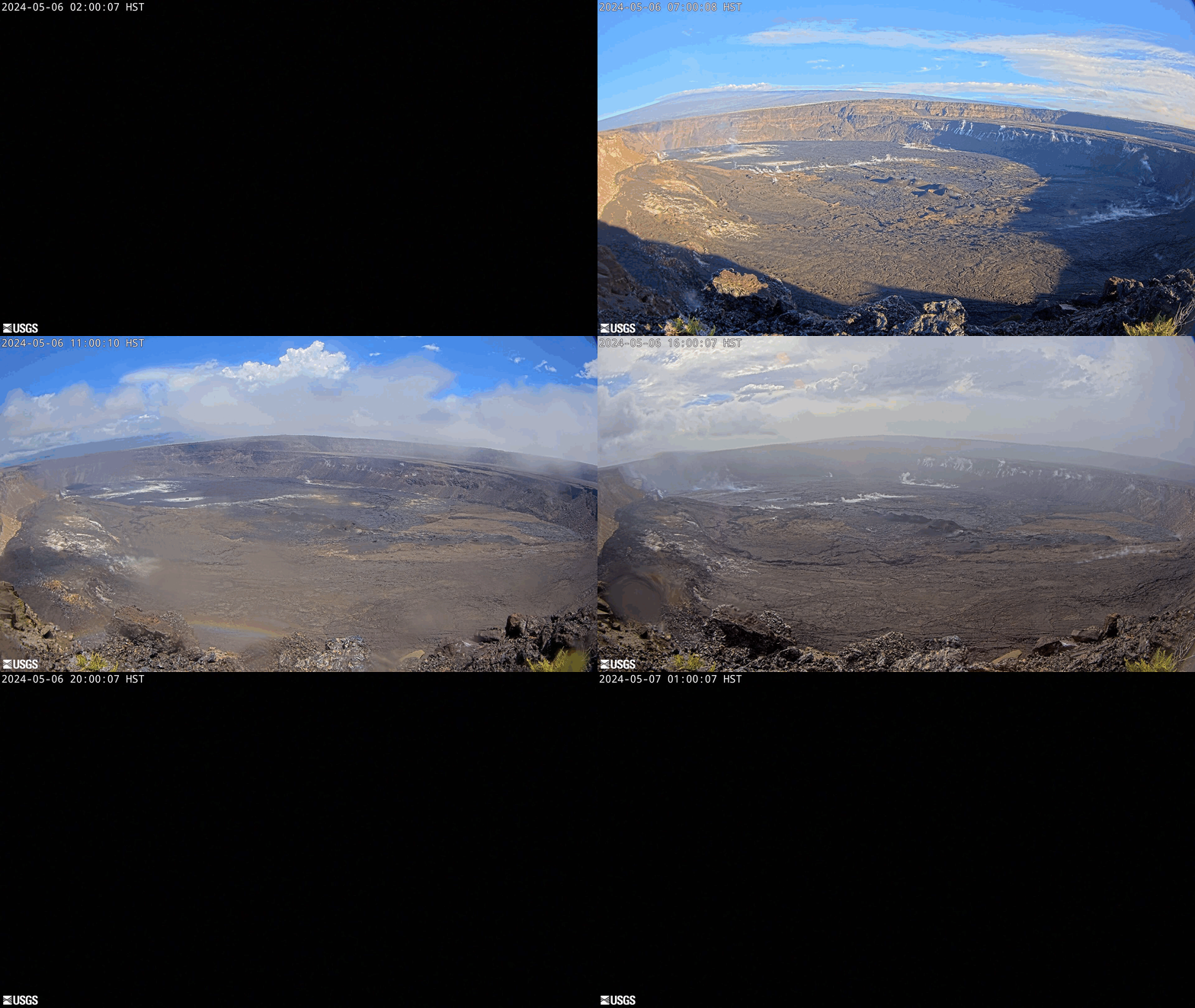
Last 24 Hours - [B1cam] - Kīlauea caldera down-dropped block and Halemaʻumaʻu
Last 24 Hours - [B1cam] - Kīlauea caldera down-dropped block and HalemaʻumaʻuLast 24 Hours - Live view of Kīlauea caldera down-dropped block and Halemaʻumaʻu crater from the east rim of the caldera [B1cam].
Last 24 Hours - [B1cam] - Kīlauea caldera down-dropped block and Halemaʻumaʻu
Last 24 Hours - [B1cam] - Kīlauea caldera down-dropped block and HalemaʻumaʻuLast 24 Hours - Live view of Kīlauea caldera down-dropped block and Halemaʻumaʻu crater from the east rim of the caldera [B1cam].
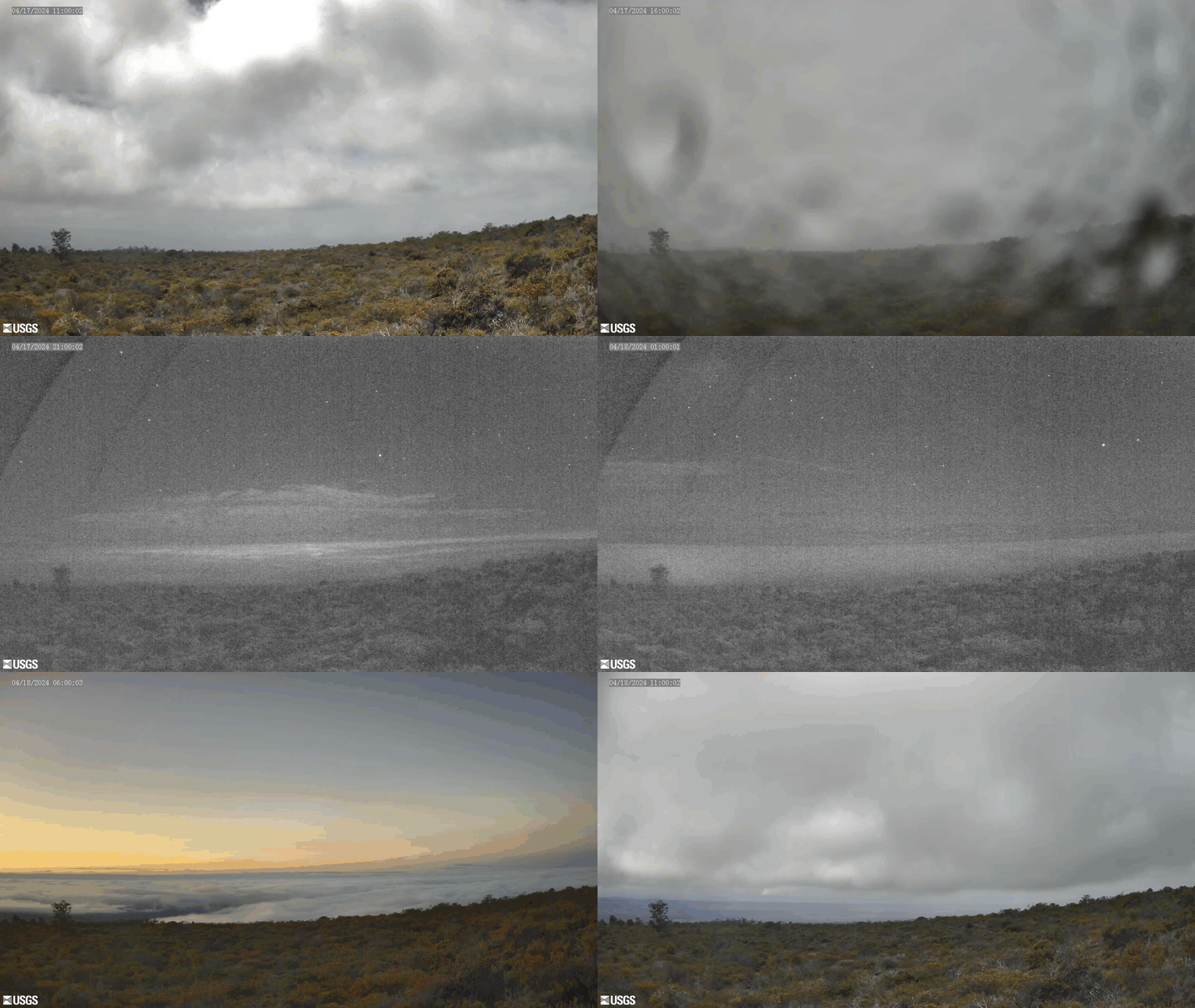
Last 24 Hours - [KPcam] - Kīlauea Summit from Mauna Loa Strip Road
Last 24 Hours - [KPcam] - Kīlauea Summit from Mauna Loa Strip RoadView from Mauna Loa Strip Road looking at the Kīlauea summit to document volcanic eruption plumes.
Last 24 Hours - [KPcam] - Kīlauea Summit from Mauna Loa Strip Road
Last 24 Hours - [KPcam] - Kīlauea Summit from Mauna Loa Strip RoadView from Mauna Loa Strip Road looking at the Kīlauea summit to document volcanic eruption plumes.

The Helikite in action, being walked by WHOI scientist, Peter Traykovski, at Pea Island DUNEX site, the helium powered balloon kite is used to survey the beach and dune to produce elevation models using Structure from Motion.
The Helikite in action, being walked by WHOI scientist, Peter Traykovski, at Pea Island DUNEX site, the helium powered balloon kite is used to survey the beach and dune to produce elevation models using Structure from Motion.

I Am An...Ecotoxicologist
I Am An...Ecotoxicologist

No changes were observed at Kīlauea's summit during a brief field visit on September 3, 2021. Sunny weather made for spectacular views, though strong winds were blowing. The solidified crust of the lava lake within Halema‘uma‘u—which was active from December 2020 to May 2021—is visible in the lower center of this image. USGS photo by K. Mulliken.
No changes were observed at Kīlauea's summit during a brief field visit on September 3, 2021. Sunny weather made for spectacular views, though strong winds were blowing. The solidified crust of the lava lake within Halema‘uma‘u—which was active from December 2020 to May 2021—is visible in the lower center of this image. USGS photo by K. Mulliken.

View from a temporary webcam, which is located just southwest of Kīlauea summit caldera, and looks south over the area of the August 2021 intrusion. The dark lava flow on the left of image (mid-ground) is where the 1982 lava flow spilled out of the south caldera.
View from a temporary webcam, which is located just southwest of Kīlauea summit caldera, and looks south over the area of the August 2021 intrusion. The dark lava flow on the left of image (mid-ground) is where the 1982 lava flow spilled out of the south caldera.

Image of the Week - Caldor Fire Expands Toward Lake Tahoe
Image of the Week - Caldor Fire Expands Toward Lake TahoeThe Caldor fire in California started on August 14, 2021 and quickly spread in high winds.
The fire continues to expand toward the Lake Tahoe area as residents evacuate.
This image was captured on August 21, the 8th day.
Landsat 8's near infrared and shortwave infrared bands reveal active fire, burn scars, and smoke.
Image of the Week - Caldor Fire Expands Toward Lake Tahoe
Image of the Week - Caldor Fire Expands Toward Lake TahoeThe Caldor fire in California started on August 14, 2021 and quickly spread in high winds.
The fire continues to expand toward the Lake Tahoe area as residents evacuate.
This image was captured on August 21, the 8th day.
Landsat 8's near infrared and shortwave infrared bands reveal active fire, burn scars, and smoke.

Photomicrographs from a California newt found moribund in California
Photomicrographs from a California newt found moribund in CaliforniaPhotomicrographs from a California newt (Taricha torosa) found moribund in California, USA. (A) Necrosis of the tail tip with exposed vertebral bone (B), hyperplastic epithelial regrowth at the edges (arrowhead), moderate mixed leukocytes and dilated lymphatics (*), and a few osteoclasts remodeling the exposed bone (arrows). H&E stain 4X.
Photomicrographs from a California newt found moribund in California
Photomicrographs from a California newt found moribund in CaliforniaPhotomicrographs from a California newt (Taricha torosa) found moribund in California, USA. (A) Necrosis of the tail tip with exposed vertebral bone (B), hyperplastic epithelial regrowth at the edges (arrowhead), moderate mixed leukocytes and dilated lymphatics (*), and a few osteoclasts remodeling the exposed bone (arrows). H&E stain 4X.

To survey the bathymetry off of the Pea Island DUNEX site WHOI investigator Peter Traykovski, and USGS investigator, Chris Sherwood, prepare to launch the ASV into the water to measure the bathymetry of the Pea Island DUNEX site.
To survey the bathymetry off of the Pea Island DUNEX site WHOI investigator Peter Traykovski, and USGS investigator, Chris Sherwood, prepare to launch the ASV into the water to measure the bathymetry of the Pea Island DUNEX site.

HVO technician Steven Fuke checks the solar panel at station HRPKE while conducting station maintenance on September 1. HVO remote monitoring stations are powered via solar panels and a suite of batteries.
HVO technician Steven Fuke checks the solar panel at station HRPKE while conducting station maintenance on September 1. HVO remote monitoring stations are powered via solar panels and a suite of batteries.

Station HRPKE is located southwest of Kīlauea's summit, in the upper Southwest Rift Zone region, within Hawai‘i Volcanoes National Park. The station measures sulfur dioxide (SO2) concentrations in the air, as well as local meteorological data such as wind speed, wind direction, and rainfall.
Station HRPKE is located southwest of Kīlauea's summit, in the upper Southwest Rift Zone region, within Hawai‘i Volcanoes National Park. The station measures sulfur dioxide (SO2) concentrations in the air, as well as local meteorological data such as wind speed, wind direction, and rainfall.

View of Pu‘ukoa‘e on Kīlauea's Southwest Rift Zone
View of Pu‘ukoa‘e on Kīlauea's Southwest Rift ZoneView to the southwest from HVO station HRPKE, showing Pu‘ukoa‘e on Kīlauea's Southwest Rift Zone in the background.
View of Pu‘ukoa‘e on Kīlauea's Southwest Rift Zone
View of Pu‘ukoa‘e on Kīlauea's Southwest Rift ZoneView to the southwest from HVO station HRPKE, showing Pu‘ukoa‘e on Kīlauea's Southwest Rift Zone in the background.

Yellowstone Volcano Observatory scientist-in-charge Mike Poland tells the story behind the color change of Morning Glory Pool and shows how to recognize seasonal changes in ground deformation data in this September 1, 2021 video update of volcano and earthquake activity at Yellowstone Volcano.
Yellowstone Volcano Observatory scientist-in-charge Mike Poland tells the story behind the color change of Morning Glory Pool and shows how to recognize seasonal changes in ground deformation data in this September 1, 2021 video update of volcano and earthquake activity at Yellowstone Volcano.

Photo Contest Winner | September 2021 | Honorable Mention 2
Liz Nystrom captaining a boat on the Hudson River
Photo Contest Winner | September 2021 | Honorable Mention 2
Liz Nystrom captaining a boat on the Hudson River

Sampling Keller Well in Kīlauea’s south caldera region
Sampling Keller Well in Kīlauea’s south caldera regionOn August 31, the water level in Keller Well was measured at approximately 514.12 m (1686.75 ft) below the ground surface. Though an intrusion of magma took place beneath the ground surface in Kīlauea's south caldera region from August 23–30, water level in Keller Well does not show significant changes as a result of this event. USGS image by P. Nadeau.
Sampling Keller Well in Kīlauea’s south caldera region
Sampling Keller Well in Kīlauea’s south caldera regionOn August 31, the water level in Keller Well was measured at approximately 514.12 m (1686.75 ft) below the ground surface. Though an intrusion of magma took place beneath the ground surface in Kīlauea's south caldera region from August 23–30, water level in Keller Well does not show significant changes as a result of this event. USGS image by P. Nadeau.

Sampling Keller Well in Kīlauea’s south caldera region
Sampling Keller Well in Kīlauea’s south caldera regionOn Tuesday, August 31, Hawaiian Volcano Observatory (HVO) scientists and technicians visited the Keller Well in Kīlauea's south caldera region. Water from the well is typically sampled and analyzed quarterly to monitor how magma supply to Kīlauea's summit reservoirs might impact regional ground water.
Sampling Keller Well in Kīlauea’s south caldera region
Sampling Keller Well in Kīlauea’s south caldera regionOn Tuesday, August 31, Hawaiian Volcano Observatory (HVO) scientists and technicians visited the Keller Well in Kīlauea's south caldera region. Water from the well is typically sampled and analyzed quarterly to monitor how magma supply to Kīlauea's summit reservoirs might impact regional ground water.

Earth Observation User Case: Speaking a New Language of Landsat
Earth Observation User Case: Speaking a New Language of LandsatSocial scientists at the U.S. Geological Survey (USGS) Fort Collins Science Center – in collaboration with the USGS National Land Imaging Program – conduct Earth observation user case studies using qualitative research methods.
Earth Observation User Case: Speaking a New Language of Landsat
Earth Observation User Case: Speaking a New Language of LandsatSocial scientists at the U.S. Geological Survey (USGS) Fort Collins Science Center – in collaboration with the USGS National Land Imaging Program – conduct Earth observation user case studies using qualitative research methods.