U.S. flag

An official website of the United States government

Large-Scale Restoration Science

USGS works collaboratively with partners to improve the stewardship and restoration of ecosystems across the country. Many of these projects are large-scale, crossing multiple organizational and state boundaries and occasionally bridging scientific and engineering disciplines. The primary outcomes of these projects are restoring critical ecosystems and their biological communities.

Filter Total Items: 230

Where Land Meets Sea: USGS Science for Resilient Coastal Habitats

USGS coastal science plays a critical role in supporting the effective, science-based management of coastal ecosystems, where the biodiversity of land and sea meet. It provides managers with the information they need to make sound decisions. Through cutting-edge research, predictive modeling, and decision-support tools, USGS empowers resource managers to make informed, science-based choices. From...
Where Land Meets Sea: USGS Science for Resilient Coastal Habitats

Where Land Meets Sea: USGS Science for Resilient Coastal Habitats

USGS coastal science plays a critical role in supporting the effective, science-based management of coastal ecosystems, where the biodiversity of land and sea meet. It provides managers with the information they need to make sound decisions. Through cutting-edge research, predictive modeling, and decision-support tools, USGS empowers resource managers to make informed, science-based choices. From...
Learn More

USGS Sagebrush Science: Supporting Public Safety and Economic Decision Making Across the West

The sagebrush biome is one of the largest ecosystems in North America. Encompassing nearly one-third of the continental U.S., it provides critical resources for millions of Americans and a home for hundreds of plants and animal species in the West. Natural resource management in sagebrush ecosystems can be complex, and science can support management decisions by providing knowledge and tools to...
USGS Sagebrush Science: Supporting Public Safety and Economic Decision Making Across the West

USGS Sagebrush Science: Supporting Public Safety and Economic Decision Making Across the West

The sagebrush biome is one of the largest ecosystems in North America. Encompassing nearly one-third of the continental U.S., it provides critical resources for millions of Americans and a home for hundreds of plants and animal species in the West. Natural resource management in sagebrush ecosystems can be complex, and science can support management decisions by providing knowledge and tools to...
Learn More

Biological Soil Crust ("Biocrust") Science

Biological soil crusts (biocrusts) are commonly found on the soil surface in arid and semi-arid ecosystems (collectively called drylands). Biocrusts can consist of mosses, cyanobacteria, lichens, algae, and microfungi, and they strongly interact with the soil. These organisms or consortium of disparate organisms, depending on the specific biocrust, are important to the functioning of ecosystems...
Biological Soil Crust ("Biocrust") Science

Biological Soil Crust ("Biocrust") Science

Biological soil crusts (biocrusts) are commonly found on the soil surface in arid and semi-arid ecosystems (collectively called drylands). Biocrusts can consist of mosses, cyanobacteria, lichens, algae, and microfungi, and they strongly interact with the soil. These organisms or consortium of disparate organisms, depending on the specific biocrust, are important to the functioning of ecosystems...
Learn More

Hydro-Ecology of Arctic Thawing (HEAT): Ecology

Permafrost thaw is leading to a myriad of changes in physical and chemical conditions throughout the Arctic.
Hydro-Ecology of Arctic Thawing (HEAT): Ecology

Hydro-Ecology of Arctic Thawing (HEAT): Ecology

Permafrost thaw is leading to a myriad of changes in physical and chemical conditions throughout the Arctic.
Learn More

Changing Arctic Ecosystems

Arctic regions of Alaska are important for cultural and economic sustainability and host a wide variety of wildlife species, many of which are of conservation and management interest to the U.S. Department of the Interior. The USGS and collaborators provide information about Arctic ecosystems that are used by Arctic residents, management agencies, and industry.
Changing Arctic Ecosystems

Changing Arctic Ecosystems

Arctic regions of Alaska are important for cultural and economic sustainability and host a wide variety of wildlife species, many of which are of conservation and management interest to the U.S. Department of the Interior. The USGS and collaborators provide information about Arctic ecosystems that are used by Arctic residents, management agencies, and industry.
Learn More

Lake Powell Research

Lake Powell is a large arid reservoir that represents about 70% of the water storage capacity for the Upper Colorado River Basin. It is the second largest reservoir in the United States by capacity (second only to Lake Mead). Lake Powell is an oligotrophic reservoir, which means that nutrient concentrations and algal production are generally low. This often results in very clear-water conditions...
Lake Powell Research

Lake Powell Research

Lake Powell is a large arid reservoir that represents about 70% of the water storage capacity for the Upper Colorado River Basin. It is the second largest reservoir in the United States by capacity (second only to Lake Mead). Lake Powell is an oligotrophic reservoir, which means that nutrient concentrations and algal production are generally low. This often results in very clear-water conditions...
Learn More

EESC Makes an Impact: Restoring the Chesapeake Bay Watershed

The Chesapeake Bay provides over $100 billion in annual economic value and is home to 18 million people. The USGS, including scientists from the Eastern Ecological Science Center (EESC), works with Federal, State, local, and academic partners to provide research and monitoring and to communicate results to inform management for the Chesapeake and other important landscapes across the Nation.
EESC Makes an Impact: Restoring the Chesapeake Bay Watershed

EESC Makes an Impact: Restoring the Chesapeake Bay Watershed

The Chesapeake Bay provides over $100 billion in annual economic value and is home to 18 million people. The USGS, including scientists from the Eastern Ecological Science Center (EESC), works with Federal, State, local, and academic partners to provide research and monitoring and to communicate results to inform management for the Chesapeake and other important landscapes across the Nation.
Learn More

SBSC: Providing Unbiased Actionable Science & Information to Support Natural Resource Management Needs of the U.S. & Department of the Interior Priorities

The U.S. Geological Survey Southwest Biological Science Center (SBSC) is uniquely positioned in the Colorado River Basin to provide sound information, specialized expertise, and innovative tools to support the management and sustained use of natural resources on public and Tribal lands in the Southwest U.S.
SBSC: Providing Unbiased Actionable Science & Information to Support Natural Resource Management Needs of the U.S. & Department of the Interior Priorities

SBSC: Providing Unbiased Actionable Science & Information to Support Natural Resource Management Needs of the U.S. & Department of the Interior Priorities

The U.S. Geological Survey Southwest Biological Science Center (SBSC) is uniquely positioned in the Colorado River Basin to provide sound information, specialized expertise, and innovative tools to support the management and sustained use of natural resources on public and Tribal lands in the Southwest U.S.
Learn More

Land management research in support of streamlined energy development, economic growth, and wildfire management

FORT researchers provide sound science to support the Department of the Interior in its efforts to streamline reliable energy development, enhance cost efficiency in public lands management, and manage fire-prone habitats for public safety. This research is developed in partnership with resource managers from local, State, Federal and Tribal governments, industry, and nongovernmental organizations...
Land management research in support of streamlined energy development, economic growth, and wildfire management

Land management research in support of streamlined energy development, economic growth, and wildfire management

FORT researchers provide sound science to support the Department of the Interior in its efforts to streamline reliable energy development, enhance cost efficiency in public lands management, and manage fire-prone habitats for public safety. This research is developed in partnership with resource managers from local, State, Federal and Tribal governments, industry, and nongovernmental organizations...
Learn More

Ecosystems on the Edge: Landscape and Fire Ecology of Forests, Deserts, and Tundra
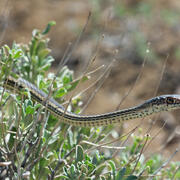
Climate changes and interacting disturbances such as wildfires, insect and disease outbreaks, and erosion and flooding can perturb and reorganize ecosystems.
Ecosystems on the Edge: Landscape and Fire Ecology of Forests, Deserts, and Tundra

Ecosystems on the Edge: Landscape and Fire Ecology of Forests, Deserts, and Tundra

Climate changes and interacting disturbances such as wildfires, insect and disease outbreaks, and erosion and flooding can perturb and reorganize ecosystems.
Learn More

Ground-truthing an easy guide to biocrust morphogroups

Land and resource managers are increasingly aware of the contribution of biocrusts to ecological functions and have expressed interest in training and resources to recognize biocrusts in the field. This knowledge will help enable managers to address biocrusts in carrying out analyses under the National Environmental Policy Act (NEPA). WERC scientists have drafted a single page, easy guide to...
Ground-truthing an easy guide to biocrust morphogroups

Ground-truthing an easy guide to biocrust morphogroups

Land and resource managers are increasingly aware of the contribution of biocrusts to ecological functions and have expressed interest in training and resources to recognize biocrusts in the field. This knowledge will help enable managers to address biocrusts in carrying out analyses under the National Environmental Policy Act (NEPA). WERC scientists have drafted a single page, easy guide to...
Learn More

State of Knowledge of Biological Soil Crusts: A synthesis of work to inform land management.

Land and resource managers are increasingly interested in up-to-date information for biocrust conservation and management. To facilitate the use of evolving science by land managers, WERC scientists are compiling a synthesis of recent work on biocrusts related to their ecology and management. This knowledge will help enable managers to address biocrusts in carrying out analyses under the National...
State of Knowledge of Biological Soil Crusts: A synthesis of work to inform land management.

State of Knowledge of Biological Soil Crusts: A synthesis of work to inform land management.

Land and resource managers are increasingly interested in up-to-date information for biocrust conservation and management. To facilitate the use of evolving science by land managers, WERC scientists are compiling a synthesis of recent work on biocrusts related to their ecology and management. This knowledge will help enable managers to address biocrusts in carrying out analyses under the National...
Learn More
Was this page helpful?