



The bark at the base of a tree in a burned watershed in the 2024 Ek Fire burn area has been partially removed by fast-moving water and debris. This damage occurs as debris flows pass through the channel and sediment suspended in the flow scrapes bark off of trees.
Images
Browse our photos of landslide research and post-landslide investigations.
Filter Total Items: 271
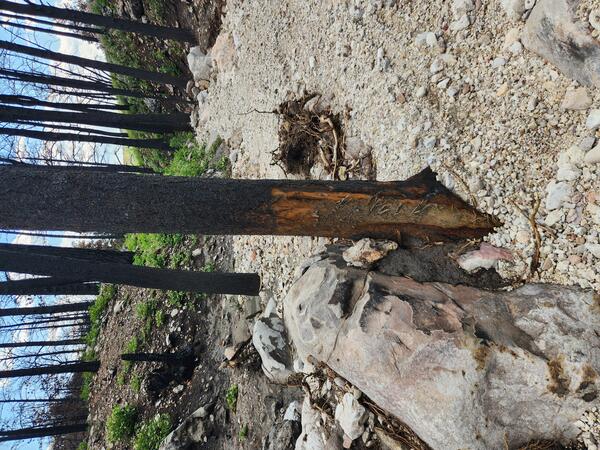
Tree damage in the 2024 Elk Fire burn area.
The bark at the base of a tree in a burned watershed in the 2024 Ek Fire burn area has been partially removed by fast-moving water and debris. This damage occurs as debris flows pass through the channel and sediment suspended in the flow scrapes bark off of trees.
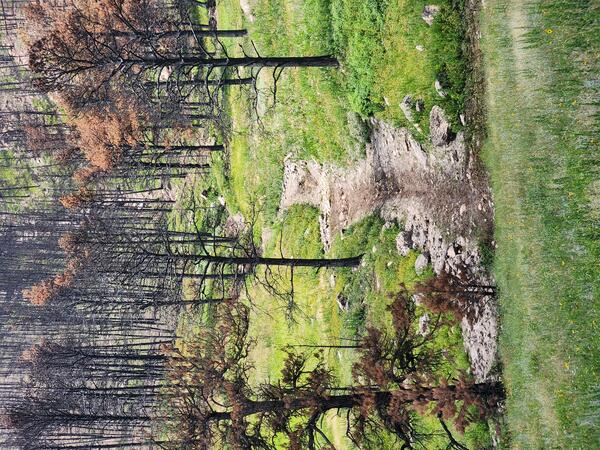
Postfire runoff in the 2024 Elk Fire buran area near Dayton, Wyoming
Postfire runoff in the 2024 Elk Fire buran area near Dayton, WyomingRunoff during a 2025 summer thunderstorm carried material downstream in this relatively small channel in the High Water Creek watershed within the Elk Fire burn area.
Postfire runoff in the 2024 Elk Fire buran area near Dayton, Wyoming
Postfire runoff in the 2024 Elk Fire buran area near Dayton, WyomingRunoff during a 2025 summer thunderstorm carried material downstream in this relatively small channel in the High Water Creek watershed within the Elk Fire burn area.
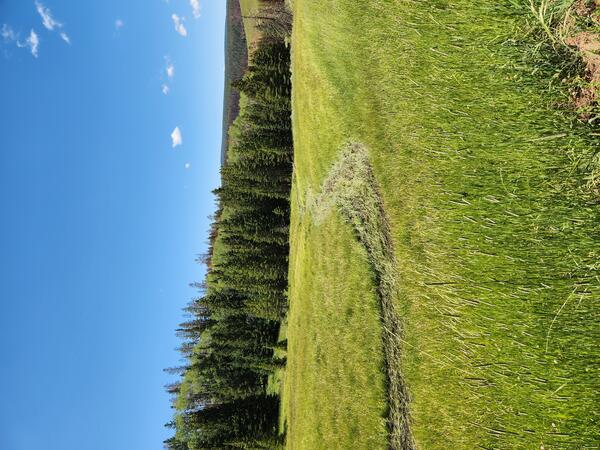
Runoff in the 2024 Elk Fire burn area
Runoff in the 2024 Elk Fire burn area. This meadow near a watershed outlet along Lower Dry Fork Road shows a shallow channel formed during Summer 2025. Although vegetation is recovering, runoff deposited mud and flattened grasses in this low-slope area.
Runoff in the 2024 Elk Fire burn area. This meadow near a watershed outlet along Lower Dry Fork Road shows a shallow channel formed during Summer 2025. Although vegetation is recovering, runoff deposited mud and flattened grasses in this low-slope area.
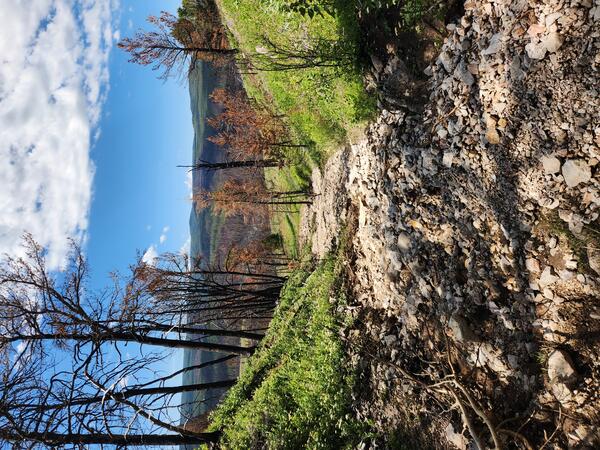
Flow deposit in the 2024 Elk Fire burn area near Dayton, Wyoming
Flow deposit in the 2024 Elk Fire burn area near Dayton, WyomingSediment transported by storm runoff was deposited in this small channel draining from Dry Fork Ridge in the Elk Fire burn area. The deposit includes a mix of woody debris, gravel, cobbles, and finer material typical of flood or debris-flow processes.
Flow deposit in the 2024 Elk Fire burn area near Dayton, Wyoming
Flow deposit in the 2024 Elk Fire burn area near Dayton, WyomingSediment transported by storm runoff was deposited in this small channel draining from Dry Fork Ridge in the Elk Fire burn area. The deposit includes a mix of woody debris, gravel, cobbles, and finer material typical of flood or debris-flow processes.
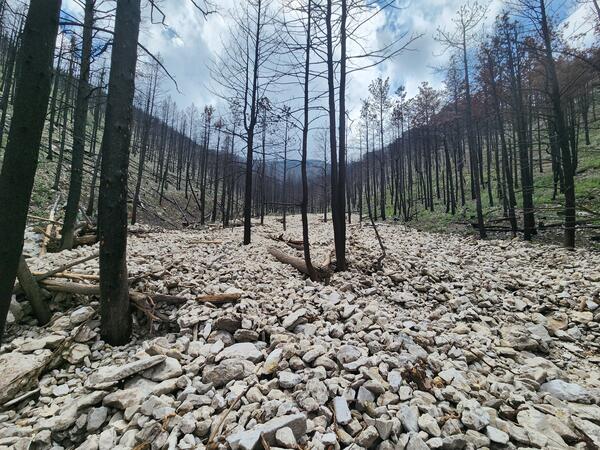
Postfire debris-flow deposit in the 2024 Elk Fire burn area
Postfire debris-flow deposit in the 2024 Elk Fire burn areaPostfire debris-flow deposit in a channel within the 2024 Elk Fire burn area near Dayton, Wyoming. Following a July 2025 thunderstorm, the channel filled with mud, cobbles, small boulders, and woody debris. This photo, taken near the watershed outlet, looks upslope from U.S. Highway 14.
Postfire debris-flow deposit in the 2024 Elk Fire burn area
Postfire debris-flow deposit in the 2024 Elk Fire burn areaPostfire debris-flow deposit in a channel within the 2024 Elk Fire burn area near Dayton, Wyoming. Following a July 2025 thunderstorm, the channel filled with mud, cobbles, small boulders, and woody debris. This photo, taken near the watershed outlet, looks upslope from U.S. Highway 14.
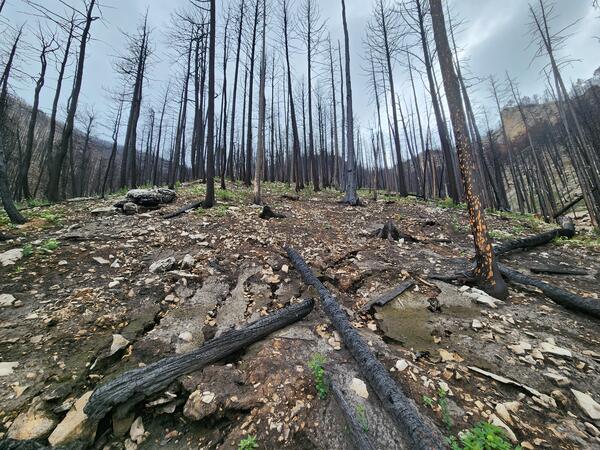
Burned hillslope in the 2024 Elk Fire burn area near Dayton, Wyoming
Burned hillslope in the 2024 Elk Fire burn area near Dayton, WyomingBurned trees and loose material cover a burned hillslope in 2024 Elk Fire burn area near Dayton, Wyoming. Rills, in the foreground formed from rainfall running off the ground surface. New green vegetation shows early signs of postfire recovery.
Burned hillslope in the 2024 Elk Fire burn area near Dayton, Wyoming
Burned hillslope in the 2024 Elk Fire burn area near Dayton, WyomingBurned trees and loose material cover a burned hillslope in 2024 Elk Fire burn area near Dayton, Wyoming. Rills, in the foreground formed from rainfall running off the ground surface. New green vegetation shows early signs of postfire recovery.
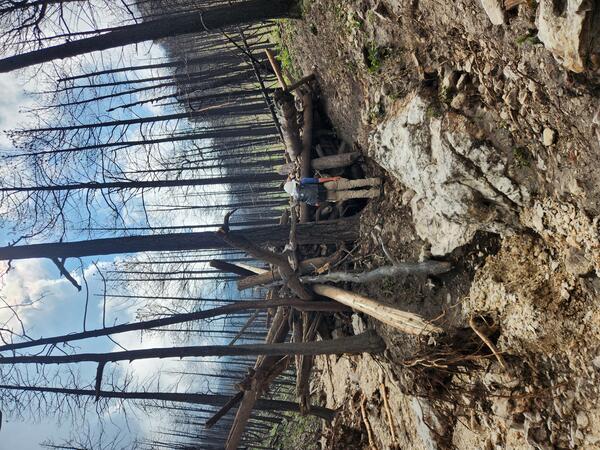
Wood dam in the 2024 Elk Fire burn area
Woody debris forms an upstream dam in the 2024 Elk Fire burn area near Dayton, Wyoming. The dam was deposited by a debris flow triggered during a 2025 summer thunderstorm. The woody debris forming the dam is larger and more abundant than material observed lower in the channel.
Woody debris forms an upstream dam in the 2024 Elk Fire burn area near Dayton, Wyoming. The dam was deposited by a debris flow triggered during a 2025 summer thunderstorm. The woody debris forming the dam is larger and more abundant than material observed lower in the channel.
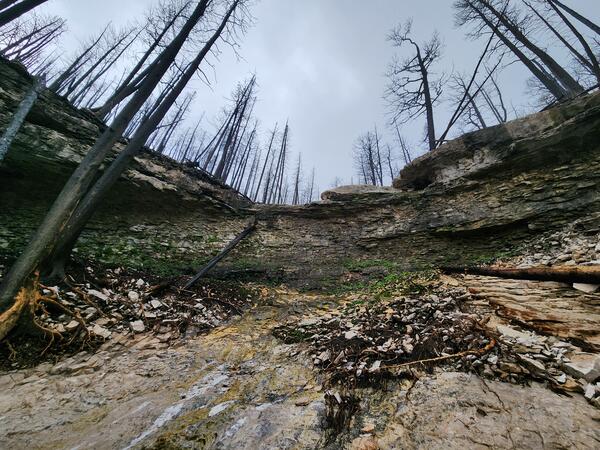
Knickpoint near the headwaters of a burned watershed in the 2024 Elk Fire burn area
Knickpoint near the headwaters of a burned watershed in the 2024 Elk Fire burn areaKnickpoint (a step-like feature in bedrock along stream channel) near the headwaters of a burned watershed in the 2024 Elk Fire burn area near Dayton, Wyoming. The exposed bedrock is heavily fractured, and loose material is visible at the base. During storms, this material can be mobilized and transported downstream.
Knickpoint near the headwaters of a burned watershed in the 2024 Elk Fire burn area
Knickpoint near the headwaters of a burned watershed in the 2024 Elk Fire burn areaKnickpoint (a step-like feature in bedrock along stream channel) near the headwaters of a burned watershed in the 2024 Elk Fire burn area near Dayton, Wyoming. The exposed bedrock is heavily fractured, and loose material is visible at the base. During storms, this material can be mobilized and transported downstream.
Debris-flow deposit in the 2024 Elk Fire burn area
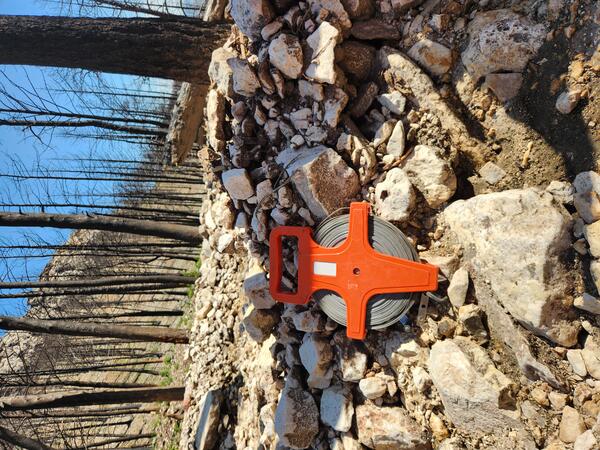
Debris-flow deposit in the 2024 Elk Fire burn areaClose-up view of a debris-flow deposit in the 2024 Elk Fire burn area near Dayton, Wyoming. A debris flow triggered by a 2025 summer thunderstorm deposited poorly sorted material ranging from mud to boulder size. Mud coatings are observed on some larger rocks, and finer material fills spaces between the cobbles and boulders.
Debris-flow deposit in the 2024 Elk Fire burn area
Debris-flow deposit in the 2024 Elk Fire burn areaClose-up view of a debris-flow deposit in the 2024 Elk Fire burn area near Dayton, Wyoming. A debris flow triggered by a 2025 summer thunderstorm deposited poorly sorted material ranging from mud to boulder size. Mud coatings are observed on some larger rocks, and finer material fills spaces between the cobbles and boulders.
Channel in a burned watershed within the 2024 Elk Fire burn area
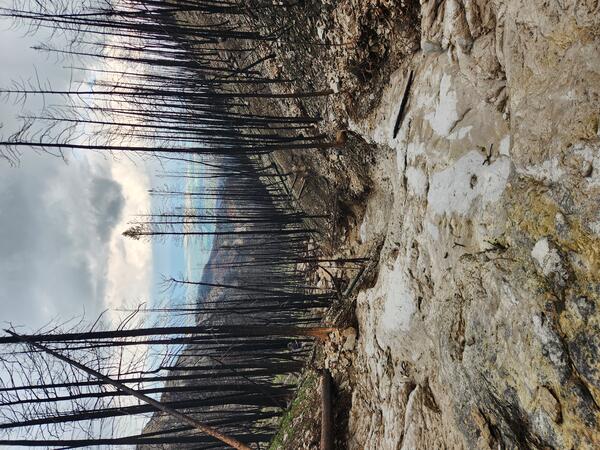
Channel in a burned watershed within the 2024 Elk Fire burn areaChannel in a burned watershed within the 2024 Elk Fire burn area near Dayton, Wyoming where a debris flow initiated during a July 2025 thunderstorm. Near the headwaters, exposed bedrock is visible in channel, and loose sediment and burned trees cover the hillslope above. Trees near the channel margin show damage from the force of the flow.
Channel in a burned watershed within the 2024 Elk Fire burn area
Channel in a burned watershed within the 2024 Elk Fire burn areaChannel in a burned watershed within the 2024 Elk Fire burn area near Dayton, Wyoming where a debris flow initiated during a July 2025 thunderstorm. Near the headwaters, exposed bedrock is visible in channel, and loose sediment and burned trees cover the hillslope above. Trees near the channel margin show damage from the force of the flow.
Postfire debris-flow levee in the 2024 Elk fire burn area
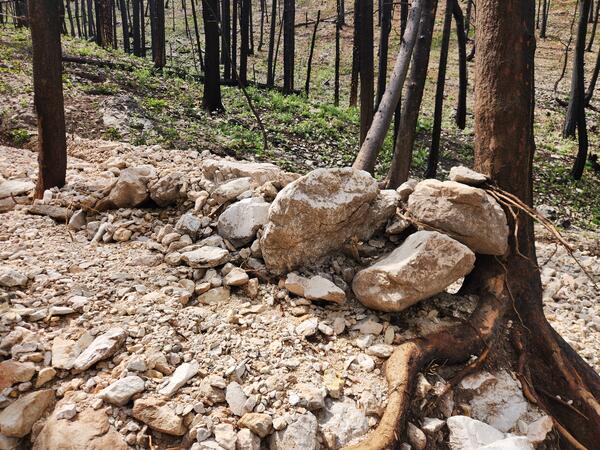
Postfire debris-flow levee in the 2024 Elk fire burn areaPostfire debris-flow levee in the 2024 Elk fire burn area near Dayton, Wyoming. This levee, located near the channel margin contains poorly sorted sediment ranging from fine mud-to boulder-sized. A small amount of woody material is also present in the levee. The levee was formed by a debris flow in the watershed, triggered by a 2025 summer thunderstorm.
Postfire debris-flow levee in the 2024 Elk fire burn area
Postfire debris-flow levee in the 2024 Elk fire burn areaPostfire debris-flow levee in the 2024 Elk fire burn area near Dayton, Wyoming. This levee, located near the channel margin contains poorly sorted sediment ranging from fine mud-to boulder-sized. A small amount of woody material is also present in the levee. The levee was formed by a debris flow in the watershed, triggered by a 2025 summer thunderstorm.
2024 Elk Fire debris flow
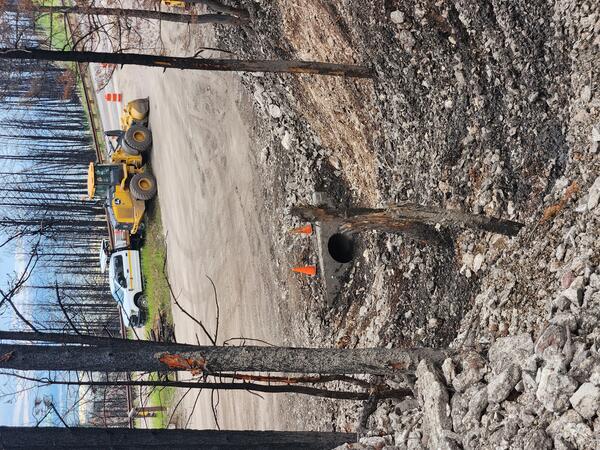
Burned watershed in the 2024 Elk Fire burn area where a debris flow was triggered during a July 2025 thunderstorm. This downstream view shows the watershed outlet near the Crystal Springs Rest Area and U.S. Highway 14. Heavy equipment used to clear the debris remains on site 8 days after the event.
Burned watershed in the 2024 Elk Fire burn area where a debris flow was triggered during a July 2025 thunderstorm. This downstream view shows the watershed outlet near the Crystal Springs Rest Area and U.S. Highway 14. Heavy equipment used to clear the debris remains on site 8 days after the event.
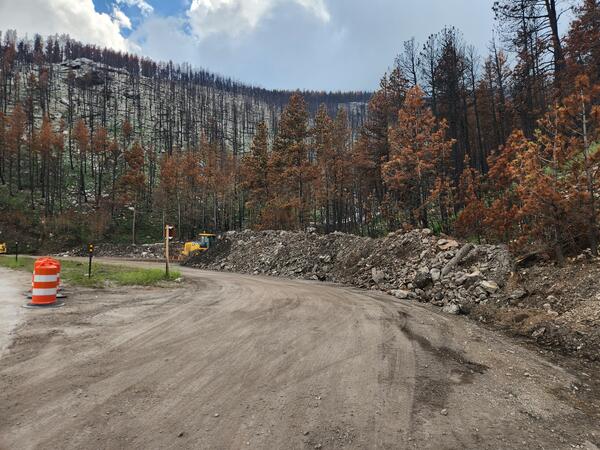
Debris-flow deposit in the 2024 Elk Fire burn area
Debris-flow deposit in the 2024 Elk Fire burn areaDebris-flow deposit in the 2024 Elk Fire burn area. The flow partially covered U.S. Highway 14 west of Dayton, Wyoming. Sediment and woody debris partially covered U.S. Highway 14, near the Crystals Springs Rest Area after a thunderstorm triggered a debris flow in a burned watershed.
Debris-flow deposit in the 2024 Elk Fire burn area
Debris-flow deposit in the 2024 Elk Fire burn areaDebris-flow deposit in the 2024 Elk Fire burn area. The flow partially covered U.S. Highway 14 west of Dayton, Wyoming. Sediment and woody debris partially covered U.S. Highway 14, near the Crystals Springs Rest Area after a thunderstorm triggered a debris flow in a burned watershed.
Postfire debris-flow deposit in the 2024 Elk Fire burn area
Postfire debris-flow deposit in the 2024 Elk Fire burn areaPostfire debris-flow deposit in a channel within the 2024 Elk Fire burn area near Dayton, Wyoming. Following a July 2025 thunderstorm, the channel filled with mud, cobbles, small boulders, and woody debris. This photo, taken near the watershed outlet, looks upslope from U.S. Highway 14.
Postfire debris-flow deposit in the 2024 Elk Fire burn area
Postfire debris-flow deposit in the 2024 Elk Fire burn areaPostfire debris-flow deposit in a channel within the 2024 Elk Fire burn area near Dayton, Wyoming. Following a July 2025 thunderstorm, the channel filled with mud, cobbles, small boulders, and woody debris. This photo, taken near the watershed outlet, looks upslope from U.S. Highway 14.
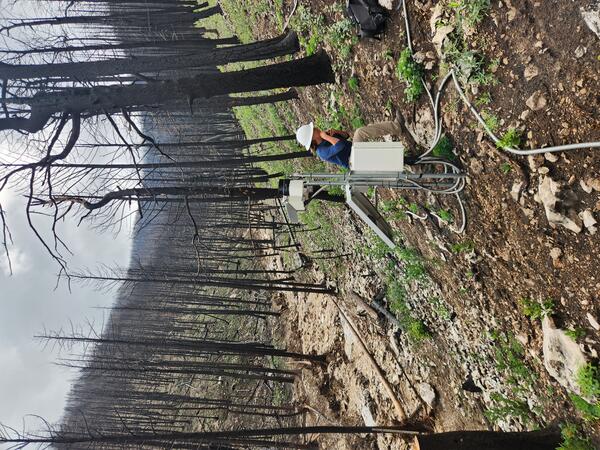
USGS Postfire landslide monitoring station in the 2024 Elk Fire burn area
USGS Postfire landslide monitoring station in the 2024 Elk Fire burn areaUSGS Postfire landslide monitoring station in the 2024 Elk Fire burn area near Dayton, Wyoming. The station records rainfall and soil moisture data and captured video of a debris flow on July 15, 2025. The channel where the flow occurred is visible in the background.
USGS Postfire landslide monitoring station in the 2024 Elk Fire burn area
USGS Postfire landslide monitoring station in the 2024 Elk Fire burn areaUSGS Postfire landslide monitoring station in the 2024 Elk Fire burn area near Dayton, Wyoming. The station records rainfall and soil moisture data and captured video of a debris flow on July 15, 2025. The channel where the flow occurred is visible in the background.
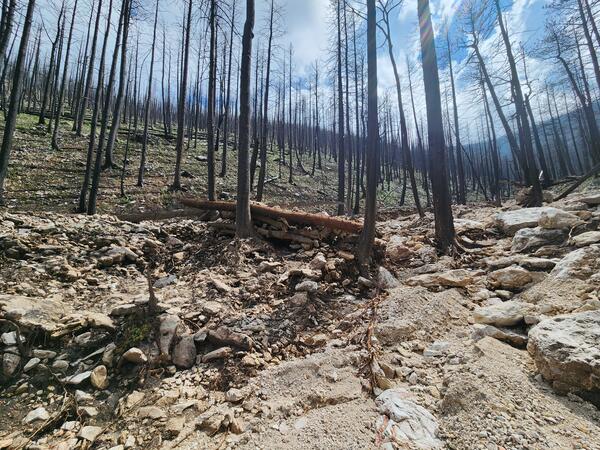
Wood dam in a postfire debris-flow deposit within in the 2024 Elk Fire burn area
Wood dam in a postfire debris-flow deposit within in the 2024 Elk Fire burn areaPostfire debris-flow deposit in the 2024 Elk Fire burn area near Dayton, Wyoming. A debris flow triggered by a July 2025 thunderstorm deposited sediment and woody debris within the channel. Downed trees, oriented perpendicular to the channel banks, form a wood dam.
Wood dam in a postfire debris-flow deposit within in the 2024 Elk Fire burn area
Wood dam in a postfire debris-flow deposit within in the 2024 Elk Fire burn areaPostfire debris-flow deposit in the 2024 Elk Fire burn area near Dayton, Wyoming. A debris flow triggered by a July 2025 thunderstorm deposited sediment and woody debris within the channel. Downed trees, oriented perpendicular to the channel banks, form a wood dam.
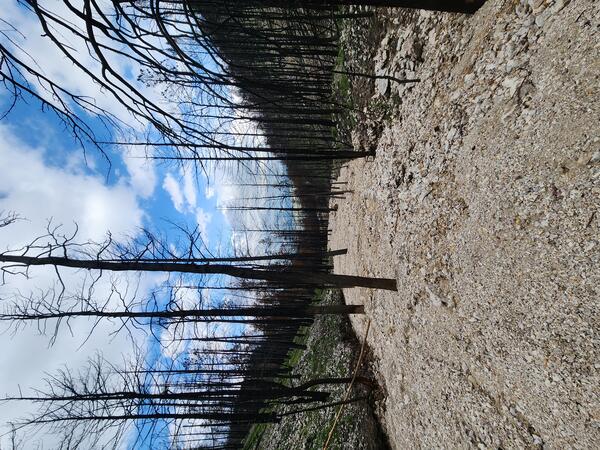
Postfire debris-flow deposit in the 2024 Elk Fire burn area
Postfire debris-flow deposit in the 2024 Elk Fire burn areaPostfire debris-flow deposit in a channel within the 2024 Elk Fire burn area near Dayton, Wyoming. Following a July 2025 thunderstorm, the channel filled with mud, cobbles, small boulders, and woody debris. The material shown here is finer than deposits near the watershed outlet. Several trees in the channel show evidence of damage from the debris flow.
Postfire debris-flow deposit in the 2024 Elk Fire burn area
Postfire debris-flow deposit in the 2024 Elk Fire burn areaPostfire debris-flow deposit in a channel within the 2024 Elk Fire burn area near Dayton, Wyoming. Following a July 2025 thunderstorm, the channel filled with mud, cobbles, small boulders, and woody debris. The material shown here is finer than deposits near the watershed outlet. Several trees in the channel show evidence of damage from the debris flow.
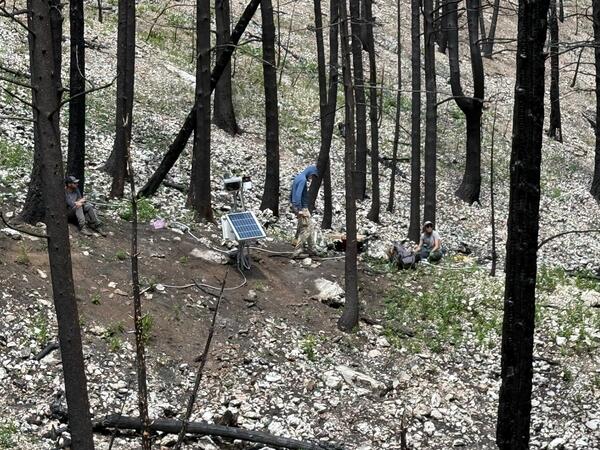
USGS scientists install a postfire monitoring station in the Elk Fire burn area near Dayton, Wyoming.
USGS scientists install a postfire monitoring station in the Elk Fire burn area near Dayton, Wyoming.USGS scientists install a postfire monitoring station in the Elk Fire burn area near Dayton, Wyoming. Installed less than a year after the wildfire, the station records hydrologic responses during rainfall on the burned landscape.
USGS scientists install a postfire monitoring station in the Elk Fire burn area near Dayton, Wyoming.
USGS scientists install a postfire monitoring station in the Elk Fire burn area near Dayton, Wyoming.USGS scientists install a postfire monitoring station in the Elk Fire burn area near Dayton, Wyoming. Installed less than a year after the wildfire, the station records hydrologic responses during rainfall on the burned landscape.
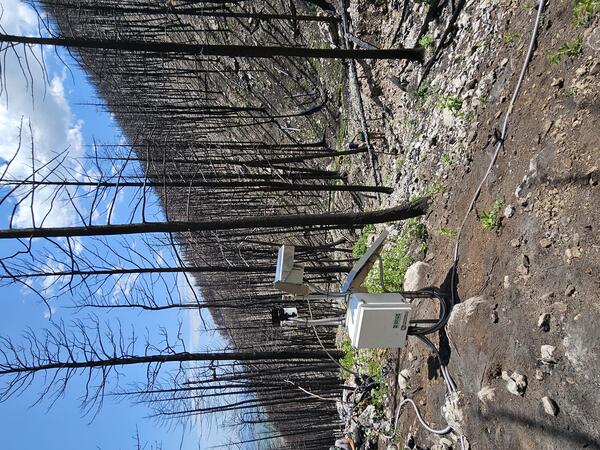
USGS postfire monitoring station in the Elk Fire burn area near Dayton, Wyoming.
USGS postfire monitoring station in the Elk Fire burn area near Dayton, Wyoming.USGS postfire monitoring station in the Elk Fire burn area near Dayton, Wyoming. Installed less than a year after the wildfire, the station records hydrologic responses during rainfall on the burned landscape. Located above a channel that was assessed to have a very high likelihood of debris flows, it collects data on soil properties and rainfall.
USGS postfire monitoring station in the Elk Fire burn area near Dayton, Wyoming.
USGS postfire monitoring station in the Elk Fire burn area near Dayton, Wyoming.USGS postfire monitoring station in the Elk Fire burn area near Dayton, Wyoming. Installed less than a year after the wildfire, the station records hydrologic responses during rainfall on the burned landscape. Located above a channel that was assessed to have a very high likelihood of debris flows, it collects data on soil properties and rainfall.
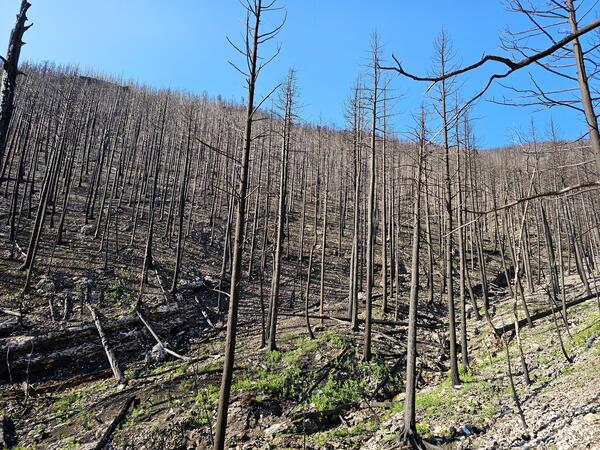
Crystal Springs watershed in the 2024 Elk fire burn area
Crystal Springs watershed in the 2024 Elk fire burn areaCrystal springs watershed in the 2024 Elk fire burn area. The USGS installed a monitoring station here to record postfire hydrologic responses during rainfall events. This photo was taken before any flooding or debris flows occurred, but the station later recorded a debris flow during a July 2025 thunderstorm.
Crystal Springs watershed in the 2024 Elk fire burn area
Crystal Springs watershed in the 2024 Elk fire burn areaCrystal springs watershed in the 2024 Elk fire burn area. The USGS installed a monitoring station here to record postfire hydrologic responses during rainfall events. This photo was taken before any flooding or debris flows occurred, but the station later recorded a debris flow during a July 2025 thunderstorm.
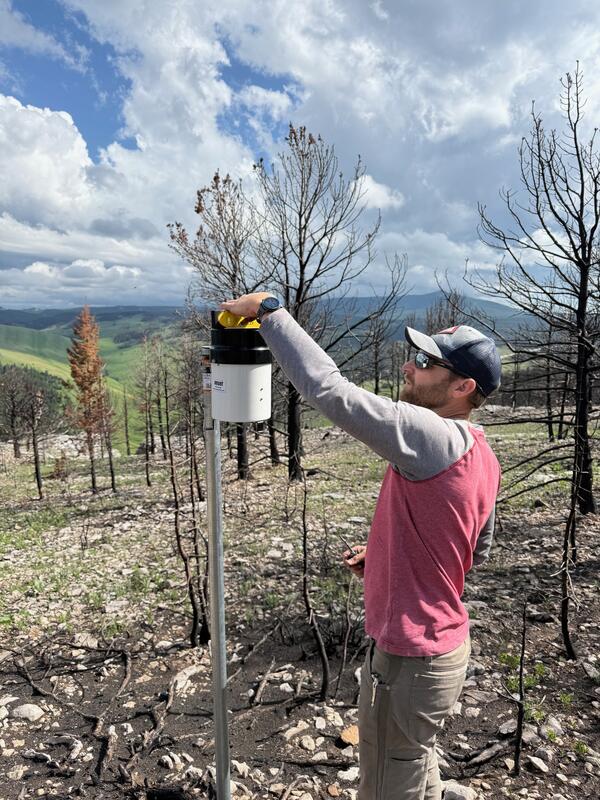
Rain gage in the 2024 Elk fire burn area
A USGS hydrologist checks a newly installed rain gage in the Elk Fire burn area near Dayton, Wyoming to ensure that it is level. USGS scientists installed several rain gages throughout the Elk Fire burn area. Rain gage data is paired with observations of flooding and debris-flows to test how well the USGS hazard assessment models are working.
A USGS hydrologist checks a newly installed rain gage in the Elk Fire burn area near Dayton, Wyoming to ensure that it is level. USGS scientists installed several rain gages throughout the Elk Fire burn area. Rain gage data is paired with observations of flooding and debris-flows to test how well the USGS hazard assessment models are working.