



Map of the landslide and flooding extent of the 2026 Nepal Debris Avalanche and Flash Flood
Images
Browse our photos of landslide research and post-landslide investigations.
Filter Total Items: 271
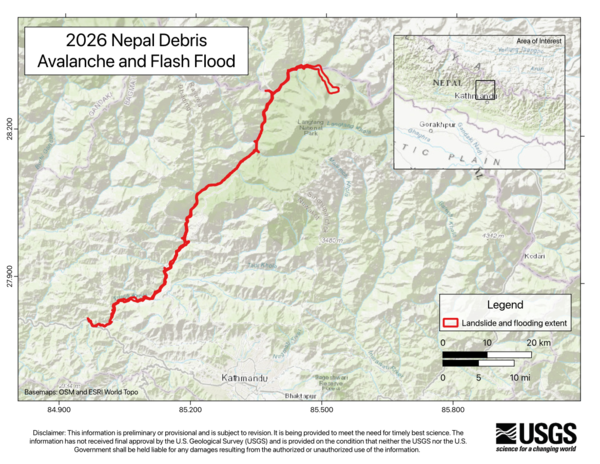
2026 Nepal Debris Avalanche and Flash Flood Map
Map of the landslide and flooding extent of the 2026 Nepal Debris Avalanche and Flash Flood
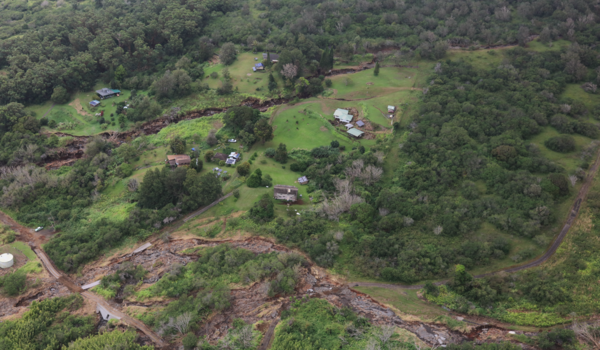
2026 Hurricane Lala landslide source areas
Field photo of landslide source areas from 2026 Hurricane Lala landslide response. Photograph by the U.S. Geological Survey.
Field photo of landslide source areas from 2026 Hurricane Lala landslide response. Photograph by the U.S. Geological Survey.
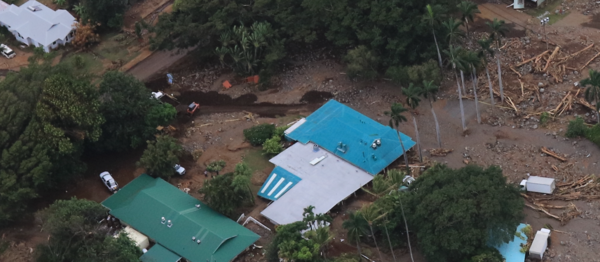
Blocked culvert under roadway being cleaned out after 2026 Hurricane Lala landslides
Blocked culvert under roadway being cleaned out after 2026 Hurricane Lala landslidesField photo of blocked culvert under roadway being cleaned out. Photograph by the U.S. Geological Survey.
Blocked culvert under roadway being cleaned out after 2026 Hurricane Lala landslides
Blocked culvert under roadway being cleaned out after 2026 Hurricane Lala landslidesField photo of blocked culvert under roadway being cleaned out. Photograph by the U.S. Geological Survey.
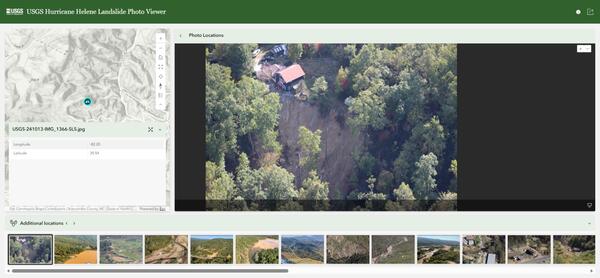
Screenshot of USGS Hurricane Helene Landslide Photo Viewer
Screenshot of USGS Hurricane Helene Landslide Photo ViewerScreenshot of the USGS Hurricane Helene Landslide Photo Viewer taken on 7/28/2026.
Screenshot of USGS Hurricane Helene Landslide Photo Viewer
Screenshot of USGS Hurricane Helene Landslide Photo ViewerScreenshot of the USGS Hurricane Helene Landslide Photo Viewer taken on 7/28/2026.
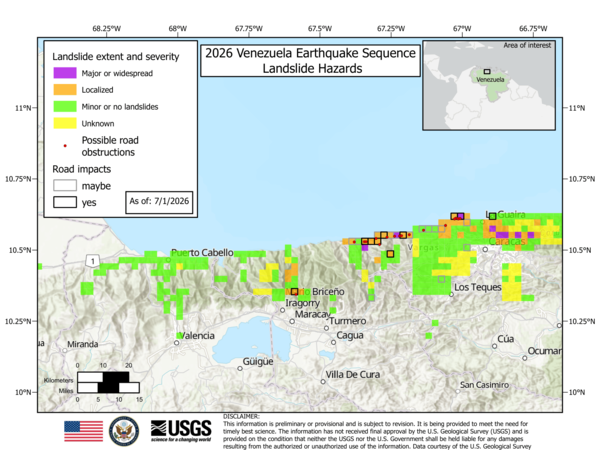
2026 Venezuela Earthquake Sequence - Landslide Hazards
2026 Venezuela Earthquake Sequence - Landslide HazardsUSGS Imagery assessment of landslide extent and severity (as of 07/01/26, 4:30 PM MDT). Verification remains ongoing. Color is based on USGS’s remote assessment. Landslide impact is classified as “Unknown” (yellow), “Minor or none” (green), “Localized” (orange), or “Major or Widespread” (purple).
2026 Venezuela Earthquake Sequence - Landslide Hazards
2026 Venezuela Earthquake Sequence - Landslide HazardsUSGS Imagery assessment of landslide extent and severity (as of 07/01/26, 4:30 PM MDT). Verification remains ongoing. Color is based on USGS’s remote assessment. Landslide impact is classified as “Unknown” (yellow), “Minor or none” (green), “Localized” (orange), or “Major or Widespread” (purple).
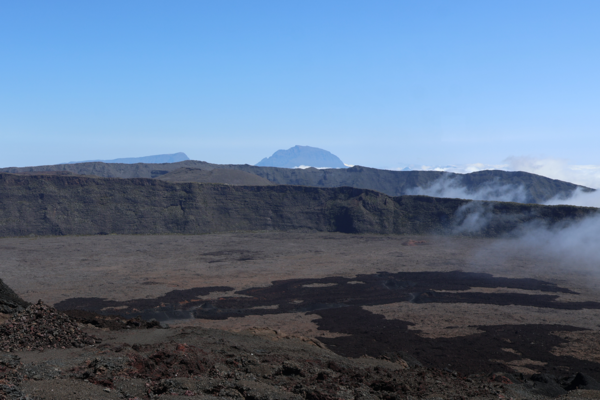
Piton de la Fournaise Collapse Scarps
Photograph taken from the western flank of the Piton de la Fournaise (Reunion Island, Indian Ocean) looking westward to Piton des Neiges. Cliffs in image are scarps associated with previous edifice collapses.
Photograph taken from the western flank of the Piton de la Fournaise (Reunion Island, Indian Ocean) looking westward to Piton des Neiges. Cliffs in image are scarps associated with previous edifice collapses.
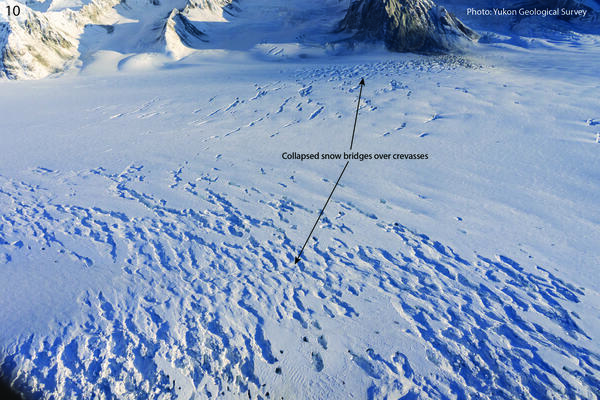
12-12-25 Hubbard Glacier Collapsed Snow Bridges
Collapsed snow bridges on crevasse field on the Hubbard Glacier between McArthur Peak and Mt. King George. Photo courtesy of Yukon Geological Survey.
Collapsed snow bridges on crevasse field on the Hubbard Glacier between McArthur Peak and Mt. King George. Photo courtesy of Yukon Geological Survey.
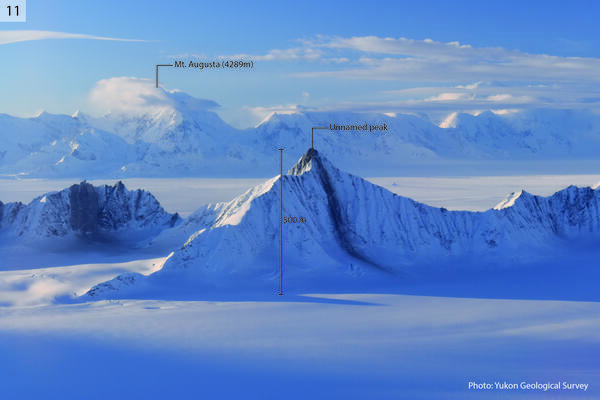
12-12-25 Mt. Vancouver and Mt. Logan Arete Landslides
12-12-25 Mt. Vancouver and Mt. Logan Arete LandslidesCollapsed snow bridges on crevasse field on the Hubbard Glacier between McArthur Peak and Mt. King George. Photo courtesy of Yukon Geological Survey.
12-12-25 Mt. Vancouver and Mt. Logan Arete Landslides
12-12-25 Mt. Vancouver and Mt. Logan Arete LandslidesCollapsed snow bridges on crevasse field on the Hubbard Glacier between McArthur Peak and Mt. King George. Photo courtesy of Yukon Geological Survey.
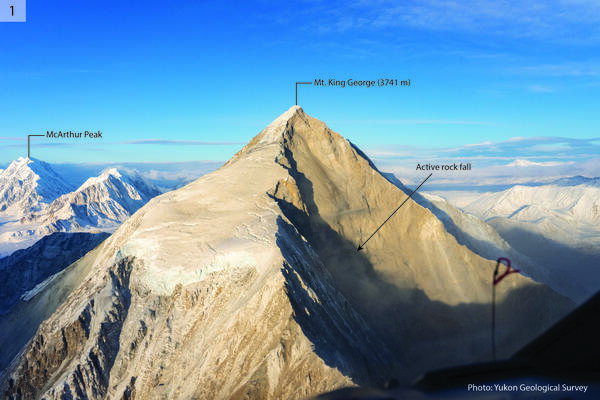
12-12-25 Mt. King George East Face Landslide
Recent landslide on the east face of Mt. King George (3741 m) with clouds of dust from ongoing rockfall. Debris descended over 1500 m to the glacier below. Photo courtesy of Yukon Geological Survey.
Recent landslide on the east face of Mt. King George (3741 m) with clouds of dust from ongoing rockfall. Debris descended over 1500 m to the glacier below. Photo courtesy of Yukon Geological Survey.
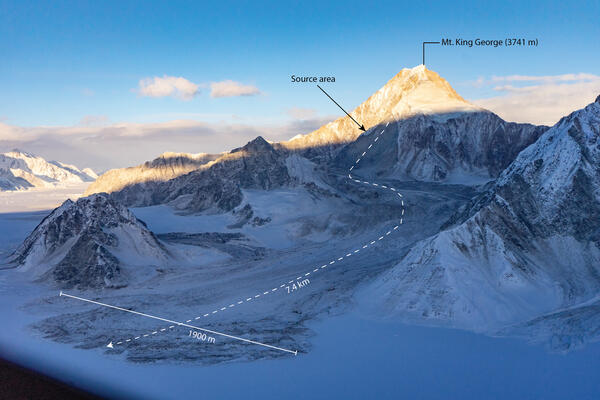
12-12-25 Mt. King George Landslide with Large Runout
12-12-25 Mt. King George Landslide with Large RunoutLarge landslide on the southwest side of Mt. King George. The main debris lobe is 1800 m wide, and material would have travelled approximately 6 km from the source area (triangular scar) in the background. Photo courtesy of Yukon Geological Survey.
12-12-25 Mt. King George Landslide with Large Runout
12-12-25 Mt. King George Landslide with Large RunoutLarge landslide on the southwest side of Mt. King George. The main debris lobe is 1800 m wide, and material would have travelled approximately 6 km from the source area (triangular scar) in the background. Photo courtesy of Yukon Geological Survey.
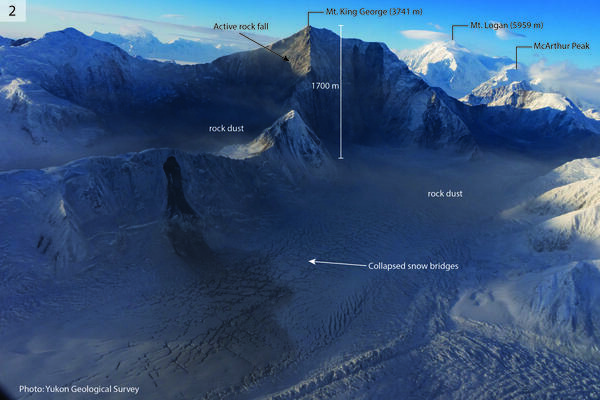
12-12-25 Mt. King George East Glacier Landslides
Landslides on the northeast side of Mt. King George with clouds of rock dust in the air caused by ongoing activity. Elevation difference between the peak and the glacier is at least 1700 m. Also note the numerous collapsed snow bridges on the glacier. Photo courtesy of Yukon Geological Survey.
Landslides on the northeast side of Mt. King George with clouds of rock dust in the air caused by ongoing activity. Elevation difference between the peak and the glacier is at least 1700 m. Also note the numerous collapsed snow bridges on the glacier. Photo courtesy of Yukon Geological Survey.
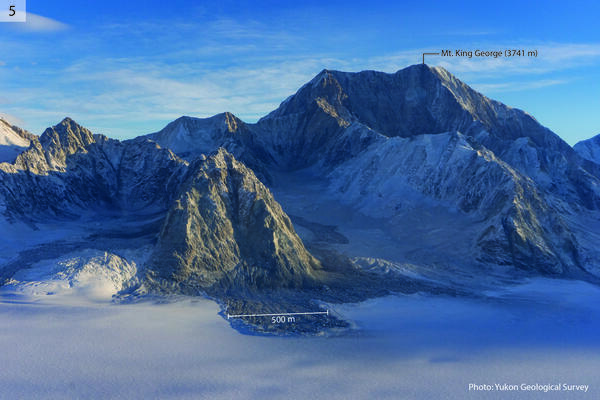
12-12-25 Mt. King George West Face Landslides
Landslides on the west side of Mt. King George. The central debris lobe is 500 m wide. Photo courtesy of Yukon Geological Survey.
Landslides on the west side of Mt. King George. The central debris lobe is 500 m wide. Photo courtesy of Yukon Geological Survey.
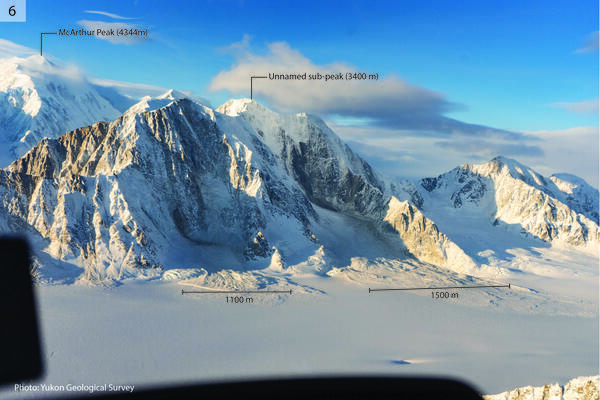
12-12-25 McArthur Peak East Face Landslides & Avalanches
12-12-25 McArthur Peak East Face Landslides & AvalanchesLandslides and avalanches on the east side of McArthur Peak. The left-hand debris lobe is 1100 m wide, and the right-hand debris lobe is 1500 m wide. The elevation difference between the peak and the glacier is approximately 1500 m. Photo courtesy of Yukon Geological Survey.
12-12-25 McArthur Peak East Face Landslides & Avalanches
12-12-25 McArthur Peak East Face Landslides & AvalanchesLandslides and avalanches on the east side of McArthur Peak. The left-hand debris lobe is 1100 m wide, and the right-hand debris lobe is 1500 m wide. The elevation difference between the peak and the glacier is approximately 1500 m. Photo courtesy of Yukon Geological Survey.
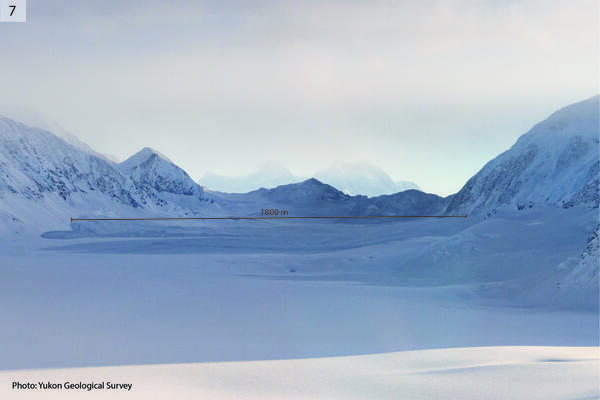
12-12-25 Mt. King George North Snow Avalanches
Snow avalanche on the north side of Mt. King George. The debris lobe is 1800 m long and runs up onto the hillside across the valley. Photo courtesy of Yukon Geological Survey.
Snow avalanche on the north side of Mt. King George. The debris lobe is 1800 m long and runs up onto the hillside across the valley. Photo courtesy of Yukon Geological Survey.
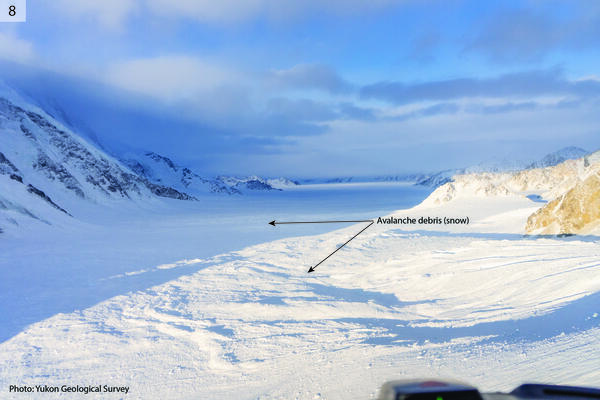
12-12-25 McArthur Valley Snow Avalanches
Snow avalanches in the valley on the east side of McArthur Peak. Photo courtesy of Yukon Geological Survey.
Snow avalanches in the valley on the east side of McArthur Peak. Photo courtesy of Yukon Geological Survey.
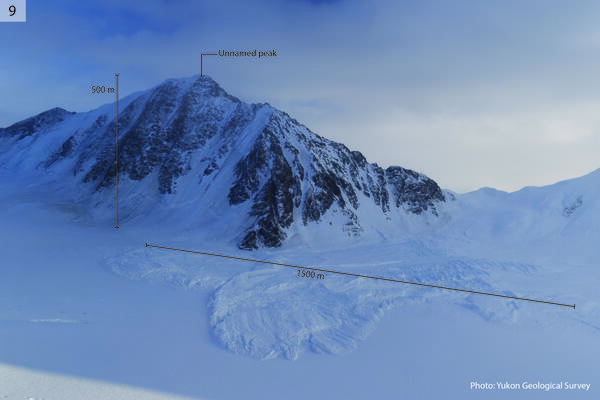
12-12-25 McArthur Peak Snow Avalanche
Large snow avalanche in valley east of McArthur Peak. Debris lobe is 1500 m wide. Photo courtesy of Yukon Geological Survey.
Large snow avalanche in valley east of McArthur Peak. Debris lobe is 1500 m wide. Photo courtesy of Yukon Geological Survey.
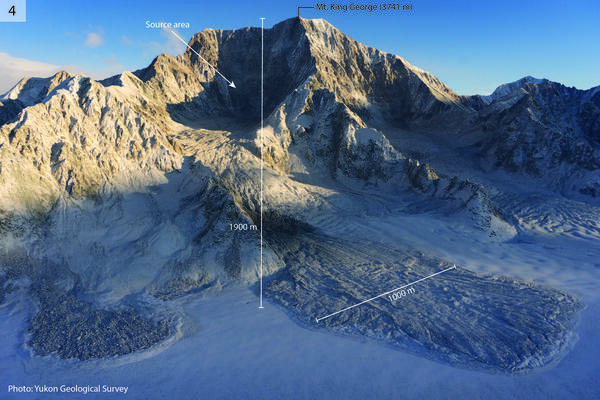
12-12-25 Mt. King George West Face Landslides
Large landslides on the southwest side of Mt. King George. The main debris lobe on the right is approximately 1000 m wide. The elevation difference between the peak and the glacier is approximately 1900 m. Photo courtesy of Yukon Geological Survey.
Large landslides on the southwest side of Mt. King George. The main debris lobe on the right is approximately 1000 m wide. The elevation difference between the peak and the glacier is approximately 1900 m. Photo courtesy of Yukon Geological Survey.
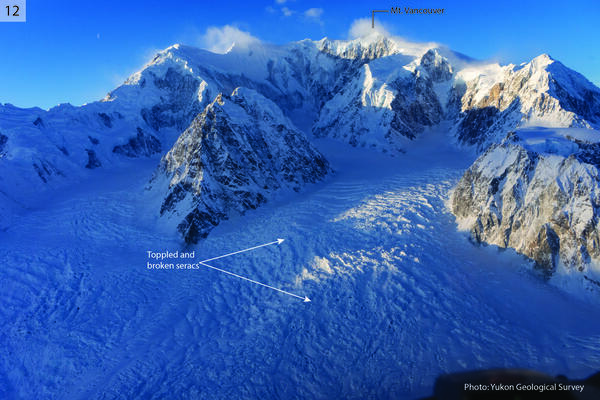
12-12-25 Mt. Vancouver Toppled Seracs
Seracs in an icefall on the east side of Mt. Vancouver (4812 m), toppled by shaking. Field of view is approximately 3.5 km wide. Photo courtesy of Yukon Geological Survey.
Seracs in an icefall on the east side of Mt. Vancouver (4812 m), toppled by shaking. Field of view is approximately 3.5 km wide. Photo courtesy of Yukon Geological Survey.
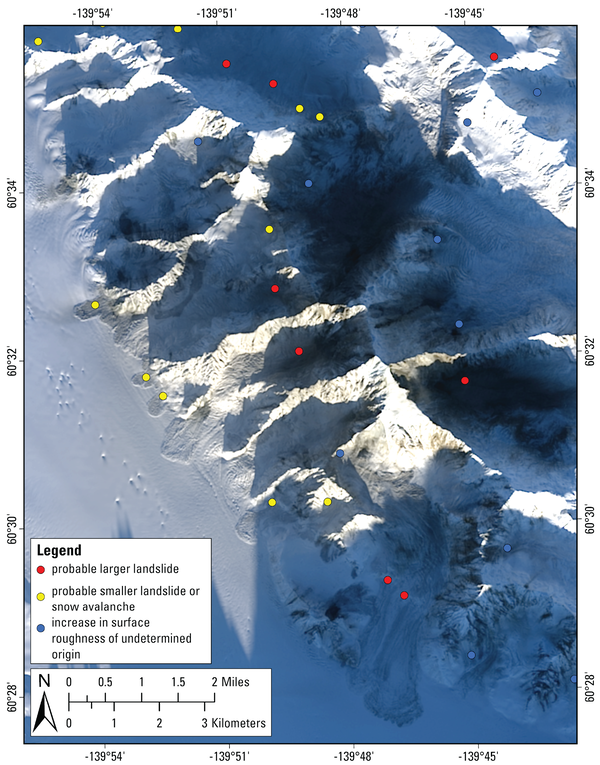
2025 M7.0 Hubbard Glacier Earthquake-Triggered Landslides and Snow Avalanches Satellite Imagery
2025 M7.0 Hubbard Glacier Earthquake-Triggered Landslides and Snow Avalanches Satellite ImageryLandsat 9 true color, pan-sharpened satellite image collected on December 10, 2025, showing landslides triggered by the M7.0 Hubbard Glacier Earthquake on the slopes of Mount King George. Landslide points were mapped from SAR change detection.
2025 M7.0 Hubbard Glacier Earthquake-Triggered Landslides and Snow Avalanches Satellite Imagery
2025 M7.0 Hubbard Glacier Earthquake-Triggered Landslides and Snow Avalanches Satellite ImageryLandsat 9 true color, pan-sharpened satellite image collected on December 10, 2025, showing landslides triggered by the M7.0 Hubbard Glacier Earthquake on the slopes of Mount King George. Landslide points were mapped from SAR change detection.
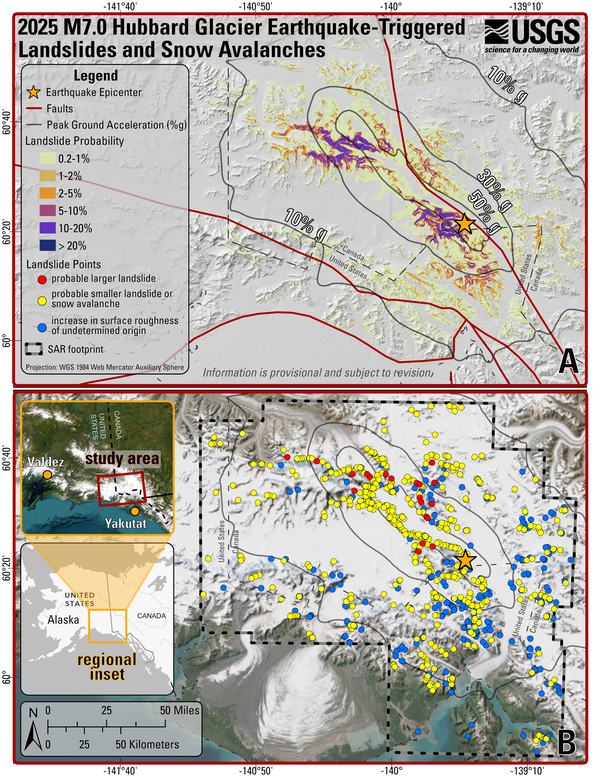
2025 M7.0 Hubbard Glacier Earthquake-Triggered Landslides and Snow Avalanches Overview Map
2025 M7.0 Hubbard Glacier Earthquake-Triggered Landslides and Snow Avalanches Overview MapOverview maps at the same scale showing the epicenter of the M7.0 Hubbard Glacier Earthquake and modeled peak ground acceleration contours. A) shows the probability of landslides triggered by the earthquake and mapped faults, and B) shows the locations of landslides mapped using synthetic aperture radar (SAR) change detection.
2025 M7.0 Hubbard Glacier Earthquake-Triggered Landslides and Snow Avalanches Overview Map
2025 M7.0 Hubbard Glacier Earthquake-Triggered Landslides and Snow Avalanches Overview MapOverview maps at the same scale showing the epicenter of the M7.0 Hubbard Glacier Earthquake and modeled peak ground acceleration contours. A) shows the probability of landslides triggered by the earthquake and mapped faults, and B) shows the locations of landslides mapped using synthetic aperture radar (SAR) change detection.
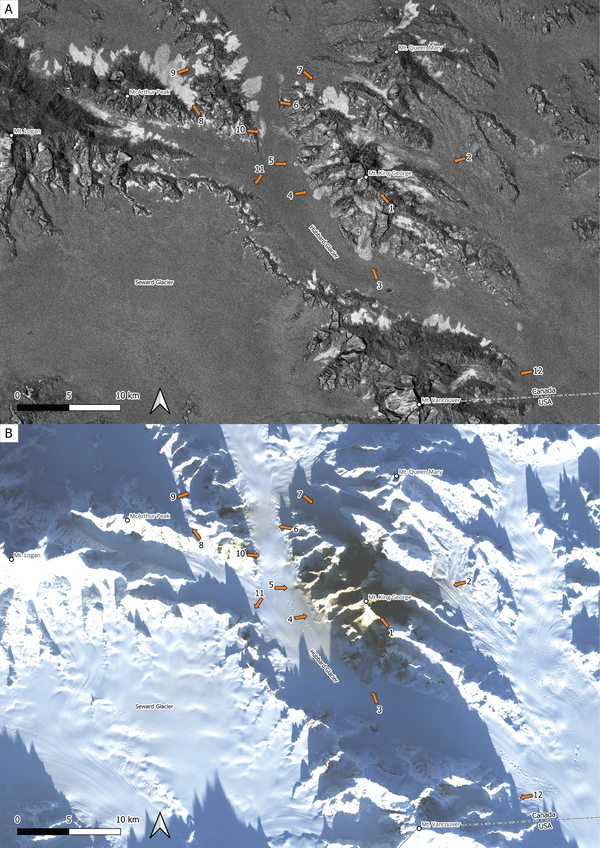
12-11-25 Satellite Imagery of Surface Roughness at Hubbard Glacier
12-11-25 Satellite Imagery of Surface Roughness at Hubbard GlacierA) Map of Sentinel-1 radar surface roughness change with photo locations and azimuths. B) Landsat 8 optical imagery from December 11, 2025, with photo locations and azimuths.
12-11-25 Satellite Imagery of Surface Roughness at Hubbard Glacier
12-11-25 Satellite Imagery of Surface Roughness at Hubbard GlacierA) Map of Sentinel-1 radar surface roughness change with photo locations and azimuths. B) Landsat 8 optical imagery from December 11, 2025, with photo locations and azimuths.