U.S. flag

An official website of the United States government

The U.S. Geological Survey (USGS) is excited to announce the release of the Annual National Land Cover Database (NLCD) Conterminous U.S. (CU), Collection 1.2. This release builds on the popular Annual NLCD CU Collection 1.0 by extending the dataset through 2025. 

Produced at the USGS Earth Resources Observation and Science (EROS) Center, Annual NLCD now provides land cover and land cover change information for the conterminous United States for each year from 1985 through 2025.

While Annual NLCD focuses on monitoring the surface of the Earth, it relies on imagery captured from 438 miles up. Satellites in the Landsat Program provide the extensive time series of data required to characterize distinct features and change on the ground.

Media
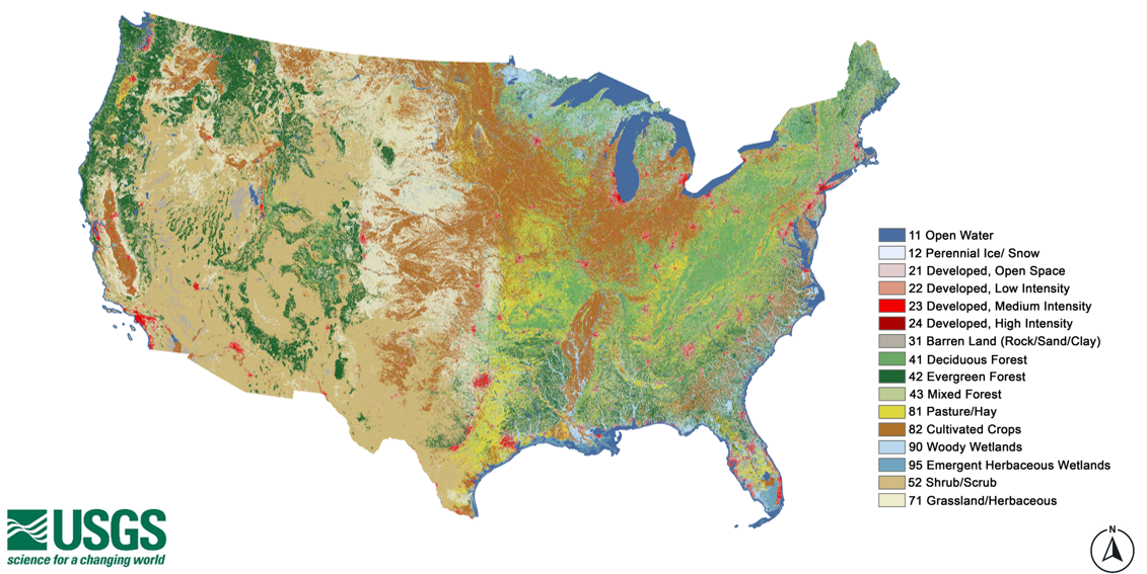
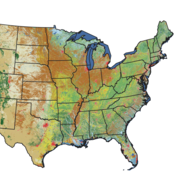
Map of land cover across the United States with legend of colors 
Annual National Land Cover Database (NLCD) map of the United States with classifications for types of land cover. Produced by the USGS Earth Resources Observation and Science (EROS) Center.

Land Cover Characteristics in a Suite of Six Products

Annual NLCD CU Collection 1.2 adds 2025 to the established suite of six raster-based land use and land cover science products for the conterminous United States: 

  1. Land Cover – This dataset provides 16 land cover classes such as deciduous and evergreen forest, grassland, cultivated crops and developed. 
  2. Land Cover Change – These data represent annual land cover changes from one year to the next. 
  3. Land Cover Confidence – This layer provides confidence levels for the land cover classifications. 
  4. Fractional Impervious Surface – This component provides the proportion of land covered by developed surfaces, such as roads and rooftops. 
  5. Impervious Descriptor – This feature offers additional information about impervious surfaces by distinguishing between roads and other built surfaces. 
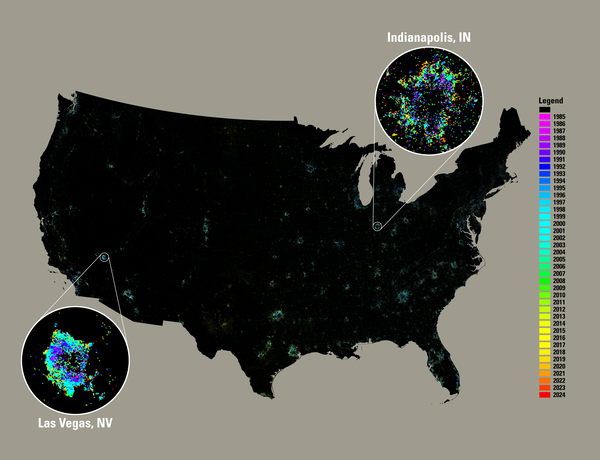
  6. Spectral Change Day of Year – This attribute captures the specific day of the year when significant changes in surface reflectance occurred. 
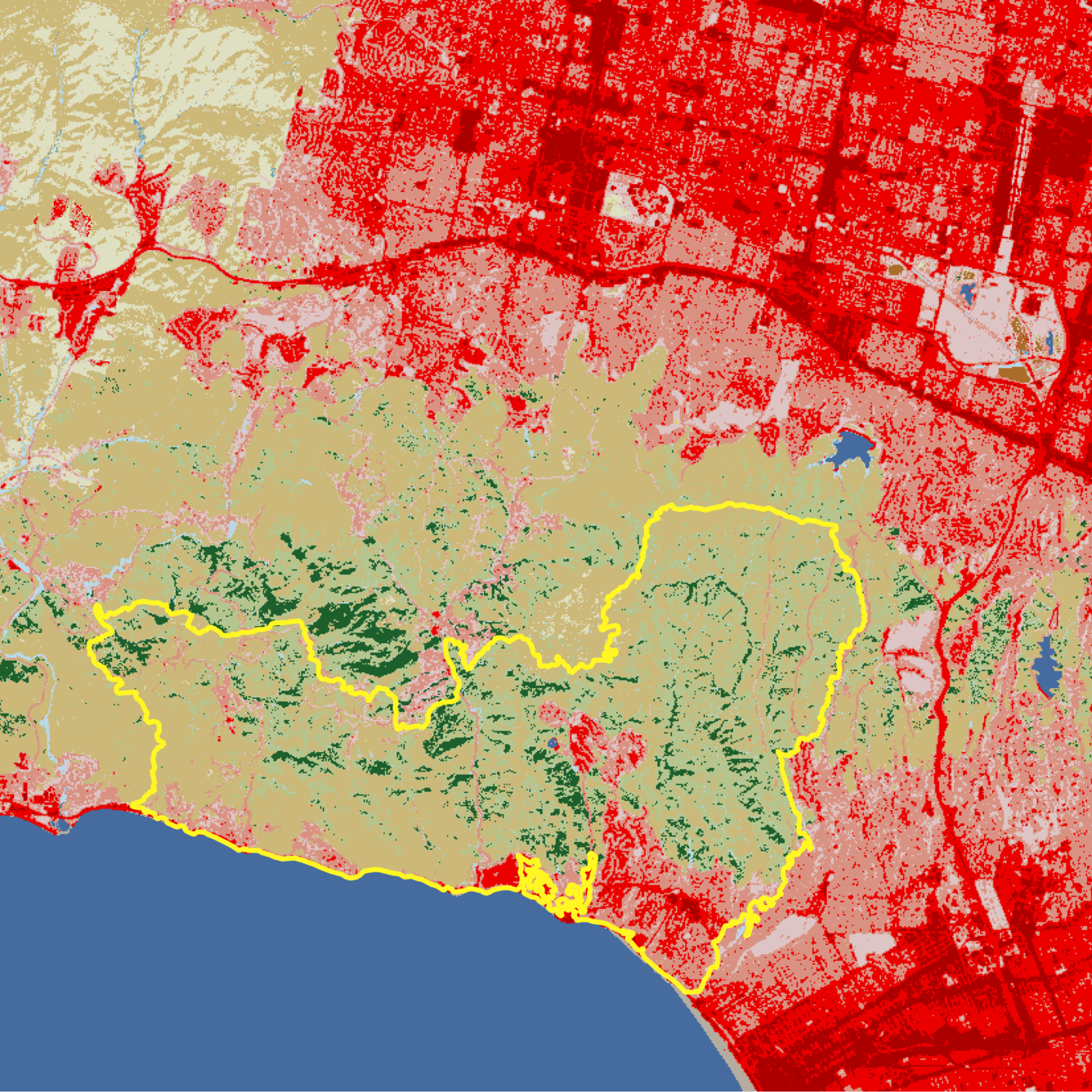
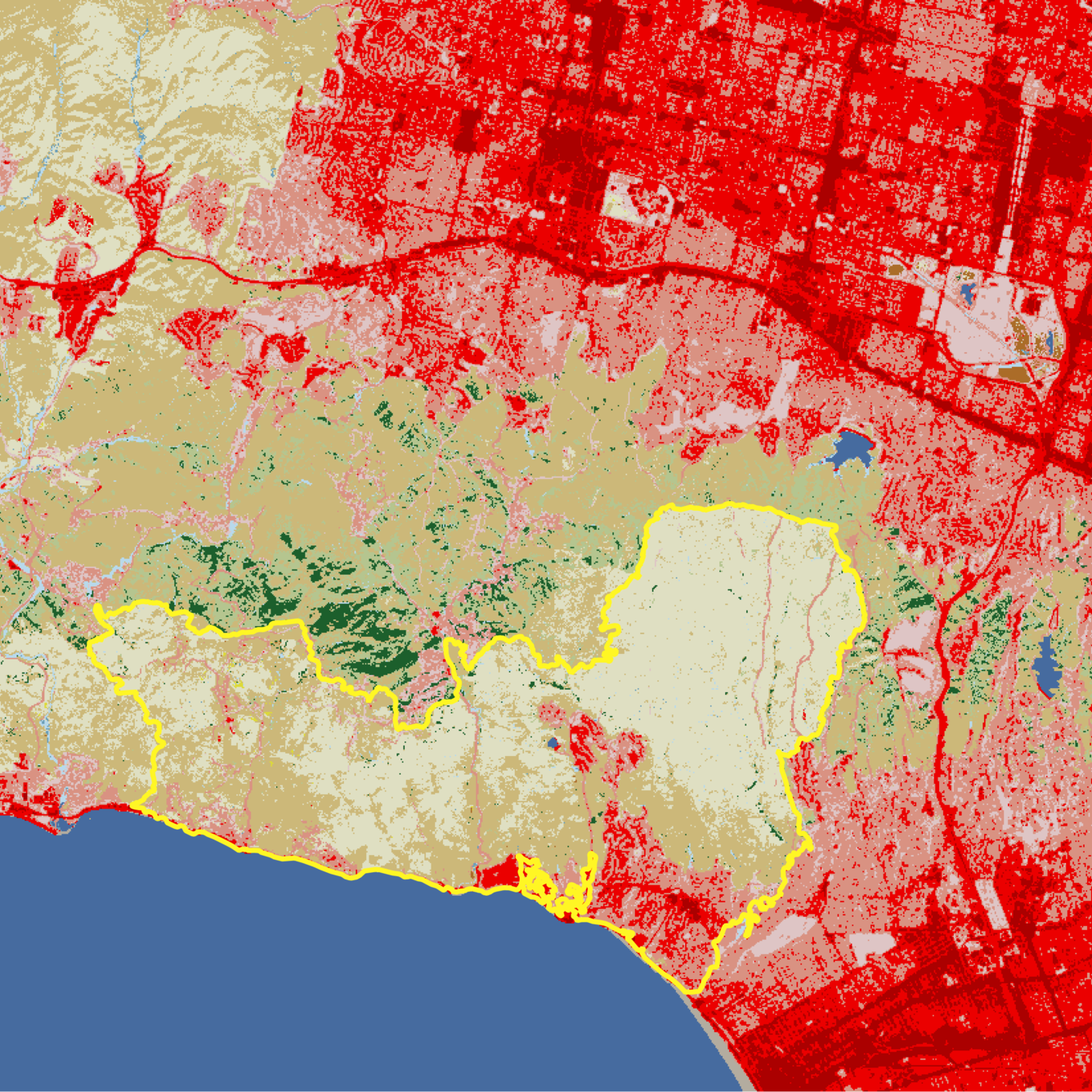
This Annual National Land Cover Database (NLCD) slider shows before (2024) and after (2025) land cover images of the January 2025 Palisades Fire in the Los Angeles, California, area. The yellow outline represents the fire's perimeter. The light tan color indicates grassland; medium brown is shrub/scrub land cover such as chapparal; shades of green are forests; and shades of red are developed cities and roads, with darker shades indicating more intense areas of development. Dark blue is open water, including the Pacific Ocean at the bottom left. Much of the shrub/scrub and evergreen forest areas within the fire perimeter were classified as grassland after the fire.

The Annual NLCD intra-collection annual update strategy was designed to ensure consistency with previous product releases (i.e., 1.0, 1.1), maintain reliability in time-series analyses, and develop products in a resource-efficient manner. Users of the data can expect the core algorithms of Annual NLCD to remain stable throughout the duration of all Collection 1 dot product releases. Items below detail what’s new in Collection 1.2:

  1. New 2025 data for all 6 products listed above.
  2. Updated Spectral Change Day of Year products for 2021 – 2024 to maintain consistency between spectral change characteristics and the downstream land cover products.
Media
Animated GIF of land cover change in the Great Salt Lake area of Utah from 1985 to 2025
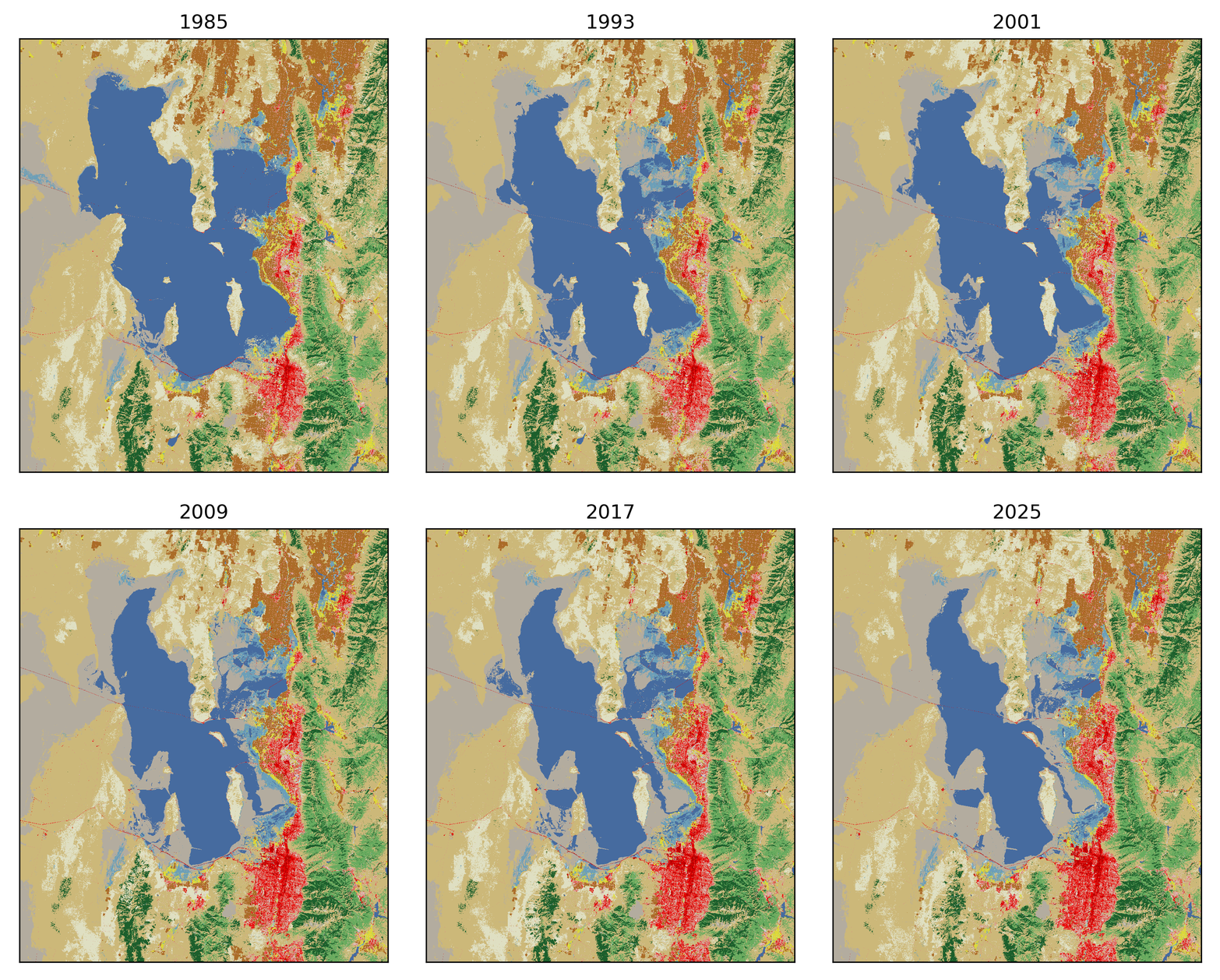
This Annual National Land Cover Database (NLCD) animation shows the Great Salt Lake area in Utah from 1985 to 2025. Darker blue represents open water, while lighter blues represent wetlands. Shades of green signify various types of forests. Shades of red are developed cities and roads, with darker shades indicating more intense areas of development. Light tan is grassland; darker tan is shrub/scrub land cover; yellow is pasture/hay; and brown is cropland. Gray is barren land. During the mid-1980s, the Great Salt Lake's water levels reached historic highs. Since then, water levels have fluctuated year to year but ultimately dwindled. More development has occurred during the animation's time span as well.

Data Access

The Annual NLCD products are available for download on EarthExplorer, the MRLC Web Viewer, the MRLC Mosaic Download websiteScienceBase, as Annual NLCD web services, and through USGS AWS S3 (Oregon us-west-2 region). 

For quick and easy change analyses, try out the NLCD Enhanced Visualization and Analysis (EVA) tool

See more information on the Annual NLCD data access page.

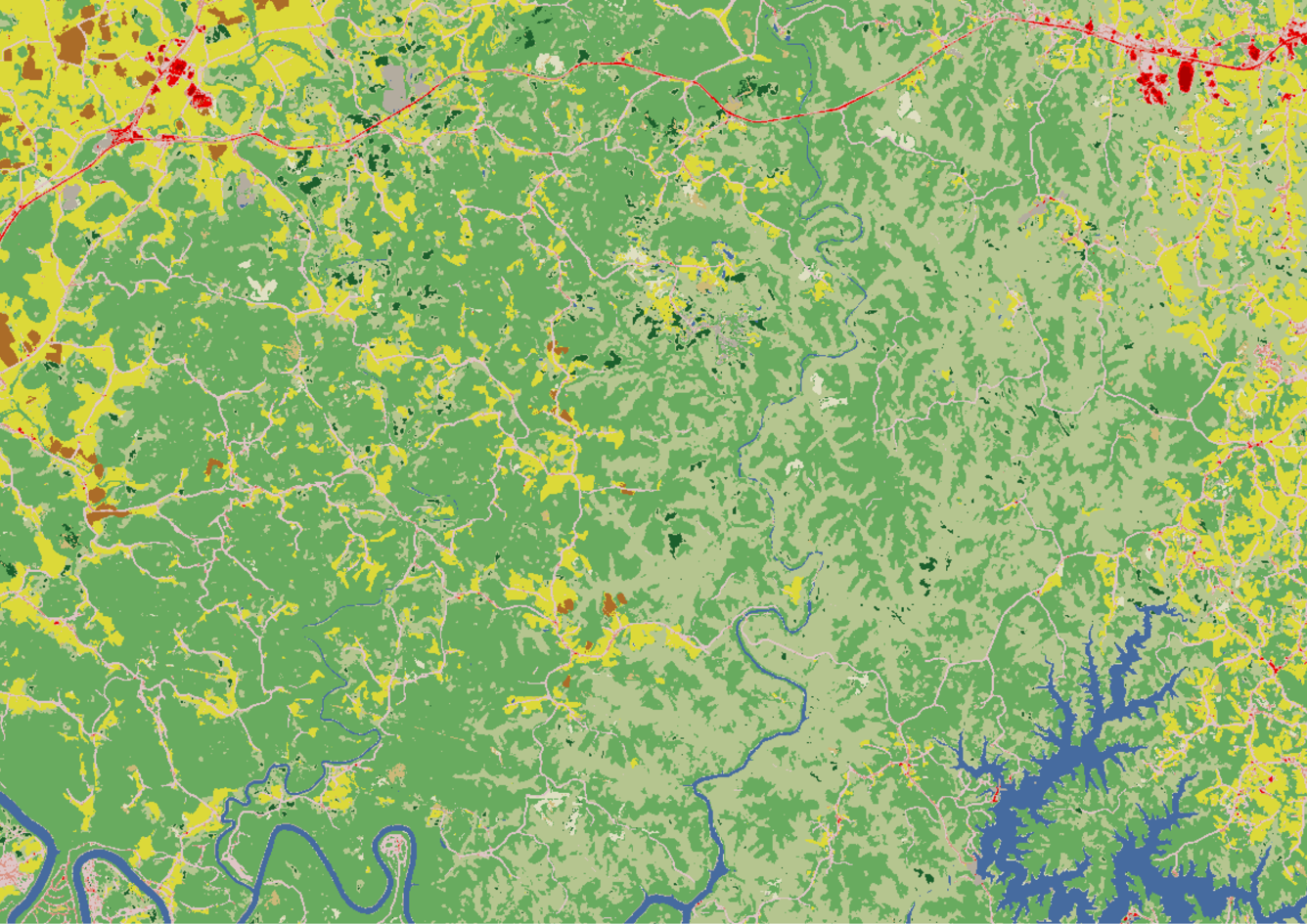
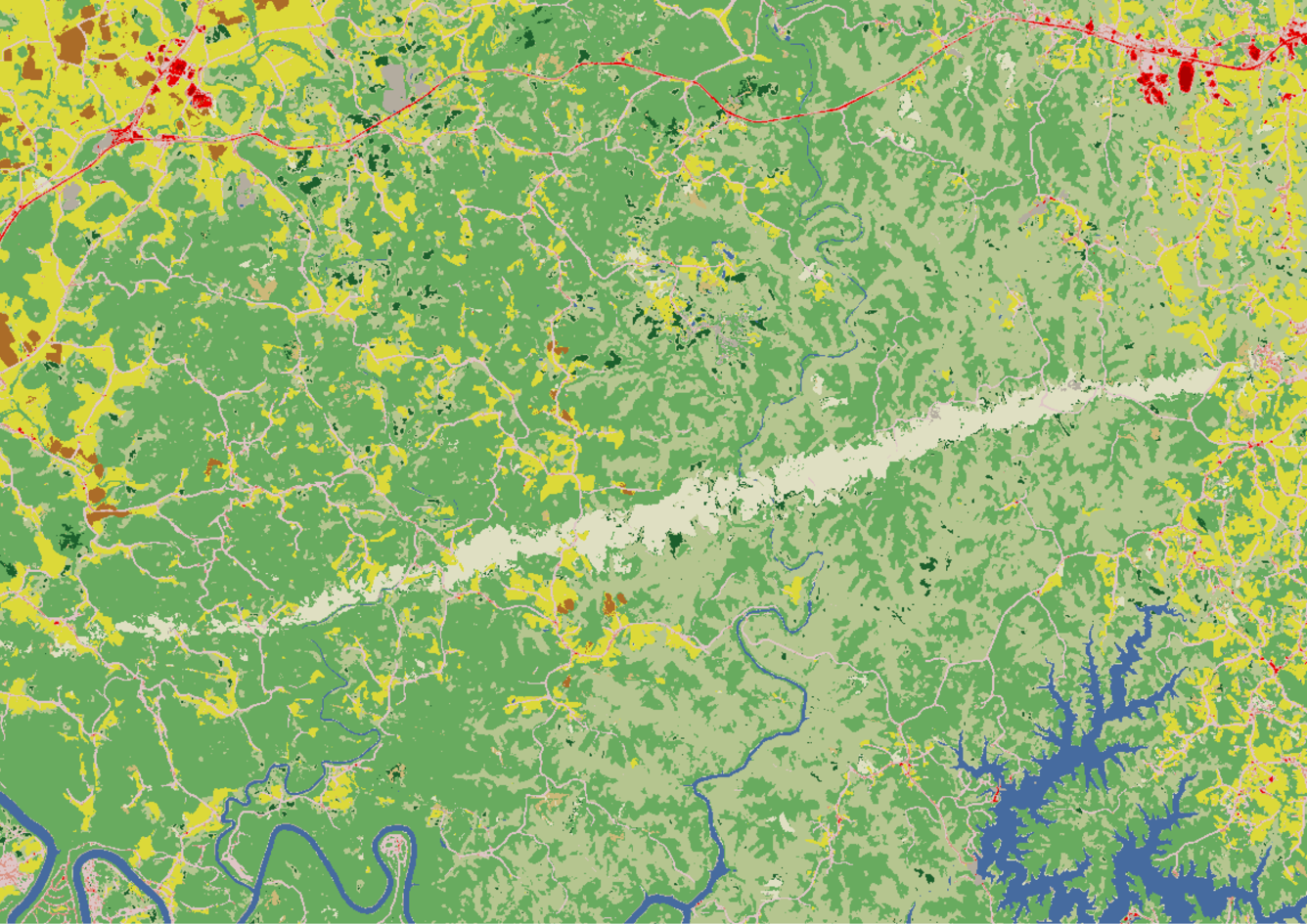
This Annual National Land Cover Database (NLCD) slider shows before (2024) and after (2025) images of a tornado that tore through part of southern Kentucky, in the Somerset and London area, on May 16, 2025. Mixed forest is shown in light green, deciduous forest in medium green, and small patches of evergreen forest in dark green. Pasture/hay land is shown in yellow; small patches of cropland in dark brown; and open water in dark blue. Shades of pink and red are developed areas, including roads and residential areas. The light tan line in the 2025 image, indicating the EF-4 tornado’s path, shows where the land cover shifted from forest to grass. Nineteen people were killed, and hundreds of homes were damaged or destroyed. At its widest, the tornado stretched nearly a mile to mow down trees in the Daniel Boone National Forest. 

More About the Database

NLCD supports thousands of applications in the private, public, and academic sectors. It has been used to assess ecosystem status and health, examine spatial patterns of biodiversity, and develop land management policies. It also serves as a critical data layer in national assessments of surface and ground water quality, wildfire monitoring and modeling, biodiversity conservation efforts and more. 


Was this page helpful?