



Drivers of Ecosystem Change
Restoration Ecology and Species Recovery
Western Fisheries Research Center
Research at the WFRC focuses on the environmental factors responsible for the creation, maintenance, and regulation of fish populations including their interactions in aquatic communities and ecosystems. Within these pages you will find research information on Pacific salmon; western trout, charr, and resident riverine fishes; desert and inland fishes; aquatic ecosystems and their resources.

Peer Reviewed Publications
Peer Reviewed Publications

Dive into our research through our rich and diverse publications.
News
Exclusive: Happy Holidays from the Western Fisheries Research Center!
Exclusive: Happy Holidays from the Western Fisheries Research Center!
Congratulations to Chris Pullano for Winning this Issue's Photo Contest!
Congratulations to Chris Pullano for Winning this Issue's Photo Contest!
Director's Message: To All of Our Partners, Thank You!
Director's Message: To All of Our Partners, Thank You!
Publications
Stochastic within-host dynamics and climate-sensitive traits generate predictable patterns of variation in disease outcomes Stochastic within-host dynamics and climate-sensitive traits generate predictable patterns of variation in disease outcomes
Understanding how climatic variables impact host-pathogen relationships in temperature-sensitive ectothermic host organisms is crucial under global change. Few studies have explored how temperature gradients generate inter-individual variation in epidemiological traits like host susceptibility or pathogen replication. Here, we develop a mathematical model to explore a novel hypothesis...
Who needs closure? Estimating abundance with a Markovian availability model for geographically open removal sampling Who needs closure? Estimating abundance with a Markovian availability model for geographically open removal sampling
Removal sampling is an important method for estimating abundance, but nearly all removal models assume closure during sampling. Yet, closure may be difficult to assume, evaluate, or enforce in many settings. To address situations where populations are geographically open between each removal sample, we incorporated a Markovian availability process into an N-mixture model framework. This...
The impacts of co-circulating pathogens in Pacific herring depend on interactions between viral life-cycle traits and transmission parameters, highlighting interdependencies between pathogen epizootics The impacts of co-circulating pathogens in Pacific herring depend on interactions between viral life-cycle traits and transmission parameters, highlighting interdependencies between pathogen epizootics
The average host susceptibility decreases as the epizootic progresses because easily infected hosts are first removed from the population. While host susceptibility is pathogen-specific, it is likely that host susceptibility is correlated between different pathogens, so that co-circulating pathogens may have reciprocal impacts on their epidemics. However, despite well-documented examples...
Science

Where Land Meets Sea: USGS Science for Resilient Coastal Habitats
USGS coastal science plays a critical role in supporting the effective, science-based management of coastal ecosystems, where the biodiversity of land and sea meet. It provides managers with the information they need to make sound decisions. Through cutting-edge research, predictive modeling, and decision-support tools, USGS empowers resource managers to make informed, science-based choices. From...
By
Ecosystems Mission Area, Land Management Research Program, California Water Science Center, Eastern Ecological Science Center, Forest and Rangeland Ecosystem Science Center, Lower Mississippi-Gulf Water Science Center, Pacific Coastal and Marine Science Center, Western Ecological Research Center (WERC), Western Fisheries Research Center, Western Geographic Science Center, Wetland and Aquatic Research Center
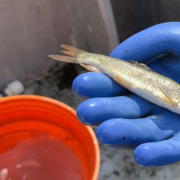
The Science of Suckers: What’s driving population declines in the Klamath River basin?
USGS and its partners are working tirelessly to monitor suckers and understand why they are disappearing from lakes and streams in the Klamath River Basin
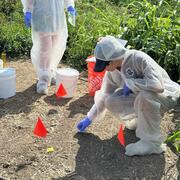
eDNA and the Efficacy of Management Actions
Environmental DNA (eDNA) is a powerful feedback tool, giving managers fast, clear, and cost-effective evidence to guide decisions and improve conservation outcomes.
By
Ecosystems Mission Area, Biological Threats and Invasive Species Research Program, Environmental Health Program, Species Management Research Program, Alaska Science Center, Columbia Environmental Research Center, Eastern Ecological Science Center, Forest and Rangeland Ecosystem Science Center, Fort Collins Science Center, Great Lakes Science Center, National Wildlife Health Center, Northern Prairie Wildlife Research Center, Northern Rocky Mountain Science Center, Pacific Island Ecosystems Research Center, Southwest Biological Science Center, Upper Midwest Environmental Sciences Center, Western Ecological Research Center (WERC), Western Fisheries Research Center, Wetland and Aquatic Research Center , Pacific Northwest Environmental DNA Laboratory