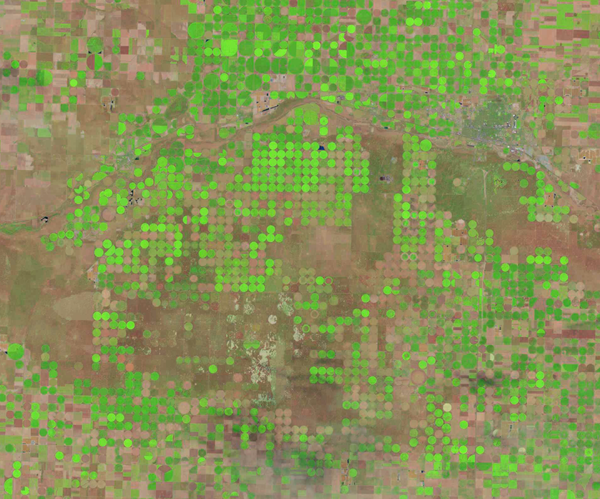
America at 250, Seen from Space
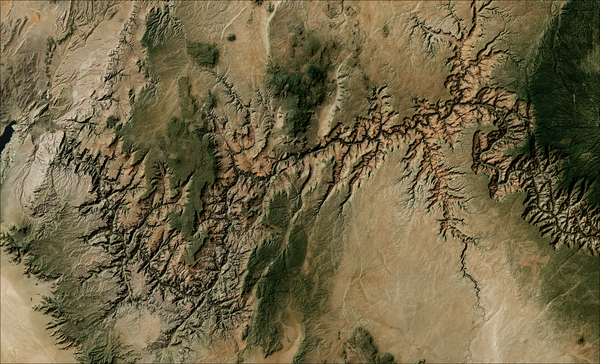
A new Landsat mosaic captures the full geographic diversity of the United States in a single image
LANDSAT AT WORK: Transforming Data Into Solutions
Stories that highlight how Landsat data is put into practice to inform decisions that help safeguard lives, property, and natural resources.
Landsat and the Earth Resources Observation and Science (EROS) Center
EROS is one of the largest civilian archives of land images in the world
Annual National Land Cover Database (NLCD)
Products based on Landsat data provide timely, long-term, and detailed land surface change information
Landsat's Economic Value Increases to 25.6 Billion in 2023
A new report details a substantial increase in societal benefits
Landsat Products and Services from the USGS
An Interactive Way to Learn About Landsat
Landsat Missions
Since 1972, Landsat satellites have continuously acquired images of the Earth’s land surface, providing uninterrupted data to help land managers and policymakers make informed decisions about natural resources and the environment. Data acquired by Landsat satellites are distributed from the USGS Earth Resources Observation and Science (EROS) Center in Sioux Falls, South Dakota.
Landsat Continuity has always been central to the program’s success. This includes (1) maintaining historic sensor compatibility to support long-term time series analyses, (2) ensuring consistent image quality to reduce uncertainties in land surface measurements, and (3) evolving satellite observations and data products to meet changing priorities and national needs.
Landsat Collections

Landsat Collections are tiered management structures that ensure all Landsat Level-1 products are produced to create a consistent archive of known data quality
Science Products

Landsat Level-2 and Level-3 Science Products, along with U.S. Analysis Ready Data (ARD), contain higher-level data to allow scientists to better document changes to Earth's terrestrial environment.
Project Information
There is a wealth of technical information and statistics about the Landsat Project, Landsat data, and Landsat science products. Statistics about Landsat data availability, distribution and usage are updated quarterly.
- Explore project documents about policy, data, systems and more
- Discover project statistics about the USGS Landsat data archive
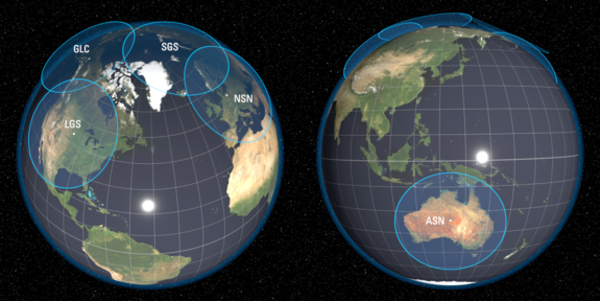
- Learn about the Landsat Ground Network Stations (LGN)
News about Landsat
Find the latest news about Landsat missions, data products, data access, and related topics.
- Read all Landsat Mission Headlines
- Subscribe to the Latest in Landsat Newsletter
- Subscribe to Landsat Headlines RSS Feeds
Landsat Products and Data Access
Landsat data products are continually being matured into the highest quality possible. These products allow scientists to provide improved and more useful results for land change and use analysis. Landsat data products held in the USGS archives can be searched and downloaded at no charge from a variety of data portals.
Useful Tools & Viewers
Various files, tools, converters, and information to better understand Landsat acquisition and how to search for Landsat data and products.
- Open the Landsat Acquisition Calendar Tool
- Open the Spectral Characteristics Viewer
- Open the Landsat Path/Row - Latitude/Longitude Conversion Tool
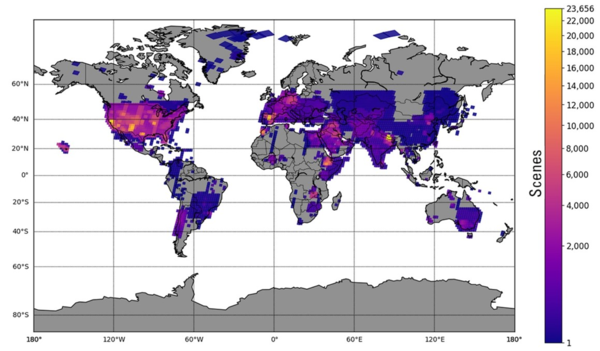
- Open the Landsat Archive Dashboard
International Collaboration
Landsat has always been an important component of U.S. foreign policy, science, and technology policy. A longstanding network of International Cooperators operate numerous International Ground Stations allowing direct reception and downlink from Landsat satellites. In 2010, International Cooperators started the effort to consolidate Landsat data acquired at worldwide ground station to the USGS archive.
- Learn about the Landsat International Ground Station (IGS) Network
- Learn about Landsat Global Archive (LGAC) efforts
Education and Outreach Resources
Landsat education and outreach resources can be used by students, teachers and the general public to further understand the fundamentals of remote sensing, Landsat technology, and how practical applications of Landsat data are helping specialists manage Earth's natural resources for a growing world population.
- View Frequently asked Questions (FAQs)
- Open Landsat Fact Sheets
- Listen to Eyes on Earth episodes about Landsat
- Explore Landsat Interactive Webpages
Join us on Social!
News
Landsat MSS Level-1 Products Reprocessed to Correct Brightness Values
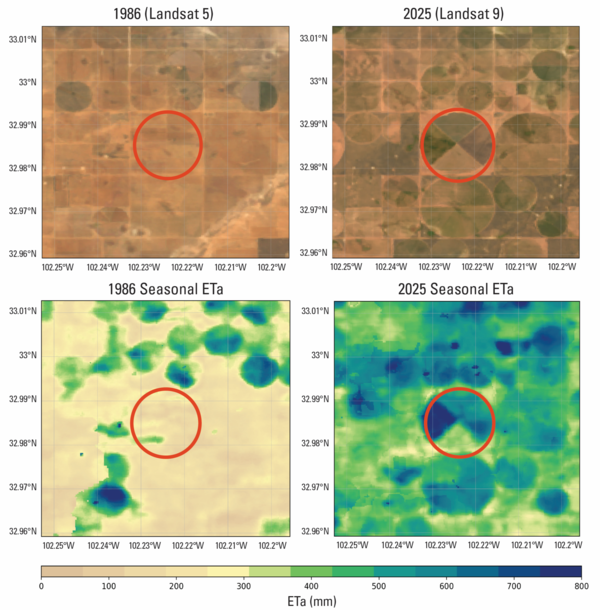
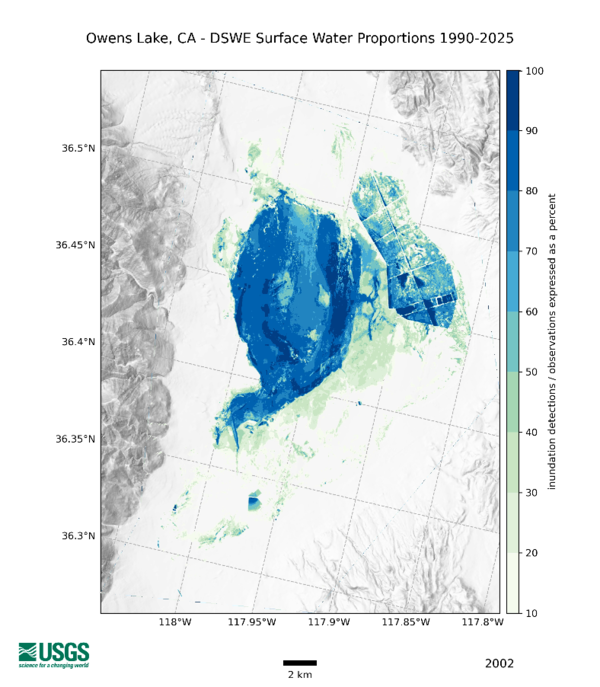
Landsat Product Supports Water Management Worldwide
Latest in Landsat September 2026 - Vol. 5 | Issue 9
Publications
On-demand global Landsat evapotranspiration product: Development, evaluation, and dissemination On-demand global Landsat evapotranspiration product: Development, evaluation, and dissemination
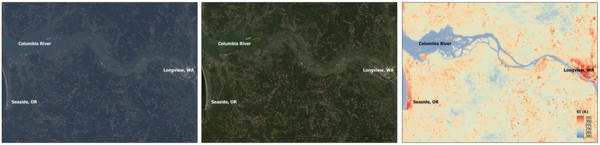
Enhancements to the USGS Landsat Level 2 surface temperature and emissivity product for Collection 3 reprocessing Enhancements to the USGS Landsat Level 2 surface temperature and emissivity product for Collection 3 reprocessing
Across-track tilt concept for sun glint mitigation in future Earth-observing missions Across-track tilt concept for sun glint mitigation in future Earth-observing missions
Science

Landsat Science Team

Eyes on Earth Episode 137 – Landsat Takes Yellowstone’s Temperature