



Mineral resources
Geothermal resources
Geophysical mapping
Climate studies
Geology, Minerals, Energy, and Geophysics Science Center
Scientists with the GMEG Science Center work on issues related to geologic processes, mineral and energy resource potential, and past climate, primarily in the Western United States. The science staff includes Geologists, Geophysicists, Geochemists, Biologists, and Geographic Information Systems specialists located in Arizona, California, Nevada, Oregon, and Washington.
Primary Research Direction - What we do.
GMEGSC focuses on Geologic Mapping, Mineral Resources and Mineral Environmental Health, Landslide Hazards, Energy Resources, Earthquake Hazards, and Land Change Science.
Innovation - How we help.
GMEGSC hosts the USGS Innovation Center, which sponsors work with public and private technology partners to design, test, and bring into operation a new generation of technical and engineering tools to address urgent national natural science issues.
Disciplinary Expertise - How we do it.
GMEGSC utilizes Geologic Mapping and Tectonics, Geophysics, Economic Geology, Geochronology, Sedimentary Basin Studies and Energy Assessments, Landslide Hazards, Geomorphology, Paleoclimatology, and many more processes to complete our work!
News
In SF Bay, even an exceptionally wet year can’t supply enough sediment to keep pace with rising seas, new study finds
Earth Science Matters - Vol. 21 | Issue 1
Uncovering the Mysteries of the Bering Land Bridge
Publications
Terrain-based map of mélange and intact rock at the junction of Coastal and Central Belt rocks of the Franciscan Complex between Gualala and Ukiah, northern California Coast Ranges Terrain-based map of mélange and intact rock at the junction of Coastal and Central Belt rocks of the Franciscan Complex between Gualala and Ukiah, northern California Coast Ranges
Impacts of transient critical zone evolution on landslide susceptibility and hazard Across the Utuado batholith, Puerto Rico Impacts of transient critical zone evolution on landslide susceptibility and hazard Across the Utuado batholith, Puerto Rico
Polystyrene microplastics alter the accumulation and elimination dynamics of silver nanoparticles in Daphnia magna Polystyrene microplastics alter the accumulation and elimination dynamics of silver nanoparticles in Daphnia magna
Science

Geologic Mapping for Landscape Resiliency in California, Oregon, and Washington
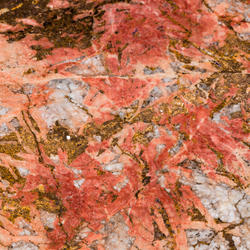
Controls on Critical Element Enrichment in Carbonatite-Alkaline Igneous Complexes
