



Drivers of Ecosystem Change
Restoration Ecology and Species Recovery
Western Fisheries Research Center
Research at the WFRC focuses on the environmental factors responsible for the creation, maintenance, and regulation of fish populations including their interactions in aquatic communities and ecosystems. Within these pages you will find research information on Pacific salmon; western trout, charr, and resident riverine fishes; desert and inland fishes; aquatic ecosystems and their resources.

Peer Reviewed Publications
Peer Reviewed Publications

Dive into our research through our rich and diverse publications.
News
A Tale of Two Islands and the Future of an Ocean Sentinel Seabird
A Tale of Two Islands and the Future of an Ocean Sentinel Seabird
Something Fishy from the Western Fisheries Research Center - Spring 2026
Something Fishy from the Western Fisheries Research Center - Spring 2026
Congratulations to Tobyn Rhodes for Winning the Spring 2026 Something Fishy Photo Contest!
Congratulations to Tobyn Rhodes for Winning the Spring 2026 Something Fishy Photo Contest!
Publications
Evaluating reservoir passage and survival of juvenile Chinook Salmon to support reintroduction upstream of Shasta Dam, California Evaluating reservoir passage and survival of juvenile Chinook Salmon to support reintroduction upstream of Shasta Dam, California
Objective Juvenile Chinook Salmon Oncorhynchus tshawytscha that are released upstream of Shasta Reservoir migrate more than 35 km to reach Shasta Dam, although survival through this system is poorly understood. We conducted a reservoir-scale acoustic telemetry study to quantify downstream movement and survival under seasonally variable environmental conditions to inform decisions about...
Development of a two-stage lifecycle model to inform the trap-and-haul program for Oncorhynchus kisutch (coho salmon) in the Lewis River, Washington Development of a two-stage lifecycle model to inform the trap-and-haul program for Oncorhynchus kisutch (coho salmon) in the Lewis River, Washington
Restoration of salmon populations in the upper Lewis River Basin, Washington, depends on a trap-and-haul program owing to the Lewis River Hydroelectric Project (hereinafter referred to as “Project”) operated by PacifiCorp and Cowlitz Public Utilities District (hereinafter referred to as “Utilities”), which has been a barrier to salmon passage since the 1930s. Thus, sustaining the...
Stochastic within-host dynamics and climate-sensitive traits generate predictable patterns of variation in disease outcomes Stochastic within-host dynamics and climate-sensitive traits generate predictable patterns of variation in disease outcomes
Understanding how climatic variables impact host-pathogen relationships in temperature-sensitive ectothermic host organisms is crucial under global change. Few studies have explored how temperature gradients generate inter-individual variation in epidemiological traits like host susceptibility or pathogen replication. Here, we develop a mathematical model to explore a novel hypothesis...
Science
Where Land Meets Sea: USGS Science for Resilient Coastal Habitats
USGS coastal science plays a critical role in supporting the effective, science-based management of coastal ecosystems, where the biodiversity of land and sea meet. It provides managers with the information they need to make sound decisions. Through cutting-edge research, predictive modeling, and decision-support tools, USGS empowers resource managers to make informed, science-based choices. From...
By
Ecosystems Mission Area, Land Management Research Program, California Water Science Center, Eastern Ecological Science Center, Forest and Rangeland Ecosystem Science Center, Lower Mississippi-Gulf Water Science Center, Pacific Coastal and Marine Science Center, Western Ecological Research Center (WERC), Western Fisheries Research Center, Western Geographic Science Center, Wetland and Aquatic Research Center
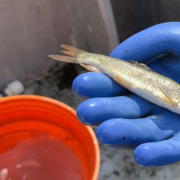
The Science of Suckers: What’s driving population declines in the Klamath River basin?
USGS and its partners are working tirelessly to monitor suckers and understand why they are disappearing from lakes and streams in the Klamath River Basin
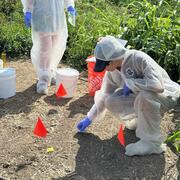
eDNA and the Efficacy of Management Actions
Environmental DNA (eDNA) is a powerful feedback tool, giving managers fast, clear, and cost-effective evidence to guide decisions and improve conservation outcomes.
By
Ecosystems Mission Area, Biological Threats and Invasive Species Research Program, Environmental Health Program, Species Management Research Program, Alaska Science Center, Columbia Environmental Research Center, Eastern Ecological Science Center, Forest and Rangeland Ecosystem Science Center, Fort Collins Science Center, Great Lakes Science Center, National Wildlife Health Center, Northern Prairie Wildlife Research Center, Northern Rocky Mountain Science Center, Pacific Island Ecosystems Research Center, Southwest Biological Science Center, Upper Midwest Environmental Sciences Center, Western Ecological Research Center (WERC), Western Fisheries Research Center, Wetland and Aquatic Research Center , Pacific Northwest Environmental DNA Laboratory