



Fish and Wildlife Disease
Fish and Wildlife Disease
Chronic wasting disease and cervid health—2025 highlights
White-Nose Syndrome and Bat Health: 2025 Year in Review
Batrachochytrium salamandrivorans (Bsal) Surveillance
Tackling avian influenza with automated detection for an early warning system
Distribution of CWD Expanding
Chronic Wasting Disease continues to spread across North America
Chronic Wasting Disease continues to spread across North America
What is Avian Influenza (AI)?
USGS is the lead Federal agency for free-ranging wildlife disease research and surveillance. Our capabilities enhance the understanding of wildlife disease ecology and epidemiology as well as inform the development of decision-support and control tools. USGS wildlife disease experts provide technical assistance as needed to manage wildlife disease and conduct cause-of-death investigations.

Filter Total Items: 172

USGS Wild Bird Avian Influenza Program – Studies from Endemic Regions of Eurasia
This project focuses on tracking wild birds throughout Eurasia via satellite telemetry to better understand their spatiotemporal movement patterns, relationship to domestic birds, and potential role in the spread, persistence, and amplification of avian influenza viruses.

Avian Influenza Research
Since Public Law 109-148, USGS has partnered with state and federal agencies to conduct science to support the national response to highly pathogenic avian influenza (HPAI). In 2014, the first reports of HPAI in US wild birds came from USGS cause-of-death investigations confirmed by the USDA.

Avian Influenza Host Movement Ecology
Understanding disease systems requires an understanding of the basic ecology of host species. USGS is involved in global efforts to explore the movements of bird species that are hosts of avian influenza as well as the potential impacts of changing landscapes on avian influenza.

Using Global Telemetry to Understand Avian Movement and Migration
USGS researchers are collaborating with partners around the globe to leverage new and existing telemetry data to answer broad scale questions about factors influencing avian movement and migration.

Avian Influenza Viral Pathogenicity
USGS is collaborating with numerous partner institutions to explore susceptibility and pathogenesis of relevant avian influenza strains in waterfowl species with special emphasis on sea ducks and diving ducks.
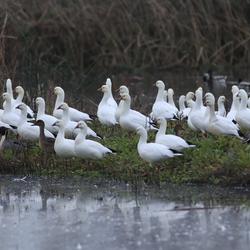
Identifying Spatial and Temporal Trends in Avian Influenza Prevalence in Wild Waterfowl Across the United States
USGS researchers are at the forefront of building and maintaining datasets that represent the spatial and temporal patterns in avian influenza virus prevalence in wild birds, which is critical information used to estimate transmission risk to domestic poultry.

Deriving Spatial and Temporal Waterfowl Inputs for Disease Risk Modeling
USGS is creating spatially and temporally explicit inputs to improve avian influenza transmission risk modeling. This project places special emphasis on wild bird distribution and abundance models as well as avian influenza prevalence models.

Exploring the Sensitivity of Salmonids to 6PPD-Quinone: Implications for Urban Ecosystems
The USGS is investigating the effects of 6PPD-quinone (6PPDQ), a harmful contaminant found in urban stormwater runoff, on fish and wildlife health, particularly in salmonids. Recent studies have shown that 6PPDQ poses acute toxicity risks, especially to coho salmon, with sensitivity varying by life stage. New research evaluated the lethal and sublethal impacts of 6PPDQ exposure on coastal...
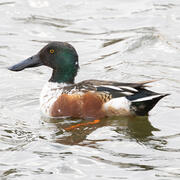
Developing Waterfowl Distribution and Abundance Models to Inform Avian Influenza Transmission Risk
USGS researchers are developing novel methods to improve our understanding of waterfowl distributions and abundance across the United States to inform a variety of ongoing disease studies. Understanding the distribution of wild waterfowl is a critical component to assessing avian influenza transmission risks across the landscape.

Wildlife Disease and Environmental Health in Alaska
Environmental health is defined by connections between the physical environment, ecological health, and human health. Current research within the U.S. Geological Survey (USGS) recognizes the importance of this integrated research philosophy, which includes study of disease and pollutants as they pertain to both wildlife and humans. Due to its key geographic location and significant wildlife...

USGS Chronic Wasting Disease Research at NOROCK
Chronic wasting disease (CWD) is a growing management issue in the U.S. and has been detected in 36 states as of April 2025, including many western states. There is no cure or vaccine for CWD, and the disease threatens economically important animals like elk and deer. NOROCK scientists have taken a multi-pronged approach to develop actionable science including 1) evaluating CWD management options...

Fish & Wildlife Disease: Coral Diseases and Reef Health
Corals reefs support marine biodiversity, protect coastlines from storm surges and strong waves, and provide income from tourism to coastal communities. Coral diseases were first recognized in the 1970s and are now considered a major threat to coral reef survival worldwide. Stony coral tissue loss disease (SCTLD) emerged in Florida in 2014, impacting coral reefs in Florida, Puerto Rico, US Virgin...