



Fish and Wildlife Disease
Fish and Wildlife Disease
Chronic wasting disease and cervid health—2025 highlights
White-Nose Syndrome and Bat Health: 2025 Year in Review
Batrachochytrium salamandrivorans (Bsal) Surveillance
Tackling avian influenza with automated detection for an early warning system
Distribution of CWD Expanding
Chronic Wasting Disease continues to spread across North America
Chronic Wasting Disease continues to spread across North America
What is Avian Influenza (AI)?
USGS is the lead Federal agency for free-ranging wildlife disease research and surveillance. Our capabilities enhance the understanding of wildlife disease ecology and epidemiology as well as inform the development of decision-support and control tools. USGS wildlife disease experts provide technical assistance as needed to manage wildlife disease and conduct cause-of-death investigations.

Filter Total Items: 172

USGS Northern Rocky Mountain Science Center Fiscal Year 2025 Highlights
The USGS Northern Rocky Mountain Science Center (NOROCK) proudly supports Federal, State, Tribal, and other partners by delivering high-quality data, cutting-edge science, and practical tools to support natural resource management. Below are some of NOROCK’s highlights during fiscal year 2025.
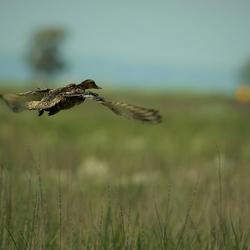
Avian Influenza Spread, Prevalence and Persistence
USGS researchers seek to understand the factors influencing the spread and persistence of avian influenza viruses on the landscape. This research also addresses how novel strains of highly pathogenic avian influenza are impacting a larger number and diversity of host species, including waterfowl, shorebirds, raptors and other birds.

Avian Influenza Dynamics in the Chesapeake Bay Region
USGS is investigating factors that influence the risk of avian influenza transmission from wild waterfowl to domestic poultry within the Chesapeake Bay region, a hub of poultry production for the United States.
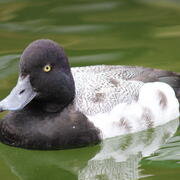
Combining Field and Laboratory Studies to Understand Viral Ecology in Avian Species
USGS researchers are pairing field and laboratory studies to gain deeper insights into the role of Lesser Scaup ( Aythya affinis) in the spread and persistence of avian influenza viruses.

Avian Influenza Research at EESC
Emergence of avian influenza viruses with the potential to be highly pathogenic to poultry, wild birds, and humans cause serious concern for the global economic and public health sectors. Researchers at the USGS Eastern Ecological Science Center study multiple aspects of avian influenza viruses in wild birds as well as their implications for commercial agriculture with a special emphasis on...

Avian Influenza and Wildlife Health: 2025 Year in Review
Avian influenza, once largely limited to poultry, is now reshaping wildlife health across North America, affecting wild birds, mammals, and even people. This 2025 Year in Review highlights how USGS science is helping track, understand, and respond to this rapidly evolving disease. From large-scale wildlife die-offs to new tools for detecting and monitoring the virus, USGS research supports...

USGS Sagebrush Science: Supporting Public Safety and Economic Decision Making Across the West
The sagebrush biome is one of the largest ecosystems in North America. Encompassing nearly one-third of the continental U.S., it provides critical resources for millions of Americans and a home for hundreds of plants and animal species in the West. Natural resource management in sagebrush ecosystems can be complex, and science can support management decisions by providing knowledge and tools to...
By
Core Science Systems Mission Area, Ecosystems Mission Area, Land Management Research Program, Earth Resources Observation and Science (EROS) Center, Forest and Rangeland Ecosystem Science Center, Fort Collins Science Center, Northern Rocky Mountain Science Center, Southwest Biological Science Center, Western Ecological Research Center (WERC), Wildland Fire Science

Batrachochytrium salamandrivorans (Bsal)
Batrachochytrium salamandrivorans ( Bsal ) is an emerging pathogen capable of causing significant morbidity and mortality in salamanders.

Batrachochytrium salamandrivorans (Bsal) Surveillance
Scientists of the USGS National Wildlife Health Center (NWHC) in collaboration with partners have developed risk assessments for Batrachochytrium salamandrivorans ( Bsal ) in the United States and are sampling high-risk locations for the fungus.

White-Nose Syndrome and Bat Health: 2025 Year in Review
USGS scientists have developed novel tools and techniques for national white-nose syndrome (WNS) detection and research efforts. Our scientists are monitoring bat populations (NABat) and bat behavior in addition to assessing the impact of WNS on bat populations. USGS is now focusing on disease management strategies to reverse bat declines from WNS.

Mapping Chronic Wasting Disease Management: Identify Opportunities for Intervention
This research effort is an interagency partnership between U.S. Geological Survey and U.S. Fish and Wildlife Service to model the social-ecological system that encompasses chronic wasting disease management in the United States. Chronic wasting disease (CWD) is a fatal, neurologically degenerative disease that impacts many cervid species in North America (e.g., elk, moose, mule deer, and white...

The Strain and Genetic Online Tissue Repository for Chronic Wasting Disease
The Strain and Genetic Online Tissue Repository (SAGOTR) is being developed by the USGS Fort Collins Science Center to document, track, discover, and request physical samples of Chronic Wasting Disease (CWD). SAGOTR connects natural resource managers, tissue repositories, and researchers in one online platform, making it easier to locate and share samples and support research and management of CWD...