U.S. flag

An official website of the United States government

Multimedia

Images

Landsat Missions Timeline

In a September 21, 1966 press release, Secretary of the Interior Stewart Udall announced that the DOI was launching "Project EROS (Earth Resources Observation Satellites)." Udall's vision was to observe the Earth for the benefit of all. 

In a September 21, 1966 press release, Secretary of the Interior Stewart Udall announced that the DOI was launching "Project EROS (Earth Resources Observation Satellites)." Udall's vision was to observe the Earth for the benefit of all. 

A graphic showing the cumulative download volume of Landsat products
Landsat Product Downloads by Volume

This graphic displays the cumulative volume of all operational Landsat products downloaded from the USGS EROS Landsat archive since December 2008 (FY2009). The release of Landsat Collection 2 products in 2020, which improved data quality and accessibility, helped drive downloads upward. 

This graphic displays the cumulative volume of all operational Landsat products downloaded from the USGS EROS Landsat archive since December 2008 (FY2009). The release of Landsat Collection 2 products in 2020, which improved data quality and accessibility, helped drive downloads upward. 

Map of Earth Observing Satellites
Countries with Earth Observing Satellites

The numbers on this map indicate the number of commercial and government/civil Earth observing satellites launched by the highlighted countries. This image is updated quarterly.

Visit the Earth Observing Satellites webpage to learn more. 

The numbers on this map indicate the number of commercial and government/civil Earth observing satellites launched by the highlighted countries. This image is updated quarterly.

Visit the Earth Observing Satellites webpage to learn more. 

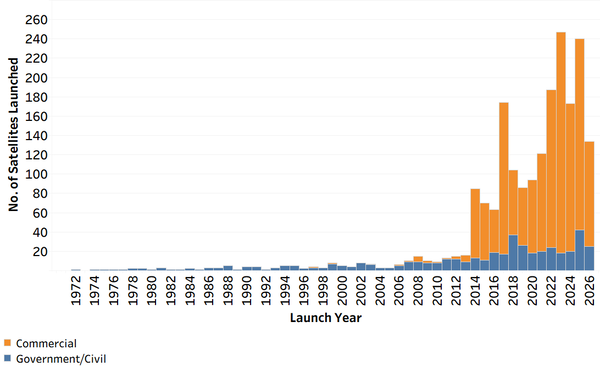
Number of Commercial, Government-Civil Satellites Launched

This chart shows the number of commercial and government/civil satellites launched each year since 1972.  This information is updated quarterly. 

Visit the Earth Observing Satellites webpage to learn more.

Landsat 9 Image of the Beaufort Sea shoreline at the Alaska and Canadian border
Landsat 9 False Color Image of the Beaufort Sea Shoreline

This Landsat 9 image showing the Beaufort Sea shoreline off of Alaska and Canada is just one of the scenes captured and processed on July 13, 2025— that day, the USGS EROS archive reached a milestone of one million Landsat 9 Level-1 products.  This false color image was made with bands 6,5, and 4 from the Operational Land Imager. 

This Landsat 9 image showing the Beaufort Sea shoreline off of Alaska and Canada is just one of the scenes captured and processed on July 13, 2025— that day, the USGS EROS archive reached a milestone of one million Landsat 9 Level-1 products.  This false color image was made with bands 6,5, and 4 from the Operational Land Imager. 

Videos

Thumbnail for "Greek Island Wildfire (Image of the Week)" video Thumbnail for "Greek Island Wildfire (Image of the Week)" video
Greek Island Wildfire (Image of the Week)

Greek firefighters battled a wildfire on the Greek island of Zakynthos in August 2025, one of many late summer fires in the Ionian Islands. Landsat 8 captured smoke, ash, burn scar, and thermal perimeter activity on August 12 in natural color and false color infrared.

Greek firefighters battled a wildfire on the Greek island of Zakynthos in August 2025, one of many late summer fires in the Ionian Islands. Landsat 8 captured smoke, ash, burn scar, and thermal perimeter activity on August 12 in natural color and false color infrared.

Overhead view taken by drone of a USGS fieldwork site in Moab with multiple cars and a tent shelter Overhead view taken by drone of a USGS fieldwork site in Moab with multiple cars and a tent shelter
B-Roll: Field and drone remote sensing operations near Moab, Utah – May 2025

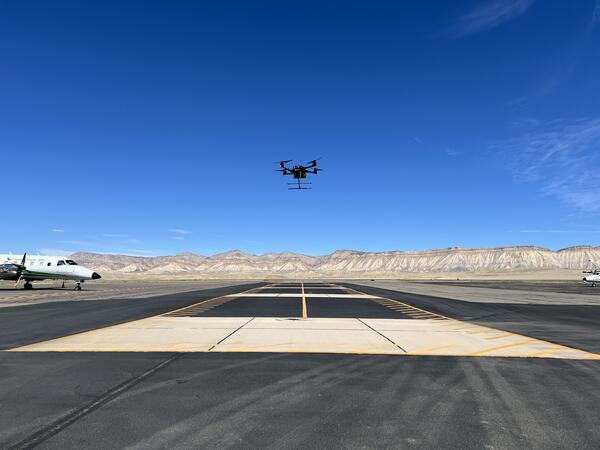
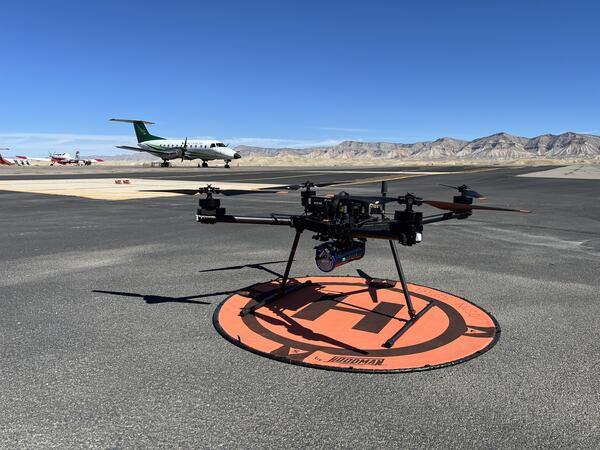
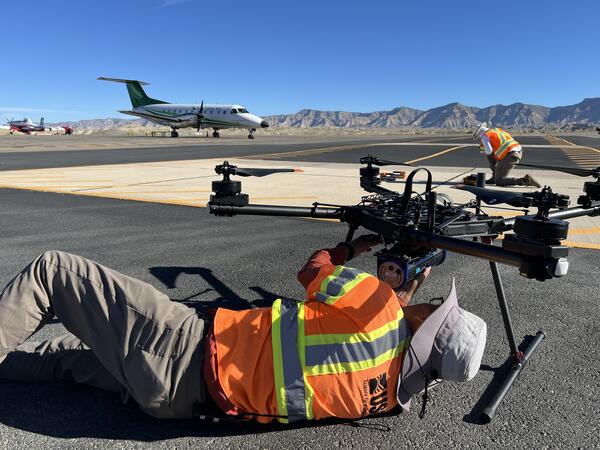
In May 2025, the U.S. Geological Survey (USGS) National Uncrewed Systems Office (NUSO) collected uncrewed aircraft system (UAS, also known as drone) data to support a collaborative field campaign led by Sasha Reed of the Southwest Biological Science Center (SBSC) and Miguel Villarreal of the Western Geographic Science Center (WGSC) near Moab, Utah.

In May 2025, the U.S. Geological Survey (USGS) National Uncrewed Systems Office (NUSO) collected uncrewed aircraft system (UAS, also known as drone) data to support a collaborative field campaign led by Sasha Reed of the Southwest Biological Science Center (SBSC) and Miguel Villarreal of the Western Geographic Science Center (WGSC) near Moab, Utah.

Thumbnail for "Grand Canyon Megafire (Image of the Week)" Thumbnail for "Grand Canyon Megafire (Image of the Week)"
Grand Canyon Megafire (Image of the Week)

Multiple Landsat passes have captured the growth of the Dragon Bravo Fire in Kaibab National Forest near the North Rim of the Grand Canyon in Arizona.

On July 13, it destroyed the historic Grand Canyon Lodge. Dozens of other buildings have also been destroyed. As of August 15, the fire is 56% contained.

Multiple Landsat passes have captured the growth of the Dragon Bravo Fire in Kaibab National Forest near the North Rim of the Grand Canyon in Arizona.

On July 13, it destroyed the historic Grand Canyon Lodge. Dozens of other buildings have also been destroyed. As of August 15, the fire is 56% contained.

Simplifying Geospatial Data Workflows with NASA's AppEEARS

This video is a recording of a previous webinar entitled: “Simplifying Geospatial Data Workflows with NASA's AppEEARS”. This webinar was recorded on July 17, 2025. 

Thumbnail Image for video: "Record-Breaking Flooding in Australia (Image of the Week)" Thumbnail Image for video: "Record-Breaking Flooding in Australia (Image of the Week)"
Record-Breaking Flooding in Australia (Image of the Week)

In May 2025, record rainfall in Australia's New South Wales created major flooding along the coast. In Taree, a mid-North Coast city, the Manning River reached a height of 6.4m on May 21st. The previous record of six meters was set back in 1929. The torrential rains have left almost 800 properties and counting uninhabitable in New South Wales.

In May 2025, record rainfall in Australia's New South Wales created major flooding along the coast. In Taree, a mid-North Coast city, the Manning River reached a height of 6.4m on May 21st. The previous record of six meters was set back in 1929. The torrential rains have left almost 800 properties and counting uninhabitable in New South Wales.

Aerial photo looking down at a field with drone operator and reference objects used for calibration of payload instruments Aerial photo looking down at a field with drone operator and reference objects used for calibration of payload instruments
B-Roll: 2025 UAS radiometric calibration and validation research in Golden, Colorado

Calibration and validation (cal/val) are essential steps to ensure that remotely sensed data are reliable for scientific use. Radiometric cal/val involves converting digital image pixel values to meaningful units and assessing their accuracy.  

Audio

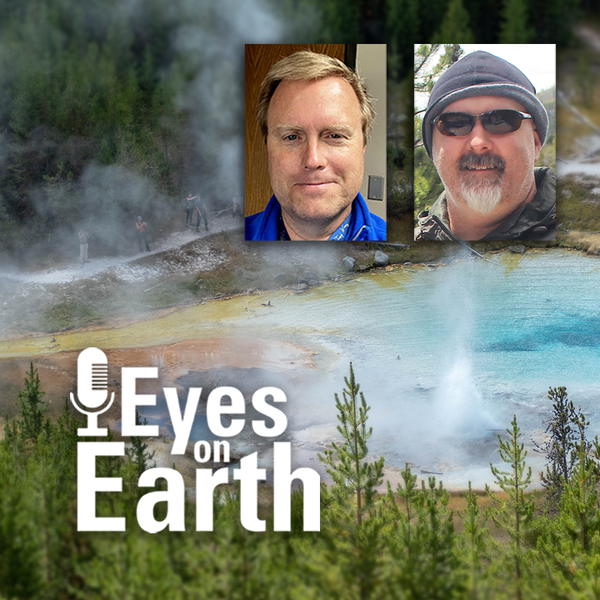
A background photo of a pool of water with a natural fountain in an area surrounded by evergreens, plus two men's mugshots
Thumbnail image for Eyes on Earth episode 137 about Yellowstone National Park
Eyes on Earth Episode 137 – Landsat Takes Yellowstone’s Temperature
A background photo of a pool of water with a natural fountain in an area surrounded by evergreens, plus two men's mugshots
Thumbnail image for Eyes on Earth episode 137 about Yellowstone National Park
Eyes on Earth Episode 137 – Landsat Takes Yellowstone’s Temperature

The Yellowstone National Park area has more than 10,000 thermal features. And while Old Faithful is a pretty predictable geyser, some thermal features can change quite a bit. New ones can even pop up! Remote sensing provides a tool for monitoring them—especially the thermal infrared sensors (TIRS) on Landsat 8 and Landsat 9 satellites.

The Yellowstone National Park area has more than 10,000 thermal features. And while Old Faithful is a pretty predictable geyser, some thermal features can change quite a bit. New ones can even pop up! Remote sensing provides a tool for monitoring them—especially the thermal infrared sensors (TIRS) on Landsat 8 and Landsat 9 satellites.

A mountainside with sheep and tree trunks, plus mugshots of three men and a woman, plus a white title
Thumbnail image for EoE episode 135 - Exotic Annual Grasses and Sheep Grazing
Eyes on Earth Episode 135 – Exotic Annual Grasses and Sheep Grazing
A mountainside with sheep and tree trunks, plus mugshots of three men and a woman, plus a white title
Thumbnail image for EoE episode 135 - Exotic Annual Grasses and Sheep Grazing
Eyes on Earth Episode 135 – Exotic Annual Grasses and Sheep Grazing

Exotic annual grasses, or EAGs, are invasive species. They outcompete native grasses. They are extremely flammable. And they are expanding into higher elevations. Targeted sheep grazing is one way to combat these invasive grasses, manage fire risk, and help restore native sagebrush in western states.

Exotic annual grasses, or EAGs, are invasive species. They outcompete native grasses. They are extremely flammable. And they are expanding into higher elevations. Targeted sheep grazing is one way to combat these invasive grasses, manage fire risk, and help restore native sagebrush in western states.

Two men are working with equipment in a grassy area with trees in the background
Thumbnail image for EoE Episode 136 – The EROS Test Site
Eyes on Earth Episode 136 – The EROS Test Site
Two men are working with equipment in a grassy area with trees in the background
Thumbnail image for EoE Episode 136 – The EROS Test Site
Eyes on Earth Episode 136 – The EROS Test Site

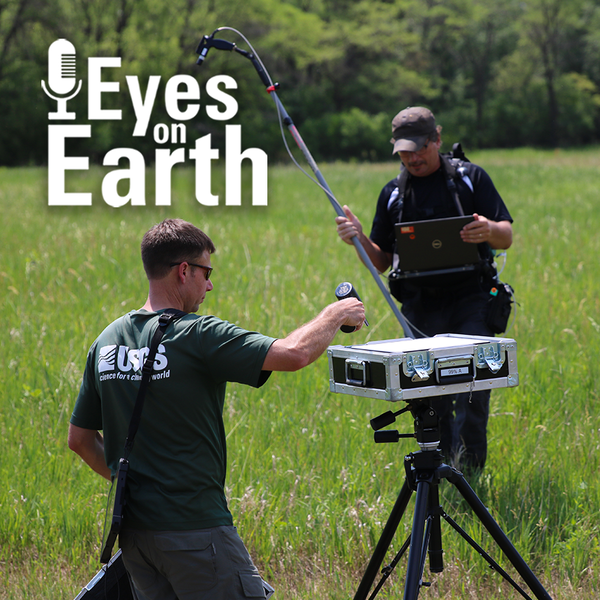
Landsat has been accurate and reliable for over 50 years because of the diligent calibration and validation work done by the team at EROS. One of the ways the team validates what they have so carefully calibrated is to take measurements on the ground while Landsat passes by overhead.

Landsat has been accurate and reliable for over 50 years because of the diligent calibration and validation work done by the team at EROS. One of the ways the team validates what they have so carefully calibrated is to take measurements on the ground while Landsat passes by overhead.

A man stands by a giant globe in a long hallway with skylights and a little white text on top
Thumbnail image for EoE Episode 134 - Data Accuracy: The Calibration and Validation of Landsat
Eyes on Earth Episode 134 – Data Accuracy: The Calibration and Validation of Landsat
A man stands by a giant globe in a long hallway with skylights and a little white text on top
Thumbnail image for EoE Episode 134 - Data Accuracy: The Calibration and Validation of Landsat
Eyes on Earth Episode 134 – Data Accuracy: The Calibration and Validation of Landsat

Landsat is the longest-running, continuously operating record of Earth observations, and it’s the gold standard reference point that other civil and commercial satellite programs trust.

A black and white satellite image with several words in white on top, plus a color mugshot of a man
Thumbnail image for EoE Episode 133 - Vietnam War Bomb Craters
Eyes on Earth Episode 133 – Vietnam War Bomb Craters
A black and white satellite image with several words in white on top, plus a color mugshot of a man
Thumbnail image for EoE Episode 133 - Vietnam War Bomb Craters
Eyes on Earth Episode 133 – Vietnam War Bomb Craters

Declassified spy satellite imagery, distributed by the USGS EROS Center, is finding fascinating uses since being made available to the public starting in the 1990s.

Thumbnail image for Eyes on Earth Episode 131 – Using AI in Geospatial Work, showing photos of the four guests
Thumbnail image for EoE Episode 131 – Using AI in Geospatial Work
Eyes on Earth Episode 131 – Using AI in Geospatial Work
Thumbnail image for Eyes on Earth Episode 131 – Using AI in Geospatial Work, showing photos of the four guests
Thumbnail image for EoE Episode 131 – Using AI in Geospatial Work
Eyes on Earth Episode 131 – Using AI in Geospatial Work

Eyes on Earth tackles artificial intelligence (AI) in a 2-part episode. AI is quickly becoming a necessary part of geospatial work at EROS, helping us efficiently do science to better manage our world. In Part 1, EROS Director Pete Doucette discusses AI and its current and upcoming impact on our work at EROS.

Eyes on Earth tackles artificial intelligence (AI) in a 2-part episode. AI is quickly becoming a necessary part of geospatial work at EROS, helping us efficiently do science to better manage our world. In Part 1, EROS Director Pete Doucette discusses AI and its current and upcoming impact on our work at EROS.

Was this page helpful?