



To understand information needs and respond to the many challenges in bird conservation, USGS scientists participate in Flyway committees, on Joint Venture boards and working groups, in professional organizations, and in other conservation partnerships. These activities connect USGS scientists to conservation partners with whom they work to address substantial challenges. More than one hundred USGS scientists are dedicated to the scientific study of birds.
USGS Bird Science Today
Read about the history of USGS bird research and the ways our science informs real-world decisions from sustaining hunting traditions to protecting at-risk bird species.
6 Birds USGS is Tracking
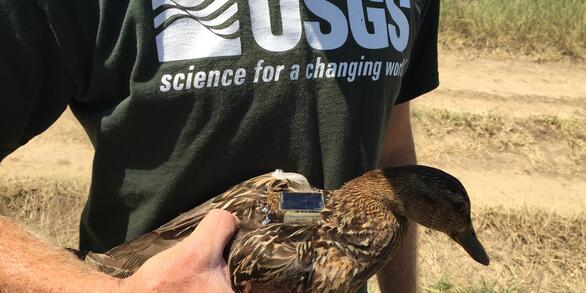
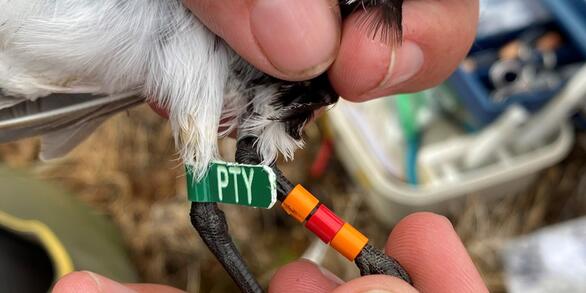
Using lightweight GPS transmitters and classic tools like bird bands, we track migratory birds in near real-time to study their flight paths and behaviors.
USGS Migratory Bird Science

This report highlights the 2021 scope of USGS work supporting migratory bird conservation and management, with contributions from 90 scientists.
Bird Research

Use of Remote Sensing Data to Quantify Bird and Bat Distributions and Inform Migratory Bird Conservation Efforts

Interaction Between Alternative Energy Development and Raptors
Information for Golden Eagle Management
Genetic and Demographic Analyses of Species at Risk
Effects of Climate Variability and Other Environmental Stressors on Water Birds and Their Habitats
Conservation Ecology and Monitoring of Raptors
Bird Movement and Migration
Avian Movements, Monitoring, and Conservation

Seabird Health and Adaptive Management

Distribution, Occupancy and Population Genetic Structure of California Gnatcatchers in Southern California

Ecology and Population Dynamics of Ridgway's Rails along the West Coast of the U.S.

Monitoring Avian Productivity and Survivorship (MAPS)

Breeding and Wintering Ecology of Waterfowl

Waterbird Breeding Ecology and Management

Waterfowl Ecology in California and the Pacific Flyway

Population Structure and Demography of the Least Bell’s Vireo and Southwestern Willow Flycatcher and Use of Restored Riparian Habitat

Contaminants in Waterbirds and Effects on Avian Reproduction

An Online Portal for Managing and Reporting Annual Piping Plover Monitoring Data

U.S. Fish & Wildlife Service - Automated Waterfowl Counts

Ecology of Hawaiian Waterbirds

Sea-Level Rise and Tsunami Vulnerability of Habitat and Wildlife of the Northwestern Hawaiian Islands
To understand information needs and respond to the many challenges in bird conservation, USGS scientists participate in Flyway committees, on Joint Venture boards and working groups, in professional organizations, and in other conservation partnerships. These activities connect USGS scientists to conservation partners with whom they work to address substantial challenges. More than one hundred USGS scientists are dedicated to the scientific study of birds.
USGS Bird Science Today
Read about the history of USGS bird research and the ways our science informs real-world decisions from sustaining hunting traditions to protecting at-risk bird species.
6 Birds USGS is Tracking
Using lightweight GPS transmitters and classic tools like bird bands, we track migratory birds in near real-time to study their flight paths and behaviors.
USGS Migratory Bird Science
This report highlights the 2021 scope of USGS work supporting migratory bird conservation and management, with contributions from 90 scientists.
Bird Research
Use of Remote Sensing Data to Quantify Bird and Bat Distributions and Inform Migratory Bird Conservation Efforts
Interaction Between Alternative Energy Development and Raptors
Information for Golden Eagle Management
Genetic and Demographic Analyses of Species at Risk
Effects of Climate Variability and Other Environmental Stressors on Water Birds and Their Habitats
Conservation Ecology and Monitoring of Raptors
Bird Movement and Migration
Avian Movements, Monitoring, and Conservation
Seabird Health and Adaptive Management
Distribution, Occupancy and Population Genetic Structure of California Gnatcatchers in Southern California
Ecology and Population Dynamics of Ridgway's Rails along the West Coast of the U.S.
Monitoring Avian Productivity and Survivorship (MAPS)
Breeding and Wintering Ecology of Waterfowl
Waterbird Breeding Ecology and Management
Waterfowl Ecology in California and the Pacific Flyway
Population Structure and Demography of the Least Bell’s Vireo and Southwestern Willow Flycatcher and Use of Restored Riparian Habitat
Contaminants in Waterbirds and Effects on Avian Reproduction
An Online Portal for Managing and Reporting Annual Piping Plover Monitoring Data
U.S. Fish & Wildlife Service - Automated Waterfowl Counts
Ecology of Hawaiian Waterbirds