Debris jam from flooding after Tropical Strom Irene
Debris jam from flooding after Tropical Strom IreneDebris jam from flooding after Tropical Strom Irene on the upstream side of the Bulkeley Bridge in Hartford, CT.


Official websites use .gov
A .gov website belongs to an official government organization in the United States.

Secure .gov websites use HTTPS
A lock () or https:// means you’ve safely connected to the .gov website. Share sensitive information only on official, secure websites.

Images below come from a wide variety of USGS science activities in the Northeast Region. Science Center staff showcase what we do, who we are, and where we work conducting science that inform decision makers and addresses societal needs.
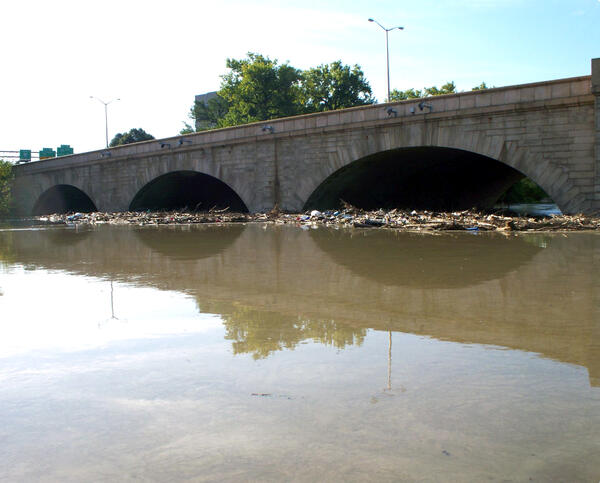
Debris jam from flooding after Tropical Strom Irene on the upstream side of the Bulkeley Bridge in Hartford, CT.
Debris jam from flooding after Tropical Strom Irene on the upstream side of the Bulkeley Bridge in Hartford, CT.

The channel at Roaring Brook needed reconstruction after Irene devastated the river system due to the immense rainfall. This image was taken looking upstream from Route 7 (North St) crossing in Bennington, Vermont.
The channel at Roaring Brook needed reconstruction after Irene devastated the river system due to the immense rainfall. This image was taken looking upstream from Route 7 (North St) crossing in Bennington, Vermont.
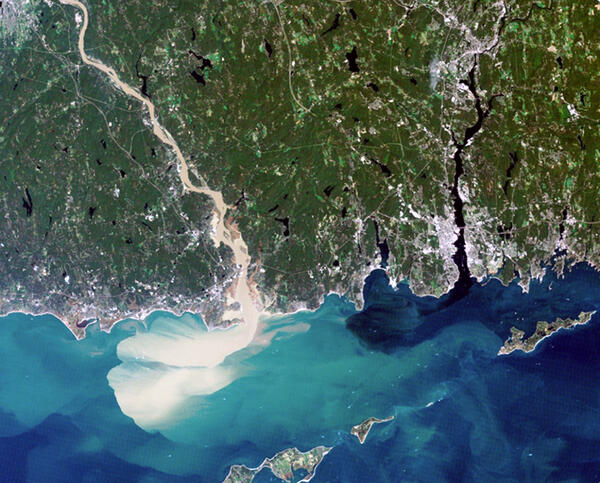
Satellite imagery of southern Connecticut showing the Connecticut River and the Thames River, with the Connecticut River a muddy color due to heavy sediment transport.
Satellite imagery of southern Connecticut showing the Connecticut River and the Thames River, with the Connecticut River a muddy color due to heavy sediment transport.

Damage to bridge at E. Kill nr Jewett from Tropical Storm Irene
Damage to bridge at E. Kill nr Jewett from Tropical Storm Irene

Before Irene reached New England, the USGS New England Water Science Center had to make sure our boats were running properly in anticipation of making discharge measurements in the larger rivers. In some cases, we had to get permission ahead of time to use boat ramps that were closed to the public.
Before Irene reached New England, the USGS New England Water Science Center had to make sure our boats were running properly in anticipation of making discharge measurements in the larger rivers. In some cases, we had to get permission ahead of time to use boat ramps that were closed to the public.

This photo taken on August 30, 2011 shows what used to be the parking lot where we parked our field vehicle during a previous deployment. The rocks in the forefront used to be part of the paved parking lot that was largely destroyed during Irene.
This photo taken on August 30, 2011 shows what used to be the parking lot where we parked our field vehicle during a previous deployment. The rocks in the forefront used to be part of the paved parking lot that was largely destroyed during Irene.

Deploying the airgun array from CCGS Louis S. St-Laurent. USCGC Healy can be seen in the background.
Deploying the airgun array from CCGS Louis S. St-Laurent. USCGC Healy can be seen in the background.

USCG Healy is circling to pass CCGS Louis in order to break her free from the ice. The joint field program utilized two icebreakers so that the seismic vessel, with gear in the water behind the ship, could be broken free when the ice prevented her forward progress.
USCG Healy is circling to pass CCGS Louis in order to break her free from the ice. The joint field program utilized two icebreakers so that the seismic vessel, with gear in the water behind the ship, could be broken free when the ice prevented her forward progress.

USCG Healy is circling to pass CCGS Louis in order to break her free from the ice. The joint field program utilized two icebreakers so that the seismic vessel, with gear in the water behind the ship, could be broken free when the ice prevented her forward progress.
USCG Healy is circling to pass CCGS Louis in order to break her free from the ice. The joint field program utilized two icebreakers so that the seismic vessel, with gear in the water behind the ship, could be broken free when the ice prevented her forward progress.

USGS station ID 01144000 White River near West Hartford, Vermont. Rainfall from Irene led to flooding throughout New England including here where floodwaters damaged Route 14. Note the debris line on the bridge rail, which is the river’s peak from the storm!
USGS station ID 01144000 White River near West Hartford, Vermont. Rainfall from Irene led to flooding throughout New England including here where floodwaters damaged Route 14. Note the debris line on the bridge rail, which is the river’s peak from the storm!

USGS station ID 01150900 Ottauquechee River at West Bridgewater, Vermont. Bridge and road damage was substantial throughout New England due to the intense rainfall. Amazingly, the USGS gage survived the storm!
USGS station ID 01150900 Ottauquechee River at West Bridgewater, Vermont. Bridge and road damage was substantial throughout New England due to the intense rainfall. Amazingly, the USGS gage survived the storm!

This photograph of the White River near West Hartford, Vermont (USGS station ID 01144000, gage on the left) was taken on August 29, 2011 and is looking upstream towards the USGS gage.
This photograph of the White River near West Hartford, Vermont (USGS station ID 01144000, gage on the left) was taken on August 29, 2011 and is looking upstream towards the USGS gage.

A High-Water Mark (HWM) at USGS station ID 01150900 Ottauquechee River at West Bridgewater, Vermont was observed at an undesirable location. It was inside the gage house and above the equipment, which was destroyed!
A High-Water Mark (HWM) at USGS station ID 01150900 Ottauquechee River at West Bridgewater, Vermont was observed at an undesirable location. It was inside the gage house and above the equipment, which was destroyed!

Cohoes Falls in Cohoes, NY following Tropical Storm Irene
Cohoes Falls in Cohoes, NY following Tropical Storm Irene

CCGS Louis S. St-Laurent following the path created by USCGC Healy
CCGS Louis S. St-Laurent following the path created by USCGC Healy
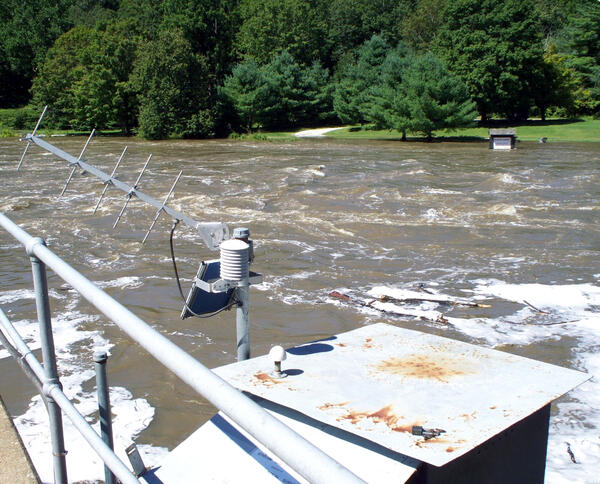
High water from Tropical Storm Irene at going past the Housatonic River at Falls Village, CT (01199000) streamgage, park and boat ramp on the far side of river is inundated by the flood water.
High water from Tropical Storm Irene at going past the Housatonic River at Falls Village, CT (01199000) streamgage, park and boat ramp on the far side of river is inundated by the flood water.
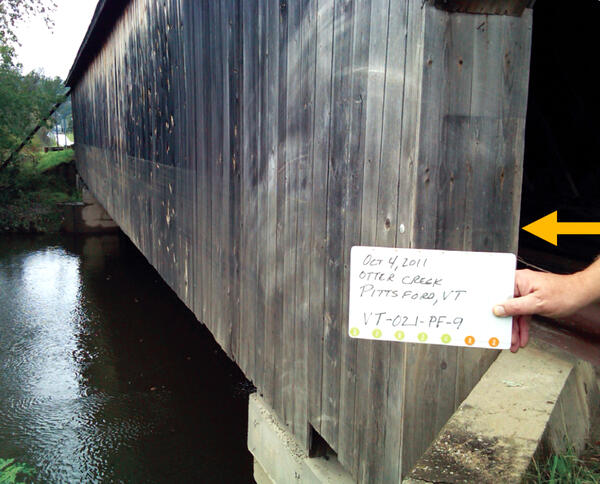
Covered bridge over Otter Creek showing a high-water mark (silt line) from Tropical Storm Irene.
Covered bridge over Otter Creek showing a high-water mark (silt line) from Tropical Storm Irene.

USGS station ID 01077400 Cockermouth River near Groton, New Hampshire. On August 28, 2011, during Irene the river jumped its banks upstream of this road crossing at North Groton Rd. due to the significant rainfall during the storm.
USGS station ID 01077400 Cockermouth River near Groton, New Hampshire. On August 28, 2011, during Irene the river jumped its banks upstream of this road crossing at North Groton Rd. due to the significant rainfall during the storm.

USGS station ID 01075000 Pemigewasset River at Woodstock, New Hampshire. Onlookers observing the flooded river on August 28, 2011 from just across the gage house. https://waterdata.usgs.gov/monitoring-location/01075000/
USGS station ID 01075000 Pemigewasset River at Woodstock, New Hampshire. Onlookers observing the flooded river on August 28, 2011 from just across the gage house. https://waterdata.usgs.gov/monitoring-location/01075000/

Flooding from Tropical Storm Irene at USGS 01374701 West Branch Croton River Near Croton Falls NY
Flooding from Tropical Storm Irene at USGS 01374701 West Branch Croton River Near Croton Falls NY