Streaks of blue-green cyanobacteria in the Willamette River
Streaks of blue-green cyanobacteria in the Willamette RiverStreaks of blue-green cyanobacteria in the Willamette River at the new USGS water-quality monitor at OMSI.


Official websites use .gov
A .gov website belongs to an official government organization in the United States.

Secure .gov websites use HTTPS
A lock () or https:// means you’ve safely connected to the .gov website. Share sensitive information only on official, secure websites.

Check out photos of some of the awesome work USGS scientists and field technicians have done over the years.

Streaks of blue-green cyanobacteria in the Willamette River at the new USGS water-quality monitor at OMSI.
Streaks of blue-green cyanobacteria in the Willamette River at the new USGS water-quality monitor at OMSI.

Microcyctis aeruginosa is a freshwater cyanobacteria that produce cyanotoxins such as Microcystin. Cyanotoxins are harmful to humans and pets.
Microcyctis aeruginosa is a freshwater cyanobacteria that produce cyanotoxins such as Microcystin. Cyanotoxins are harmful to humans and pets.

New USGS water temperature and water level gage installed in Middle Santiam River in the Middle Santiam Wildness Area upstream of Green Peter Dam. This gage will help characterize habitat conditions for multiple life stages of spring Chinook salmon in this river reach.
New USGS water temperature and water level gage installed in Middle Santiam River in the Middle Santiam Wildness Area upstream of Green Peter Dam. This gage will help characterize habitat conditions for multiple life stages of spring Chinook salmon in this river reach.

Brandon Overstreet paddles North Santiam River near Narrows Rapid collecting survey data and underwater photographs to characterize channel bed topography and substrates
Brandon Overstreet paddles North Santiam River near Narrows Rapid collecting survey data and underwater photographs to characterize channel bed topography and substrates

Image of a preliminary topobathymetric digital elevation model captured of the of the Santiam River, OR.
Image of a preliminary topobathymetric digital elevation model captured of the of the Santiam River, OR.

An American coot nest in Malheur Lake was built with bulrush and floated on the surface even as waves passed by.
An American coot nest in Malheur Lake was built with bulrush and floated on the surface even as waves passed by.

Photo taken of the Willamette River near Harrisburg, Oregon during the "heat dome" of 2021. This historic heatwave occurred in Oregon and the greater Pacific Northwest in late June of 2021 breaking high temperature records, some by several degrees.
Photo taken of the Willamette River near Harrisburg, Oregon during the "heat dome" of 2021. This historic heatwave occurred in Oregon and the greater Pacific Northwest in late June of 2021 breaking high temperature records, some by several degrees.

Diatom, Synedra, from the Greek word synedria meaning "a sitting together". The genus Synedra has long, needle like cells that can exist singly or radiate in colonies.
Diatom, Synedra, from the Greek word synedria meaning "a sitting together". The genus Synedra has long, needle like cells that can exist singly or radiate in colonies.

The Saline Lake Ecosystems IWAA Waterbird Movement Project began tagging American Avocets in March 2023 to track their movements across the landscape. Tracking data from these birds will help scientists better understand why these birds choose to use the terminal lake and wetland habitats they do in the Great Basin.
The Saline Lake Ecosystems IWAA Waterbird Movement Project began tagging American Avocets in March 2023 to track their movements across the landscape. Tracking data from these birds will help scientists better understand why these birds choose to use the terminal lake and wetland habitats they do in the Great Basin.

Lake Abert, Oregon is one of the 20 terminal lakes identified by USGS partners as priority ecosystems for study by the Saline Lakes Ecosystems IWAA.
Lake Abert, Oregon is one of the 20 terminal lakes identified by USGS partners as priority ecosystems for study by the Saline Lakes Ecosystems IWAA.
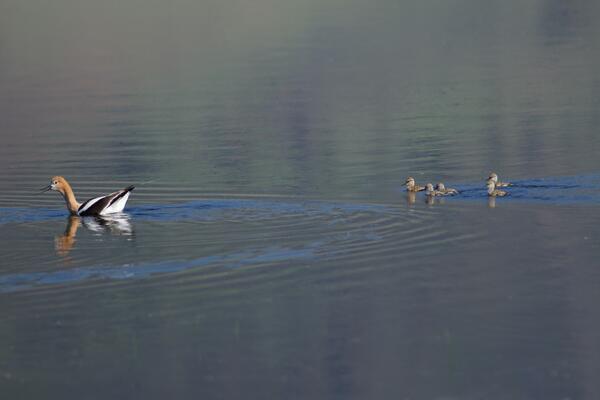
American Avocet are a bird that relies heavily on the Saline Lakes ecosystem during their spring migration periods. Over 50% of these birds exist here. Part of their use includes using the terminal lakes there to breed.
American Avocet are a bird that relies heavily on the Saline Lakes ecosystem during their spring migration periods. Over 50% of these birds exist here. Part of their use includes using the terminal lakes there to breed.

An outside gage set-up at Quartzville Creek near Cascadia Oregon. Graduated staff plates installed at various heights to capture the range in water levels. Staffs are used to get river level readings hydrologic technicians need to calibrate electronic sensors. The vertical grey metal pipe is a crest stage gage (CSG).
An outside gage set-up at Quartzville Creek near Cascadia Oregon. Graduated staff plates installed at various heights to capture the range in water levels. Staffs are used to get river level readings hydrologic technicians need to calibrate electronic sensors. The vertical grey metal pipe is a crest stage gage (CSG).

Photo taken by hydrotech Josh Price while he scouts for potential spots to install the new monitoring equipment.
Photo taken by hydrotech Josh Price while he scouts for potential spots to install the new monitoring equipment.

USGS hydrologic technicians pose during their fastening the grey enclosure to the dock. The grey enclosure protects the monitoring station equipment from the elements.
USGS hydrologic technicians pose during their fastening the grey enclosure to the dock. The grey enclosure protects the monitoring station equipment from the elements.

This large basalt boulder is the perfect stable foundation for the metal gage box keeping our equipment safe on the shores of Lake Abert.
This large basalt boulder is the perfect stable foundation for the metal gage box keeping our equipment safe on the shores of Lake Abert.

USGS data technicians are skilled in both field hydrology and construction to build and maintain USGS monitoring stations. Here they attach the equipment shelter to the dock at the Oregon Museum of Science and Industry.
USGS data technicians are skilled in both field hydrology and construction to build and maintain USGS monitoring stations. Here they attach the equipment shelter to the dock at the Oregon Museum of Science and Industry.

The star-shaped Asterionella is a genus of freshwater diatoms often found in star-shaped colonies of individuals. The thread like shape is Fragilaria a genus of fresh and saltwater diatom.
The star-shaped Asterionella is a genus of freshwater diatoms often found in star-shaped colonies of individuals. The thread like shape is Fragilaria a genus of fresh and saltwater diatom.

Scientific studies in Malheur Lake require strong partnerships and collaboration among USGS, USFWS, and High Desert Partnership. Photo by Brandon McMullen.
Scientific studies in Malheur Lake require strong partnerships and collaboration among USGS, USFWS, and High Desert Partnership. Photo by Brandon McMullen.

Local sand was applied to some mesocosms to test whether hardening the lakebed would reduce suspension of bottom sediments.
Local sand was applied to some mesocosms to test whether hardening the lakebed would reduce suspension of bottom sediments.
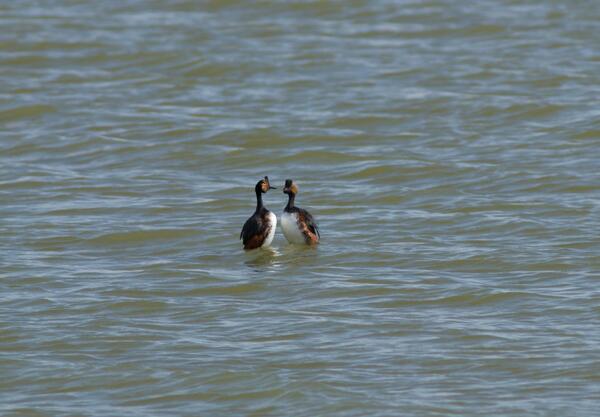
Eared grebes in a courtship behavior in the Great Salt Lake. They are one of many migratory birds in the Great Basin that rely on terminal lakes and wetlands in the area to stop rest and feed.
Eared grebes in a courtship behavior in the Great Salt Lake. They are one of many migratory birds in the Great Basin that rely on terminal lakes and wetlands in the area to stop rest and feed.