U.S. flag

An official website of the United States government

Chesapeake Bay

Filter Total Items: 31

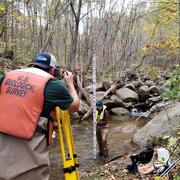
Using monitoring data to measure conditions over time in Chesapeake Bay streams

This study provides a comprehensive assessment of the health of streams throughout the Chesapeake Bay. Monitoring data were used to assess seven key indicators of stream condition, revealing consistent patterns of degradation in urban and agricultural areas. The findings offer critical insights that can inform watershed restoration efforts and improve long-term monitoring strategies.
Using monitoring data to measure conditions over time in Chesapeake Bay streams

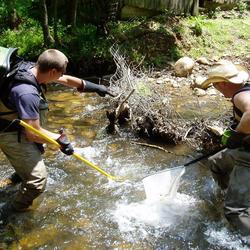
Using monitoring data to measure conditions over time in Chesapeake Bay streams

This study provides a comprehensive assessment of the health of streams throughout the Chesapeake Bay. Monitoring data were used to assess seven key indicators of stream condition, revealing consistent patterns of degradation in urban and agricultural areas. The findings offer critical insights that can inform watershed restoration efforts and improve long-term monitoring strategies.
Learn More

EESC Makes an Impact: Enhancing Recreational & Commercial Fishing

The USGS Eastern Ecological Science Center (EESC) provides world-class science to inform natural resource decisions on aquatic ecosystems, species populations and management, disease, and invasive species. Our scientific products represent critical contributions that enhance the ecological and economic sustainability of recreational and commercial fishing. In the United States, anglers contribute...
EESC Makes an Impact: Enhancing Recreational & Commercial Fishing

EESC Makes an Impact: Enhancing Recreational & Commercial Fishing

The USGS Eastern Ecological Science Center (EESC) provides world-class science to inform natural resource decisions on aquatic ecosystems, species populations and management, disease, and invasive species. Our scientific products represent critical contributions that enhance the ecological and economic sustainability of recreational and commercial fishing. In the United States, anglers contribute...
Learn More

Advancing Risk Modeling for Highly Pathogenic Avian Influenza

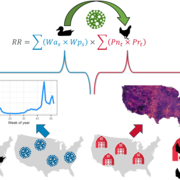
Ongoing global outbreaks demonstrate the capacity of highly pathogenic avian influenza virus (HPAIV) to impact poultry, wild birds, and even human health. USGS research is advancing the understanding of the spatial and temporal interface between wild and domestic bird populations from which these viruses emerge to aid biosecurity planning and outbreak response.
Advancing Risk Modeling for Highly Pathogenic Avian Influenza

Advancing Risk Modeling for Highly Pathogenic Avian Influenza

Ongoing global outbreaks demonstrate the capacity of highly pathogenic avian influenza virus (HPAIV) to impact poultry, wild birds, and even human health. USGS research is advancing the understanding of the spatial and temporal interface between wild and domestic bird populations from which these viruses emerge to aid biosecurity planning and outbreak response.
Learn More

Pathogens in the Aquatic Environment – Waterfowl, Avian Influenza

USGS research is investigating the prevalence and strains of avian influenza viruses in the aquatic environment, how those viruses compare to those circulating within wild birds in the same area, and how viruses persist in the environment across seasons.

Pathogens in the Aquatic Environment – Waterfowl, Avian Influenza

Pathogens in the Aquatic Environment – Waterfowl, Avian Influenza

USGS research is investigating the prevalence and strains of avian influenza viruses in the aquatic environment, how those viruses compare to those circulating within wild birds in the same area, and how viruses persist in the environment across seasons.
Learn More

Key Values of a Century of EESC Science

The USGS Eastern Ecological Science Center (EESC) is rooted in a proud tradition of service to the nation—advancing science that informs the conservation and management of fish, wildlife, and habitats across the eastern United States and beyond. Our mission is clear: deliver reliable, partner-driven science that supports natural resource decisions today, while ensuring these resources remain...
Key Values of a Century of EESC Science

Key Values of a Century of EESC Science

The USGS Eastern Ecological Science Center (EESC) is rooted in a proud tradition of service to the nation—advancing science that informs the conservation and management of fish, wildlife, and habitats across the eastern United States and beyond. Our mission is clear: deliver reliable, partner-driven science that supports natural resource decisions today, while ensuring these resources remain...
Learn More

EESC Makes an Impact: Restoring the Chesapeake Bay Watershed

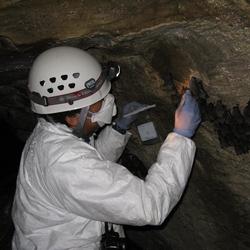
The Chesapeake Bay provides over $100 billion in annual economic value and is home to 18 million people. The USGS, including scientists from the Eastern Ecological Science Center (EESC), works with Federal, State, local, and academic partners to provide research and monitoring and to communicate results to inform management for the Chesapeake and other important landscapes across the Nation.
EESC Makes an Impact: Restoring the Chesapeake Bay Watershed

EESC Makes an Impact: Restoring the Chesapeake Bay Watershed

The Chesapeake Bay provides over $100 billion in annual economic value and is home to 18 million people. The USGS, including scientists from the Eastern Ecological Science Center (EESC), works with Federal, State, local, and academic partners to provide research and monitoring and to communicate results to inform management for the Chesapeake and other important landscapes across the Nation.
Learn More

EESC Makes an Impact: Reducing Management Costs and Increasing Efficiency

Decision analysis is widely used in business applications to improve cost saving and increase efficiency under uncertainty. Scientists at the U.S. Geological Survey Eastern Ecological Science Center (EESC) include world-renowned experts who use data, mathematics, statistics, and computer science to help frame and solve decision problems to support U.S. national security, public health, wildlife...
EESC Makes an Impact: Reducing Management Costs and Increasing Efficiency

EESC Makes an Impact: Reducing Management Costs and Increasing Efficiency

Decision analysis is widely used in business applications to improve cost saving and increase efficiency under uncertainty. Scientists at the U.S. Geological Survey Eastern Ecological Science Center (EESC) include world-renowned experts who use data, mathematics, statistics, and computer science to help frame and solve decision problems to support U.S. national security, public health, wildlife...
Learn More

Avian Influenza Host Movement Ecology

Understanding disease systems requires an understanding of the basic ecology of host species. USGS is involved in global efforts to explore the movements of bird species that are hosts of avian influenza as well as the potential impacts of changing landscapes on avian influenza.
Avian Influenza Host Movement Ecology

Avian Influenza Host Movement Ecology

Understanding disease systems requires an understanding of the basic ecology of host species. USGS is involved in global efforts to explore the movements of bird species that are hosts of avian influenza as well as the potential impacts of changing landscapes on avian influenza.
Learn More

Using Global Telemetry to Understand Avian Movement and Migration

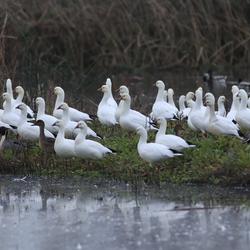
USGS researchers are collaborating with partners around the globe to leverage new and existing telemetry data to answer broad scale questions about factors influencing avian movement and migration.
Using Global Telemetry to Understand Avian Movement and Migration

Using Global Telemetry to Understand Avian Movement and Migration

USGS researchers are collaborating with partners around the globe to leverage new and existing telemetry data to answer broad scale questions about factors influencing avian movement and migration.
Learn More

Identifying Spatial and Temporal Trends in Avian Influenza Prevalence in Wild Waterfowl Across the United States

USGS researchers are at the forefront of building and maintaining datasets that represent the spatial and temporal patterns in avian influenza virus prevalence in wild birds, which is critical information used to estimate transmission risk to domestic poultry.
Identifying Spatial and Temporal Trends in Avian Influenza Prevalence in Wild Waterfowl Across the United States

Identifying Spatial and Temporal Trends in Avian Influenza Prevalence in Wild Waterfowl Across the United States

USGS researchers are at the forefront of building and maintaining datasets that represent the spatial and temporal patterns in avian influenza virus prevalence in wild birds, which is critical information used to estimate transmission risk to domestic poultry.
Learn More

Developing Waterfowl Distribution and Abundance Models to Inform Avian Influenza Transmission Risk

USGS researchers are developing novel methods to improve our understanding of waterfowl distributions and abundance across the United States to inform a variety of ongoing disease studies. Understanding the distribution of wild waterfowl is a critical component to assessing avian influenza transmission risks across the landscape.
Developing Waterfowl Distribution and Abundance Models to Inform Avian Influenza Transmission Risk

Developing Waterfowl Distribution and Abundance Models to Inform Avian Influenza Transmission Risk

USGS researchers are developing novel methods to improve our understanding of waterfowl distributions and abundance across the United States to inform a variety of ongoing disease studies. Understanding the distribution of wild waterfowl is a critical component to assessing avian influenza transmission risks across the landscape.
Learn More

Genomics to Aid Conservation and restoration of the Yellow Lampmussel (Lampsilis cariosa) and Tidewater Mucket (Atlanticoncha ochracea)

Due to the rapid decline in abundance of Yellow Lampmussel ( Lampsilis cariosa) and Tidewater Mucket ( Atlanticoncha ochracea), USGS and partners at the U.S. Fish and Wildlife Service (USFWS) and Central Michigan University (CMU) are conducting an assessment of genetic diversity and population structure to inform appropriate recommendations for conservation and management of each species. These...
Genomics to Aid Conservation and restoration of the Yellow Lampmussel (Lampsilis cariosa) and Tidewater Mucket (Atlanticoncha ochracea)

Genomics to Aid Conservation and restoration of the Yellow Lampmussel (Lampsilis cariosa) and Tidewater Mucket (Atlanticoncha ochracea)

Due to the rapid decline in abundance of Yellow Lampmussel ( Lampsilis cariosa) and Tidewater Mucket ( Atlanticoncha ochracea), USGS and partners at the U.S. Fish and Wildlife Service (USFWS) and Central Michigan University (CMU) are conducting an assessment of genetic diversity and population structure to inform appropriate recommendations for conservation and management of each species. These...
Learn More
Was this page helpful?