U.S. flag

An official website of the United States government

Land Management

Learn more about FORT research on land management.

Filter Total Items: 129

Recommendations for conducting landscape assessments to inform decision making on multiple-use public lands

Landscape assessments have been proposed as a mechanism for informing conservation and natural resource management actions at broad scales. We are documenting the process used in a large effort to conduct 14 such assessments across the western United States, and evaluating how the assessments were used in subsequent land use plans. In this project, we seek to identify methods and characteristics...

Recommendations for conducting landscape assessments to inform decision making on multiple-use public lands

Recommendations for conducting landscape assessments to inform decision making on multiple-use public lands

Landscape assessments have been proposed as a mechanism for informing conservation and natural resource management actions at broad scales. We are documenting the process used in a large effort to conduct 14 such assessments across the western United States, and evaluating how the assessments were used in subsequent land use plans. In this project, we seek to identify methods and characteristics...
Learn More

Science for effective pollinator conservation and improved food security

Pollinators, including bees, flies, butterflies, bats, birds, and other animals, are critically important to U.S. ecosystems and agriculture. Recent reports of declines of pollinator species have led to widespread actions to conserve pollinator habitat and recover imperiled species, but resource managers need accurate data and science to support management actions. USGS pollinator research helps...
Science for effective pollinator conservation and improved food security

Science for effective pollinator conservation and improved food security

Pollinators, including bees, flies, butterflies, bats, birds, and other animals, are critically important to U.S. ecosystems and agriculture. Recent reports of declines of pollinator species have led to widespread actions to conserve pollinator habitat and recover imperiled species, but resource managers need accurate data and science to support management actions. USGS pollinator research helps...
Learn More

Greater Sage-Grouse Population Monitoring Framework

Greater sage-grouse ( Centrocercus urophasianus) are at the center of state and national land use policies largely because of their unique life-history traits as an ecological indicator for health of sagebrush ecosystems. Researchers within the U.S. Geological Survey (USGS) and Colorado State University (CSU) worked with the Bureau of Land Management (BLM) and state wildlife agencies to develop a...
Greater Sage-Grouse Population Monitoring Framework

Greater Sage-Grouse Population Monitoring Framework

Greater sage-grouse ( Centrocercus urophasianus) are at the center of state and national land use policies largely because of their unique life-history traits as an ecological indicator for health of sagebrush ecosystems. Researchers within the U.S. Geological Survey (USGS) and Colorado State University (CSU) worked with the Bureau of Land Management (BLM) and state wildlife agencies to develop a...
Learn More

Shrubland, Alpine and Grassland Ecology (SAGE) Wildlife Research Group

The SAGE Wildlife Research Group consists of a large team of research scientists with an interest in conservation and management of wildlife and their ecosystems. Broadly, research involves understanding animal-habitat relationships, with an emphasis on conservation ecology and population demography, and a focus on shrubland, alpine, and grassland ecosystems. We are addressing the effects of...
Shrubland, Alpine and Grassland Ecology (SAGE) Wildlife Research Group

Shrubland, Alpine and Grassland Ecology (SAGE) Wildlife Research Group

The SAGE Wildlife Research Group consists of a large team of research scientists with an interest in conservation and management of wildlife and their ecosystems. Broadly, research involves understanding animal-habitat relationships, with an emphasis on conservation ecology and population demography, and a focus on shrubland, alpine, and grassland ecosystems. We are addressing the effects of...
Learn More

USGS Science Syntheses for Public Lands Management

Scientific information is fundamental to understanding how proposed actions on public lands may impact the environment. Development of new science is occurring at rates that can make it challenging for biologists, resource managers, decision makers, private landowners, and other stakeholders to ensure they are using up-to-date, high-quality science information to inform their decisions. Further...
USGS Science Syntheses for Public Lands Management

USGS Science Syntheses for Public Lands Management

Scientific information is fundamental to understanding how proposed actions on public lands may impact the environment. Development of new science is occurring at rates that can make it challenging for biologists, resource managers, decision makers, private landowners, and other stakeholders to ensure they are using up-to-date, high-quality science information to inform their decisions. Further...
Learn More

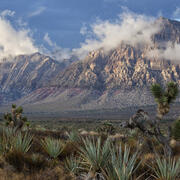
Developing structured science syntheses for use in NEPA analyses and decision making in the Bureau of Land Management

Science information is fundamental to understanding how proposed actions on public lands may impact the environment. However, agencies often have limited time to compile and synthesize existing science. We are working with land management agencies to develop a new type of science product— structured science syntheses—for facilitating the use of science information in public lands decisions.
Developing structured science syntheses for use in NEPA analyses and decision making in the Bureau of Land Management

Developing structured science syntheses for use in NEPA analyses and decision making in the Bureau of Land Management

Science information is fundamental to understanding how proposed actions on public lands may impact the environment. However, agencies often have limited time to compile and synthesize existing science. We are working with land management agencies to develop a new type of science product— structured science syntheses—for facilitating the use of science information in public lands decisions.
Learn More

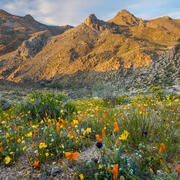
Skill-building workshops for researchers on the coproduction of actionable science

Public lands management requires the use of science, but agency staff rarely have time to stay current with all the science on management-relevant topics, especially as articles are published at an ever-increasing rate. In this new series of learning modules, we aim to provide scientists with essential tools, skills, and strategies for coproducing actionable science products with and for federal...
Skill-building workshops for researchers on the coproduction of actionable science

Skill-building workshops for researchers on the coproduction of actionable science

Public lands management requires the use of science, but agency staff rarely have time to stay current with all the science on management-relevant topics, especially as articles are published at an ever-increasing rate. In this new series of learning modules, we aim to provide scientists with essential tools, skills, and strategies for coproducing actionable science products with and for federal...
Learn More

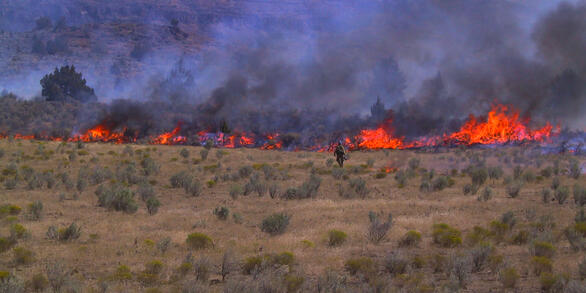
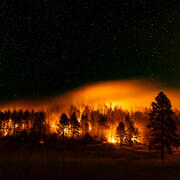
Ecosystem change science in support of wildfire management, water conservation, public land reclamation, and food security

FORT researchers provide sound science to support the Department of the Interior in its efforts to manage wildfires, conserve water, reclaim public lands for multiple uses, and promote food security. This research is developed in partnership with resource managers from local, State, Federal and Tribal governments, industry, and nongovernmental organizations, empowering local and rural communities...
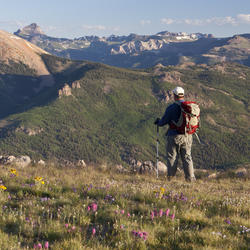
Ecosystem change science in support of wildfire management, water conservation, public land reclamation, and food security

Ecosystem change science in support of wildfire management, water conservation, public land reclamation, and food security

FORT researchers provide sound science to support the Department of the Interior in its efforts to manage wildfires, conserve water, reclaim public lands for multiple uses, and promote food security. This research is developed in partnership with resource managers from local, State, Federal and Tribal governments, industry, and nongovernmental organizations, empowering local and rural communities...
Learn More

Social and economic analysis research in support of public safety, outdoor recreation, and economic growth

FORT researchers provide sound science to support the Department of the Interior in its efforts to reduce the risks wildfires pose to people and property, expand outdoor recreation and tourism opportunities, and promote economic decision making in public lands management. This research is developed in partnership with resource managers from local, State, Federal and Tribal governments, industry...
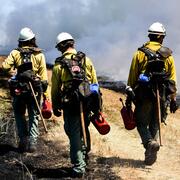
Social and economic analysis research in support of public safety, outdoor recreation, and economic growth

Social and economic analysis research in support of public safety, outdoor recreation, and economic growth

FORT researchers provide sound science to support the Department of the Interior in its efforts to reduce the risks wildfires pose to people and property, expand outdoor recreation and tourism opportunities, and promote economic decision making in public lands management. This research is developed in partnership with resource managers from local, State, Federal and Tribal governments, industry...
Learn More

Land management research in support of streamlined energy development, economic growth, and wildfire management

FORT researchers provide sound science to support the Department of the Interior in its efforts to streamline reliable energy development, enhance cost efficiency in public lands management, and manage fire-prone habitats for public safety. This research is developed in partnership with resource managers from local, State, Federal and Tribal governments, industry, and nongovernmental organizations...
Land management research in support of streamlined energy development, economic growth, and wildfire management

Land management research in support of streamlined energy development, economic growth, and wildfire management

FORT researchers provide sound science to support the Department of the Interior in its efforts to streamline reliable energy development, enhance cost efficiency in public lands management, and manage fire-prone habitats for public safety. This research is developed in partnership with resource managers from local, State, Federal and Tribal governments, industry, and nongovernmental organizations...
Learn More

Human Dimensions of Resource Management

Human dimensions in the context of natural resource management refers to understanding attitudes, preferences, and behaviors of American citizens in order to improve conservation and management of public lands and waters. Human Dimensions at the FORT also includes understanding the users and applications of data and technology in the context of natural resource management.
Human Dimensions of Resource Management

Human Dimensions of Resource Management

Human dimensions in the context of natural resource management refers to understanding attitudes, preferences, and behaviors of American citizens in order to improve conservation and management of public lands and waters. Human Dimensions at the FORT also includes understanding the users and applications of data and technology in the context of natural resource management.
Learn More

Feasibility of Remote Sensing Data Sets for Evaluation of Next Generation Fire Behavior Models

U.S. Geological Survey (USGS) scientists are working with the U.S. Department of Defense (DoD) Environmental Security Technology Certification Program (ESTCP) to advance efforts to deploy next generation fire behavior models through a research-to-operations transition to enable land managers to use advanced modeling tools for real-time decision making. As part of this effort, USGS is leading an...
Feasibility of Remote Sensing Data Sets for Evaluation of Next Generation Fire Behavior Models

Feasibility of Remote Sensing Data Sets for Evaluation of Next Generation Fire Behavior Models

U.S. Geological Survey (USGS) scientists are working with the U.S. Department of Defense (DoD) Environmental Security Technology Certification Program (ESTCP) to advance efforts to deploy next generation fire behavior models through a research-to-operations transition to enable land managers to use advanced modeling tools for real-time decision making. As part of this effort, USGS is leading an...
Learn More
Was this page helpful?