These Landsat images show the remarkable transformation of desert sand in 1986 into green, circular fields—some as large as 1 kilometer across—by 2016
Images
The National Land Imaging Program supports a variety of geospatial data programs and projects, including the USGS Landsat Program. Browse the images below to see some of the imagery produced using NLI-supported data sources.
These Landsat images show the remarkable transformation of desert sand in 1986 into green, circular fields—some as large as 1 kilometer across—by 2016
Kilauea, Mauna Loa Volcanoes Shape the Face of Hawaii
Kilauea, Mauna Loa Volcanoes Shape the Face of HawaiiThough the park celebrates its 100th anniversary on August 1, 2016, its main attractions-Kilauea and Mauna Loa volcanoes-have been adding to the land mass of Hawaii’s “Big Island” for at least 400,000 years.
Kilauea, Mauna Loa Volcanoes Shape the Face of Hawaii
Kilauea, Mauna Loa Volcanoes Shape the Face of HawaiiThough the park celebrates its 100th anniversary on August 1, 2016, its main attractions-Kilauea and Mauna Loa volcanoes-have been adding to the land mass of Hawaii’s “Big Island” for at least 400,000 years.
The total area (land and water) of Rhode Island is only 1,545 square miles. The state measures about 37 miles east-west, and about 48 miles north-south.
Capital Providence
Image Source Landsat 8
Population 1,097,379
Number of Pixels 3,162,631
The total area (land and water) of Rhode Island is only 1,545 square miles. The state measures about 37 miles east-west, and about 48 miles north-south.
Capital Providence
Image Source Landsat 8
Population 1,097,379
Number of Pixels 3,162,631
The Salar de Atacama in Chile is a large, dry salt flat surrounded by mountain ranges and is one of the driest places on Earth. Parts of the Atacama Desert have gone without rain for as long as people have been keeping track, but water rich in dissolved salts lies beneath this flat surface. The Salar is particularly rich in lithium salts.
Beauty of Earth Science Revealed Within Great Smoky Mountains
Beauty of Earth Science Revealed Within Great Smoky MountainsEarth Science reminds us that the study of Earth and its biological processes can occur anywhere—whether we realize it or not.
Beauty of Earth Science Revealed Within Great Smoky Mountains
Beauty of Earth Science Revealed Within Great Smoky MountainsEarth Science reminds us that the study of Earth and its biological processes can occur anywhere—whether we realize it or not.
Hurricane Sandy Slammed Eastern U.S. Four Years Ago
Hurricane Sandy Slammed Eastern U.S. Four Years AgoHigh Resolution Orthoimagery archived at the USGS EROS Center and inset into the larger image show the New Jersey coastal town of Mantoloking five years before Sandy made landfall, as well as the slow recovery three years after the storm.
Hurricane Sandy Slammed Eastern U.S. Four Years Ago
Hurricane Sandy Slammed Eastern U.S. Four Years AgoHigh Resolution Orthoimagery archived at the USGS EROS Center and inset into the larger image show the New Jersey coastal town of Mantoloking five years before Sandy made landfall, as well as the slow recovery three years after the storm.
Land Remote Sensing Image of Mount St. Helens on May 22, 1983. The volcanic blast on May 18, 1980, devastated more than 150 square miles of forest within a few minutes. In this Landsat false-color images, forest appears as bright red interspersed with patches of logging. Snow appears white, and ash is gray.
Canyonlands National Park was one of four national parks established (1964) under the leadership of Interior Secretary Stewart Udall.
Landsat 8, acquired March 29, 2015.
Canyonlands National Park was one of four national parks established (1964) under the leadership of Interior Secretary Stewart Udall.
Landsat 8, acquired March 29, 2015.
Landsat 8 OLI image of retreating glacial ice near Eltanin Bay, West Antarctica
Remote pilot monitoring the flight of a UAS at the Sequoyah NWR
Remote pilot monitoring the flight of a UAS at the Sequoyah NWRRemote pilot monitoring the flight of a UAS at the Sequoyah NWR
The NUSO and the USFWS in February 2015 evaluated the use of UAS data collection to improve waterfowl survey accuracy and eliminate pilot/passenger safety risks associated with manned aircraft data collection.
Remote pilot monitoring the flight of a UAS at the Sequoyah NWR
Remote pilot monitoring the flight of a UAS at the Sequoyah NWRRemote pilot monitoring the flight of a UAS at the Sequoyah NWR
The NUSO and the USFWS in February 2015 evaluated the use of UAS data collection to improve waterfowl survey accuracy and eliminate pilot/passenger safety risks associated with manned aircraft data collection.
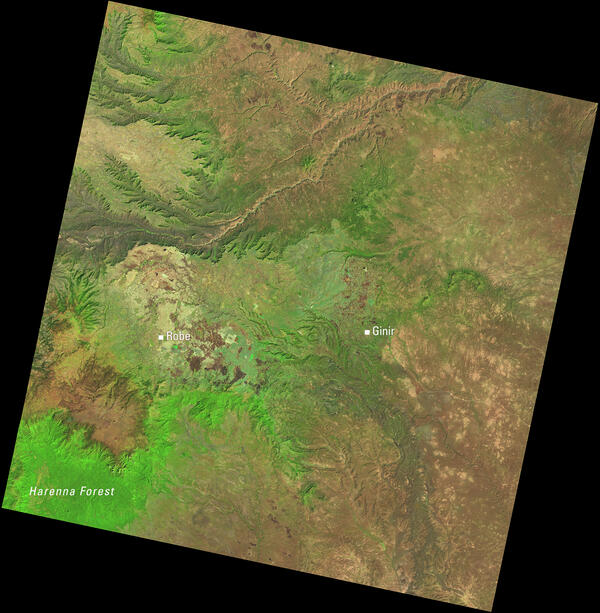
Landsat View of Ethiopia’s Highlands and the Harenna Forest
Landsat View of Ethiopia’s Highlands and the Harenna ForestThis Landsat 8 image of central Ethiopia, acquired January 1, 2014, uses the shortwave infrared, near infrared, and red spectral bands (bands 6,5,4) to emphasize vegetation and land cover. In this combination, healthy vegetation appears bright green.
Landsat View of Ethiopia’s Highlands and the Harenna Forest
Landsat View of Ethiopia’s Highlands and the Harenna ForestThis Landsat 8 image of central Ethiopia, acquired January 1, 2014, uses the shortwave infrared, near infrared, and red spectral bands (bands 6,5,4) to emphasize vegetation and land cover. In this combination, healthy vegetation appears bright green.
A graphic showing the Antarctica Plateau where temperatures in several hollows can dip below minus 133.6 degrees F.
A vast, open expanse in Namibia is one of the largest salt pans in the world. The pan is within Etosha National Park, protected since 1907. The horizontal line across the image is the national park fence. The wild patterns in this infrared interpretation are from numerous episodes of water evaporation following seasonal rains.
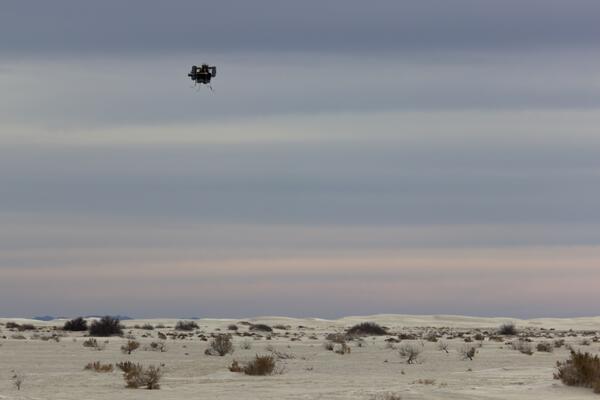
UAS in flight at the White Sands National Monument
UAS in flight at the White Sands National MonumentUAS in flight at the White Sands National Monument
UAS in flight at the White Sands National Monument
UAS in flight at the White Sands National MonumentUAS in flight at the White Sands National Monument
Nevada was the fastest growing state between 1990 and 2000, with a population growth rate of 66.3 percent. No other state topped 40 percent.
Capital Carson City
Image Source Landsat 8
Population 3,104,614
Number of Pixels 318,192,547
Nevada was the fastest growing state between 1990 and 2000, with a population growth rate of 66.3 percent. No other state topped 40 percent.
Capital Carson City
Image Source Landsat 8
Population 3,104,614
Number of Pixels 318,192,547
Artist's rendering of Landsat Data Continuity Mission (LDCM). The satellite was renamed Landsat 8 after a successful launch on February 11, 2013.
Visit this Landsat 8 webpage to learn more about the Landsat program.
Artist's rendering of Landsat Data Continuity Mission (LDCM). The satellite was renamed Landsat 8 after a successful launch on February 11, 2013.
Visit this Landsat 8 webpage to learn more about the Landsat program.
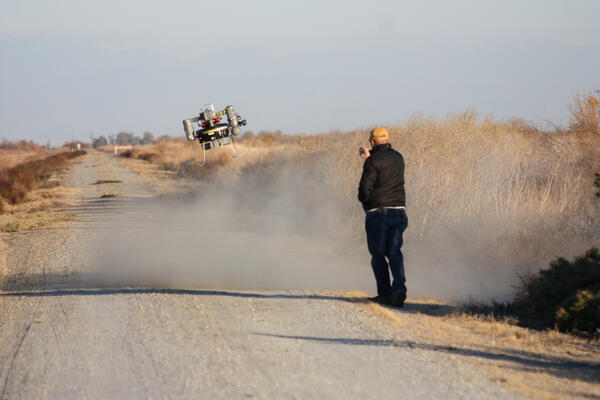
USGS scientist observing a UAS launch at the Pixley National Wildlife Refuge
USGS scientist observing a UAS launch at the Pixley National Wildlife RefugeUSGS scientist observing a UAS launch at the Pixley National Wildlife Refuge
In December 2013 NUSO scientists, in coordination with the USFWS, tested the feasibility of using UAS for waterbird surveys, waterbird species differentiation, and night-time thermal imagery collection at the Pixley NWR.
USGS scientist observing a UAS launch at the Pixley National Wildlife Refuge
USGS scientist observing a UAS launch at the Pixley National Wildlife RefugeUSGS scientist observing a UAS launch at the Pixley National Wildlife Refuge
In December 2013 NUSO scientists, in coordination with the USFWS, tested the feasibility of using UAS for waterbird surveys, waterbird species differentiation, and night-time thermal imagery collection at the Pixley NWR.
This image also provides a clear view of the Juneau Icefield. Several glaciers flow from this icefield, and glaciologists are using the 42-year Landsat archive to monitor the advance and retreat of the glaciers over time.
This image is a portion of the first Landsat 8 scene acquired May 12, 2013 (Path 107, Rows 70-71) in Western Australia. Geoscience Australia, a Landsat International Cooperator and a Landsat Science Team member, produced this enhanced image. Water and land were masked, separately enhanced, and then reassembled.
On March 29-30, 2013, the Landsat Data Continuity Mission (later named Landsat 8) was in position under the Landsat 7 satellite. This provided opportunities for near-coincident data collection from both satellites.