
Bebbia juncea, a native plant growing in western Grand Canyon
Bebbia juncea, a native plant growing in western Grand CanyonBebbia juncea, a native plant growing in western Grand Canyon. Photo by Emily Palmquist, USGS.


Official websites use .gov
A .gov website belongs to an official government organization in the United States.

Secure .gov websites use HTTPS
A lock () or https:// means you’ve safely connected to the .gov website. Share sensitive information only on official, secure websites.

Where would we be without plants? They are the basis of the food chain and producers of oxygen - and so much more. From marsh grasses to mangroves, from sagebrush to sunflowers, getting to the root of the biology and ecology of plants is a critical component of USGS research.
Life as we know it wouldn’t be possible without plants. Plants maintain the atmosphere by producing oxygen and absorbing carbon dioxide, help keep our waterways clean, and provide us with food, shelter, and medicine. Plant communities are influenced by soil, terrain, climate, animals, and human activities, so different groups and types of plants are found in different regions of the country. Grassland plants such as the western prairie fringed orchid are found in the Great Plains, while desert plants such as the saguaro cactus are found in the Southwest. Approximately 391,000 species of vascular plants are currently known to science. Explore examples of USGS science on different plant types below.


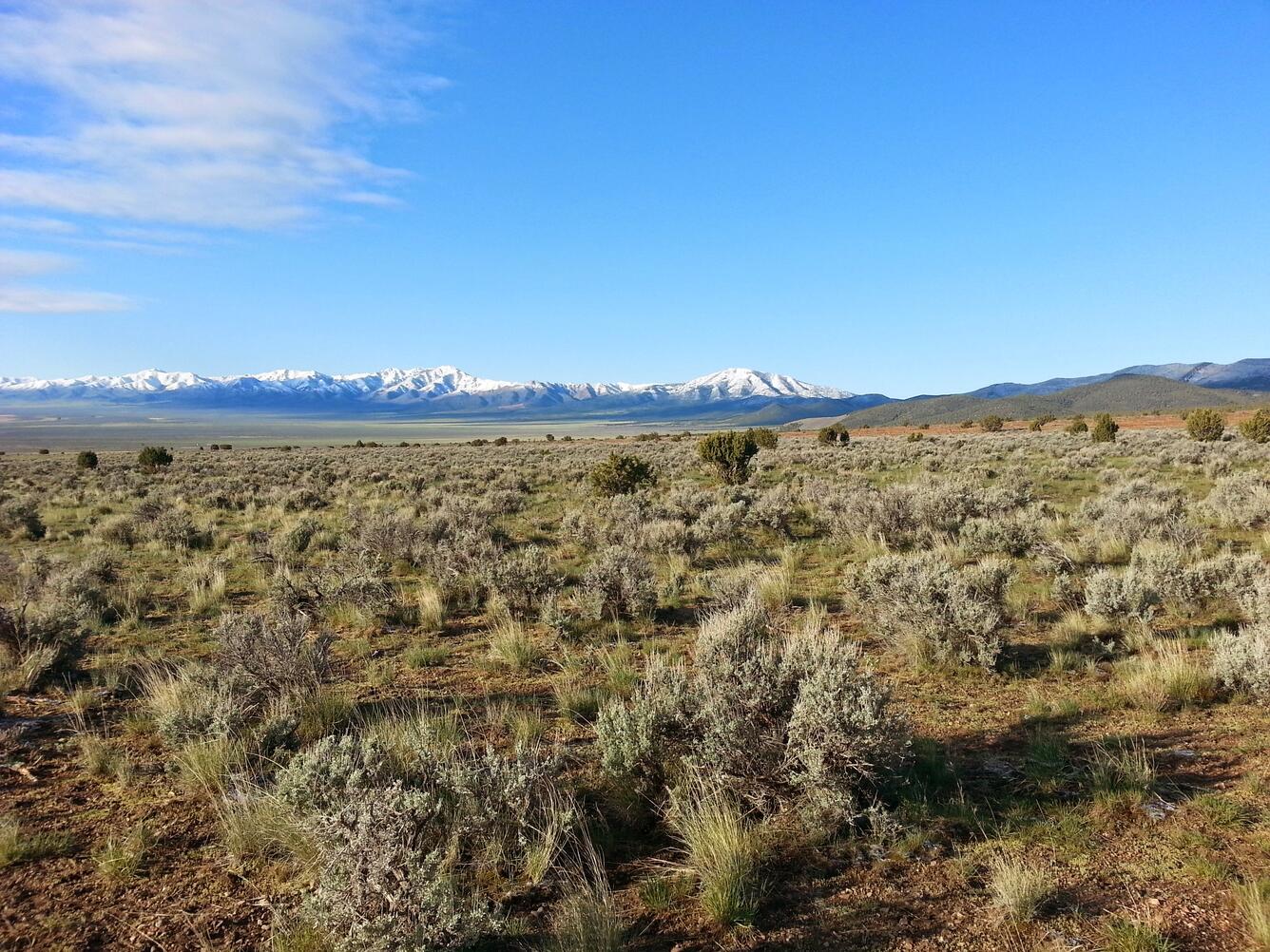
Healthy plants are the foundation of healthy ecosystems. In an era of global change, our Nation’s forests, grasslands, wetlands, and other critical habitats are facing multiple threats that challenge our ability to maintain these ecosystems and the species that depend on them. USGS science provides the information needed to address these challenges and support healthy, thriving plant communities across the country.
Understanding, monitoring, and predicting threats to plants contributes to the USGS goal of providing science to support the protection, conservation, and enhancement of the Nation’s biodiversity. Through activities such as identifying strategies for controlling invasive cheatgrass, using novel techniques to identify the presence of disease-causing plant pathogens, and informing recovery plans for at-risk species, USGS science is tackling some of the biggest threats facing plants today.
The single biggest threat facing plants today is habitat loss. Changes in land use, such as the encroachment of agriculture or urban development into areas that were once covered by natural vegetation, reduce plant population sizes and alter the ecosystems that plants, animals, and humans rely on. Changes in land use can cause species extinctions, destabilize soil, increase erosion, and reduce water quality. USGS scientists are monitoring changes in land use to understand how they are affecting the plants and wildlife that depend on them. Explore examples of our science below:

Every plant and animal species has a native range where it evolved. When a species exists in a location beyond its natural range, it is considered a “non-native” species in that area. When a non-native species establishes in a new habitat, causing harm to the environment or humans, it becomes “invasive”. The annual estimated economic and health-related costs of invasive species in the U.S. have been reported at more than \$21 billion and adversely affect every state in the country. Invasive plants represent a major threat to global and local biodiversity while also having negative socio-economic and human health impacts. Invasive plants displace native plants, prevent native plant growth, reduce agricultural production, and induce allergies.
Invasive plants such as cheatgrass and buffelgrass have increased fire vulnerability and diminished grazing value across the western U.S. Aquatic invasive plants such as the weed hydrilla and giant fern salvinia are clogging waterways. To help combat these invaders, USGS scientists are using new tools to model the potential spread of high impact invasive species and to support the early detection and rapid response of invasive species before they are able to spread and cause harm. If an invasive plant is already established, USGS science is helping land managers reverse and mitigate the negative impacts these invasions are causing. Explore examples of our science to understand and reduce the threat of invasive plants below:
Visit our Invasive Species webpage to learn more about USGS activities to monitor and respond to the threat of invasive species across the country.

USGS research is addressing numerous diseases in both plants and animals and leading development efforts in advanced tools such as environmental DNA (eDNA) to assist in prevention and early detection. Explore examples of our science on plant diseases and pathogens below:
Climate helps shape ecosystems. Things like average temperatures, humidity, and rainfall determine where plants and animals lives. If a region’s climate changes, the ecosystem changes as well. Climate change poses one of the biggest threats to plants, leading to an increased spread of invasive species, increased vulnerability to insect pests, the loss of native plant species and changes in their distribution. USGS scientists are leading efforts to understand the current and future impacts of climate change on plants. This information helps management agencies identify adaptation strategies and actions that can help support vulnerable plant species in the face of a changing climate. Explore examples of our science below:
As a result of threats such as the spread of invasive species, disease, and climate and land use change, some plant species are in decline or in danger of extinction. The USGS provides management agencies such as the U.S. Fish and Wildlife Agency and National Park Service with scientific information to support conservation decisions for at-risk plant species. Explore examples of our science below:

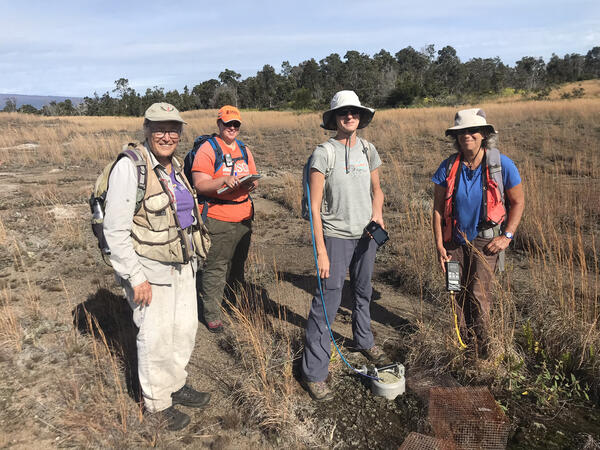

Ecosystem restoration is the act of rehabilitating a degraded or lost ecosystems through activities such as planting native trees and shrubs and controlling invasive species. To do this, land managers need tools to help get the right plants, in the right place, at the right time for successful restoration. The USGS develops strategies and techniques to understand and facilitate the restoration of native species and habitats that have deteriorated due to threats such as invasive species and climate change. Explore examples of our science below:


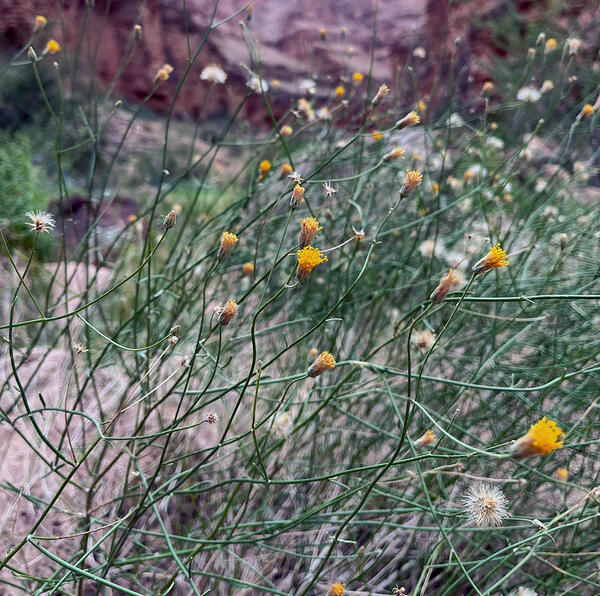
Bebbia juncea, a native plant growing in western Grand Canyon. Photo by Emily Palmquist, USGS.
Bebbia juncea, a native plant growing in western Grand Canyon. Photo by Emily Palmquist, USGS.

USGS wetland scientists (GLSC; Ann Arbor, Michigan) collecting plant growth data during an invasive Phragmites australis control experiment. Photo credit: Spenser Widin, USGS.
USGS wetland scientists (GLSC; Ann Arbor, Michigan) collecting plant growth data during an invasive Phragmites australis control experiment. Photo credit: Spenser Widin, USGS.

USGS Director David Applegate along with Associate Director Anne Kinsinger and Dr. Kurt Kowalski listen to Dr. Wes Bickford describe invasive Phragmites australis and the research being done at the Great Lakes Science Center to control it. Photo Credit: Josh Miller (USGS)
USGS Director David Applegate along with Associate Director Anne Kinsinger and Dr. Kurt Kowalski listen to Dr. Wes Bickford describe invasive Phragmites australis and the research being done at the Great Lakes Science Center to control it. Photo Credit: Josh Miller (USGS)

Sam Droege (fore) arrived from Patuxent with plants for the Conte Lab's new pollinator garden. Sam Parker (back) assists with the planting.
Sam Droege (fore) arrived from Patuxent with plants for the Conte Lab's new pollinator garden. Sam Parker (back) assists with the planting.

American Beachgrass (Ammophila breviligulata) is planted on a beach in the town of Aquinnah on Martha's Vineyard, Massachusetts for stabilization.
American Beachgrass (Ammophila breviligulata) is planted on a beach in the town of Aquinnah on Martha's Vineyard, Massachusetts for stabilization.

A saguaro flowering in the desert near Tucson, AZ. Photo courtesy of Daniel Winkler, USGS, SBSC. Taken in spring, 2022.
A saguaro flowering in the desert near Tucson, AZ. Photo courtesy of Daniel Winkler, USGS, SBSC. Taken in spring, 2022.

A bee visits a saguaro flower near Tucson in Saguaro National Park, southern Arizona. Photo courtesy of Daniel Winkler, USGS SBSC.
A bee visits a saguaro flower near Tucson in Saguaro National Park, southern Arizona. Photo courtesy of Daniel Winkler, USGS SBSC.

Biological carbon sequestration is the natural ability of life and ecosystems to store carbon. Forests, peat marshes, and coastal wetlands are particularly good as storing carbon. Carbon can be stored in plant tissue, such as long-lived tree bark or in extensive root systems. Microbes break down plant and animal tissue through decomposition.
Biological carbon sequestration is the natural ability of life and ecosystems to store carbon. Forests, peat marshes, and coastal wetlands are particularly good as storing carbon. Carbon can be stored in plant tissue, such as long-lived tree bark or in extensive root systems. Microbes break down plant and animal tissue through decomposition.

A basic overview of the nitrogen cycle. Red arrows represent the portions of the nitrogen cycle (decomposition and nitrification) that are performed by our laboratory’s microbial culture.
A basic overview of the nitrogen cycle. Red arrows represent the portions of the nitrogen cycle (decomposition and nitrification) that are performed by our laboratory’s microbial culture.
The multimedia items below are a sample of USGS media on plants and do not represent a complete list.

This green tree frog (Hyla cinerea) sits on the lip of a pitcher plant in a bog in Alabama. The frog was down in the pitcher plant, but moved up to rest on its edge as the photographer approached.
This green tree frog (Hyla cinerea) sits on the lip of a pitcher plant in a bog in Alabama. The frog was down in the pitcher plant, but moved up to rest on its edge as the photographer approached.

Plant community along river.
Plant community along river.

USGS scientist Jenny Briggs (foreground) researches beetle-killed pines at a USGS study site near Maxwell Ranch, Colorado, while Colorado State University entomologist Dan West examines the bark of a dead tree.
USGS scientist Jenny Briggs (foreground) researches beetle-killed pines at a USGS study site near Maxwell Ranch, Colorado, while Colorado State University entomologist Dan West examines the bark of a dead tree.

This diagram of the nitrogen cycle shows were in the cycle antibiotics could impact the ability of denitrifying bacteria to process nitrates and nitrites in groundwater. The diagram is a modified version of figure 9 from USGS SIR 2004-5144, page 16.
This diagram of the nitrogen cycle shows were in the cycle antibiotics could impact the ability of denitrifying bacteria to process nitrates and nitrites in groundwater. The diagram is a modified version of figure 9 from USGS SIR 2004-5144, page 16.

Mountains of Western Canada overlooking an extensive coniferous forest and young trees.
Mountains of Western Canada overlooking an extensive coniferous forest and young trees.

Invasive species Giant Salvinia, Hydrilla, and Water Hyacinth clog one end of Lake Murphy. Lake Murphy is home to these three of Louisiana’s most problematic invasive aquatic plant species. As the record-setting 2011 floodwaters push through the Atchafalaya Basin, USGS crews are monitoring these invasive species to see what effects the water have on them.
Invasive species Giant Salvinia, Hydrilla, and Water Hyacinth clog one end of Lake Murphy. Lake Murphy is home to these three of Louisiana’s most problematic invasive aquatic plant species. As the record-setting 2011 floodwaters push through the Atchafalaya Basin, USGS crews are monitoring these invasive species to see what effects the water have on them.

Coniferous trees and grass growing on mountain side.
Coniferous trees and grass growing on mountain side.

Aquatic plants typical of still waters, ponds, and shallow wetlands: duckweeds, water lettuce, and watermoss.
Aquatic plants typical of still waters, ponds, and shallow wetlands: duckweeds, water lettuce, and watermoss.
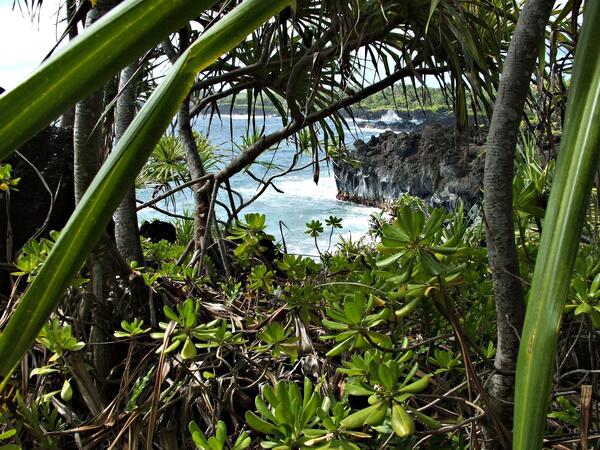
A forest on an old seaside lava flow vegetated almost entirely by just two plant species: Pandanus trees with an understory of Beach naupaka.
A forest on an old seaside lava flow vegetated almost entirely by just two plant species: Pandanus trees with an understory of Beach naupaka.

This is sagebrush burning at Hart Mountain National Antelope Refuge in association with a management project located 65 miles northeast of Lakeview, OR.
This is sagebrush burning at Hart Mountain National Antelope Refuge in association with a management project located 65 miles northeast of Lakeview, OR.

Phragmites australis invading a Great Lakes coastal wetland. This tall wetland grass was introduced from Europe in the early 19th century and aggressively displaces native vegetation causing plant diversity to decline and critical habitat for fish and other wildlife to be altered.
Phragmites australis invading a Great Lakes coastal wetland. This tall wetland grass was introduced from Europe in the early 19th century and aggressively displaces native vegetation causing plant diversity to decline and critical habitat for fish and other wildlife to be altered.

Hermit thrushes are a songbird species that was strongly affected by plant community changes in mountains because of reduced snowpack and cascading ecological effects, according to a USGS Montana Cooperative Wildlife Research Unit study.
Hermit thrushes are a songbird species that was strongly affected by plant community changes in mountains because of reduced snowpack and cascading ecological effects, according to a USGS Montana Cooperative Wildlife Research Unit study.

A Sundew plant taken at the Indiana Dunes National Lakeshore, Indiana
A Sundew plant taken at the Indiana Dunes National Lakeshore, Indiana

Pitcher Plants at Indiana Dunes National Lakeshore.
Pitcher Plants at Indiana Dunes National Lakeshore.

Monarch butterfly on a dense blazing star.
Monarch butterfly on a dense blazing star.

Figure 1. Examples of (left) a Sonoran Desert landscape showing the characteristic arrangement of patches of native vegetation separated by bare ground; and (right) a Sonoran Desert landscape that has been invaded by buffelgrass, which fills in the open spaces to form a relatively continuous mat of highly flamm
Figure 1. Examples of (left) a Sonoran Desert landscape showing the characteristic arrangement of patches of native vegetation separated by bare ground; and (right) a Sonoran Desert landscape that has been invaded by buffelgrass, which fills in the open spaces to form a relatively continuous mat of highly flamm

Looking down from the boardwalk at Fern Forest, ferns and other plants
prosper.
Looking down from the boardwalk at Fern Forest, ferns and other plants
prosper.

A giant leather fern along the boardwalk, at Fern Forest.
A giant leather fern along the boardwalk, at Fern Forest.

A violet-blue pickerelweed flower spike, in Big Cypress National Preserve.
A violet-blue pickerelweed flower spike, in Big Cypress National Preserve.

A red mangrove and its intricate aerial root system in west lake waters.
A red mangrove and its intricate aerial root system in west lake waters.

Budding spatterdocks are seen floating atop the Taylor Slough waters at
Everglades National Park.
Budding spatterdocks are seen floating atop the Taylor Slough waters at
Everglades National Park.
Where would we be without plants? They are the basis of the food chain and producers of oxygen - and so much more. From marsh grasses to mangroves, from sagebrush to sunflowers, getting to the root of the biology and ecology of plants is a critical component of USGS research.
Life as we know it wouldn’t be possible without plants. Plants maintain the atmosphere by producing oxygen and absorbing carbon dioxide, help keep our waterways clean, and provide us with food, shelter, and medicine. Plant communities are influenced by soil, terrain, climate, animals, and human activities, so different groups and types of plants are found in different regions of the country. Grassland plants such as the western prairie fringed orchid are found in the Great Plains, while desert plants such as the saguaro cactus are found in the Southwest. Approximately 391,000 species of vascular plants are currently known to science. Explore examples of USGS science on different plant types below.
Healthy plants are the foundation of healthy ecosystems. In an era of global change, our Nation’s forests, grasslands, wetlands, and other critical habitats are facing multiple threats that challenge our ability to maintain these ecosystems and the species that depend on them. USGS science provides the information needed to address these challenges and support healthy, thriving plant communities across the country.
Understanding, monitoring, and predicting threats to plants contributes to the USGS goal of providing science to support the protection, conservation, and enhancement of the Nation’s biodiversity. Through activities such as identifying strategies for controlling invasive cheatgrass, using novel techniques to identify the presence of disease-causing plant pathogens, and informing recovery plans for at-risk species, USGS science is tackling some of the biggest threats facing plants today.
The single biggest threat facing plants today is habitat loss. Changes in land use, such as the encroachment of agriculture or urban development into areas that were once covered by natural vegetation, reduce plant population sizes and alter the ecosystems that plants, animals, and humans rely on. Changes in land use can cause species extinctions, destabilize soil, increase erosion, and reduce water quality. USGS scientists are monitoring changes in land use to understand how they are affecting the plants and wildlife that depend on them. Explore examples of our science below:
Every plant and animal species has a native range where it evolved. When a species exists in a location beyond its natural range, it is considered a “non-native” species in that area. When a non-native species establishes in a new habitat, causing harm to the environment or humans, it becomes “invasive”. The annual estimated economic and health-related costs of invasive species in the U.S. have been reported at more than \$21 billion and adversely affect every state in the country. Invasive plants represent a major threat to global and local biodiversity while also having negative socio-economic and human health impacts. Invasive plants displace native plants, prevent native plant growth, reduce agricultural production, and induce allergies.
Invasive plants such as cheatgrass and buffelgrass have increased fire vulnerability and diminished grazing value across the western U.S. Aquatic invasive plants such as the weed hydrilla and giant fern salvinia are clogging waterways. To help combat these invaders, USGS scientists are using new tools to model the potential spread of high impact invasive species and to support the early detection and rapid response of invasive species before they are able to spread and cause harm. If an invasive plant is already established, USGS science is helping land managers reverse and mitigate the negative impacts these invasions are causing. Explore examples of our science to understand and reduce the threat of invasive plants below:
Visit our Invasive Species webpage to learn more about USGS activities to monitor and respond to the threat of invasive species across the country.
USGS research is addressing numerous diseases in both plants and animals and leading development efforts in advanced tools such as environmental DNA (eDNA) to assist in prevention and early detection. Explore examples of our science on plant diseases and pathogens below:
Climate helps shape ecosystems. Things like average temperatures, humidity, and rainfall determine where plants and animals lives. If a region’s climate changes, the ecosystem changes as well. Climate change poses one of the biggest threats to plants, leading to an increased spread of invasive species, increased vulnerability to insect pests, the loss of native plant species and changes in their distribution. USGS scientists are leading efforts to understand the current and future impacts of climate change on plants. This information helps management agencies identify adaptation strategies and actions that can help support vulnerable plant species in the face of a changing climate. Explore examples of our science below:
As a result of threats such as the spread of invasive species, disease, and climate and land use change, some plant species are in decline or in danger of extinction. The USGS provides management agencies such as the U.S. Fish and Wildlife Agency and National Park Service with scientific information to support conservation decisions for at-risk plant species. Explore examples of our science below:
Ecosystem restoration is the act of rehabilitating a degraded or lost ecosystems through activities such as planting native trees and shrubs and controlling invasive species. To do this, land managers need tools to help get the right plants, in the right place, at the right time for successful restoration. The USGS develops strategies and techniques to understand and facilitate the restoration of native species and habitats that have deteriorated due to threats such as invasive species and climate change. Explore examples of our science below:
Bebbia juncea, a native plant growing in western Grand Canyon. Photo by Emily Palmquist, USGS.
Bebbia juncea, a native plant growing in western Grand Canyon. Photo by Emily Palmquist, USGS.
USGS wetland scientists (GLSC; Ann Arbor, Michigan) collecting plant growth data during an invasive Phragmites australis control experiment. Photo credit: Spenser Widin, USGS.
USGS wetland scientists (GLSC; Ann Arbor, Michigan) collecting plant growth data during an invasive Phragmites australis control experiment. Photo credit: Spenser Widin, USGS.
USGS Director David Applegate along with Associate Director Anne Kinsinger and Dr. Kurt Kowalski listen to Dr. Wes Bickford describe invasive Phragmites australis and the research being done at the Great Lakes Science Center to control it. Photo Credit: Josh Miller (USGS)
USGS Director David Applegate along with Associate Director Anne Kinsinger and Dr. Kurt Kowalski listen to Dr. Wes Bickford describe invasive Phragmites australis and the research being done at the Great Lakes Science Center to control it. Photo Credit: Josh Miller (USGS)
Sam Droege (fore) arrived from Patuxent with plants for the Conte Lab's new pollinator garden. Sam Parker (back) assists with the planting.
Sam Droege (fore) arrived from Patuxent with plants for the Conte Lab's new pollinator garden. Sam Parker (back) assists with the planting.
American Beachgrass (Ammophila breviligulata) is planted on a beach in the town of Aquinnah on Martha's Vineyard, Massachusetts for stabilization.
American Beachgrass (Ammophila breviligulata) is planted on a beach in the town of Aquinnah on Martha's Vineyard, Massachusetts for stabilization.
A saguaro flowering in the desert near Tucson, AZ. Photo courtesy of Daniel Winkler, USGS, SBSC. Taken in spring, 2022.
A saguaro flowering in the desert near Tucson, AZ. Photo courtesy of Daniel Winkler, USGS, SBSC. Taken in spring, 2022.
A bee visits a saguaro flower near Tucson in Saguaro National Park, southern Arizona. Photo courtesy of Daniel Winkler, USGS SBSC.
A bee visits a saguaro flower near Tucson in Saguaro National Park, southern Arizona. Photo courtesy of Daniel Winkler, USGS SBSC.
Biological carbon sequestration is the natural ability of life and ecosystems to store carbon. Forests, peat marshes, and coastal wetlands are particularly good as storing carbon. Carbon can be stored in plant tissue, such as long-lived tree bark or in extensive root systems. Microbes break down plant and animal tissue through decomposition.
Biological carbon sequestration is the natural ability of life and ecosystems to store carbon. Forests, peat marshes, and coastal wetlands are particularly good as storing carbon. Carbon can be stored in plant tissue, such as long-lived tree bark or in extensive root systems. Microbes break down plant and animal tissue through decomposition.
A basic overview of the nitrogen cycle. Red arrows represent the portions of the nitrogen cycle (decomposition and nitrification) that are performed by our laboratory’s microbial culture.
A basic overview of the nitrogen cycle. Red arrows represent the portions of the nitrogen cycle (decomposition and nitrification) that are performed by our laboratory’s microbial culture.
The multimedia items below are a sample of USGS media on plants and do not represent a complete list.
This green tree frog (Hyla cinerea) sits on the lip of a pitcher plant in a bog in Alabama. The frog was down in the pitcher plant, but moved up to rest on its edge as the photographer approached.
This green tree frog (Hyla cinerea) sits on the lip of a pitcher plant in a bog in Alabama. The frog was down in the pitcher plant, but moved up to rest on its edge as the photographer approached.
Plant community along river.
Plant community along river.
USGS scientist Jenny Briggs (foreground) researches beetle-killed pines at a USGS study site near Maxwell Ranch, Colorado, while Colorado State University entomologist Dan West examines the bark of a dead tree.
USGS scientist Jenny Briggs (foreground) researches beetle-killed pines at a USGS study site near Maxwell Ranch, Colorado, while Colorado State University entomologist Dan West examines the bark of a dead tree.
This diagram of the nitrogen cycle shows were in the cycle antibiotics could impact the ability of denitrifying bacteria to process nitrates and nitrites in groundwater. The diagram is a modified version of figure 9 from USGS SIR 2004-5144, page 16.
This diagram of the nitrogen cycle shows were in the cycle antibiotics could impact the ability of denitrifying bacteria to process nitrates and nitrites in groundwater. The diagram is a modified version of figure 9 from USGS SIR 2004-5144, page 16.
Mountains of Western Canada overlooking an extensive coniferous forest and young trees.
Mountains of Western Canada overlooking an extensive coniferous forest and young trees.
Invasive species Giant Salvinia, Hydrilla, and Water Hyacinth clog one end of Lake Murphy. Lake Murphy is home to these three of Louisiana’s most problematic invasive aquatic plant species. As the record-setting 2011 floodwaters push through the Atchafalaya Basin, USGS crews are monitoring these invasive species to see what effects the water have on them.
Invasive species Giant Salvinia, Hydrilla, and Water Hyacinth clog one end of Lake Murphy. Lake Murphy is home to these three of Louisiana’s most problematic invasive aquatic plant species. As the record-setting 2011 floodwaters push through the Atchafalaya Basin, USGS crews are monitoring these invasive species to see what effects the water have on them.
Coniferous trees and grass growing on mountain side.
Coniferous trees and grass growing on mountain side.
Aquatic plants typical of still waters, ponds, and shallow wetlands: duckweeds, water lettuce, and watermoss.
Aquatic plants typical of still waters, ponds, and shallow wetlands: duckweeds, water lettuce, and watermoss.
A forest on an old seaside lava flow vegetated almost entirely by just two plant species: Pandanus trees with an understory of Beach naupaka.
A forest on an old seaside lava flow vegetated almost entirely by just two plant species: Pandanus trees with an understory of Beach naupaka.
This is sagebrush burning at Hart Mountain National Antelope Refuge in association with a management project located 65 miles northeast of Lakeview, OR.
This is sagebrush burning at Hart Mountain National Antelope Refuge in association with a management project located 65 miles northeast of Lakeview, OR.
Phragmites australis invading a Great Lakes coastal wetland. This tall wetland grass was introduced from Europe in the early 19th century and aggressively displaces native vegetation causing plant diversity to decline and critical habitat for fish and other wildlife to be altered.
Phragmites australis invading a Great Lakes coastal wetland. This tall wetland grass was introduced from Europe in the early 19th century and aggressively displaces native vegetation causing plant diversity to decline and critical habitat for fish and other wildlife to be altered.
Hermit thrushes are a songbird species that was strongly affected by plant community changes in mountains because of reduced snowpack and cascading ecological effects, according to a USGS Montana Cooperative Wildlife Research Unit study.
Hermit thrushes are a songbird species that was strongly affected by plant community changes in mountains because of reduced snowpack and cascading ecological effects, according to a USGS Montana Cooperative Wildlife Research Unit study.
A Sundew plant taken at the Indiana Dunes National Lakeshore, Indiana
A Sundew plant taken at the Indiana Dunes National Lakeshore, Indiana
Pitcher Plants at Indiana Dunes National Lakeshore.
Pitcher Plants at Indiana Dunes National Lakeshore.
Monarch butterfly on a dense blazing star.
Monarch butterfly on a dense blazing star.
Figure 1. Examples of (left) a Sonoran Desert landscape showing the characteristic arrangement of patches of native vegetation separated by bare ground; and (right) a Sonoran Desert landscape that has been invaded by buffelgrass, which fills in the open spaces to form a relatively continuous mat of highly flamm
Figure 1. Examples of (left) a Sonoran Desert landscape showing the characteristic arrangement of patches of native vegetation separated by bare ground; and (right) a Sonoran Desert landscape that has been invaded by buffelgrass, which fills in the open spaces to form a relatively continuous mat of highly flamm
Looking down from the boardwalk at Fern Forest, ferns and other plants
prosper.
Looking down from the boardwalk at Fern Forest, ferns and other plants
prosper.
A giant leather fern along the boardwalk, at Fern Forest.
A giant leather fern along the boardwalk, at Fern Forest.
A violet-blue pickerelweed flower spike, in Big Cypress National Preserve.
A violet-blue pickerelweed flower spike, in Big Cypress National Preserve.
A red mangrove and its intricate aerial root system in west lake waters.
A red mangrove and its intricate aerial root system in west lake waters.
Budding spatterdocks are seen floating atop the Taylor Slough waters at
Everglades National Park.
Budding spatterdocks are seen floating atop the Taylor Slough waters at
Everglades National Park.