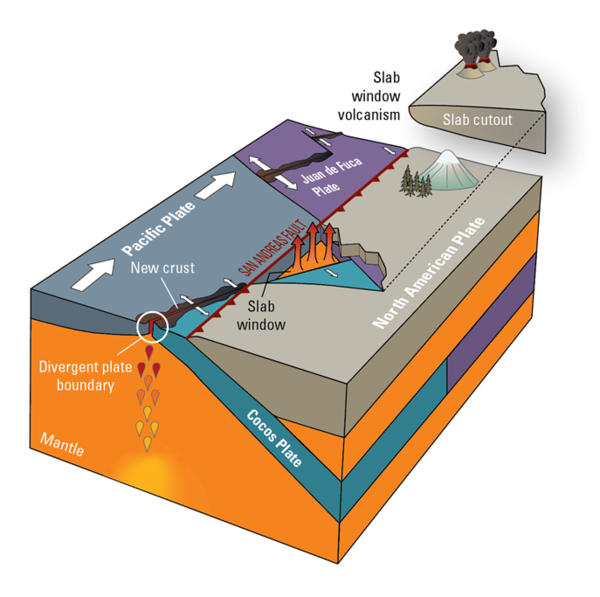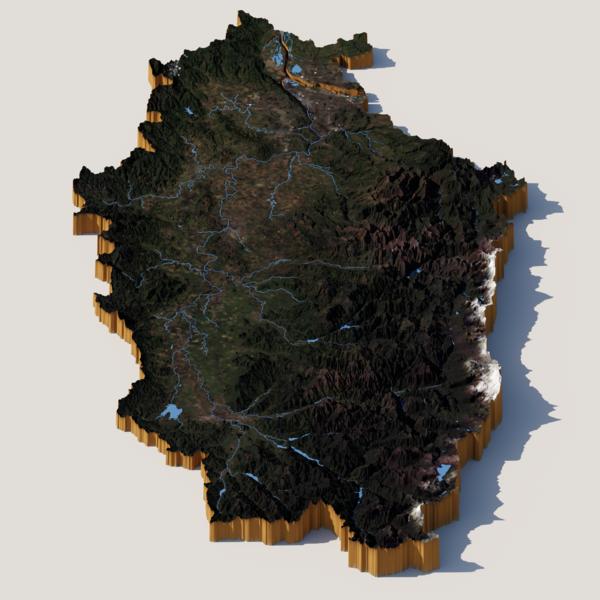
This figure shows an approximation of the tectonic plate geometry of western California as it existed roughly 20 million years ago. A piece of the North American tectonic plate has been cut out to show how a slab window is formed when a spreading ridge is subducted.
Images
This figure shows an approximation of the tectonic plate geometry of western California as it existed roughly 20 million years ago. A piece of the North American tectonic plate has been cut out to show how a slab window is formed when a spreading ridge is subducted.
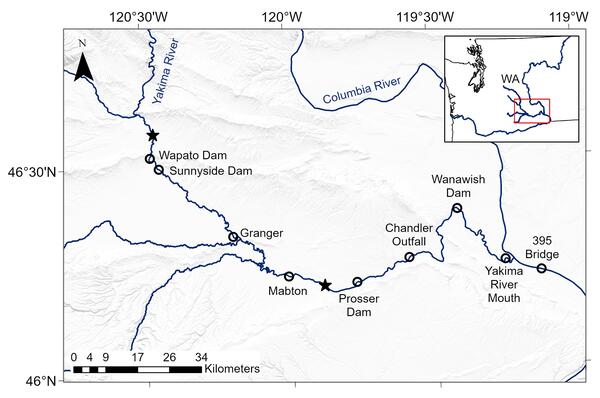
This is a map of the lower Yakima River showing locations where acoustic telemetry receivers were deployed (open circles) to detect tagged fish that were released at two sites (stars). This was part of the study titled, "Survival implications of diversion entrainment for out-migrating juvenile Chinook Salmon and steelhead.
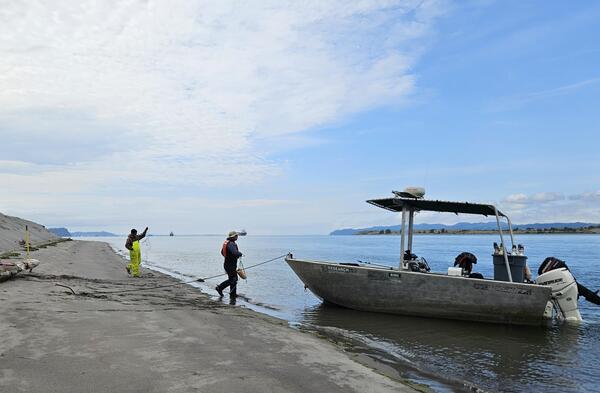
Chris Pullano and Ryan Tomka load acoustic telemetry receives on to boat in lower Columbia River estuary. Field work was recently completed for the first year of a study to better understand how young salmon use restored habitats in the Lower Columbia River Estuary.
Scientist Holding a Telemetry Receiver for Tracking Fish
Scientist Holding a Telemetry Receiver for Tracking FishRyan Tomka retrieves an acoustic telemetry receiver from the lower Columbia River estuary. During the 2025 field season, researchers deployed acoustic telemetry equipment to track yearling Chinook salmon as they moved through both restored estuarine wetlands and the main Columbia River channel.
Scientist Holding a Telemetry Receiver for Tracking Fish
Scientist Holding a Telemetry Receiver for Tracking FishRyan Tomka retrieves an acoustic telemetry receiver from the lower Columbia River estuary. During the 2025 field season, researchers deployed acoustic telemetry equipment to track yearling Chinook salmon as they moved through both restored estuarine wetlands and the main Columbia River channel.
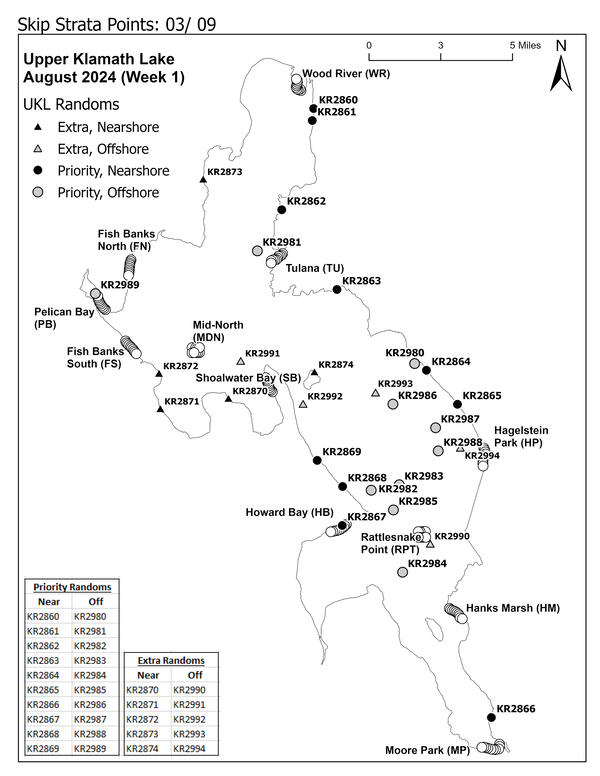
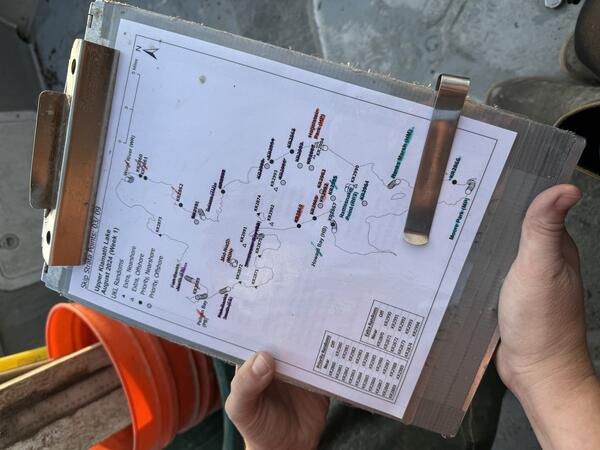
This is a map of the nets on the Upper Klamath Lake in Oregon. The Western Fisheries Research Center carefully monitors juvenile Sucker populations for signs of population recovery and to better understand where they habitate.
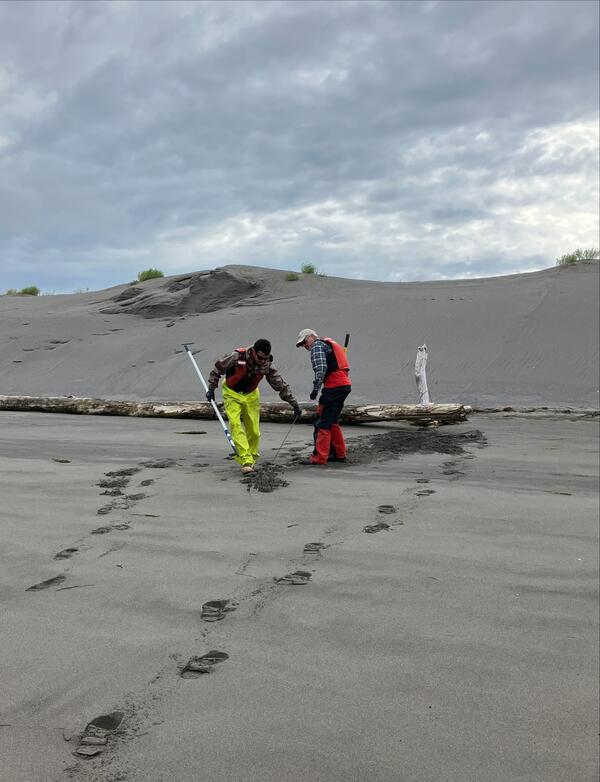
USGS Scientists Unearth Buried Cable Tethering a Telemetry Receiver to Shore in the Columbia River
USGS Scientists Unearth Buried Cable Tethering a Telemetry Receiver to Shore in the Columbia RiverChirs Pullano and Collin Smith unearth the buried cable tethering an acoustic receiver to shore in the lower Columbia River estuary. Shifting sands frequently bury equipment making it difficult to retrieve. During the 2025 field season, researchers deployed acoustic telemetry equipment to track yearling Chinook salmon as they moved through both restored e
USGS Scientists Unearth Buried Cable Tethering a Telemetry Receiver to Shore in the Columbia River
USGS Scientists Unearth Buried Cable Tethering a Telemetry Receiver to Shore in the Columbia RiverChirs Pullano and Collin Smith unearth the buried cable tethering an acoustic receiver to shore in the lower Columbia River estuary. Shifting sands frequently bury equipment making it difficult to retrieve. During the 2025 field season, researchers deployed acoustic telemetry equipment to track yearling Chinook salmon as they moved through both restored e
This is a map of the nets on the Upper Klamath Lake in Oregon. The Western Fisheries Research Center carefully monitors juvenile Sucker populations for signs of population recovery and to better understand where they habitate.
Since 2009, the WFRC has partnered with Real Time Research to study bird predation of suckers. Scientists scan large nesting sites of fish-eating (piscivorous) birds, looking for PIT tags from juvenile and adult suckers that have been eaten by the birds.
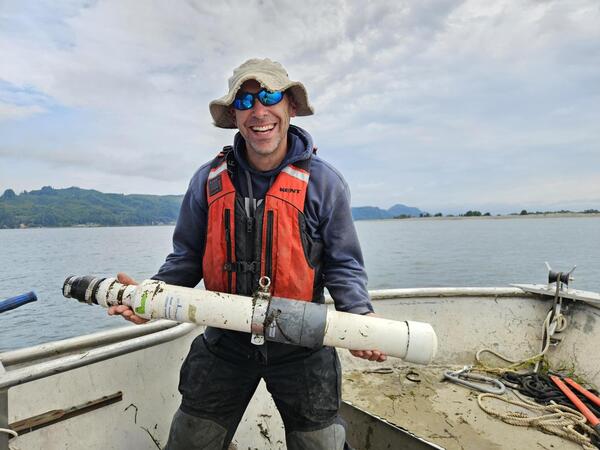
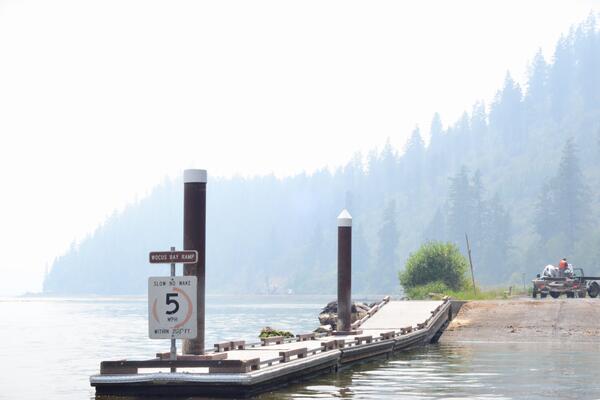
Its early morning as we pass a green expanse of farmland and pull into a parking lot with a boat ramp sloping into the massive waters of Upper Klamath Lake. Paving machines drone next to us, widening the road winding along the lake shore.
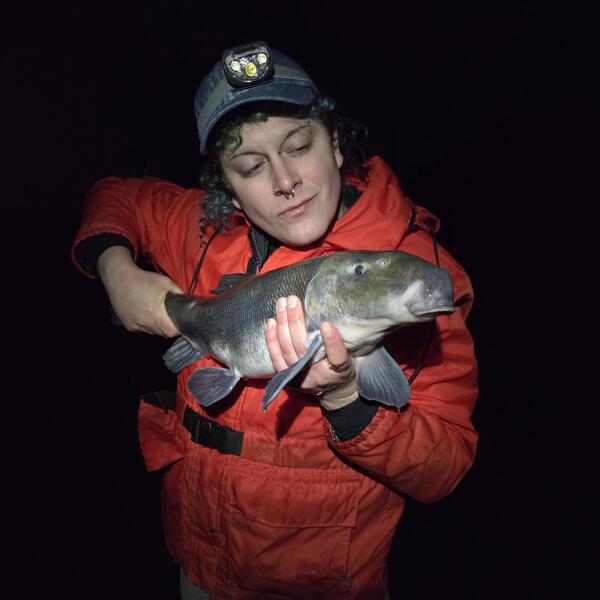
This is a photo of the endangered Klamath Sucker in Upper Klamath Lake, OR. Through decades of research, scientists of the USGS Western Fisheries Research Center have determined that, over the last 30 years, something has prevented young suckers from reaching adulthood.
Sampling for Juvenile Klamath Suckers on Upper Klamath Lake, OR
Sampling for Juvenile Klamath Suckers on Upper Klamath Lake, ORWe pack up, leave shore, and head toward our first target—a set of trap nets--with tempered hopes of finding something exceedingly rare: evidence of surviving juvenile suckers. After hours on the lake and around 20 nets void of juvenile suckers, we steer the boat back towards the marshlands near our truck.
Sampling for Juvenile Klamath Suckers on Upper Klamath Lake, OR
Sampling for Juvenile Klamath Suckers on Upper Klamath Lake, ORWe pack up, leave shore, and head toward our first target—a set of trap nets--with tempered hopes of finding something exceedingly rare: evidence of surviving juvenile suckers. After hours on the lake and around 20 nets void of juvenile suckers, we steer the boat back towards the marshlands near our truck.
Nets Used to Sample Juvenile Suckers in Upper Klamath Lake, OR
Nets Used to Sample Juvenile Suckers in Upper Klamath Lake, ORLost River and Shortnose suckers are on the verge of extinction in Upper Klamath Lake. Age data indicate that almost all adult suckers remaining in the lake spawning populations were hatched in the early 1990s.
Nets Used to Sample Juvenile Suckers in Upper Klamath Lake, OR
Nets Used to Sample Juvenile Suckers in Upper Klamath Lake, ORLost River and Shortnose suckers are on the verge of extinction in Upper Klamath Lake. Age data indicate that almost all adult suckers remaining in the lake spawning populations were hatched in the early 1990s.
This is an infographic of the life cycle of the parasite, Diplostomum gavium. This parasite affects the Sucker fish in the Upper Klamath Lake. Upper Klamath Lake is home to large colonies of birds and an abundance of snails and fish, making it a haven for trematodes who are reliant on all three for their life cycle. Birds host adult flukes in their intestines.
This Landsat 8 image highlights the McDermitt Caldera, which straddles the Nevada–Oregon border. The yellow boundary outlines the caldera margin, a geologic feature formed by a massive volcanic eruption millions of years ago. Over time, weathering of lithium-rich volcanic material led to the formation of clay deposits within the caldera basin.
A routine field visit at the Bull Run River at Lower Flume near Brightwood, Oregon (14138720). The U.S. Geological Survey operates several streamgages and monitoring stations throughout the Bull Run watershed.
Annual NLCD animation of the Smith River Complex Fire land change between 2023 and 2024
Annual NLCD animation of the Smith River Complex Fire land change between 2023 and 2024This Annual National Land Cover Database (NLCD) animation shows how the Smith River Complex Fire, which occurred in the fall of 2023 at the California-Oregon border, left a devastating mark on the landscape.
Annual NLCD animation of the Smith River Complex Fire land change between 2023 and 2024
Annual NLCD animation of the Smith River Complex Fire land change between 2023 and 2024This Annual National Land Cover Database (NLCD) animation shows how the Smith River Complex Fire, which occurred in the fall of 2023 at the California-Oregon border, left a devastating mark on the landscape.
Chinook Salmon Egg Survival Fieldwork in the Sacramento River, CA
Chinook Salmon Egg Survival Fieldwork in the Sacramento River, CAThis is fieldwork from a Chinook salmon egg survival pilot study in the Sacramento River. Egg boxes were placed in the river at different locations to collect data on egg-to-fry survival. Some examples of data collected include water velocity and river flow, gravel temperature, scour and deposition, and sediment type.
Chinook Salmon Egg Survival Fieldwork in the Sacramento River, CA
Chinook Salmon Egg Survival Fieldwork in the Sacramento River, CAThis is fieldwork from a Chinook salmon egg survival pilot study in the Sacramento River. Egg boxes were placed in the river at different locations to collect data on egg-to-fry survival. Some examples of data collected include water velocity and river flow, gravel temperature, scour and deposition, and sediment type.
This is a photo of fieldwork on the pilot Chinook egg survival study occurring in the Sacramento River, California.
This is the lower Granite Lock and Dam. Lower Granite Lock and Dam was authorized by the River and Harbor Act of 1945. The project includes a dam, a navigation lock, powerhouse, a fish ladder and associated facilities. It provides hydropower, navigation, flood risk management, fish and wildlife habitat, recreation and incidental irrigation.
This is a diagram of a cross section of a dam. This diagram is to show where gas bubble trauma could occur.
Since the early 1990s, WFRC has supported state and federal agencies by providing regular assessments of gas bubble trauma in salmon. But salmon aren’t the only fish affected. In 2020, scientists at the Cook lab began monitoring GBT in resident species like sculpin, northern pikeminnow, and three-spined stickleback.