



Drivers of Ecosystem Change
Restoration Ecology and Species Recovery
Western Fisheries Research Center
Research at the WFRC focuses on the environmental factors responsible for the creation, maintenance, and regulation of fish populations including their interactions in aquatic communities and ecosystems. Within these pages you will find research information on Pacific salmon; western trout, charr, and resident riverine fishes; desert and inland fishes; aquatic ecosystems and their resources.

Peer Reviewed Publications
Peer Reviewed Publications

Dive into our research through our rich and diverse publications.
News
A Tale of Two Islands and the Future of an Ocean Sentinel Seabird
A Tale of Two Islands and the Future of an Ocean Sentinel Seabird
EcoNews - Vol. 7 | Issue 2
EcoNews - Vol. 7 | Issue 2
Something Fishy from the Western Fisheries Research Center - Spring 2026
Something Fishy from the Western Fisheries Research Center - Spring 2026
Publications
Seasonal trophic dynamics drive growth potential and predation risk for reintroduced Chinook salmon in Shasta Reservoir Seasonal trophic dynamics drive growth potential and predation risk for reintroduced Chinook salmon in Shasta Reservoir
Reservoir ecosystems can significantly affect anadromous salmon populations reintroduced upstream of impassable high-head dams. In this study, we examine how a novel reservoir food web created by an impoundment can limit juvenile growth or survival through the seasonal production or access to food, promote competition for available resources, and affect risk of the food supply or...
Restoration is a partial but not complete solution for long-term declines in oyster populations—A case history from the northeastern Gulf of America Restoration is a partial but not complete solution for long-term declines in oyster populations—A case history from the northeastern Gulf of America
Objective We sought to evaluate whether oyster reef restoration is associated with sustained increases in intertidal eastern oyster Crassostrea virginica density in Suwannee Sound, Florida, and to examine how commercial fishing activity and freshwater discharge may modify those patterns.Methods We monitored intertidal oyster reefs for 14 years, including 9 years prior to large-scale...
Disease-associated mortality drives reduction in Yukon River Chinook salmon escapement: A novel method for quantifying the negative impacts of ‘misfit’ parasites to improve fisheries management Disease-associated mortality drives reduction in Yukon River Chinook salmon escapement: A novel method for quantifying the negative impacts of ‘misfit’ parasites to improve fisheries management
Parasites can suppress host populations through parasite-induced mortality. However, the negative effects of parasites are difficult to measure in wild populations and we have few tools for quantifying the magnitude of parasite-induced mortality. This is especially true for many ‘misfit’ parasites that do not fit into standard classifications (e.g. fungal-like parasites and myxozoans)...
Science

Where Land Meets Sea: USGS Science for Resilient Coastal Habitats
USGS coastal science plays a critical role in supporting the effective, science-based management of coastal ecosystems, where the biodiversity of land and sea meet. It provides managers with the information they need to make sound decisions. Through cutting-edge research, predictive modeling, and decision-support tools, USGS empowers resource managers to make informed, science-based choices. From...
By
Ecosystems Mission Area, Land Management Research Program, California Water Science Center, Eastern Ecological Science Center, Forest and Rangeland Ecosystem Science Center, Lower Mississippi-Gulf Water Science Center, Pacific Coastal and Marine Science Center, Western Ecological Research Center (WERC), Western Fisheries Research Center, Western Geographic Science Center, Wetland and Aquatic Research Center
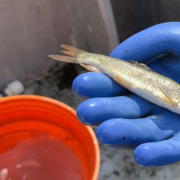
The Science of Suckers: What’s driving population declines in the Klamath River basin?
USGS and its partners are working tirelessly to monitor suckers and understand why they are disappearing from lakes and streams in the Klamath River Basin
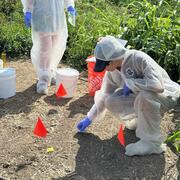
eDNA and the Efficacy of Management Actions
Environmental DNA (eDNA) is a powerful feedback tool, giving managers fast, clear, and cost-effective evidence to guide decisions and improve conservation outcomes.
By
Ecosystems Mission Area, Biological Threats and Invasive Species Research Program, Environmental Health Program, Species Management Research Program, Alaska Science Center, Columbia Environmental Research Center, Eastern Ecological Science Center, Forest and Rangeland Ecosystem Science Center, Fort Collins Science Center, Great Lakes Science Center, National Wildlife Health Center, Northern Prairie Wildlife Research Center, Northern Rocky Mountain Science Center, Pacific Island Ecosystems Research Center, Southwest Biological Science Center, Upper Midwest Environmental Sciences Center, Western Ecological Research Center (WERC), Western Fisheries Research Center, Wetland and Aquatic Research Center , Pacific Northwest Environmental DNA Laboratory