



Dryland Ecology and Management Support
Dryland Ecology and Management Support
Southwest Energy Exploration, Development, and Reclamation
Restoration Assessment & Monitoring Program for the Southwest
Providing seed restoration guidelines and native plant materials development
Research supporting restoration across the Colorado Plateau and beyond
Research supporting restoration across the Colorado Plateau and beyond
Informing Solar Energy Land Management
Contributing Remote Sensing Expertise
SBSC remote sensing enables partners to make crucial wildlife management decisions that save money and time.
SBSC remote sensing enables partners to make crucial wildlife management decisions that save money and time.
SBSC conducts research in drylands to deliver information that aids land and wildlife management to promote productive ecosystems. Our work provides tools that are used to mitigate the impacts of drought, wildfire, and invasive species, as well as science that supports Department of the Interior economic and cultural activities including recreation and ranching.
Filter Total Items: 60

New Tools for Modern Land Management Decisions
In an era of rapid land use changes, it is imperative that land managers and policymakers have actionable and current information available for decision processes. In this work, we seek to meet these needs through new data products and decision support tools built on digital soil mapping, new vegetation cover maps, agency inventory and monitoring data sets, and cutting-edge analytical frameworks...

Supporting energy and mineral development through successful reclamation
Federal lands of the US contain important reserves of oil, gas and other resources important for Unleashing American Energy (SO 3418). After development of these resources is complete, successfully reclaiming disturbed lands is a necessary step towards restoring wildlife habitat, forage production, and maintaining natural resources for future use. To improve reclamation outcomes on these lands and...

USGS Sagebrush Science: Supporting Public Safety and Economic Decision Making Across the West
The sagebrush biome is one of the largest ecosystems in North America. Encompassing nearly one-third of the continental U.S., it provides critical resources for millions of Americans and a home for hundreds of plants and animal species in the West. Natural resource management in sagebrush ecosystems can be complex, and science can support management decisions by providing knowledge and tools to...
By
Core Science Systems Mission Area, Ecosystems Mission Area, Biological Threats and Invasive Species Research Program, Climate Adaptation Science Centers, Cooperative Research Units, Land Management Research Program, Species Management Research Program, Earth Resources Observation and Science (EROS) Center , Forest and Rangeland Ecosystem Science Center, Fort Collins Science Center, Northern Rocky Mountain Science Center, Southwest Biological Science Center, Western Ecological Research Center (WERC), Wildland Fire Science

Biological Soil Crust ("Biocrust") Science
Biological soil crusts (biocrusts) are commonly found on the soil surface in arid and semi-arid ecosystems (collectively called drylands). Biocrusts can consist of mosses, cyanobacteria, lichens, algae, and microfungi, and they strongly interact with the soil. These organisms or consortium of disparate organisms, depending on the specific biocrust, are important to the functioning of ecosystems...

USGS Science Syntheses for Public Lands Management
Scientific information is fundamental to understanding how proposed actions on public lands may impact the environment. Development of new science is occurring at rates that can make it challenging for biologists, resource managers, decision makers, private landowners, and other stakeholders to ensure they are using up-to-date, high-quality science information to inform their decisions. Further...

Monitoring the Rare Island Night Lizard on San Nicolas Island
The Island Night Lizard ( Xantusia riversiana) was removed from the Federal list of Threatened species in May 2014. This rare and unique species represents an ancient lineage whose members are now sparsely distributed across parts of the Southwest North America, south through Mexico to the New World Tropics. The information on population size and habitat helps to inform and guide conservation and...
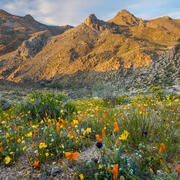
Skill-building workshops for researchers on the coproduction of actionable science
Public lands management requires the use of science, but agency staff rarely have time to stay current with all the science on management-relevant topics, especially as articles are published at an ever-increasing rate. In this new series of learning modules, we aim to provide scientists with essential tools, skills, and strategies for coproducing actionable science products with and for federal...

SBSC: Providing Unbiased Actionable Science & Information to Support Natural Resource Management Needs of the U.S. & Department of the Interior Priorities
The U.S. Geological Survey Southwest Biological Science Center (SBSC) is uniquely positioned in the Colorado River Basin to provide sound information, specialized expertise, and innovative tools to support the management and sustained use of natural resources on public and Tribal lands in the Southwest U.S.

The Innovation Landscape Network
As public, tribal, and military lands continue to experience rapid change brought on by fire, invasive species, and drought, there is a growing need for science-management partnerships to apply innovative research and technologies to support decision-making at an accelerated pace.

WebDART: A Cutting-edge Web Tool that Evaluates Land Condition
WebDART is an online ecological assessment tool available to a wide audience that incorporates Landsat satellite remote sensing imagery, topography, geology, soil conditions, and rangeland geospatial and vegetation mapping to compare altered terrain with an unspoiled area that has similar characteristics in the same region. The tool gives resource managers, landowners, companies, and other...
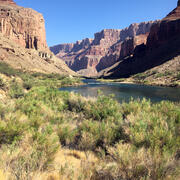
Vegetation monitoring: How one square meter can tell the story of 255 river miles along the Colorado River
The goal of SBSC's Grand Canyon Monitoring and Research Center’s (GCMRC) riparian vegetation monitoring program is to assess changes and trends in plant species composition and cover and relate those changes to river hydrology, climate, geomorphology, and the operations of Glen Canyon Dam.

Southwest Fire Innovation Landscape Network: Advanced tools for fuel monitoring and assessment of wildfire risk
The USGS Southwest Biological Science Center is coordinating the Southwest Fire Innovation Landscape Network to prepare fire and natural resource managers for rapidly changing fire landscapes by conducting research and building science-management partnerships. The network develops advanced tools and technologies to assess fuel loads and the effectiveness of fuel treatments, understand wildfire...