



Canada Geese using a small retention pond near a commercial poultry facility.
Diann Prosser, Ph.D.
Diann is a research wildlife ecologist at the Eastern Ecological Science Center located in Laurel, MD.
Avian Influenza Research
Avian Influenza Research

Researchers at the USGS Eastern Ecological Science Center study multiple aspects of avian influenza viruses in wild birds as well as their implications for commercial agriculture.
Colonial Nesting Waterbird Ecology
Colonial Nesting Waterbird Ecology

This project aims to understand the factors driving breeding success of multiple waterbird species, with special emphasis on Least and Common Terns (two species of concern) on Poplar Island Environmental Restoration Project.
Prosser Lab Personnel
Prosser Lab Personnel

Current and past members of Diann Prosser’s lab at the U.S. Geological Survey’s Eastern Ecological Science Center.
She began working at Patuxent in 1999. Her background is in wetland ecology and ornithology and her research interests include using spatial modeling techniques to help answer questions related to wildlife and stressors such as climate change and disease.
Recently Hosted Visiting Scientists from Chinese Academy of Sciences (2012-2013).
Science and Products
Filter Total Items: 23
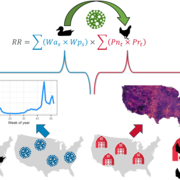
Advancing Risk Modeling for Highly Pathogenic Avian Influenza
Ongoing global outbreaks demonstrate the capacity of highly pathogenic avian influenza virus (HPAIV) to impact poultry, wild birds, and even human health. USGS research is advancing the understanding of the spatial and temporal interface between wild and domestic bird populations from which these viruses emerge to aid biosecurity planning and outbreak response.
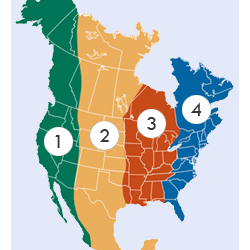
Understanding Circulating Avian Influenza Viruses and How They Spread
USGS research is quantifying the strains and prevalence of avian influenza viruses circulating in wild waterfowl and improving our understanding of how viruses move between and within migratory flyways.

Pathogens in the Aquatic Environment – Waterfowl, Avian Influenza
USGS research is investigating the prevalence and strains of avian influenza viruses in the aquatic environment, how those viruses compare to those circulating within wild birds in the same area, and how viruses persist in the environment across seasons.

USGS Wild Bird Avian Influenza Program – Studies from Endemic Regions of Eurasia
This project focuses on tracking wild birds throughout Eurasia via satellite telemetry to better understand their spatiotemporal movement patterns, relationship to domestic birds, and potential role in the spread, persistence, and amplification of avian influenza viruses.

Avian Influenza Host Movement Ecology
Understanding disease systems requires an understanding of the basic ecology of host species. USGS is involved in global efforts to explore the movements of bird species that are hosts of avian influenza as well as the potential impacts of changing landscapes on avian influenza.

Using Global Telemetry to Understand Avian Movement and Migration
USGS researchers are collaborating with partners around the globe to leverage new and existing telemetry data to answer broad scale questions about factors influencing avian movement and migration.

Avian Influenza Viral Pathogenicity
USGS is collaborating with numerous partner institutions to explore susceptibility and pathogenesis of relevant avian influenza strains in waterfowl species with special emphasis on sea ducks and diving ducks.
Avian Influenza Spread, Prevalence and Persistence
USGS researchers seek to understand the factors influencing the spread and persistence of avian influenza viruses on the landscape. This research also addresses how novel strains of highly pathogenic avian influenza are impacting a larger number and diversity of host species, including waterfowl, shorebirds, raptors and other birds.
Identifying Spatial and Temporal Trends in Avian Influenza Prevalence in Wild Waterfowl Across the United States
USGS researchers are at the forefront of building and maintaining datasets that represent the spatial and temporal patterns in avian influenza virus prevalence in wild birds, which is critical information used to estimate transmission risk to domestic poultry.

Deriving Spatial and Temporal Waterfowl Inputs for Disease Risk Modeling
USGS is creating spatially and temporally explicit inputs to improve avian influenza transmission risk modeling. This project places special emphasis on wild bird distribution and abundance models as well as avian influenza prevalence models.
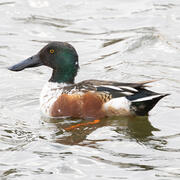
Developing Waterfowl Distribution and Abundance Models to Inform Avian Influenza Transmission Risk
USGS researchers are developing novel methods to improve our understanding of waterfowl distributions and abundance across the United States to inform a variety of ongoing disease studies. Understanding the distribution of wild waterfowl is a critical component to assessing avian influenza transmission risks across the landscape.

Understanding Avian Influenza Exposure and Antibodies in Understudied Species
Recent outbreaks of highly pathogenic avian influenza have impacted a dramatically wider range of bird hosts than ever before. USGS researchers are working to identify which bird species have been exposed, which have developed immune responses, and how these species may influence viral ecology to inform risk management activities.

Canada Geese in Front of a Poultry House
Canada Geese using a small retention pond near a commercial poultry facility.

Movement of waterfowl infected with AIV
Spring migration departure date (a–e) and duration of first stopover (f–j) by species and infection status across 84 individuals with paired influenza and telemetry data. Partially transparent points show raw data; large points and error bars show means and 95% confidence intervals estimated from linear models.
Spring migration departure date (a–e) and duration of first stopover (f–j) by species and infection status across 84 individuals with paired influenza and telemetry data. Partially transparent points show raw data; large points and error bars show means and 95% confidence intervals estimated from linear models.

Conceptual Diagram of NSF PIPP Avian Influenza work
Conceptual Diagram of NSF PIPP Avian Influenza workThis conceptual diagram explains how the research involved in the NSF PIPP project will be broken down into specific components.
Conceptual Diagram of NSF PIPP Avian Influenza work
Conceptual Diagram of NSF PIPP Avian Influenza workThis conceptual diagram explains how the research involved in the NSF PIPP project will be broken down into specific components.

Bar-headed Goose
This bar-headed goose (Anser indicus) was marked with a satellite transmitter at Qinghai Lake, China, in an effort to understand the role that wild birds play in avian influenza.
This bar-headed goose (Anser indicus) was marked with a satellite transmitter at Qinghai Lake, China, in an effort to understand the role that wild birds play in avian influenza.
Science and Products
Filter Total Items: 23
Advancing Risk Modeling for Highly Pathogenic Avian Influenza
Ongoing global outbreaks demonstrate the capacity of highly pathogenic avian influenza virus (HPAIV) to impact poultry, wild birds, and even human health. USGS research is advancing the understanding of the spatial and temporal interface between wild and domestic bird populations from which these viruses emerge to aid biosecurity planning and outbreak response.
Understanding Circulating Avian Influenza Viruses and How They Spread
USGS research is quantifying the strains and prevalence of avian influenza viruses circulating in wild waterfowl and improving our understanding of how viruses move between and within migratory flyways.
Pathogens in the Aquatic Environment – Waterfowl, Avian Influenza
USGS research is investigating the prevalence and strains of avian influenza viruses in the aquatic environment, how those viruses compare to those circulating within wild birds in the same area, and how viruses persist in the environment across seasons.
USGS Wild Bird Avian Influenza Program – Studies from Endemic Regions of Eurasia
This project focuses on tracking wild birds throughout Eurasia via satellite telemetry to better understand their spatiotemporal movement patterns, relationship to domestic birds, and potential role in the spread, persistence, and amplification of avian influenza viruses.
Avian Influenza Host Movement Ecology
Understanding disease systems requires an understanding of the basic ecology of host species. USGS is involved in global efforts to explore the movements of bird species that are hosts of avian influenza as well as the potential impacts of changing landscapes on avian influenza.
Using Global Telemetry to Understand Avian Movement and Migration
USGS researchers are collaborating with partners around the globe to leverage new and existing telemetry data to answer broad scale questions about factors influencing avian movement and migration.
Avian Influenza Viral Pathogenicity
USGS is collaborating with numerous partner institutions to explore susceptibility and pathogenesis of relevant avian influenza strains in waterfowl species with special emphasis on sea ducks and diving ducks.
Avian Influenza Spread, Prevalence and Persistence
USGS researchers seek to understand the factors influencing the spread and persistence of avian influenza viruses on the landscape. This research also addresses how novel strains of highly pathogenic avian influenza are impacting a larger number and diversity of host species, including waterfowl, shorebirds, raptors and other birds.
Identifying Spatial and Temporal Trends in Avian Influenza Prevalence in Wild Waterfowl Across the United States
USGS researchers are at the forefront of building and maintaining datasets that represent the spatial and temporal patterns in avian influenza virus prevalence in wild birds, which is critical information used to estimate transmission risk to domestic poultry.
Deriving Spatial and Temporal Waterfowl Inputs for Disease Risk Modeling
USGS is creating spatially and temporally explicit inputs to improve avian influenza transmission risk modeling. This project places special emphasis on wild bird distribution and abundance models as well as avian influenza prevalence models.
Developing Waterfowl Distribution and Abundance Models to Inform Avian Influenza Transmission Risk
USGS researchers are developing novel methods to improve our understanding of waterfowl distributions and abundance across the United States to inform a variety of ongoing disease studies. Understanding the distribution of wild waterfowl is a critical component to assessing avian influenza transmission risks across the landscape.
Understanding Avian Influenza Exposure and Antibodies in Understudied Species
Recent outbreaks of highly pathogenic avian influenza have impacted a dramatically wider range of bird hosts than ever before. USGS researchers are working to identify which bird species have been exposed, which have developed immune responses, and how these species may influence viral ecology to inform risk management activities.
Canada Geese in Front of a Poultry House
Canada Geese using a small retention pond near a commercial poultry facility.
Canada Geese using a small retention pond near a commercial poultry facility.
Movement of waterfowl infected with AIV
Spring migration departure date (a–e) and duration of first stopover (f–j) by species and infection status across 84 individuals with paired influenza and telemetry data. Partially transparent points show raw data; large points and error bars show means and 95% confidence intervals estimated from linear models.
Spring migration departure date (a–e) and duration of first stopover (f–j) by species and infection status across 84 individuals with paired influenza and telemetry data. Partially transparent points show raw data; large points and error bars show means and 95% confidence intervals estimated from linear models.
Conceptual Diagram of NSF PIPP Avian Influenza work
Conceptual Diagram of NSF PIPP Avian Influenza workThis conceptual diagram explains how the research involved in the NSF PIPP project will be broken down into specific components.
Conceptual Diagram of NSF PIPP Avian Influenza work
Conceptual Diagram of NSF PIPP Avian Influenza workThis conceptual diagram explains how the research involved in the NSF PIPP project will be broken down into specific components.
Bar-headed Goose
This bar-headed goose (Anser indicus) was marked with a satellite transmitter at Qinghai Lake, China, in an effort to understand the role that wild birds play in avian influenza.
This bar-headed goose (Anser indicus) was marked with a satellite transmitter at Qinghai Lake, China, in an effort to understand the role that wild birds play in avian influenza.