
Keith A Loftin, Ph.D.
Products and information related to Keith Loftin.
Science and Products
Filter Total Items: 32
Antibiotic Methods of Analysis: OGRL LCAB
Antibiotics are used for human health and livestock management and health. The increase of antibiotic resistant infections has resulted in concern that sub-therapeutic use of antibiotics for weight gain in livestock and the release of low levels of antibiotics into surface and groundwater from urban and agricultural sources may be contributing to this problem.
Parents and Degradation Products of Analysis: OGRL LCEA
Triazines and phenylureas are commonly used herbicides for controlling weeds in row crops. These herbicides and their degradation products have been found in samples collected from surface water, groundwater, and precipitation throughout the United States. Atrazine until recently was the most widely applied herbicide in the U.S. and is still a widely applied preplanting corn herbicide.
Acetamide Parents and Degradation Products of Analysis: OGRL LCPD
Acetamide herbicides are used to control weeds in row crops such as corn and soybeans. Acetamide herbicides and their degradates are common contaminants in surface and groundwater. Some of the widely detected acid degradates are on the USEPA contaminant candidate list (CCL).
OGRL Enzyme Linked-Imunnosorbent Assay Methods of Analysis
Immunoassays are rapid screening techinques that can be used to provide data on a specific compound or class of compunds on a large number of samples. We have used these methods to conduct large scale reconnaissance studies of atrazine in rainfall and cyanobacterial toxins in the USEPA national lake and reservoir reconnaissance study.
Cyanobacterial (Blue-Green Algal) Blooms: Tastes, Odors, and Toxins
Freshwater and marine harmful algal blooms (HABs) can occur anytime water use is impaired due to excessive accumulations of algae. In freshwater, the majority of HABs are caused by cyanobacteria (also called blue-green algae). Cyanobacteria cause a multitude of water-quality concerns, including the potential to produce taste-and-odor causing compounds and toxins that are potent enough to poison...
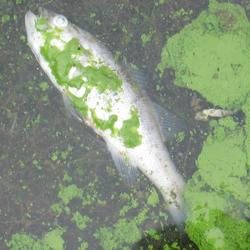
New Study on Cyanotoxins in Lakes and Reservoirs Provides Insights into Assessing Health Risks
Newly published study provides new evidence of the widespread occurrence of cyanotoxins in lakes and reservoirs of the United States and offers new insights into measures used for assessing potential recreational health risks.
U.S. Geological Survey Scientists Complete First Systematic Regional Survey of Algal Toxins in Streams of the Southeastern United States
U.S. Geological Survey (USGS) scientists detected microcystin—an algal toxin—in 39 percent of 75 streams assessed in the southeastern United States. These results will inform and become part of a larger, systematic national survey of algal toxins in small streams of the United States.
Remote Sensing Provides a National View of Cyanobacteria Blooms
Four Federal agencies, including the U.S. Geological Survey (USGS), are collaborating to transform satellite data into information managers can use to protect ecological and human health from freshwater contaminated by harmful algal blooms.
Filter Total Items: 28
Exposure potential of salt marsh units in Edwin B. Forsythe National Wildlife Refuge to environmental health stressors Exposure potential of salt marsh units in Edwin B. Forsythe National Wildlife Refuge to environmental health stressors
Natural and anthropogenic contaminants, pathogens, and viruses are found in soils and sediments throughout the United States. Enhanced dispersion and concentration of these environmental health stressors in coastal regions can result from sea level rise and storm-derived disturbances. The combination of existing environmental health stressors and those mobilized by natural or...
Concentrations of glyphosate and atrazine compounds in 100 Midwest United States streams in 2013 Concentrations of glyphosate and atrazine compounds in 100 Midwest United States streams in 2013
Glyphosate and atrazine are the most intensively used herbicides in the United States. Temporal patterns in glyphosate and atrazine concentrations were measured weekly by the USGS during the 2013 growing season in 100 small streams in the Midwestern United States. Concentrations also were measured every 2 days at a subset of 8 of the sites, all located in Missouri. Glyphosate was...
Digital Polymerase Chain Reaction (dPCR) and Presence/Absence Quantitative Polymerase Chain Reaction (qPCR) Data From the Sediment-Bound Contaminant Resiliency and Response Strategy Pilot Study, Northeastern United States, 2015 Digital Polymerase Chain Reaction (dPCR) and Presence/Absence Quantitative Polymerase Chain Reaction (qPCR) Data From the Sediment-Bound Contaminant Resiliency and Response Strategy Pilot Study, Northeastern United States, 2015
The purpose of these data sets was to define which samples contained antibiotic resistance genes (screened antibiotic resistance gene targets) and Vibrio species, the number of detectable targets per sample and the quantity of those respective gene targets per gram of soil. These data were determined from samples collected in the NE US in support of the Sediment-bound Contaminant...
Periphyton (1993-2011) and Water Quality (2014) Data for ET&C Article Entitled Spatial and Temporal Variation in Microcystins Occurrence in Wadeable Streams in the Southeastern USA Periphyton (1993-2011) and Water Quality (2014) Data for ET&C Article Entitled Spatial and Temporal Variation in Microcystins Occurrence in Wadeable Streams in the Southeastern USA
Spatial reconnaissance of fluvial microcystins (MC) concentrations and select water-quality parameters, including nutrients and periphyton biomass, in 75 wadeable streams in the Piedmont region of the southeastern USA during 2014. Data set includes only those data specifically discussed in the associated journal article: Loftin, K.A., Clark, J.M., Journey, C.A., Kolpin, D.W., Van Metre...
Filter Total Items: 87
Satellite remote sensing to assess cyanobacterial bloom frequency across the United States at multiple spatial scales Satellite remote sensing to assess cyanobacterial bloom frequency across the United States at multiple spatial scales
Cyanobacterial blooms can have negative effects on human health and local ecosystems. Field monitoring of cyanobacterial blooms can be costly, but satellite remote sensing has shown utility for more efficient spatial and temporal monitoring across the United States. Here, satellite imagery was used to assess the annual frequency of surface cyanobacterial blooms, defined for each...
Authors
Megan M. Coffer, Blake Schaeffer, Wilson B. Salls, Erin Urquhart, Keith A. Loftin, Richard P. Stumpf, P. Jeremy Werdell, John A. Darling
Pilot-scale expanded assessment of inorganic and organic tapwater exposures and predicted effects in Puerto Rico, USA Pilot-scale expanded assessment of inorganic and organic tapwater exposures and predicted effects in Puerto Rico, USA
A pilot-scale expanded target assessment of mixtures of inorganic and organic contaminants in point-of-consumption drinking water (tapwater, TW) was conducted in Puerto Rico (PR) to continue to inform TW exposures and corresponding estimations of cumulative human-health risks across the US. In August 2018, a spatial synoptic pilot assessment of than 524 organic, 37 inorganic, and select
Authors
Paul M. Bradley, Ingrid Y. Padilla, Kristin M. Romanok, Kelly Smalling, Michael J. Focazio, Sara E. Breitmeyer, Mary C. Cardon, Justin M. Conley, Nicola Evans, Carrie E. Givens, James L. Gray, L. Earl Gray, Phillip C. Hartig, Michelle L. Hladik, Christopher P. Higgins, Luke R. Iwanowicz, Rachael F. Lane, Keith A. Loftin, R. Blaine McCleskey, Carrie A. McDonough, Elizabeth Medlock-Kakaley, Shannon M. Meppelink, Christopher P. Weis, Vickie S. Wilson
Public and private tapwater: Comparative analysis of contaminant exposure and potential risk, Cape Cod, Massachusetts, USA Public and private tapwater: Comparative analysis of contaminant exposure and potential risk, Cape Cod, Massachusetts, USA
Background Humans are primary drivers of environmental contamination worldwide, including in drinking-water resources. In the United States (US), federal and state agencies regulate and monitor public-supply drinking water while private-supply monitoring is rare; the current lack of directly comparable information on contaminant-mixture exposures and risks between private- and public...
Authors
Paul M. Bradley, Denis R. LeBlanc, Kristin M. Romanok, Kelly Smalling, Michael J. Focazio, Mary C. Cardon, Jimmy Clark, Justin M. Conley, Nicola Evans, Carrie E. Givens, James L. Gray, L. Earl Gray, Phillip C. Hartig, Christopher P. Higgins, Michelle Hladik, Luke R. Iwanowicz, Keith A. Loftin, R. Blaine McCleskey, Carrie A. McDonough, Elizabeth Medlock-Kakaley, Christopher P. Weis, Vickie S. Wilson
By
Ecosystems Mission Area, Water Resources Mission Area, Contaminant Biology, Environmental Health Program, Toxic Substances Hydrology, California Water Science Center, Eastern Ecological Science Center, New England Water Science Center, New Jersey Water Science Center, South Atlantic Water Science Center (SAWSC), Upper Midwest Water Science Center, National Water Quality Laboratory
The tide turns: Episodic and localized cross-contamination of a California coastline with cyanotoxins The tide turns: Episodic and localized cross-contamination of a California coastline with cyanotoxins
The contamination of coastal ecosystems from a variety of toxins of marine algal origin is a common and well-documented situation along the coasts of the United States and globally. The occurrence of toxins originating from cyanobacteria along marine coastlines is much less studied, and little information exists on whether toxins from marine and freshwater sources co-occur regularly. The...
Authors
Avery O. Tatters, Jayme Smith, Raphael M. Kudela, Kendra Hayashi, Meredith D. A. Howard, Ariel Donovan, Keith A. Loftin, David A. Caron
Evaluation of a satellite-based cyanobacteria bloom detection algorithm using field-measured microcystin data Evaluation of a satellite-based cyanobacteria bloom detection algorithm using field-measured microcystin data
Widespread occurrence of cyanobacterial harmful algal blooms (CyanoHABs) and the associated health effects from potential cyanotoxin exposure has led to a need for systematic and frequent screening and monitoring of lakes that are used as recreational and drinking water sources. Remote sensing-based methods are often used for synoptic and frequent monitoring of CyanoHABs. In this study...
Authors
Sachidananda Mishra, Richard P. Stumpf, Blake Schaeffer, P. Jeremy Werdell, Keith A. Loftin, Andrew Meredith
Neither microcystin, nor nodularin, nor cylindrospermopsin directly interact with human toll-like receptors Neither microcystin, nor nodularin, nor cylindrospermopsin directly interact with human toll-like receptors
Various stressors including temperature, environmental chemicals, and toxins can have profound impacts on immunity to pathogens. Increased eutrophication near rivers and lakes coupled with climate change are predicted to lead to increased algal blooms. Currently, the effects of cyanobacterial toxins on disease resistance in mammals is a largely unexplored area of research. Recent studies...
Authors
John Hansen, Keith A. Loftin, Zachary R. Laughrey, Ondrei Adamovsky
Multiple co-occurring and persistently detected cyanotoxins and associated cyanobacteria in adjacent California lakes Multiple co-occurring and persistently detected cyanotoxins and associated cyanobacteria in adjacent California lakes
The global proliferation of toxin producing cyanobacterial blooms has been attributed to a wide variety of environmental factors with nutrient pollution, increased temperatures, and drought being three of the most significant. The current study is the first formal assessment of cyanotoxins in two impaired lakes, Canyon Lake and Lake Elsinore, in southern California that have a history of
Authors
Meredith D. A. Howard, Raphael M. Kudela, Kendra Hayashi, Avery O. Tatters, David A. Caron, Susanna Theroux, Stuart Oehrle, Miranda Roethler, Ariel Donovan, Keith A. Loftin, Zachary R. Laughrey
Exploring the potential value of satellite remote sensing to monitor chlorophyll-a for U.S. lakes and reservoirs Exploring the potential value of satellite remote sensing to monitor chlorophyll-a for U.S. lakes and reservoirs
Assessment of chlorophyll-a, an algal pigment, typically measured by field and laboratory in situ analyses, is used to estimate algal abundance and trophic status in lakes and reservoirs. In situ-based monitoring programs can be expensive, may not be spatially, and temporally comprehensive and results may not be available in the timeframe needed to make some management decisions, but can...
Authors
Michael Papenfus, Blake Schaeffer, Amina Pollard, Keith A. Loftin
Ecological forecasting—21st century science for 21st century management Ecological forecasting—21st century science for 21st century management
Natural resource managers are coping with rapid changes in both environmental conditions and ecosystems. Enabled by recent advances in data collection and assimilation, short-term ecological forecasting may be a powerful tool to help resource managers anticipate impending near-term changes in ecosystem conditions or dynamics. Managers may use the information in forecasts to minimize the...
Authors
John B. Bradford, Jake Weltzin, Molly L. McCormick, Jill Baron, Zack Bowen, Sky Bristol, Daren Carlisle, Theresa Crimmins, Paul C. Cross, Joe DeVivo, Mike Dietze, Mary Freeman, Jason Goldberg, Mevin Hooten, Leslie Hsu, Karen Jenni, Jennifer L. Keisman, Jonathan G. Kennen, Kathy Lee, David P. Lesmes, Keith A. Loftin, Brian W. Miller, Peter S. Murdoch, Jana Newman, Karen L. Prentice, Imtiaz Rangwala, Jordan Read, Jennifer Sieracki, Helen Sofaer, Steve Thur, Gordon Toevs, Francisco Werner, C. LeAnn White, Timothy White, Mark T. Wiltermuth
By
Ecosystems Mission Area, Water Resources Mission Area, Science Synthesis, Analysis, and Research Program, Contaminant Biology, Environmental Health Program, Science Analytics and Synthesis (SAS) Program, Central Plains Water Science Center, Eastern Ecological Science Center, Fort Collins Science Center, Maryland-Delaware-D.C. Water Science Center, National Wildlife Health Center, New Jersey Water Science Center, Pacific Island Ecosystems Research Center, Southwest Biological Science Center, Upper Midwest Environmental Sciences Center, Upper Midwest Water Science Center
Characterization of water-quality and bed-sediment conditions in Currituck Sound, North Carolina, prior to the Mid-Currituck Bridge construction, 2011–18 Characterization of water-quality and bed-sediment conditions in Currituck Sound, North Carolina, prior to the Mid-Currituck Bridge construction, 2011–18
The North Carolina Turnpike Authority plans to improve transportation in the Currituck Sound area by constructing a two-lane bridge—the Mid-Currituck Bridge—across Currituck Sound from the mainland to the Outer Banks, North Carolina. The results of the final environmental impact statement for the project indicate potential water-quality and habitat effects for Currituck Sound associated...
Authors
Stephen L. Harden, Sharon A. Fitzgerald, Chad R. Wagner, Emilia L. Bristow, Keith A. Loftin, Barry H. Rosen
Mixed organic and inorganic tapwater exposures and potential effects in greater Chicago area, USA Mixed organic and inorganic tapwater exposures and potential effects in greater Chicago area, USA
Safe drinking water at the point of use (tapwater, TW) is a public-health priority. TW exposures and potential human-health concerns of 540 organics and 35 inorganics were assessed in 45 Chicago area United States (US) homes in 2017. No US Environmental Protection Agency (EPA) enforceable Maximum Contaminant Level(s) (MCL) were exceeded in any residential or water treatment plant (WTP)...
Authors
Paul Bradley, Maria Argos, Dana W. Kolpin, Shannon M. Meppelink, Kristin M. Romanok, Kelly L. Smalling, Michael J. Focazio, Joshua M. Allen, Julie E. Dietze, Michael J. Devito, Ariel Donovan, Nicola Evans, Carrie E. Givens, James L. Gray, Christopher P. Higgins, Michelle L. Hladik, Luke Iwanowicz, Celeste A. Journey, Rachael F. Lane, Zachary R. Laughrey, Keith A. Loftin, R. Blaine McCleskey, Carrie A. McDonough, Elizabeth K Medlock Kakaley, Michael T. Meyer, Andrea Holthouse-Putz, Susan D Richardson, Alan Stark, Christopher P. Weis, Vickie S. Wilson, Abderrahman Zehraoui
Cyanotoxin occurrence in large rivers of the United States Cyanotoxin occurrence in large rivers of the United States
Cyanotoxins occur in rivers worldwide but are understudied in lotic ecosystems relative to lakes and reservoirs. Eleven large river sites located throughout the United States were sampled during June–September 2017 to determine the occurrence of cyanobacteria with known cyanotoxin-producing strains, cyanotoxin synthetase genes, and cyanotoxins. Chlorophyll-a concentrations spanned the...
Authors
Jennifer L. Graham, Neil Dubrovsky, Guy M. Foster, Lindsey R. King, Keith Loftin, Barry Rosen, Erin Stelzer
Science and Products
Filter Total Items: 32
Antibiotic Methods of Analysis: OGRL LCAB
Antibiotics are used for human health and livestock management and health. The increase of antibiotic resistant infections has resulted in concern that sub-therapeutic use of antibiotics for weight gain in livestock and the release of low levels of antibiotics into surface and groundwater from urban and agricultural sources may be contributing to this problem.
Parents and Degradation Products of Analysis: OGRL LCEA
Triazines and phenylureas are commonly used herbicides for controlling weeds in row crops. These herbicides and their degradation products have been found in samples collected from surface water, groundwater, and precipitation throughout the United States. Atrazine until recently was the most widely applied herbicide in the U.S. and is still a widely applied preplanting corn herbicide.
Acetamide Parents and Degradation Products of Analysis: OGRL LCPD
Acetamide herbicides are used to control weeds in row crops such as corn and soybeans. Acetamide herbicides and their degradates are common contaminants in surface and groundwater. Some of the widely detected acid degradates are on the USEPA contaminant candidate list (CCL).
OGRL Enzyme Linked-Imunnosorbent Assay Methods of Analysis
Immunoassays are rapid screening techinques that can be used to provide data on a specific compound or class of compunds on a large number of samples. We have used these methods to conduct large scale reconnaissance studies of atrazine in rainfall and cyanobacterial toxins in the USEPA national lake and reservoir reconnaissance study.
Cyanobacterial (Blue-Green Algal) Blooms: Tastes, Odors, and Toxins
Freshwater and marine harmful algal blooms (HABs) can occur anytime water use is impaired due to excessive accumulations of algae. In freshwater, the majority of HABs are caused by cyanobacteria (also called blue-green algae). Cyanobacteria cause a multitude of water-quality concerns, including the potential to produce taste-and-odor causing compounds and toxins that are potent enough to poison...
New Study on Cyanotoxins in Lakes and Reservoirs Provides Insights into Assessing Health Risks
Newly published study provides new evidence of the widespread occurrence of cyanotoxins in lakes and reservoirs of the United States and offers new insights into measures used for assessing potential recreational health risks.
U.S. Geological Survey Scientists Complete First Systematic Regional Survey of Algal Toxins in Streams of the Southeastern United States
U.S. Geological Survey (USGS) scientists detected microcystin—an algal toxin—in 39 percent of 75 streams assessed in the southeastern United States. These results will inform and become part of a larger, systematic national survey of algal toxins in small streams of the United States.
Remote Sensing Provides a National View of Cyanobacteria Blooms
Four Federal agencies, including the U.S. Geological Survey (USGS), are collaborating to transform satellite data into information managers can use to protect ecological and human health from freshwater contaminated by harmful algal blooms.
Filter Total Items: 28
Exposure potential of salt marsh units in Edwin B. Forsythe National Wildlife Refuge to environmental health stressors Exposure potential of salt marsh units in Edwin B. Forsythe National Wildlife Refuge to environmental health stressors
Natural and anthropogenic contaminants, pathogens, and viruses are found in soils and sediments throughout the United States. Enhanced dispersion and concentration of these environmental health stressors in coastal regions can result from sea level rise and storm-derived disturbances. The combination of existing environmental health stressors and those mobilized by natural or...
Concentrations of glyphosate and atrazine compounds in 100 Midwest United States streams in 2013 Concentrations of glyphosate and atrazine compounds in 100 Midwest United States streams in 2013
Glyphosate and atrazine are the most intensively used herbicides in the United States. Temporal patterns in glyphosate and atrazine concentrations were measured weekly by the USGS during the 2013 growing season in 100 small streams in the Midwestern United States. Concentrations also were measured every 2 days at a subset of 8 of the sites, all located in Missouri. Glyphosate was...
Digital Polymerase Chain Reaction (dPCR) and Presence/Absence Quantitative Polymerase Chain Reaction (qPCR) Data From the Sediment-Bound Contaminant Resiliency and Response Strategy Pilot Study, Northeastern United States, 2015 Digital Polymerase Chain Reaction (dPCR) and Presence/Absence Quantitative Polymerase Chain Reaction (qPCR) Data From the Sediment-Bound Contaminant Resiliency and Response Strategy Pilot Study, Northeastern United States, 2015
The purpose of these data sets was to define which samples contained antibiotic resistance genes (screened antibiotic resistance gene targets) and Vibrio species, the number of detectable targets per sample and the quantity of those respective gene targets per gram of soil. These data were determined from samples collected in the NE US in support of the Sediment-bound Contaminant...
Periphyton (1993-2011) and Water Quality (2014) Data for ET&C Article Entitled Spatial and Temporal Variation in Microcystins Occurrence in Wadeable Streams in the Southeastern USA Periphyton (1993-2011) and Water Quality (2014) Data for ET&C Article Entitled Spatial and Temporal Variation in Microcystins Occurrence in Wadeable Streams in the Southeastern USA
Spatial reconnaissance of fluvial microcystins (MC) concentrations and select water-quality parameters, including nutrients and periphyton biomass, in 75 wadeable streams in the Piedmont region of the southeastern USA during 2014. Data set includes only those data specifically discussed in the associated journal article: Loftin, K.A., Clark, J.M., Journey, C.A., Kolpin, D.W., Van Metre...
Filter Total Items: 87
Satellite remote sensing to assess cyanobacterial bloom frequency across the United States at multiple spatial scales Satellite remote sensing to assess cyanobacterial bloom frequency across the United States at multiple spatial scales
Cyanobacterial blooms can have negative effects on human health and local ecosystems. Field monitoring of cyanobacterial blooms can be costly, but satellite remote sensing has shown utility for more efficient spatial and temporal monitoring across the United States. Here, satellite imagery was used to assess the annual frequency of surface cyanobacterial blooms, defined for each...
Authors
Megan M. Coffer, Blake Schaeffer, Wilson B. Salls, Erin Urquhart, Keith A. Loftin, Richard P. Stumpf, P. Jeremy Werdell, John A. Darling
Pilot-scale expanded assessment of inorganic and organic tapwater exposures and predicted effects in Puerto Rico, USA Pilot-scale expanded assessment of inorganic and organic tapwater exposures and predicted effects in Puerto Rico, USA
A pilot-scale expanded target assessment of mixtures of inorganic and organic contaminants in point-of-consumption drinking water (tapwater, TW) was conducted in Puerto Rico (PR) to continue to inform TW exposures and corresponding estimations of cumulative human-health risks across the US. In August 2018, a spatial synoptic pilot assessment of than 524 organic, 37 inorganic, and select
Authors
Paul M. Bradley, Ingrid Y. Padilla, Kristin M. Romanok, Kelly Smalling, Michael J. Focazio, Sara E. Breitmeyer, Mary C. Cardon, Justin M. Conley, Nicola Evans, Carrie E. Givens, James L. Gray, L. Earl Gray, Phillip C. Hartig, Michelle L. Hladik, Christopher P. Higgins, Luke R. Iwanowicz, Rachael F. Lane, Keith A. Loftin, R. Blaine McCleskey, Carrie A. McDonough, Elizabeth Medlock-Kakaley, Shannon M. Meppelink, Christopher P. Weis, Vickie S. Wilson
Public and private tapwater: Comparative analysis of contaminant exposure and potential risk, Cape Cod, Massachusetts, USA Public and private tapwater: Comparative analysis of contaminant exposure and potential risk, Cape Cod, Massachusetts, USA
Background Humans are primary drivers of environmental contamination worldwide, including in drinking-water resources. In the United States (US), federal and state agencies regulate and monitor public-supply drinking water while private-supply monitoring is rare; the current lack of directly comparable information on contaminant-mixture exposures and risks between private- and public...
Authors
Paul M. Bradley, Denis R. LeBlanc, Kristin M. Romanok, Kelly Smalling, Michael J. Focazio, Mary C. Cardon, Jimmy Clark, Justin M. Conley, Nicola Evans, Carrie E. Givens, James L. Gray, L. Earl Gray, Phillip C. Hartig, Christopher P. Higgins, Michelle Hladik, Luke R. Iwanowicz, Keith A. Loftin, R. Blaine McCleskey, Carrie A. McDonough, Elizabeth Medlock-Kakaley, Christopher P. Weis, Vickie S. Wilson
By
Ecosystems Mission Area, Water Resources Mission Area, Contaminant Biology, Environmental Health Program, Toxic Substances Hydrology, California Water Science Center, Eastern Ecological Science Center, New England Water Science Center, New Jersey Water Science Center, South Atlantic Water Science Center (SAWSC), Upper Midwest Water Science Center, National Water Quality Laboratory
The tide turns: Episodic and localized cross-contamination of a California coastline with cyanotoxins The tide turns: Episodic and localized cross-contamination of a California coastline with cyanotoxins
The contamination of coastal ecosystems from a variety of toxins of marine algal origin is a common and well-documented situation along the coasts of the United States and globally. The occurrence of toxins originating from cyanobacteria along marine coastlines is much less studied, and little information exists on whether toxins from marine and freshwater sources co-occur regularly. The...
Authors
Avery O. Tatters, Jayme Smith, Raphael M. Kudela, Kendra Hayashi, Meredith D. A. Howard, Ariel Donovan, Keith A. Loftin, David A. Caron
Evaluation of a satellite-based cyanobacteria bloom detection algorithm using field-measured microcystin data Evaluation of a satellite-based cyanobacteria bloom detection algorithm using field-measured microcystin data
Widespread occurrence of cyanobacterial harmful algal blooms (CyanoHABs) and the associated health effects from potential cyanotoxin exposure has led to a need for systematic and frequent screening and monitoring of lakes that are used as recreational and drinking water sources. Remote sensing-based methods are often used for synoptic and frequent monitoring of CyanoHABs. In this study...
Authors
Sachidananda Mishra, Richard P. Stumpf, Blake Schaeffer, P. Jeremy Werdell, Keith A. Loftin, Andrew Meredith
Neither microcystin, nor nodularin, nor cylindrospermopsin directly interact with human toll-like receptors Neither microcystin, nor nodularin, nor cylindrospermopsin directly interact with human toll-like receptors
Various stressors including temperature, environmental chemicals, and toxins can have profound impacts on immunity to pathogens. Increased eutrophication near rivers and lakes coupled with climate change are predicted to lead to increased algal blooms. Currently, the effects of cyanobacterial toxins on disease resistance in mammals is a largely unexplored area of research. Recent studies...
Authors
John Hansen, Keith A. Loftin, Zachary R. Laughrey, Ondrei Adamovsky
Multiple co-occurring and persistently detected cyanotoxins and associated cyanobacteria in adjacent California lakes Multiple co-occurring and persistently detected cyanotoxins and associated cyanobacteria in adjacent California lakes
The global proliferation of toxin producing cyanobacterial blooms has been attributed to a wide variety of environmental factors with nutrient pollution, increased temperatures, and drought being three of the most significant. The current study is the first formal assessment of cyanotoxins in two impaired lakes, Canyon Lake and Lake Elsinore, in southern California that have a history of
Authors
Meredith D. A. Howard, Raphael M. Kudela, Kendra Hayashi, Avery O. Tatters, David A. Caron, Susanna Theroux, Stuart Oehrle, Miranda Roethler, Ariel Donovan, Keith A. Loftin, Zachary R. Laughrey
Exploring the potential value of satellite remote sensing to monitor chlorophyll-a for U.S. lakes and reservoirs Exploring the potential value of satellite remote sensing to monitor chlorophyll-a for U.S. lakes and reservoirs
Assessment of chlorophyll-a, an algal pigment, typically measured by field and laboratory in situ analyses, is used to estimate algal abundance and trophic status in lakes and reservoirs. In situ-based monitoring programs can be expensive, may not be spatially, and temporally comprehensive and results may not be available in the timeframe needed to make some management decisions, but can...
Authors
Michael Papenfus, Blake Schaeffer, Amina Pollard, Keith A. Loftin
Ecological forecasting—21st century science for 21st century management Ecological forecasting—21st century science for 21st century management
Natural resource managers are coping with rapid changes in both environmental conditions and ecosystems. Enabled by recent advances in data collection and assimilation, short-term ecological forecasting may be a powerful tool to help resource managers anticipate impending near-term changes in ecosystem conditions or dynamics. Managers may use the information in forecasts to minimize the...
Authors
John B. Bradford, Jake Weltzin, Molly L. McCormick, Jill Baron, Zack Bowen, Sky Bristol, Daren Carlisle, Theresa Crimmins, Paul C. Cross, Joe DeVivo, Mike Dietze, Mary Freeman, Jason Goldberg, Mevin Hooten, Leslie Hsu, Karen Jenni, Jennifer L. Keisman, Jonathan G. Kennen, Kathy Lee, David P. Lesmes, Keith A. Loftin, Brian W. Miller, Peter S. Murdoch, Jana Newman, Karen L. Prentice, Imtiaz Rangwala, Jordan Read, Jennifer Sieracki, Helen Sofaer, Steve Thur, Gordon Toevs, Francisco Werner, C. LeAnn White, Timothy White, Mark T. Wiltermuth
By
Ecosystems Mission Area, Water Resources Mission Area, Science Synthesis, Analysis, and Research Program, Contaminant Biology, Environmental Health Program, Science Analytics and Synthesis (SAS) Program, Central Plains Water Science Center, Eastern Ecological Science Center, Fort Collins Science Center, Maryland-Delaware-D.C. Water Science Center, National Wildlife Health Center, New Jersey Water Science Center, Pacific Island Ecosystems Research Center, Southwest Biological Science Center, Upper Midwest Environmental Sciences Center, Upper Midwest Water Science Center
Characterization of water-quality and bed-sediment conditions in Currituck Sound, North Carolina, prior to the Mid-Currituck Bridge construction, 2011–18 Characterization of water-quality and bed-sediment conditions in Currituck Sound, North Carolina, prior to the Mid-Currituck Bridge construction, 2011–18
The North Carolina Turnpike Authority plans to improve transportation in the Currituck Sound area by constructing a two-lane bridge—the Mid-Currituck Bridge—across Currituck Sound from the mainland to the Outer Banks, North Carolina. The results of the final environmental impact statement for the project indicate potential water-quality and habitat effects for Currituck Sound associated...
Authors
Stephen L. Harden, Sharon A. Fitzgerald, Chad R. Wagner, Emilia L. Bristow, Keith A. Loftin, Barry H. Rosen
Mixed organic and inorganic tapwater exposures and potential effects in greater Chicago area, USA Mixed organic and inorganic tapwater exposures and potential effects in greater Chicago area, USA
Safe drinking water at the point of use (tapwater, TW) is a public-health priority. TW exposures and potential human-health concerns of 540 organics and 35 inorganics were assessed in 45 Chicago area United States (US) homes in 2017. No US Environmental Protection Agency (EPA) enforceable Maximum Contaminant Level(s) (MCL) were exceeded in any residential or water treatment plant (WTP)...
Authors
Paul Bradley, Maria Argos, Dana W. Kolpin, Shannon M. Meppelink, Kristin M. Romanok, Kelly L. Smalling, Michael J. Focazio, Joshua M. Allen, Julie E. Dietze, Michael J. Devito, Ariel Donovan, Nicola Evans, Carrie E. Givens, James L. Gray, Christopher P. Higgins, Michelle L. Hladik, Luke Iwanowicz, Celeste A. Journey, Rachael F. Lane, Zachary R. Laughrey, Keith A. Loftin, R. Blaine McCleskey, Carrie A. McDonough, Elizabeth K Medlock Kakaley, Michael T. Meyer, Andrea Holthouse-Putz, Susan D Richardson, Alan Stark, Christopher P. Weis, Vickie S. Wilson, Abderrahman Zehraoui
Cyanotoxin occurrence in large rivers of the United States Cyanotoxin occurrence in large rivers of the United States
Cyanotoxins occur in rivers worldwide but are understudied in lotic ecosystems relative to lakes and reservoirs. Eleven large river sites located throughout the United States were sampled during June–September 2017 to determine the occurrence of cyanobacteria with known cyanotoxin-producing strains, cyanotoxin synthetase genes, and cyanotoxins. Chlorophyll-a concentrations spanned the...
Authors
Jennifer L. Graham, Neil Dubrovsky, Guy M. Foster, Lindsey R. King, Keith Loftin, Barry Rosen, Erin Stelzer