



Wetlands
Wetlands
Filter Total Items: 11
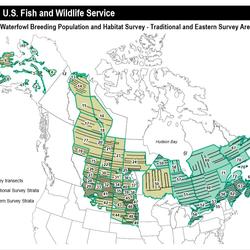
Redesigning the Eastern Breeding Waterfowl Population and Habitat Survey
USGS and partners are revising the design of a key waterfowl survey to increase management efficiency and cost-effectiveness, and inform annual harvest regulations in the U.S. and Canada.

Key Values of a Century of EESC Science
The USGS Eastern Ecological Science Center (EESC) is rooted in a proud tradition of service to the nation—advancing science that informs the conservation and management of fish, wildlife, and habitats across the eastern United States and beyond. Our mission is clear: deliver reliable, partner-driven science that supports natural resource decisions today, while ensuring these resources remain...
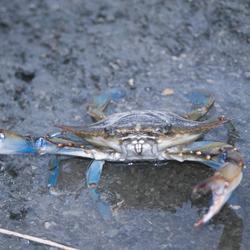
EESC Makes an Impact: Restoring the Chesapeake Bay Watershed
The Chesapeake Bay provides over $100 billion in annual economic value and is home to 18 million people. The USGS, including scientists from the Eastern Ecological Science Center (EESC), works with Federal, State, local, and academic partners to provide research and monitoring and to communicate results to inform management for the Chesapeake and other important landscapes across the Nation.

Using Telemetry to Understand Overlap in Habitat Use Between Waterfowl and Agricultural Birds in North America
USGS researchers are using telemetry to improve our understanding of how wild birds move throughout their environments and the potential implications for disease transmission within and to domestic poultry.

Coastal Wetland Vulnerability to Climate Change and Sea-Level Rise: Understanding Ecological Thresholds and Ecosystem Transformations
Eighteen USGS coastal scientists from all four coasts of the conterminous United States are working together to advance the understanding of climate change and sea-level rise impacts to coastal wetlands.
By
California Water Science Center, Chesapeake Bay Activities, Eastern Ecological Science Center, Florence Bascom Geoscience Center, Great Lakes Science Center, Pacific Coastal and Marine Science Center, St. Petersburg Coastal and Marine Science Center, Western Ecological Research Center (WERC), Western Geographic Science Center, Wetland and Aquatic Research Center , Woods Hole Coastal and Marine Science Center

Northeast Amphibian Research and Monitoring Initiative
The U.S. Geological Survey’s Eastern Ecological Science Center is home to the Northeast Amphibian Research and Monitoring Initiative (NEARMI), one of 7 ARMI regions across the United States. NEARMI works on public lands in thirteen states from Maine to Virginia, including many National Parks and National Wildlife Refuges.

Virginia Coast Reserve Long Term Ecological Research VII
The highly protected Virginia Coast Reserve (VCR) is the largest undeveloped region along the Atlantic seaboard.The VCR is managed by the Nature Conservancy, and was designated a Man and the Biosphere Reserve in 1979, providing a unique environment for which to study coastal impacts of climate change on a variety of coastal ecosystems from barrier islands across back barrier lagoons, mudflats...

Seagrass Vulnerability to Environmental Conditions Under Changing Temperature Regimes
Seagrasses are among the most productive ecosystems on the planet. Water quality degradation and direct human disturbance have caused loss of nearly a third of the seagrass habitat worldwide. These threats are exacerbated by stresses associated with a changing global climate. Predicting how seagrass distribution, abundance, and species composition will change in response to increased temperature...

Productivity of Species of Concern – Least Tern and Common Tern on Poplar Island
This project aims to understand the factors driving breeding success of multiple waterbird species, with special emphasis on Least and Common Terns (two species of concern) on Poplar Island Environmental Restoration Project.

Use of Emerging Technologies
This project is focused on exploring the use of new technology to collect data on colonially nesting waterbird species in ways that reduce disturbance, improve data accuracy, or allow for the examination of previously unanswerable questions.

Integrating Habitat and Harvest Management for Northern Pintails
The Challenge: Several blue-ribbon panels have challenged the waterfowl management world to recognize the linkages between the two primary management frameworks: harvest management under the Migratory Bird Treaty Act, and habitat management under the North American Waterfowl Management Plan. Because these two frameworks seek to manage the same populations, there needs to be better coordination, in...